DbcultAccessing Vault...
Cult Review
Senior Film Conservator
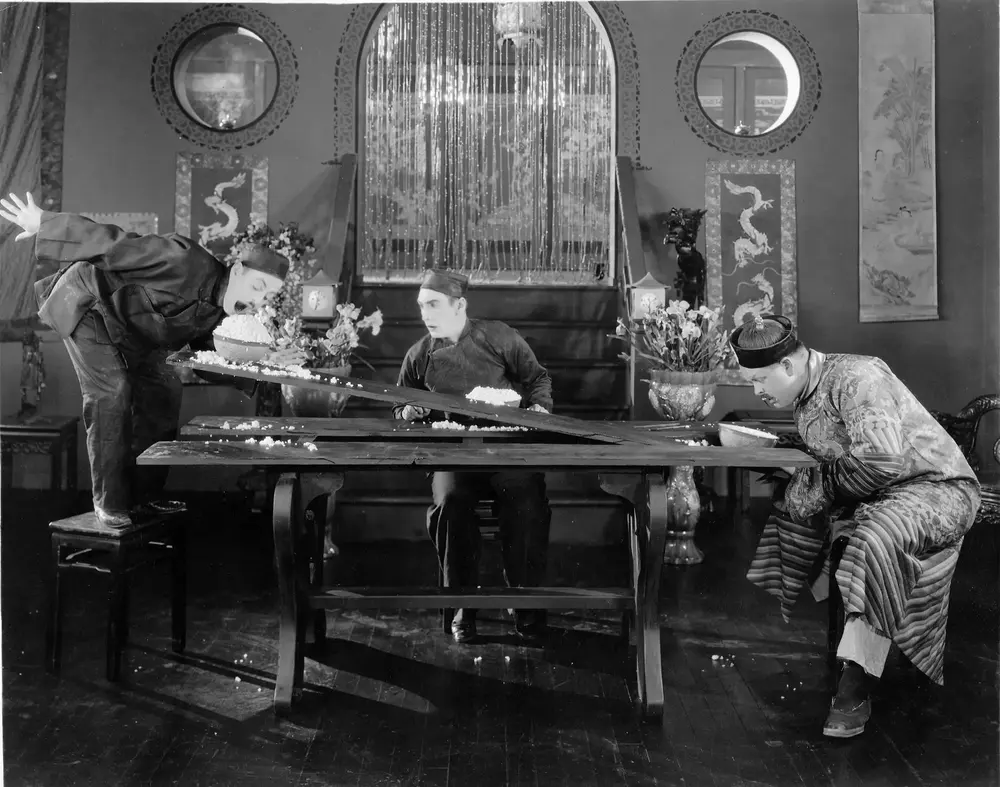
The year 1922 remains a hallowed epoch in the annals of celluloid history, a time when the visual vernacular was shedding its theatrical chrysalis to emerge as a sophisticated medium of pure kinetic expression. Within this landscape, West Is East emerges not merely as a relic of the 'Hall Room Boys' series, but as a fascinating artifact of social aspiration. Starring the inimitable Sidney Smith and the robustly versatile Bud Jamison, the film navigates the precarious tightrope between destitution and dignity with a grace that few modern comedies can replicate.
While contemporaries like The Unpainted Woman delved into the stark, somber realities of rural struggle, West Is East approaches the concept of lack through the vibrant, often chaotic energy of the urban environment. Smith and Jamison portray characters who are, in essence, performance artists of their own lives. They inhabit a world where a frayed collar is a tragedy and a borrowed tuxedo is a passport to a new existence. This thematic obsession with 'faking it' resonates deeply with the post-Victorian shift toward consumer-driven identity.
The direction—though uncredited in many archival records—demonstrates a keen understanding of spatial comedy. The boarding house, a recurring motif in early 20th-century humor, is treated here as a claustrophobic pressure cooker. It stands in stark contrast to the sprawling, opulent sets found in melodramas like Idols of Clay. Where the latter uses space to emphasize emotional isolation, West Is East uses it to fuel physical comedy. Every door is a potential trap, every staircase a site for a tumble, and every window a glimpse into a world they are perpetually excluded from.
Sidney Smith’s physicality is a masterclass in elongated absurdity. His lanky frame, often draped in clothes that seem to be fighting his very existence, provides a visual counterpoint to Bud Jamison’s more grounded, stout presence. Jamison, who would later become a staple of the Three Stooges shorts, displays an early mastery of the 'slow burn' and the exasperated double-take. Their chemistry is the engine that drives the film, transforming what could have been a series of disconnected gags into a cohesive character study.
Consider the scene where the duo attempts to infiltrate a high-society gala. The tension is not derived from the threat of violence, as one might find in Five Days to Live, but from the threat of exposure. The fear of being 'found out' as members of the lower class provides a psychological depth that elevates the slapstick. It is a dance of deception, choreographed with the precision of a Swiss watch. The way Smith adjusts his monocle—a prop of pure artifice—speaks volumes about the fragility of the American Dream in the early twenties.
Technically, West Is East utilizes the fixed-frame aesthetic of the era to its maximum potential. The cinematography avoids the avant-garde experiments seen in European imports like Telefondamen, opting instead for a clarity that allows the actors' movements to dictate the frame's energy. However, there is a subtle use of depth of field that suggests a burgeoning understanding of how to guide the viewer's eye through a complex comic sequence.
The editing is sharp, far more sophisticated than the rudimentary 'cut-and-splice' techniques of the previous decade. The timing of the visual payoffs suggests a rhythmic sensibility that mimics the jazz music beginning to sweep the nation. This isn't the languid, atmospheric pacing of The Market of Vain Desire; this is a film that moves with the frantic pulse of a city on the rise. It captures the 'staccato' nature of modern life, where one must move fast or be left behind.
To understand the significance of West Is East, one must view it alongside the broader cinematic landscape of 1922. While The Greater Profit explored the moral ambiguities of the criminal underworld, Smith and Jamison’s work focused on the 'criminality' of poverty—the small, daily thefts of dignity required to survive in a world that only values wealth. There is a subversive undercurrent here that often goes unnoticed by those who dismiss silent comedy as mere 'pie-in-the-face' antics.
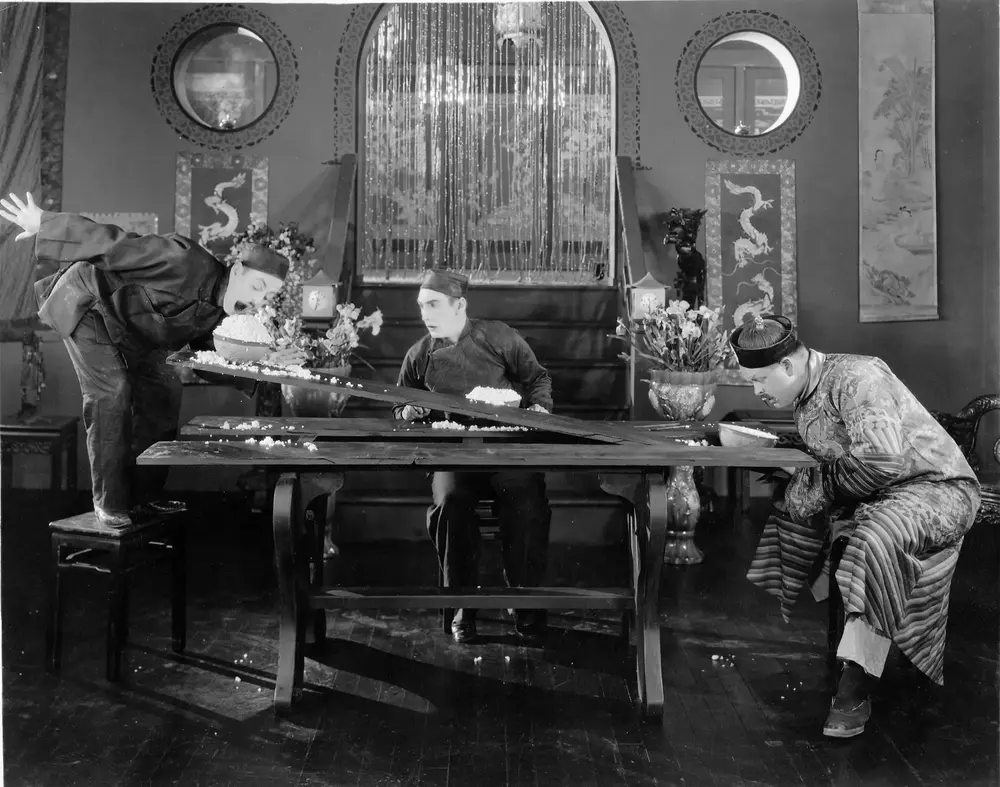
In comparison to the swashbuckling romance of The Eagle's Mate or the high-society drama of Madame Peacock, West Is East feels decidedly more grounded, even in its most absurd moments. It shares more DNA with the Swedish comedy Luffar-Petter, which also utilized the 'tramp' or 'outsider' archetype to poke fun at societal norms. Both films understand that the outsider is the ultimate observer; by being excluded from the 'East' of high culture, they are perfectly positioned to satirize its ridiculousness.
The supporting cast, featuring George Williams and Zip Monberg, provides the necessary friction for the protagonists. Monberg, in particular, possesses a face that seems carved from the very essence of the 1920s—angular, expressive, and capable of conveying a wealth of disdain with a single arched eyebrow. These actors populate the world of West Is East with a variety of types that would become staples of the genre: the grumpy landlord, the suspicious socialite, and the oblivious ingenue.
This ensemble dynamic is what separates the Hall Room Boys from the solo efforts of Chaplin or Keaton. There is a communal sense of struggle, a shared desperation that makes the comedy feel more human. It lacks the ethereal, almost supernatural athleticism of Keaton, but it replaces it with a relatable, 'everyman' quality that was highly popular with the working-class audiences of the time. This was the era of The Traveling Salesman, a time when the figure of the hustler was both a comic foil and a folk hero.
Despite the absence of sound, the film is 'loud' with intent. The intertitles are punchy and economical, serving as the percussion to the visual melody. The costume design—crucial for a film about social climbing—is meticulously handled. The contrast between the protagonists' tattered everyday wear and their 'borrowed' finery creates a visual dissonance that is both funny and slightly tragic. It reminds one of the thematic weight found in Crimson Shoals, where appearances are frequently used as a weapon of deception.
The film also manages to avoid the saccharine sentimentality that plagued many comedies of the period, such as A Lady in Love. There is a cynical edge to West Is East that feels remarkably modern. The protagonists are not 'good' men in the traditional sense; they are opportunists, survivors, and tricksters. This moral complexity makes them far more interesting than the cardboard cutouts of virtue found in contemporary dramas like Held by the Enemy.
Ultimately, West Is East is a testament to the enduring power of silent storytelling. It captures a specific moment in American history—the cusp of the Roaring Twenties—with a clarity and wit that remains infectious. It doesn't rely on the heavy-handed moralizing of Fallen Angel or the procedural rigidness of Outside the Law. Instead, it offers a slice of life that is as absurd as it is authentic.
For the modern viewer, watching Sidney Smith and Bud Jamison is like looking through a telescope into a vanished world. Yet, the themes of social anxiety, the performative nature of class, and the universal desire for something 'more' remain as relevant today as they were a century ago. West Is East is more than a comedy; it is a vibrant, flickering heartbeat of a time when the world was reinventing itself, one frame at a time. It deserves its place in the pantheon of silent cinema, not just as a curiosity, but as a vital piece of the cultural puzzle that defines the American experience.
Reviewer's Note: To truly appreciate the nuances of Smith's performance, one must pay attention to the micro-expressions during the 'dinner party' sequence—a sequence that rivals the best work of the era's more famous icons.
IMDb 5.9
1928
Community
Log in to comment.