DbcultAccessing Vault...
Cult Review
Senior Film Conservator
Ah, the silent era! A time when cinema, still in its infancy, dared to grapple with themes that resonate even today, often with a raw, unvarnished intensity that later generations of filmmakers would struggle to emulate. In this fascinating landscape emerges Thomas H. Ince and J.G. Hawks' 1915 production, The Despoiler, a film that transcends its simple plot synopsis to deliver a potent, if somewhat melodramatic, meditation on the horrors of war, the corrupting influence of power, and the redemptive potential of a nightmare. It’s a testament to the nascent art form’s capacity for psychological depth, pulling back the curtain not just on external conflict, but on the internal turmoil of its protagonist.
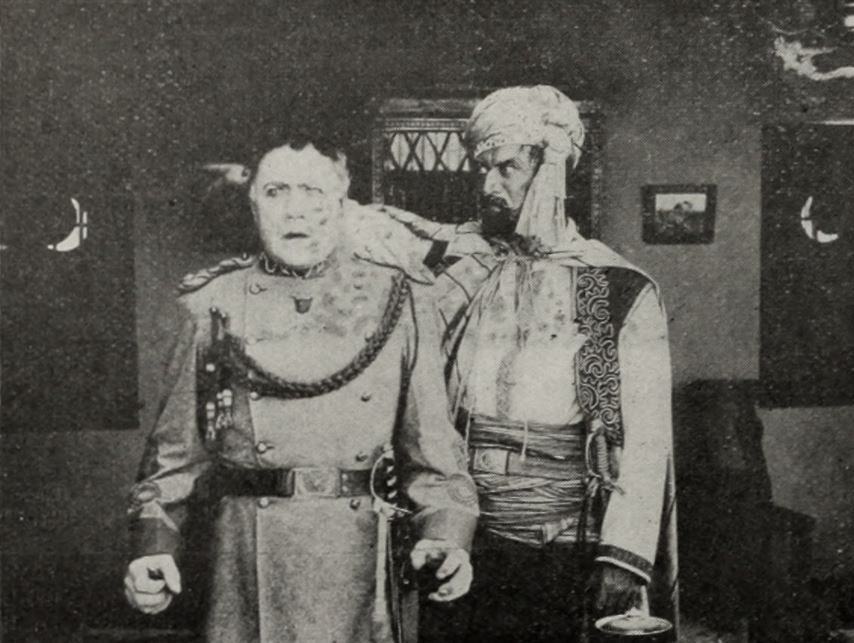
The narrative thrusts us directly into a theater of war, where Colonel Damien, portrayed with a compelling gravitas by Frank Keenan, has just secured a hard-won victory in a besieged European town. Keenan, a stage veteran, brought a commanding presence to the screen, capable of conveying complex emotions through gesture and facial expression – a prerequisite for silent film acting. His Damien is not merely a military tactician, but a man burdened by the grim realities of conflict. Victory, however, does not bring peace. Instead, it ushers in a new kind of moral quandary. The Emir of Balkania, commander of the indigenous supporting troops, a character designed to embody a certain 'otherness' and perceived ruthlessness, proposes a chilling tactic: coerce the defeated soldiers into surrendering their hidden wealth by threatening the women sheltered within the town's abbey. It’s a dark mirror reflecting the brutal opportunism that often accompanies the spoils of war. Damien, perhaps weary or perhaps morally compromised by the relentless demands of his position, sets a deadline for the ransom, then collapses, exhausted, into an armchair, drifting into a profound sleep.
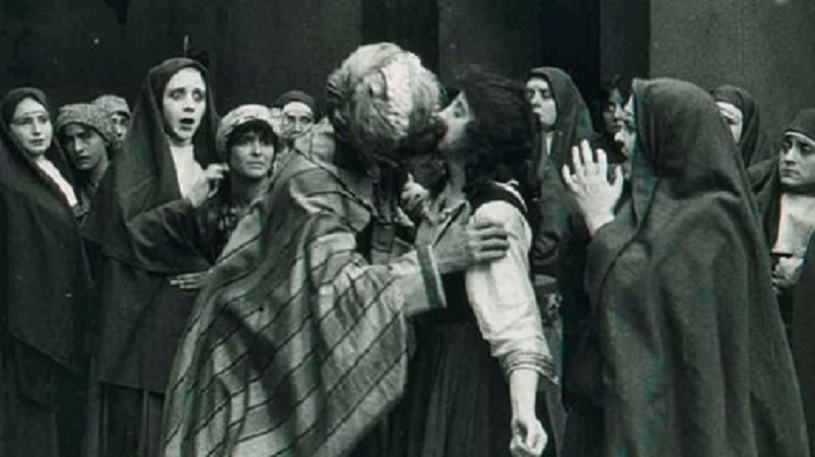
What follows is the film's audacious core: a dream sequence, vivid and harrowing, that acts as a psychological crucible for Damien. This narrative device, while not entirely novel even in 1915 (one might consider the fantastical elements in films like The Lost Paradise, though often for escapism rather than moral reckoning), is employed here with remarkable effectiveness. The dream is not merely a vision but a visceral experience, a projection of Damien's subconscious grappling with the ethical implications of his waking decisions. The Emir, now a full-blown villain unconstrained by any pretense of alliance, enters the abbey. There, in a cruel twist of fate, he discovers Sylvia, Damien's daughter, secretly residing amongst the imperiled women. Enid Markey, who plays Sylvia, was an actress known for her expressive, often vulnerable portrayals, making her an ideal choice for this role. Her character's plight becomes the emotional heart of the dream, a direct consequence of her father's actions, or inactions.
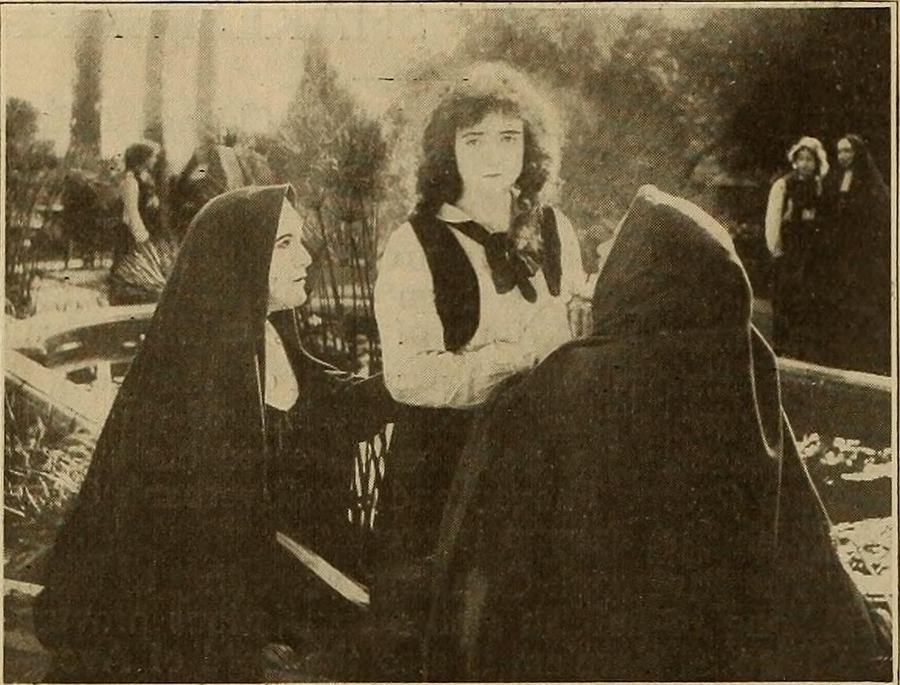
The Emir's proposition to Sylvia is a chilling example of the period's narrative boldness: her sexual favors in exchange for the freedom of the other women. This element, handled with the implicit suggestion typical of the era rather than explicit depiction, nonetheless conveys a horrific moral dilemma. Sylvia, in a moment of profound sacrifice, complies. But her compliance is not submission. It is a prelude to a desperate act of retribution. Seizing an opportunity, she shoots and kills the Emir. This moment of violent agency, a woman reclaiming her dignity through a desperate act, is a powerful, if bleak, statement. It’s a far cry from the more passive female archetypes often seen in contemporary dramas like Children of the Stage; or, When Love Speaks, where emotional distress rather than direct action typically defined female suffering.
The dream's tragic spiral continues. Damien discovers the Emir's corpse, and in his military rigidity, demands the assassin be shot. The irony is excruciating: he, the father, unwittingly condemning his own daughter. Sylvia, veiled, her identity obscured, faces the firing squad. The execution is swift, brutal, and utterly devoid of recognition. It’s a powerful visual metaphor for the dehumanizing effects of war, where individual lives become expendable, and justice is often blind. The subsequent identification of her body shatters Damien, his grief a visceral, agonizing torrent. This sequence, relying heavily on Keenan's ability to convey profound anguish without dialogue, must have been incredibly impactful for audiences of the time, accustomed to more overt theatricality. The emotional weight here is immense, a stark portrayal of loss that rivals the pathos found in other melodramas of the era, though few would connect it so directly to a protagonist's moral failing.
Then, with a jolt, Damien awakens. The horrors dissipate, the grim reality of his daughter's sacrifice and execution dissolving into the ephemeral realm of a dream. This 'it was all a dream' trope, while now often viewed with a degree of cynicism, was a potent narrative device in early cinema, allowing filmmakers to explore extreme scenarios and moral quandaries without necessarily committing to their dire consequences in the 'real' narrative. Here, it serves a crucial purpose: it is not a cheat, but a catalyst for profound personal transformation. The dream has been so vivid, so emotionally devastating, that it acts as a premonition, a stark warning of the potential future consequences of his earlier, morally dubious orders. He has experienced the full, agonizing weight of his decisions without having to suffer them in actuality.
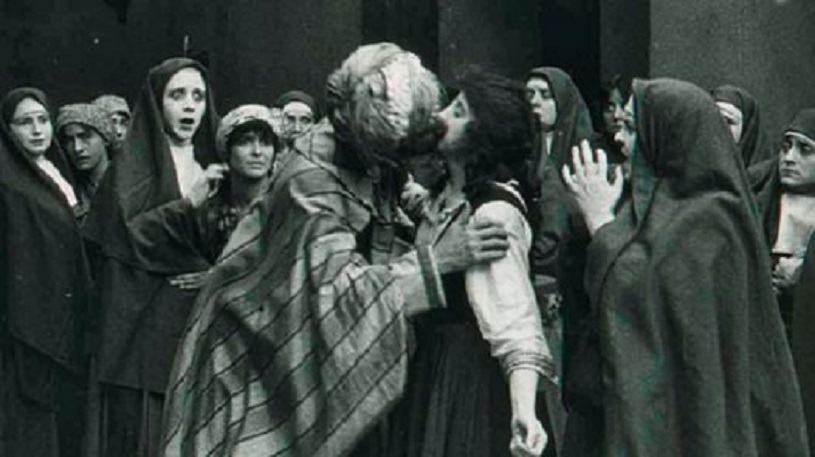
The film concludes with Damien, shaken but enlightened, ordering his troops to leave the town in peace. The demand for the defeated soldiers' money is rescinded, the threat against the women averted. This final act of mercy and restraint is the film's ultimate statement: even in the brutal calculus of war, there remains room for humanity, for compassion, and for a leader to choose a path of peace over plunder. It's a powerful and surprisingly nuanced message for a film of its vintage, particularly one dealing with such grim subject matter. It suggests that true strength lies not in unyielding authority, but in the capacity for empathy and self-reflection.
Beyond the immediate narrative, The Despoiler offers rich thematic ground. It's a critique of the dehumanizing aspects of war, not just for the vanquished, but for the victors who are often pressured into morally compromising actions. The Emir's character, while a clear antagonist, also serves as a symbol of the darker impulses that war unleashes, highlighting the barbarity that can erupt even among allied forces. The film subtly explores the vulnerability of women in wartime, a theme tragically relevant across centuries and conflicts. Sylvia's secret presence in the abbey, and her subsequent ordeal, underscores the unique dangers faced by non-combatants, particularly women, when societal structures collapse under the weight of conflict.
Thomas H. Ince, one of the most influential figures in early Hollywood, was known for his systematic approach to filmmaking, often acting as a supervising producer who oversaw every aspect of production. His influence as a writer, along with J.G. Hawks, is evident in the film's tight structure and its focus on character-driven drama, even within the broader canvas of war. Ince's productions were often characterized by their efficiency and their ability to tell compelling stories with relatively limited resources, a skill that allowed films like The Despoiler to achieve both artistic merit and commercial viability.
Comparing The Despoiler to other films of its period further illuminates its unique qualities. While many films, such as Famous Battles of Napoleon, focused on the spectacle and grandeur of military conflict, The Despoiler turns its gaze inward, using war as a backdrop for a psychological drama. The moral quandaries faced by Damien are more akin to the ethical dilemmas explored in crime dramas like The Crime and the Criminal or The Heart of a Police Officer, though transposed to a military context. The film's use of a dream to reveal deeper truths also sets it apart, demonstrating an early cinematic understanding of the subconscious, a concept that would later be explored more overtly in psychological thrillers.
Despite its age, The Despoiler retains a surprising power. It's a reminder that even in the absence of spoken dialogue, sophisticated narratives and profound emotional experiences were possible. The performances, particularly Frank Keenan's, would have been crucial in conveying the film's intricate emotional landscape. The film's ending, with its redemptive awakening, offers a glimmer of hope, suggesting that even the most hardened individuals can be swayed by the profound impact of empathy and a confrontation with the darkest aspects of their own potential actions. It asks us to consider the fine line between duty and depravity, and whether true leadership lies in unwavering resolve or in the capacity for moral introspection.
What if Damien had not fallen asleep? What if the dream had not intervened? The film implicitly argues that the consequences would have been catastrophic, a true 'despoiling' not just of the town, but of Damien's soul. This early cinematic exploration of psychological consequence, wrapped in a wartime drama, marks The Despoiler as more than just a historical curiosity. It’s a compelling piece of filmmaking that uses the unique language of silent cinema to deliver a timeless message about humanity's capacity for both cruelty and compassion. It urges us to remember that the greatest battles are often fought not with swords and cannons, but within the confines of the human heart and mind. And sometimes, it takes a nightmare to truly wake us up.
The film, like many from its era, might seem simplistic to modern eyes accustomed to complex visual effects and rapid-fire dialogue. However, to dismiss it would be to overlook its profound impact and its innovative storytelling. It stands as a testament to the ingenuity of early filmmakers like Ince, who were constantly pushing the boundaries of what cinema could achieve. Its legacy lies not just in its dramatic narrative, but in its bold attempt to explore the psychological underpinnings of human behavior, even when constrained by the technical limitations of its time. It’s a film that resonates, long after the final fade to black, leaving audiences to ponder the true cost of war and the enduring power of a dream to change a man's heart. It reminds us that cinema, from its very beginnings, has been a powerful mirror reflecting the complexities of the human condition, capable of eliciting both terror and profound moral reflection.
IMDb —
1923
Community
Log in to comment.