DbcultAccessing Vault...
Cult Review
Senior Film Conservator
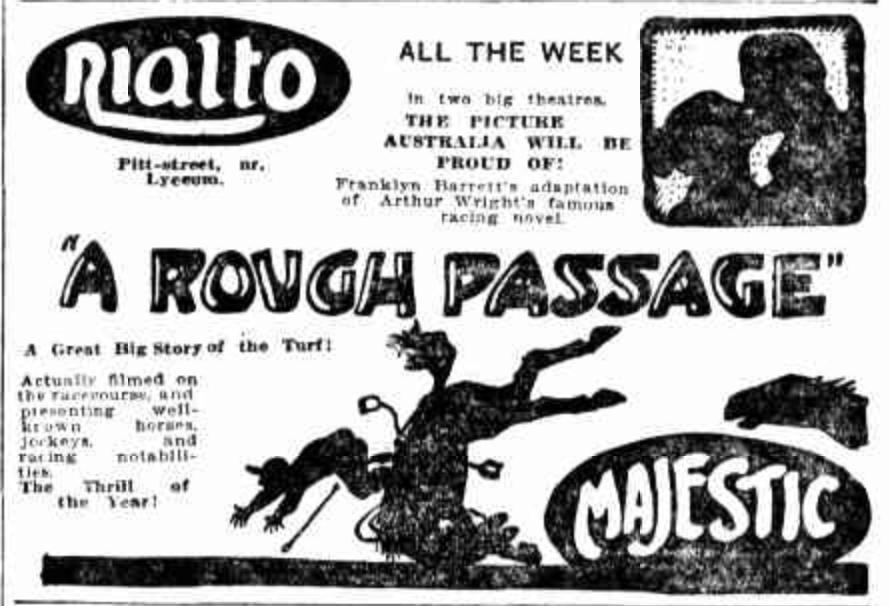
In the annals of cinematic history, certain films stand as evocative time capsules, not merely documenting an era but distilling its anxieties, aspirations, and moral quandaries into a potent visual elixir. Arthur Wright’s A Rough Passage, a compelling melodrama from an age defined by burgeoning industrialism and entrenched social stratification, is unequivocally one such artifact. It is a work that, even through the patina of time, resonates with a raw emotionality and a surprisingly sophisticated critique of societal hypocrisy, a thematic thread often explored in contemporary works like Social Hypocrites. Wright, an astute observer of human nature, crafts a narrative that is both grand in its romantic sweep and incisive in its examination of the human cost of ambition and class distinction. The film, anchored by a truly luminous performance from Stella Southern, transcends its genre confines, offering a meditation on integrity, sacrifice, and the arduous journey towards self-discovery.
At its core, A Rough Passage is a tale of two worlds colliding, personified by the spirited Elara Vance, brought to life with remarkable depth by Stella Southern, and the conflicted Julian Thorne, essayed by Robert MacKinnon. Elara, an orphan whose modest circumstances belie a formidable inner strength, represents the unyielding spirit of the common person. Her vocation as a governess places her precariously on the periphery of the upper echelons, granting her a unique vantage point into both the opulence and the moral decay that often accompanied it. Julian, conversely, is the quintessential scion, born into privilege, yet burdened by the moral compromises inherent in his family’s industrial empire. Their initial connection, portrayed with a delicate blend of longing and trepidation, immediately signals the formidable obstacles they face. It’s a classic setup, yet Wright imbues it with a freshness that prevents it from descending into cliché. The very title, A Rough Passage, becomes a multi-layered metaphor, encompassing not just literal perils but the arduous emotional and ethical journey undertaken by its protagonists.
The societal pressures are personified by Gilbert Emery’s Matron Thorne, a character of imposing will whose gender belies a distinctly patriarchal control over her son’s destiny. Her machinations, particularly the arranged engagement between Julian and Alma Rock Phillips’s Lillian St. Clair, are the initial ripples that quickly escalate into a tempest. Lillian, far from a mere romantic rival, emerges as a figure of calculated ambition, a woman who understands and exploits the levers of power within her social sphere. Phillips portrays her with a chilling composure, her beauty a deceptive veneer for a sharp, pragmatic intellect. Her knowledge of the Thorne family's unsavory business alliance with Silas Blackwood, masterfully embodied by David Edelsten as a man utterly devoid of ethical anchors, is the fulcrum upon which the entire narrative hinges. Blackwood’s exploitation of vulnerable workers, a stark commentary on the industrial age's darker side, provides the film with a potent socio-economic critique, echoing the thematic concerns seen in films like The Heart of Humanity, though perhaps with a more focused lens on corporate malfeasance.
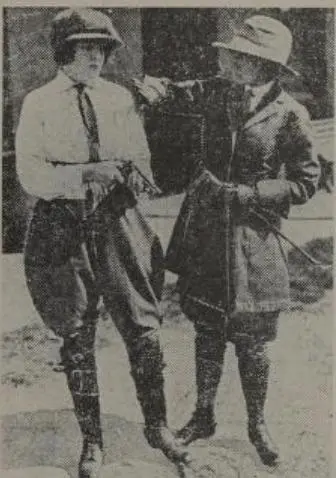
Stella Southern’s Elara Vance is the veritable soul of A Rough Passage. Her portrayal is a masterclass in silent film acting, conveying a vast spectrum of emotions through subtle gestures, expressive eyes, and an innate physicality that speaks volumes. She imbues Elara with a quiet dignity, a fierce moral compass, and an unyielding spirit that makes her trials feel genuinely harrowing. One can almost feel the weight of her dilemmas, the fear, and the unwavering resolve radiating from the screen. It is a performance that anchors the film, providing an empathetic core around which the more dramatic elements can swirl. Robert MacKinnon, as Julian Thorne, delivers a nuanced performance of a man caught between conflicting loyalties. His initial hesitation, his internal struggle between filial duty and burgeoning love, is palpable, making his eventual transformation all the more compelling. He avoids the pitfalls of a one-dimensional hero, presenting a character who is flawed but ultimately redeemable.
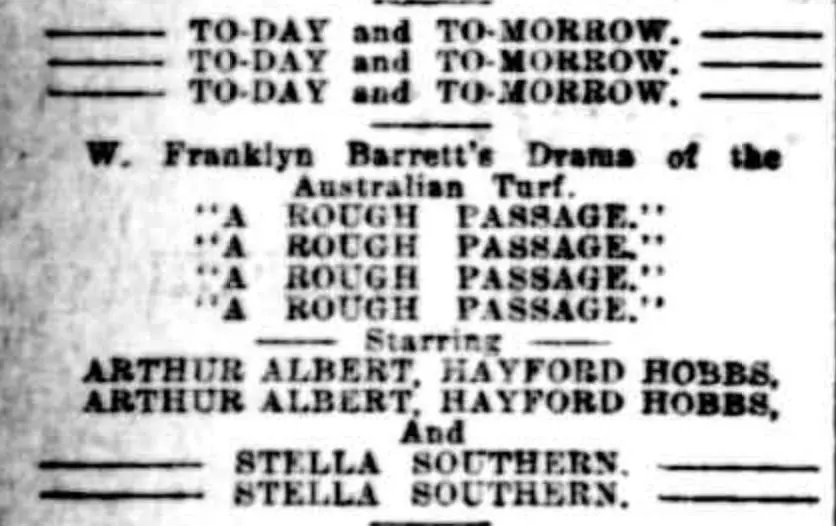
Alma Rock Phillips, as the cunning Lillian St. Clair, is a formidable antagonist. Her cold beauty and calculating demeanor create a stark contrast to Southern’s warmth, highlighting the moral chasm between the two women. Phillips understands the power of understated menace, her every move deliberate, every glance imbued with a predatory intelligence. Gilbert Emery’s Matron Thorne, despite the brevity of some of her appearances, leaves an indelible impression. Emery projects an air of unassailable authority and rigid adherence to social convention, embodying the very societal forces that seek to crush Elara. David Edelsten’s Silas Blackwood is pure villainy, a character conceived to embody unchecked greed and moral bankruptcy. Edelsten plays him with a chilling lack of remorse, making Blackwood a truly detestable, yet undeniably effective, antagonist. The supporting cast, including Arthur Albert, Sybil Shirley, Hayford Hobbs, Billy Ryan, and Elsa Granger, all contribute to the rich tapestry of the film, providing depth and authenticity to the world Wright has created. Billy Ryan, in particular, as one of Blackwood's menacing henchmen, adds a layer of visceral threat to the film's more action-oriented sequences.
Arthur Wright, as the film’s writer, demonstrates a keen understanding of melodramatic conventions while simultaneously pushing against their boundaries. The plot is meticulously constructed, each revelation building upon the last, driving the narrative forward with an inexorable momentum. The themes explored—class struggle, corporate corruption, the redemptive power of love, and the arduous quest for justice—are timeless. Wright doesn't shy away from depicting the harsh realities of the industrial era, making the film a potent social commentary alongside its romantic narrative. The idea of a 'rough passage' is not just a plot device involving a sea voyage; it is a metaphor for the difficult ethical choices and personal sacrifices required to uphold one's integrity in a morally compromised world. This thematic depth elevates A Rough Passage beyond mere entertainment, inviting viewers to reflect on the enduring struggles between virtue and vice.
The visual storytelling, crucial for a silent film, is handled with considerable skill. While specific directorial credits for this era often blur the lines between writer and director, the overall aesthetic of A Rough Passage suggests a confident hand. The framing, the use of light and shadow, and the pacing of the scenes all contribute to the film’s emotional impact. The dramatic climax, set amidst a perilous storm at sea, is particularly noteworthy. It is a sequence that, through clever editing and evocative cinematography, conveys a visceral sense of danger and desperation. The physical journey mirrors the characters' internal struggles, culminating in a powerful visual metaphor for the tempestuous nature of their moral and emotional trials. This kind of heightened reality, where external events directly reflect internal turmoil, is a hallmark of effective melodrama, and here it is executed with aplomb. For comparison, one might consider the dramatic tension and moral quandaries presented in When Men Are Tempted, though A Rough Passage often feels more expansive in its social critique.
Placing A Rough Passage within the broader cinematic landscape of its time reveals both its adherence to popular trends and its unique strengths. The era was ripe with melodramas exploring themes of class, forbidden love, and moral rectitude. Films like Don't Ever Marry or My Partner often delved into personal relationships and their societal implications. However, A Rough Passage distinguishes itself through its sharp focus on corporate malfeasance and the systemic exploitation of labor, giving it a more robust social commentary than many of its contemporaries. The villainy of Silas Blackwood is not merely personal; it is emblematic of a larger, more insidious societal ill. This lends the film a gravitas that elevates it above more simplistic romantic dramas.
The film’s narrative structure, with its clear delineation of good and evil, its dramatic twists, and its ultimate triumph of virtue, aligns with the popular tastes of the period, yet it avoids becoming overly simplistic. The characters, particularly Julian, are afforded enough complexity to make their choices feel genuinely consequential. The stakes are consistently high, both personally and socially, which keeps the audience thoroughly invested. While it may not possess the fantastical elements of a Rumpelstiltskin or the overt political satire of The Kaiser's New Dentist, its grounding in contemporary social issues gives it a different kind of enduring relevance. It speaks to the ongoing struggles for justice and equality, issues that remain pertinent even today.
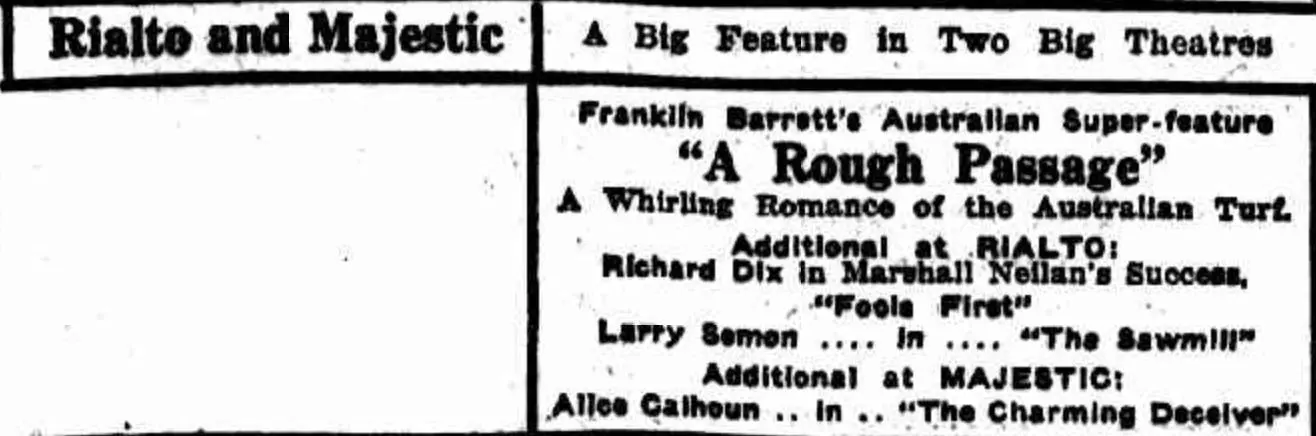
In retrospect, A Rough Passage stands as a testament to the power of early cinema to engage with complex social issues through compelling storytelling. It's a film that, while firmly rooted in its historical context, offers insights that continue to resonate. The performances, particularly Southern’s, are a reminder of the immense talent that graced the silent screen, capable of communicating profound emotion without a single spoken word. Arthur Wright’s vision, both as a writer and as the guiding force behind the film’s narrative, is one that deserves continued appreciation for its ambition and its execution. It’s a film that asks us to consider the price of progress, the corrupting influence of unchecked power, and the unwavering strength of the human spirit in the face of adversity.
The film's exploration of moral ambiguities, particularly through Julian's character arc, prevents it from being a mere black-and-white morality play. His journey from conflicted heir to resolute champion of justice is one of the film's most satisfying elements, demonstrating that even those born into privilege can choose a path of integrity. This nuanced approach to character development, while perhaps not as stark as the moral dilemmas in The Price She Paid, nonetheless provides a rich emotional core. The dramatic climax, a true test of both physical and moral fortitude, solidifies the film's message: that true love and justice often require enduring a 'rough passage' indeed. For those interested in the foundational elements of cinematic drama, or simply a powerful story well told, A Rough Passage remains a compelling and worthy viewing experience. It is a film that, despite its age, speaks volumes about the human condition, proving that some stories, and some struggles, are truly timeless. Its enduring relevance, much like the persistent allure of a well-crafted mystery such as Hinton's Double, lies in its ability to captivate and provoke thought long after the credits roll.
Film Title: A Rough Passage | Writer: Arthur Wright | Cast: Stella Southern, Alma Rock Phillips, Robert MacKinnon, Arthur Albert, Gilbert Emery, Sybil Shirley, David Edelsten, Hayford Hobbs, Billy Ryan, Elsa Granger
IMDb —
1921
Community
Log in to comment.