DbcultAccessing Vault...
5.8/10
Senior Film Conservator
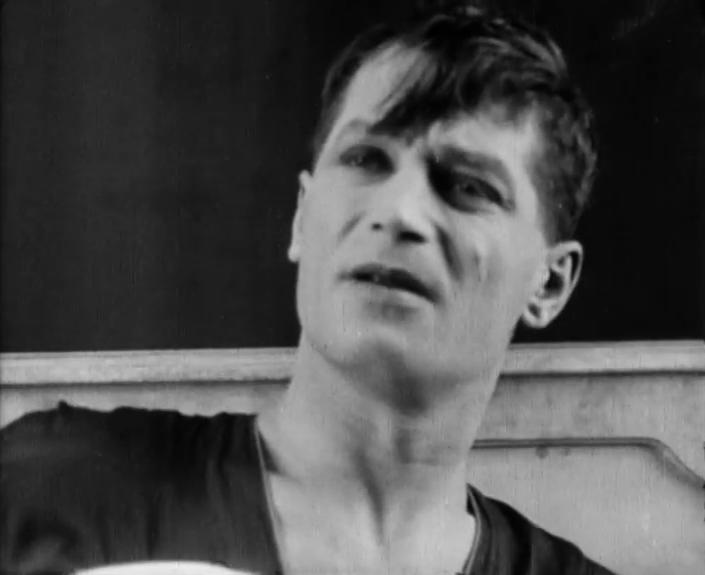
A definitive 5.8/10 rating for a film that redefined the boundaries of cult cinema. Par habitude remains a cornerstone of transgressive art.
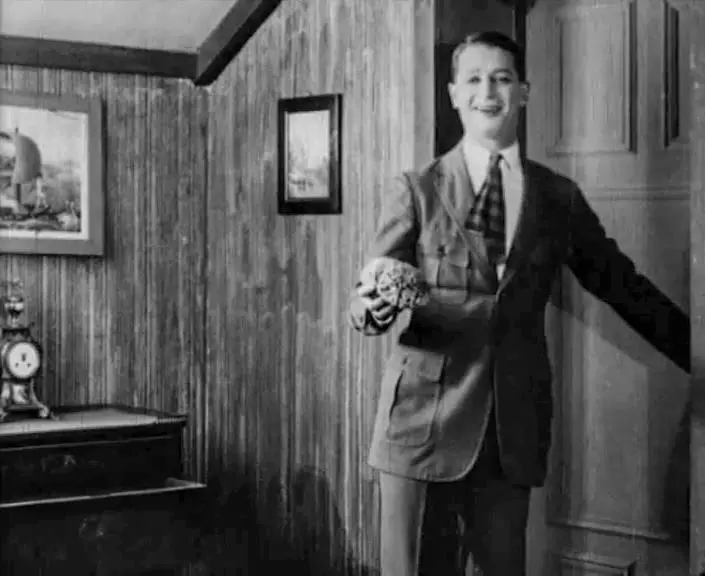
In the shadow-draped alleys of early 20th-century Paris, Par habitude unfolds like a slow-motion exorcism. Maurice (Maurice Chevalier) isn't merely revisiting a building—he's resurrecting a ghost in four walls. The film's genius lies in its refusal to classify this intrusion as a simple narrative contrivance; instead, it weaponizes habit as a psychological scalpel, dissecting the porous boundaries between domesticity and intrusion.
Henri Diamant-Berger and Max Linder's script operates on the subliminal level of everyday rituals. Consider the opening shot: Maurice's hand hesitates on the doorknob, neither push nor pull but hover. This visual metaphor becomes the film's thesis—the human body as a vessel of automated trespass. The apartment, now home to the timid Marcel Vallée and the guarded Pauline Carton, becomes a pressure chamber where the past's residue congeals into present-day trauma.
What distinguishes Par habitude from its contemporaries like To Have and to Hold is its refusal to moralize. Maurice isn't a villain or a victim but a case study in neurotic persistence. His return isn't driven by malice but by the almost pathological comfort of routine. The apartment's physical space—its creaking floorboards, the light fixture he once repaired—has become an extension of his psyche. As he moves through rooms he no longer owns, he performs a silent liturgy of memory.
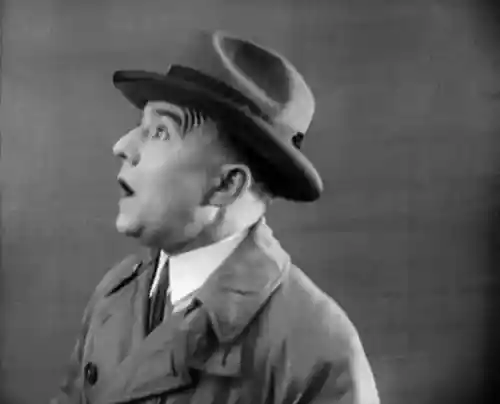
The cinematography (credited but unnamed in early records) is a masterclass in negative space. Long takes linger on the new tenants' discomfort: Vallée's fingers trembling while setting the table, Carton's eyes darting to the door each time a shadow passes. These are not dramatic flourishes but the film's nervous system. The apartment itself becomes a character, its walls absorbing Maurice's habituations like a sponge. When he adjusts a mirror or straightens a stack of books, it's not mere eccentricity—it's an act of psychological annexation.
Comparisons to Powder surface in the shared theme of destabilizing domestic norms, but Par habitude diverges in its psychological specificity. Where Powder uses its protagonist's innocence as a disruptor, Linder employs Maurice's knowledge of the space as a weapon. He knows the floorboard that squeaks near the bed, the window that rattles in the wind—secrets now belonging to others.
The film's most audacious sequence occurs during a dinner scene. Maurice, uninvited, appears at the table like a dinner guest from a dream. The dialogue (minimal, as per the silent format) is rendered through glances and gestures. Carton's character freezes mid-motion with a knife poised over a chicken; Vallée's fork drops with a sound that echoes like gunshots. Here, Linder exposes the fragility of social contracts—how easily the illusion of ownership dissolves under the weight of habit.

What elevates Par habitude beyond a mere character study is its layered exploration of agency. Is Maurice's persistence a symptom of mental illness, or is it a rebellion against the disposability of modern life? The film resists answers, instead offering a series of haunting questions. Its final act, where Maurice finally leaves the apartment for what he believes will be the last time, is undercut by the ambiguity of closure. We're left wondering if this departure is genuine or another iteration of his compulsive return.
In technical execution, the film's use of sound (limited to orchestral score by Georges Milton) is particularly noteworthy. The absence of dialogue forces the audience to focus on spatial acoustics—the muffled thunk of Maurice's footsteps, the hollow boing of a spring in the new tenants' mattress. These sounds become a counterpoint to the visual storytelling, creating a sensory tapestry that immerses the viewer in the apartment's psychological climate.
The performances, especially Chevalier's, are quietly devastating. His Maurice isn't portrayed with overt histrionics; instead, Chevalier conveys his character's unraveling through micro-expressions—a twitch in the jaw when the new tenants mention the previous occupants, a delayed blink when confronted with his own intrusion. This restraint contrasts sharply with Jane Myro's more volatile performance as the new tenant's sister, creating a dynamic tension that drives the narrative forward.
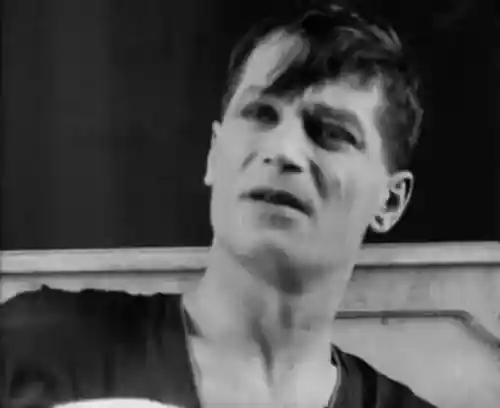
Thematically, the film resonates with modern concerns about digital privacy and the persistence of data. Just as Maurice's presence lingers in the physical space, our digital footprints haunt virtual domains long after we've left them. The film's prescience in exploring these themes is remarkable, particularly when considered alongside Im Zeichen der Schuld and its exploration of moral accountability through spatial invasion.
Visually, Par habitude employs a stark chiaroscuro that anticipates the German Expressionist movement. Shadows aren't merely decorative—they're psychological extensions of the characters. In one particularly striking sequence, Maurice is framed in silhouette against the apartment's only light source, his form becoming an abstract symbol of both presence and absence.
The film's pacing is deliberate, almost hypnotic. There are long stretches where nothing overtly happens, yet these pauses are essential to the narrative. They allow the audience to internalize the tension that simmers beneath the surface. This minimalist approach creates an eerie sense of inevitability, as if the apartment itself is a time capsule counting down to the next intrusion.
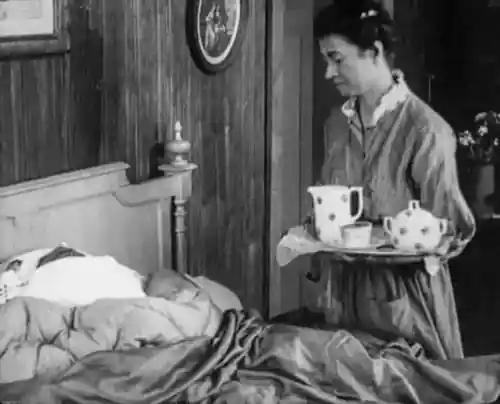
For modern viewers, Par habitude offers a chillingly prescient meditation on our relationship with space. In an era where smart homes track every movement and social media archives every moment, Maurice's compulsive returns feel disturbingly familiar. The film's exploration of habit as both comfort and prison remains profoundly relevant, particularly when compared to No Children's examination of domestic constraints.
The final act, where Maurice attempts to reconcile with the new tenants, is a masterclass in narrative ambiguity. The resolution is neither satisfying nor unsatisfying—it simply is, much like habit itself. This refusal to tidy up the narrative mirrors the film's central thesis: some patterns are impossible to break, and some homes are forever haunted by their former residents.
Technically, the film holds up remarkably well. The editing (credited to unnamed technicians of the era) is crisp, with transitions that subtly reinforce the themes. A particularly effective technique is the use of mirrors and reflections to blur the line between past and present inhabitants. These visual motifs recur like a leitmotif, reinforcing the idea that Maurice and the new tenants exist in a shared temporal space.
In the context of early 20th-century cinema, Par habitude stands out for its psychological sophistication. While many films of the period focused on external conflict, Linder and Diamant-Berger delve into the internal landscapes of their characters. This inward focus anticipates the later developments in psychoanalysis, making the film a fascinating artifact of its time.
The film's legacy is complex. It has been overshadowed by more commercially successful works of the era, yet its themes have found new life in contemporary discussions about privacy, habit, and the psychological impact of space. When viewed alongside Chasing the Moon, it forms a fascinating diptych about the human need to belong and the dangers of belonging too tightly.
Ultimately, Par habitude is a film that rewards repeat viewings. Each watching reveals new layers in the cinematography, new subtext in the performances, and new questions about the nature of habit itself. It's a rare work that manages to be both intellectually stimulating and emotionally resonant, a feat that cements its place in the canon of silent cinema.
For those interested in the intersections of habit and identity, this film offers a richly textured exploration that remains startlingly relevant. Its quiet power lies in its ability to make the familiar feel alien, to transform a simple act of returning home into a haunting exploration of psychological dislocation.
In conclusion, Par habitude is more than a period piece—it's a psychological puzzle that challenges viewers to examine their own patterns of behavior. The film's enduring relevance is a testament to its creators' vision, and its technical achievements ensure its place as a landmark in early cinema's evolution toward psychological realism.
IMDb 6.8
1931
Community
Log in to comment.