DbcultAccessing Vault...
Cult Review
Senior Film Conservator
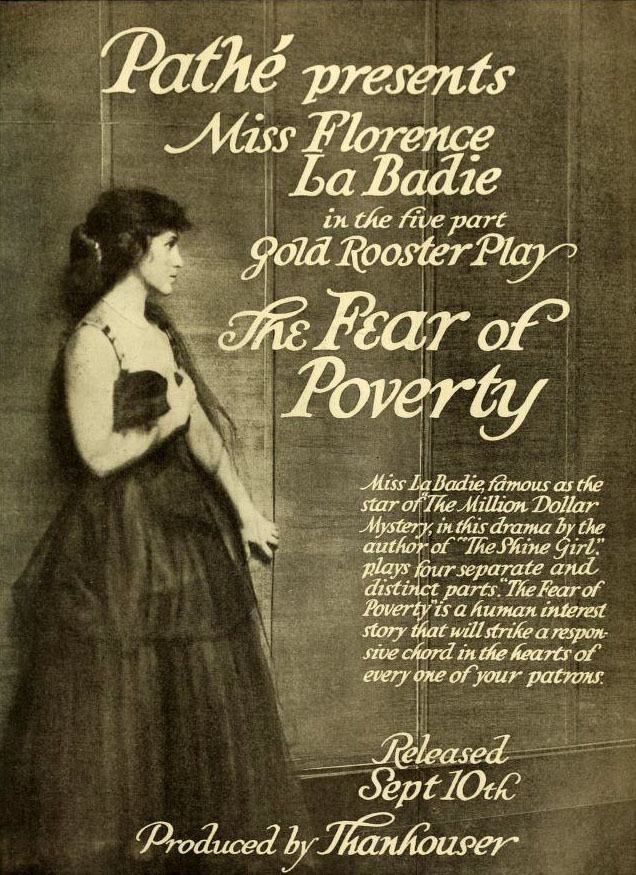
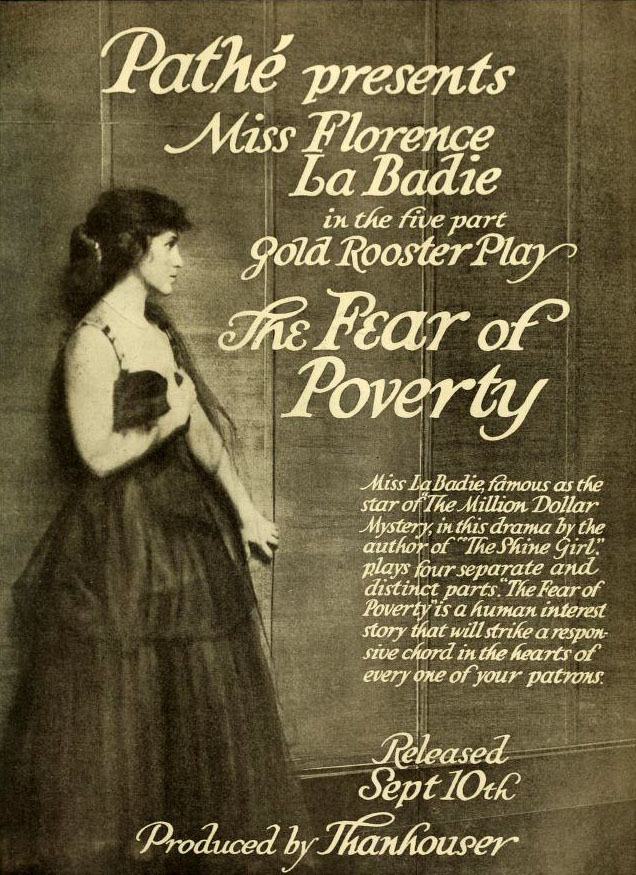
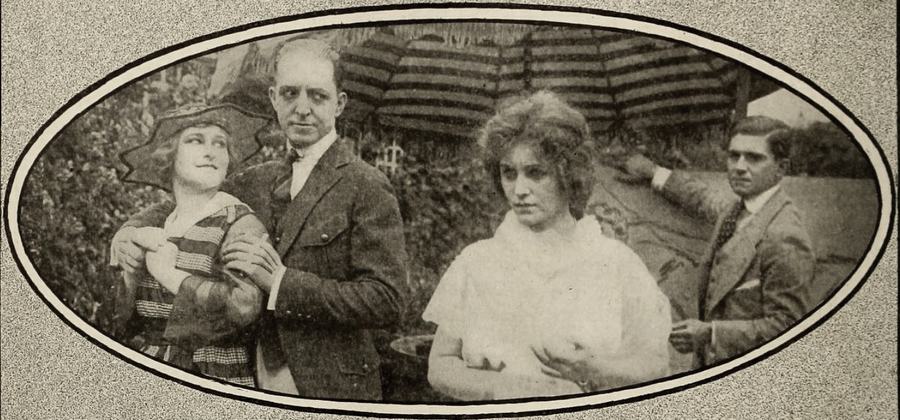
Agnes Christine Johnston’s The Fear of Poverty (1916) stands as a startlingly modern psychological autopsy of the American dream’s darker underbelly. While contemporary audiences might initially dismiss it as a standard silent-era melodrama, a closer inspection reveals a complex tapestry of socio-economic trauma and the stifling expectations of early 20th-century femininity. The film, produced by the Thanhouser Film Corporation, leverages the ethereal presence of Florence La Badie to anchor a story that is less about the absence of money and more about the corrosive haunting of its memory.
The film opens with a visceral depiction of Grace’s formative anxieties. Unlike the broad moralism found in The World, the Flesh and the Devil, where morality is often a binary choice, The Fear of Poverty posits that our environment dictates our ethics. Grace’s fear is not a character flaw but a phantom limb that continues to ache long after her husband Jim strikes it rich. This psychological scarring is what drives her to raise Florence in a gilded cage. Johnston’s screenplay expertly captures how trauma is inherited; Florence is not just a daughter, she is her mother’s insurance policy against the return of penury.
This obsession with luxury as a shield against the world is a theme we see echoed in other period pieces like The Moth and the Flame, yet here it feels more intimate and claustrophobic. The domestic space, usually a sanctuary in 1910s cinema, becomes a site of intense social engineering. Grace’s insistence on luxury is a violent rejection of her own past, and Florence is the collateral damage of this war against history.
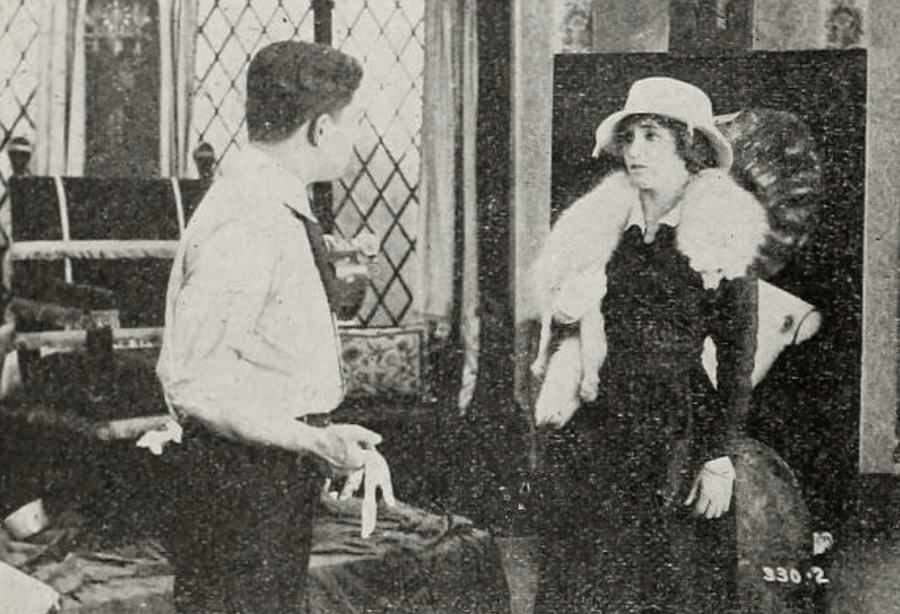
The central conflict of the film’s second act hinges on the choice between Durland and Alfred Griffin. Durland, the penniless artist, represents the soulful authenticity that Florence craves. In the lexicon of silent film, the artist is often a figure of purity, much like the characters found in Kilmeny. However, Florence’s rejection of him is not a personal choice but a systemic requirement. She is conditioned to believe that love without a ledger is a precursor to ruin.
Enter Alfred Griffin. As played by the cast, Griffin is a masterclass in the 'idle rich' archetype. He is a spendthrift and a philanderer, a man who views his wife as an acquisition rather than a partner. Their marriage is a cold, transactional affair that quickly curdles into a bitter enmity. The film’s portrayal of their domestic life is surprisingly grim for 1916, eschewing the sentimentalism of The Gentle Intruder for a more acerbic look at the decay of the upper class. The opulence of their home serves only to highlight the spiritual poverty within, a stark contrast to the gritty realism of Jeffries-Johnson World's Championship Boxing Contest where the struggle is physical and honest.
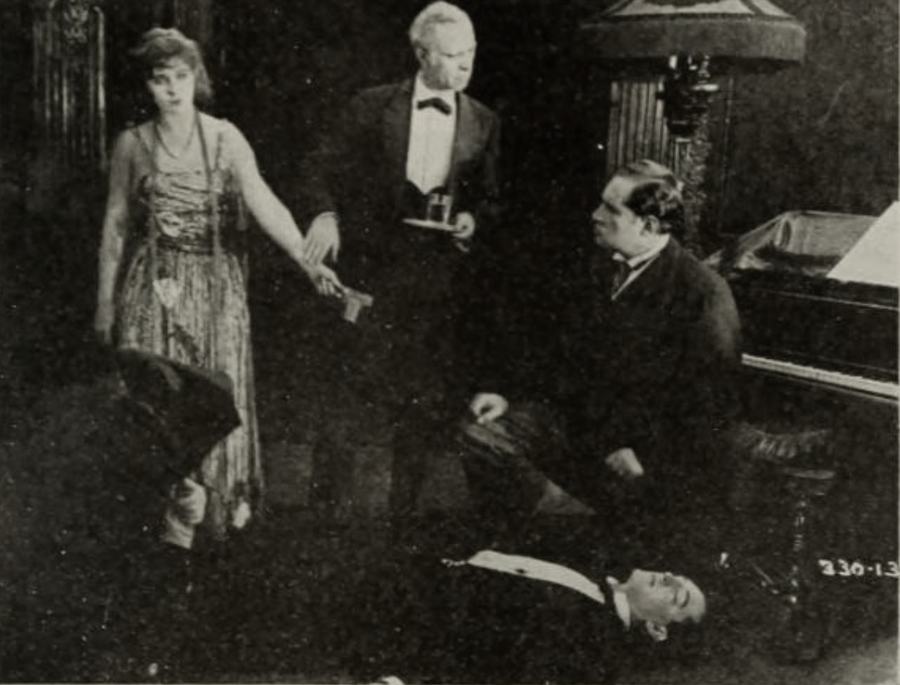
The climax of The Fear of Poverty shifts gears from social drama to a proto-noir thriller. Alfred’s decision to commit suicide is not an act of despair, but a calculated maneuver of ultimate domestic terrorism. By arranging the evidence to frame Florence for his murder, he attempts to exert control from beyond the grave. This level of psychological malice is rare for the era, reminiscent of the darker turns in La moglie di Claudio.
The framing of the suicide scene is particularly effective. The shadows lengthen, and the camera lingers on the cold, calculated movements of a man who has lost everything but his spite. It is a moment of pure cinematic villainy that transcends the usual mustache-twirling tropes. The tension is palpable, and for a moment, the film threatens to end in a tragedy as profound as Hearts of the World. The intervention of the butler—the silent observer of the household’s rot—serves as the necessary deus ex machina that restores order, but the psychological scars on Florence remain visible.
One cannot discuss this film without acknowledging the sharp pen of Agnes Christine Johnston. In an era where female screenwriters were prolific but often relegated to 'women's pictures,' Johnston consistently infused her work with a biting critique of class structures. While Little Miss Hoover might deal with social standing in a more lighthearted or patriotic manner, Johnston uses The Fear of Poverty to dismantle the myth that wealth is a panacea for suffering. Her characters are driven by primal urges—fear, spite, and the desperate need for security—making them feel remarkably human.
The narrative structure avoids the episodic nature of serials like Zudora, opting instead for a tight, character-driven arc that feels inevitable. Every scene builds toward the eventual collapse of the Griffin household. The dialogue (conveyed through intertitles) is sparse but impactful, focusing on the emotional weight of the words rather than mere exposition. This is a film that understands the power of the unspoken, much like the atmospheric travelogues such as The English Lake District, though applied here to the internal landscape of the human heart.
Technically, the film reflects the peak of Thanhouser’s production values. The sets are lavish, designed to overwhelm the viewer just as they overwhelm Florence. The costumes are intricate symbols of her imprisonment. When Florence is with Durland, the lighting is softer, the compositions more open, suggesting a freedom that the Griffin estate lacks. This visual storytelling is far more sophisticated than the documentary-style capture of Madero al sur del país or the rigid staging of The Colonel.
Florence La Badie delivers a performance of remarkable restraint. In an era often characterized by histrionic gestures, La Badie uses her eyes to convey the mounting dread of her situation. Her transition from the dutiful, sheltered daughter to the embittered wife, and finally to the exonerated woman, is handled with a subtlety that rivals modern acting standards. She doesn't need the frantic energy of Sleepy Sam, the Sleuth or the broad strokes of By Hook or Crook to make us feel her plight.
The Fear of Poverty is a haunting reminder that the ghosts of our past are rarely exorcised by the presence of gold. It is a film that challenges the viewer to look beyond the surface of prosperity and recognize the rot that can settle in when fear is the foundation of a life. While it shares the grand scale of The Battles of a Nation in its thematic ambition, its true power lies in its intimate, devastating look at the domestic sphere.
Ultimately, the film offers a glimmer of hope. Florence’s return to Durland is not just a romantic resolution; it is a reclamation of her own identity. She chooses a life of potential struggle over a life of certain misery, breaking the cycle of fear that her mother initiated. It is a bold conclusion for 1916, suggesting that the only way to truly escape the fear of poverty is to value something more than wealth itself. For any cinephile interested in the evolution of social drama, this film is an essential, if harrowing, watch. It remains a poignant critique of the human tendency to build walls out of currency, only to find ourselves trapped inside them.
IMDb 5.7
1926
Community
Log in to comment.