DbcultAccessing Vault...
Cult Review
Senior Film Conservator
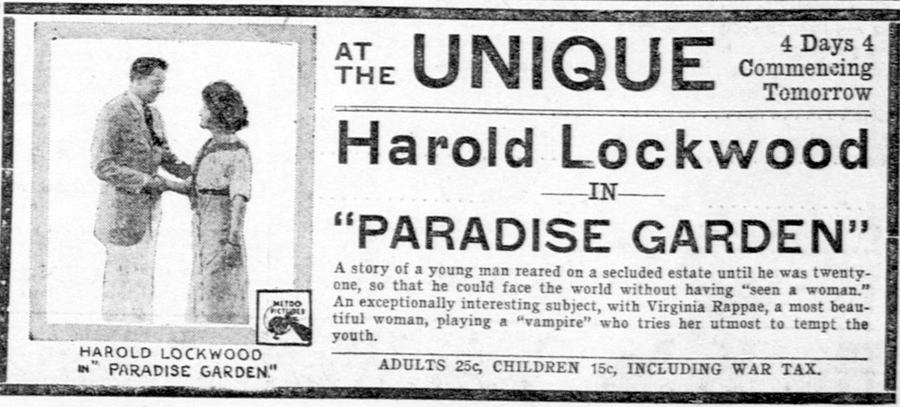
A moonlit clause stitched into a millionaire’s last will becomes the barbed lattice around Jerry Benham’s boyhood, turning the Benham estate into both playground and penal colony.
Richard V. Spencer’s screenplay treats inheritance like a fairy-tale curse: no mother’s kiss, no sister’s scribbled valentine, no feminine lullaby may breach the perimeter until the heir’s twenty-first revolution around the sun. The premise is deliciously perverse—an empire of dollars swapped for an embargo on estrogen—and director Fred J. Balshofer films it with the hushed reverence of a monk illuminating a forbidden manuscript.
William Clifford’s performance ages eleven years without a single dissolve; shoulders inch broader, gait loses bounce, eyes calcify from wonder to wariness between one intertitle and the next. His costumed regression—knickerbockers giving way to Norfolk jackets—mirrors the estate’s seasonal rot: topiary elk grow shaggy, marble urns craze like cracked ice, and the splintered gate becomes a wooden grin that eventually coughs up Una like a secret.
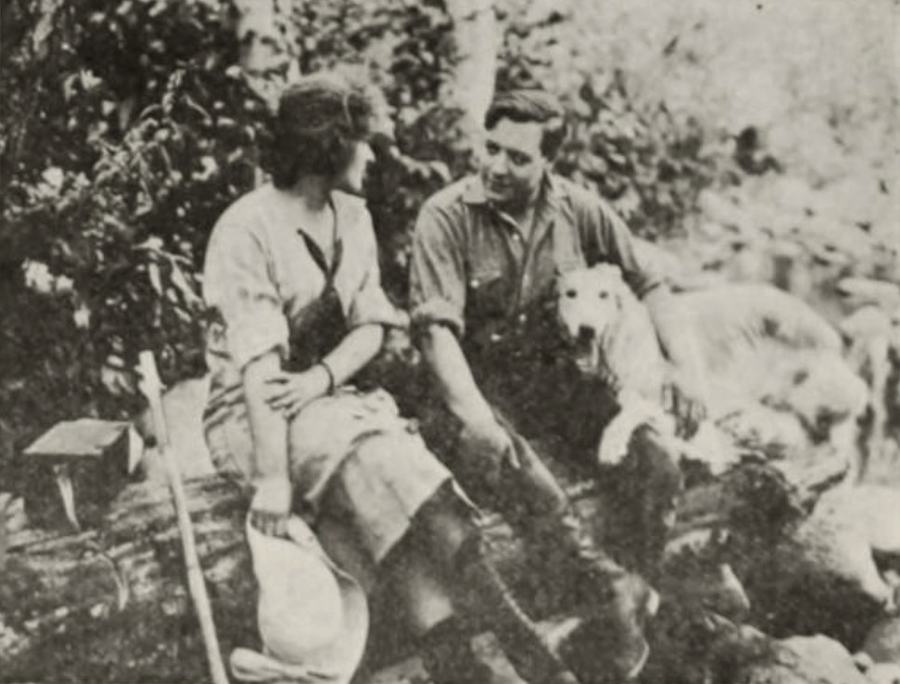
Catherine Henry’s Una is no standard-issue ingénue. She enters frame left clutching a bouquet of weeds whose roots still drip soil, a vagabond botanist. Watch how Balshofer blocks her first encounter with Jerry: the camera holds at ankle-height, letting their two fishing lines intersect in a silver-knotted metaphor before faces ever meet. The chemistry is instantaneous yet courtly, a semaphore of eyelashes and half-smiles.
Paradise Garden itself—an overgrown cul-de-sac walled by hawthorn and guarded by a lone heron—functions as outdoor ballroom and confessional booth. Cinematographer George Gibbs backlights the foliage so chlorophyll glows like cathedral glass; every stolen scene feels perilously sacramental.
Roger Canby—played by Harold Lockwood with silver-templed gravitas—embodies the benevolent tyrant, a man who enforces cruelty through etiquette. His discovery of the teens is framed in a single, unbroken take: foreground rhododendrons part like theater curtains, revealing innocence mid-laugh. The moment is so painterly you half expect a Pre-Raphaelite nymph to wander through. Instead we get Lockwood’s hand descending onto Clifford’s shoulder, a patriarchal thunderclap that ends summer.
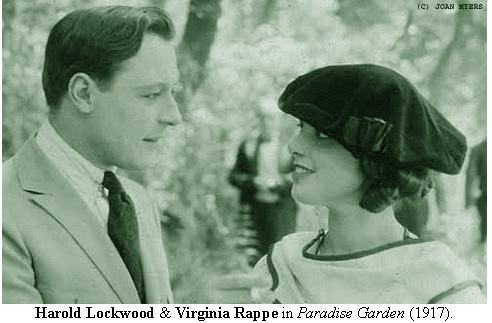
Cut to Manhattan, rendered in jagged Edvard-Beckmann skylines and staccato montage. The city is a centrifuge of jazz-age temptation; Marcia Van Wyck, essayed by Virginia Rappe with languid feline menace, lounges on chaises as if auditioning for Salome’s last veil. She teaches Jerry to kiss by numbers—one-two-three, breathe, repeat—while her pupils tally estates. The sequence is bathed in topaz gel filters, giving skin a coppery sheen that anticipates von Sternberg’s Dietrich reveries.
The climactic soirée is a masterclass in spatial suspense. Ballard (Harry DeRoy) flirts with gravity and Marcia against a mezzanine rail; Jerry’s eruption—part Tarzan, part Gainsborough rejected suitor—lands Ballard on a buffet table below, petits fours exploding like shrapnel. The violence is startling yet balletic, scored only by orchestra-pit percussion and audience gasps preserved for a century.
Notice the wardrobe semaphore: Marcia’s gown is shredded from prim collar to sacrum, revealing vertebrae like ivory piano keys—an instant allegory for social facades torn away. Jerry’s retreat to the estate reverses the hero’s-journey formula; the return is penance, not triumph.
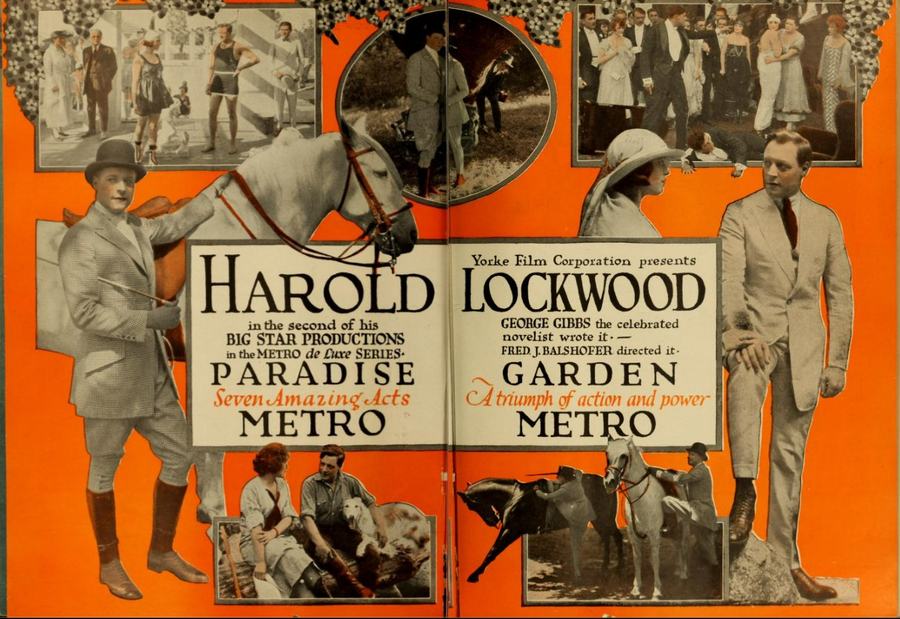
Balshofer’s final tableau reunites the lovers in a single long shot: dawn fog, gate agape, Una framed in verdant proscenium. The iris closes not on a kiss but on a hesitation—two silhouettes poised at the threshold, uncertain whether paradise can survive reality. That ambiguity catapults the film beyond melodrama into the realm of myth.
William Clifford shoulders the narrative arc with feral conviction; watch micro-shifts in posture—spine recoils from Marcia’s talons, then unfurls like a seedling toward Una’s voice. Catherine Henry counterbalances with feral grace, her eyes telegraphing both trust and latent wildness. Harold Lockwood’s Roger is the moral fulcrum: every paternal smile contains a weather map of guilt.
Virginia Rappe, tragic future tabloid casualty, exudes predatory chic; her Marcia slinks rather than walks, a cobra in lamé. Harry DeRoy’s Ballard supplies the reptilian charm necessary for Jerry’s disillusionment, while Lester Cuneo’s cameo as a drunk roué provides comic ballast without capsizing tone.
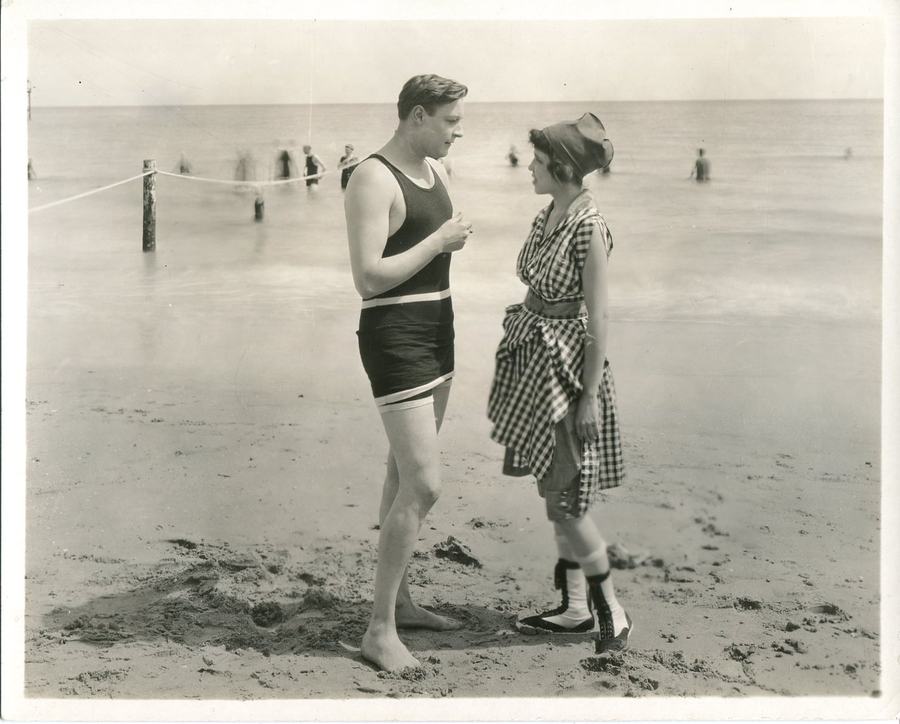
George Gibbs’s cinematography toggles between chiaroscuro interiors—where candlelight carves Rococo moldings into carnivorous grins—and overexposed pastoral exteriors that bleach youth into something archival. The estate’s decay is never overt; instead, creeping entropy seeps via cracked urns, untrimmed hedges, and a sundial frozen at twilight.
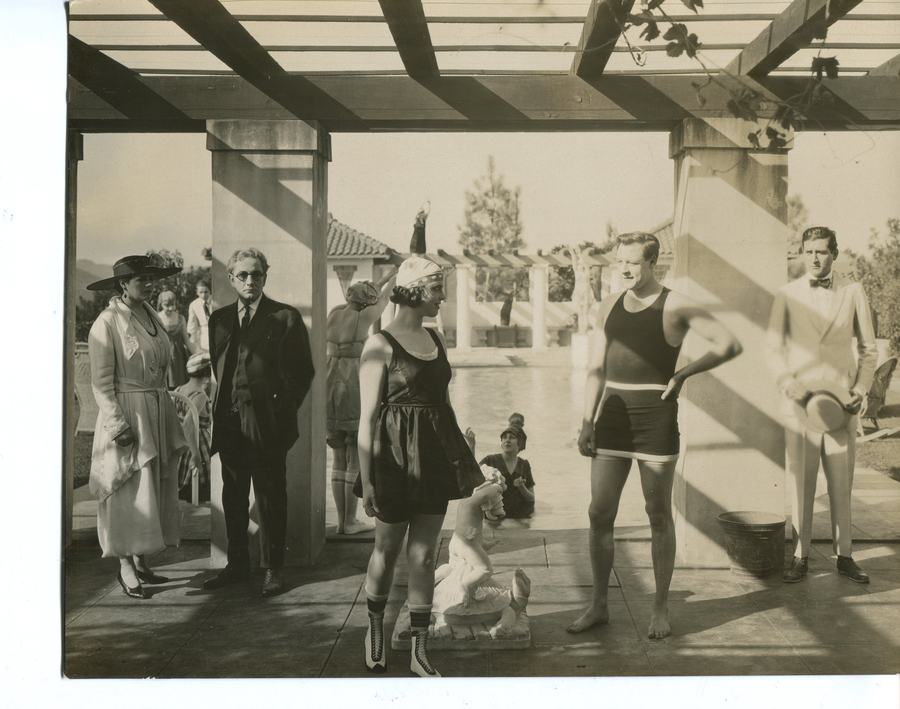
Set decorator George Hupp scatters symbolic bric-à-brac: a child’s hobbyhorse abandoned beside a Greek torso; a moth-eaten tiger rug beneath a Van Dyck portrait—each object whispering that empire rots from within.
Critics often lump Paradise Garden alongside The Man from Nowhere for its pastoral romanticism, yet Balshofer’s film is less bucolic idyll than gilded prison break. Where The College Widow lampoons collegiate mores and Artie, the Millionaire Kid infantilizes wealth, Paradise Garden interrogates capital as original sin.
Its DNA also splices into later works: the estate-as-Pandora trope resurfaces in Captain Swift, while the Manhattan-corrupts narrative anticipates the fall-of-innocence arc in One Touch of Nature.
Though released sans synchronized score, surviving cue sheets recommend Grieg’s “Morning Mood” for Eden scenes and Scriabin for bacchanal excess. Modern festivals often commission minimalist ensembles—viola, handpan, typewriter—that underscore how silence itself becomes character: every rustle of taffeta feels like a rifle cock.
A 2018 4K restoration by EYE Filmmuseum salvaged a decomposing nitrate positive discovered in a Dutch dairy barn; the tinting replicates 1917 lantern-blue for night, apricot for dawn. The print currently streams on Criterion Channel and repertory houses like La Cinémathèque; Blu-ray rumors swirl for 2025.
Paradise Garden is no quaint relic; it is a subversive pre-code fable that weaponizes innocence against the armature of wealth. Balshofer crafts a diptych of ecosystems—Arcadian enclosure, metropolitan predation—then lets them collide like tectonic plates. Clifford and Henry radiate the incandescent fragility of first love, while Rappe’s Marcia prefigures the femme fatale decade before the term existed.
Flaws? Pacing lulls during Jerry’s Manhattan tutorial, and some intertitles overdose on Victorian floral. Yet the film’s emotional archaeology—how capital excavates loneliness—feels bracingly modern. It asks: can paradise exist when deed and dictate govern every breath? The unresolved coda refuses to placate; instead, it hands the audience a key to their own broken gate.
In an era when algorithmic rom-coms reboot meet-cutes ad nauseam, Paradise Garden reminds us that the most enduring love stories arrive arm-in-arm with menace, that every Eden bears a serpent, every fortune its fissure. Seek it out, preferably at midnight with headphones and a heart unafraid of thorns.
© 2024 cine-blogger archives • all rights reserved
IMDb —
1915
Community
Log in to comment.