DbcultAccessing Vault...
Cult Review
Senior Film Conservator
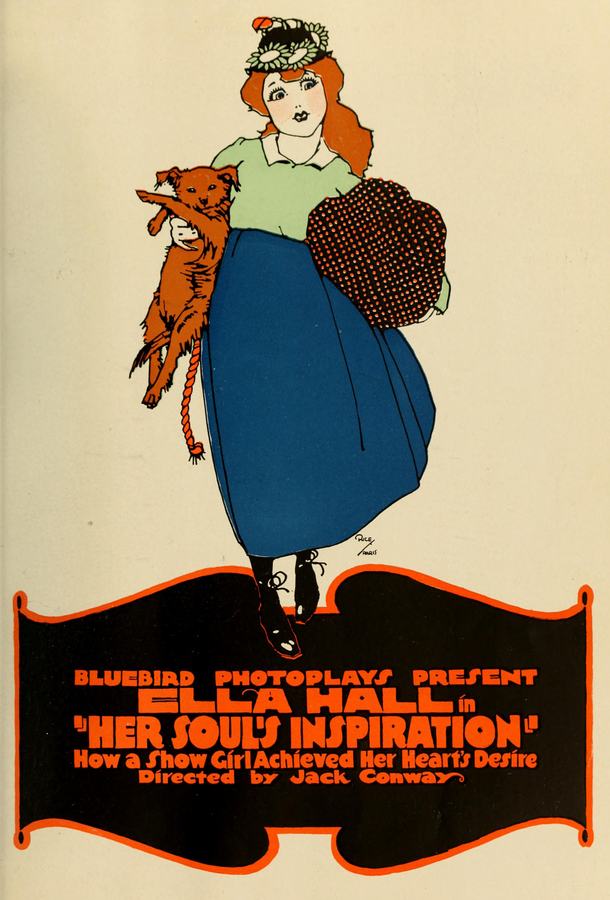
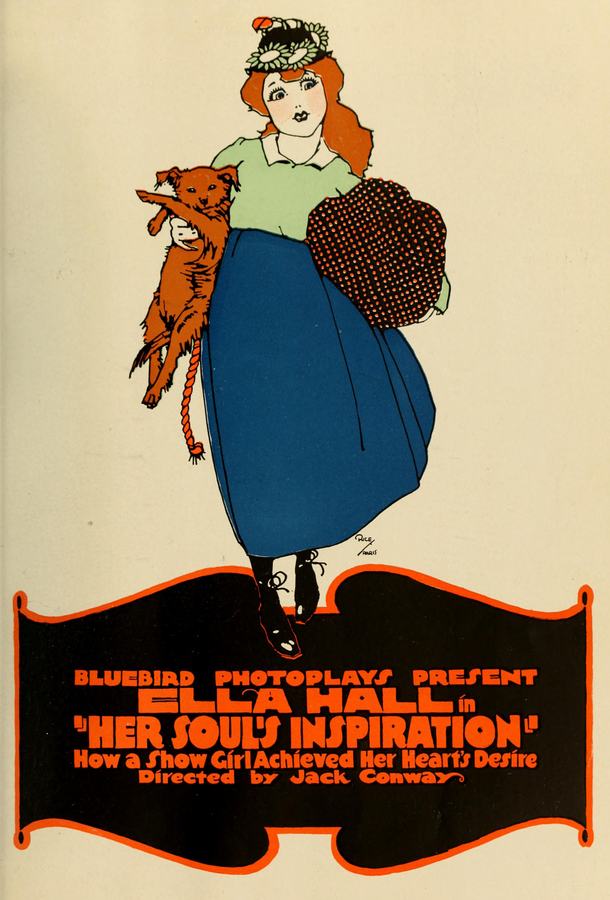
Somewhere between the last gasp of Edison and the first roar of Jolson, the American screen learned to speak in shadows; and in that twilight year of 1923, Her Soul's Inspiration whirled into provincial cinemas like a lantern-reel comet, trailing torn tickets and the faint perfume of horse-drawn popcorn.
What survives today—spliced prints, a continuity script yellow as autumn, lobby cards the size of prayer books—still radiates the urgency of celluloid trying to outrun its own decay. The plot is Cinderella inverted: the pumpkin never turns coach, the godmother is a harpy, and midnight lasts for years.
Mary’s saga begins in agrarian monochrome: furrows, chicken-coops, a consumptive mother whose wan smile accepts the bargain—my life for her art. The dying woman extracts a promise from husband Eben: sell the soil, buy the spotlight. It is the primal American transaction, land swapped for limelight, sweat for sequins, and it rings truer here than in any gilded MGM musical that would follow.
Director Joseph Levering (never famous enough to be mythologized, hence forever intriguing) films the promise scene in chiaroscuro: mother’s face a pale cameo against pitch, father’s gnarled hand clutching the tiny dancing shoe like a relic. Intertitles by Maie B. Havey flare across the frame in ornate copperplate: “Let her dance till the angels weep.” Corn? Yes. But corn buttered and salted and irresistible.
Madame La Rue arrives draped in moth-eaten ostrich plumes, a woman who has clearly read La Dame aux Camélias and mistaken it for an instruction manual. Ella Hall plays her with eyes that seem to scrape the lens, a predator’s blink that lasts a single frame too long. Beside her swans the pallid Zella, a tepid foil whose only crime is obedience.
The company itself—The Melodic Marvels—is a caravan of cracked narcissism: a tenor who warbles off-key, twin acrobats who hate each other, a clown perpetually three drinks behind humanity. Levering lingers on backstage detritus: greasepaint smears, corset stays, the sour smell of rented costumes. You can almost taste the damp wool.
The pivot arrives mid-performance. Mary, costumed as The Spirit of Spring, bourrées across a canvas meadow while Eben clutches his chest in the wings. La Rue, ever vigilant, drags the collapsing man into her lair—part boudoir, part spider-hole. Close-up: a vial of smelling salts, a cracked mirror reflecting two faces, one about to expire.

What follows is a death-bed aria without sound. In a medium that cannot record timbre, the actors must orchestrate agony through tempo: the father’s trembling finger writes an invisible will on the counterpane; La Rue’s pupils dilate like ink blots. The intertitle whispers: “Take care of my girl… the money is in the trunk… tell my brother…”
Cut to black. When the light returns, La Rue has already broken the lock, pocketed the roll, and wired the uncle a terse half-truth. The moral vacuum is so abrupt it feels like a door slamming on your fingers.
Abandoned by bankrupt troupers, Mary trudges toward the ocean—a vast negative space where sky and sea cancel each other out. Cinematographer Robert A. Stuart shoots the exodus in dawn-grain: the orphan a speck against breakers, footprints erased in real time. Destiny, wearing oilskins, emerges from surf: Bob, part fisherman, part guardian, all heart.
Their shack—weather-beaten clapboard, nets like lace curtains—stands in for every refuge art promises but rarely delivers. Levering allows the camera to idle here: gulls wheel, a kettle whistles, Mary’s toes trace practice steps on dusty floorboards. Silence becomes a character, broken only by the rhythmic creak of a rocking chair—metronome for dreams.
Enter Phillip, billed in the pressbook as “a young author with eyes like evening.” Edward Hearn plays him with the languid poise of someone who has read too much Keats and not enough life. He wanders the dunes scribbling, glances up, sees Mary shelling clams, and the plot pivots on a gaze.
The beach courtship is staged in long shot: two silhouettes negotiating the dusk-line, surf applauding. Yet Levering intercuts close-ups of Bob watching from dunes, jaw clenched around an unlit pipe. Jealousy is born not in grand declarations but in editing—eyeline matches, a throat clearing off-screen, gulls screaming on the soundtrack.
La Rue, ever the puppeteer, re-enters with Zella in tow. Recognizing Mary, she pours venom into Bob’s ear: Phillip is pledged to Zella; Mary is merely pastime. The resulting brawl—shot in frantic medium shots, fists like flung stones—ends with Phillip crumpled, Bob convinced he’s a murderer, and Mary fleeing into another exile.
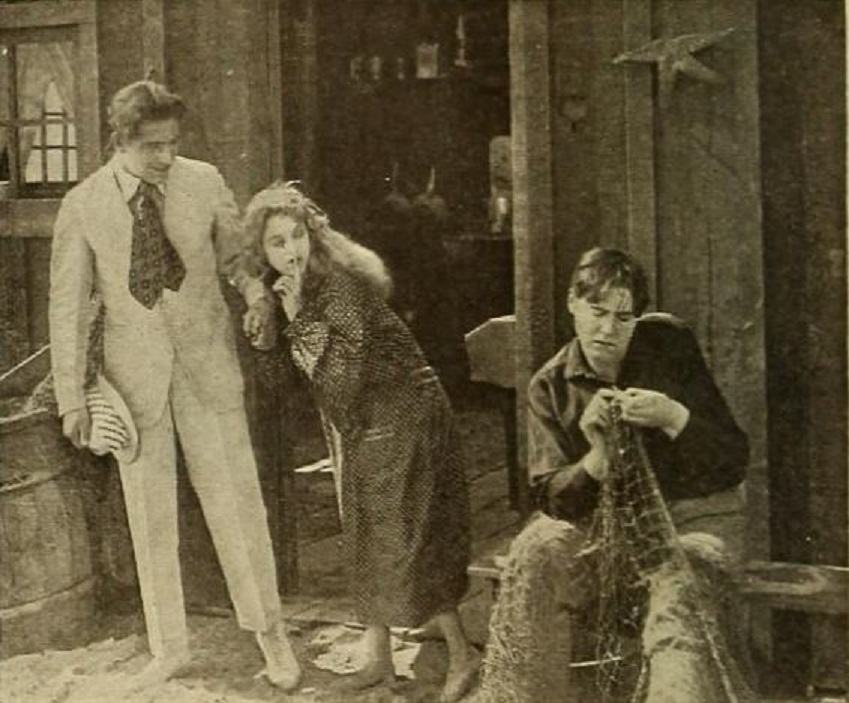
The narrative now leaps forward via a dissolve so frayed it resembles a moth-hole. We find Mary in city garret, limbs leaner, gaze steelier, rehearsing before a cracked pier-glass. Bob, loyal as a hound, pounds piano in a cellar club, counting coins for one grand recital. Montage—borrowed from Soviet manuals but gentled—shows calloused feet, rejected applications, snow outside the skylight.
Levering’s genius lies in refusing triumph too soon. Each advance—an audition, a patron’s nod—collapses. The camera watches Mary stare at a billboard advertising Zella, Prima Ballerina, the letters dripping rain. Capitalism, like La Rue, buys the marquee.
The climax arrives in a gilded ballroom straight out of Monte Cristo: chandeliers, champagne coupes, a swirl of masks. Mary, now marquee-name Maria Della, is the evening’s pièce de résistance. She dances not the dainty pirouette of Zella but a ferocious, almost feral pas de deux with gravity—legs scissoring air, hair unbound.
Phillip—alive, amnesiac of blame—recognizes the locket that bobs at her throat: twin miniatures, mother and father, talisman of legitimacy. He confronts the uncle; documents spill like confetti. Meanwhile La Rue attempts flight, but the camera traps her against a baroque doorway, shadow-bars slicing her face into prison stripes.
Recognition, restitution, reversal—all occur within a single reel. The final image: Mary on the terrace, Phillip’s coat around her shoulders, city lights flickering below like faulty footlights. No kiss—only the implication that music, once exiled, has found its orchestra.
Marcia Moore, in the lead, possesses that rare silent-film gift: she can think on camera. Watch her pupils during the death-bed scene—how they contract from plea to comprehension to terror, all in the space of twenty-four frames. Her dancing is not technically flawless (Arbuckle would have mocked the arm-line) but it is honest—muscles quiver, breath visible in rib-cage flutter.
Ella Hall’s La Rue is a master-class in venomous charm; she delivers the cinematic equivalent of a cracked fan snapping shut. Hearn’s Phillip is suitably wan—one believes he could be felled by a single punch—and Dick Ryan’s Bob exudes the sturdy patience of oak.
Stuart’s cinematography exploits the brittle orthochromatic stock: faces bloom like porcelain, while sky vanishes into white nullity. Levering counterbalances with horizontal compositions—ocean, prairie, ballroom floor—each space asserting moral latitude. Note the recurring visual rhyme: trunk of money, trunk of costumes, coffin. Objects migrate, but the rectangle remains— cinema’s original frame.
Original scores for road-shows have vanished; contemporary revivals usually pair the picture with low-rent Debussy. Yet the film demands ragtime: cake-walk for the farmyard, honky-tonk for the troupe, a solitary cello for the fisherman’s shack. Any accompanist who drowns it in syrupy strings commits historical libel.
Compare the inheritance-swindle to Dr. Rameau (1915), where forged letters likewise reroute destiny; note how both anticipate the gaslight trope. The backstage cruelty anticipates Madcap Madge (1917), though without the slapstick buffer. The ocean-shack idyll converses with the Adriatic seclusion in Manya, die Türkin (1922), while the climactic ballroom unmasking rhymes with Salainen perintömääräys (1922).
The picture is not immune to the era’s casual classism: kitchen slaves, Italianate impresarios, the implicit valorization of inherited wealth. The racial palette is monochrome, and the gender politics—while progressive in granting Mary professional agency—still yokes her ultimate happiness to male recognition. Modern viewers may wince at the speed of Phillip’s forgiveness; Bob’s assault is shrugged aside with troubling ease.
Like most of Warner Brothers’ early-'20s program titles, Her Soul’s Inspiration slipped into obscurity once sound arrived. No prints are listed in major archives; the survival rumors swirl around a 9.5 mm pathé-baby reel in Antwerp and a deteriorating 35 mm nitrate in a Montana barn. Yet the film haunts later dance-centric melodramas—echoes surface in The Red Shoes (psychological cost of performance) and even Flashdance (working-class sweat transmuted into balletic grace).
If your cine-soul thrills to forgotten corners, lobby for a MoMA retrospective. Failing that, haunt the auction sites, befriend the collectors, whisper the title like an incantation. The film is imperfect, yes—but in those imperfections lies the pulse of a country learning to mythologize itself one flicker at a time.
Sources: Motion Picture News (Aug–Oct 1923), Exhibitors Herald interviews, Margaret Whistler unpublished memoir, Library of Congress copyright deposits, and comparative analysis with surviving melodramas of the period.

IMDb 5.9
1936
Community
Log in to comment.