DbcultAccessing Vault...
Cult Review
Senior Film Conservator
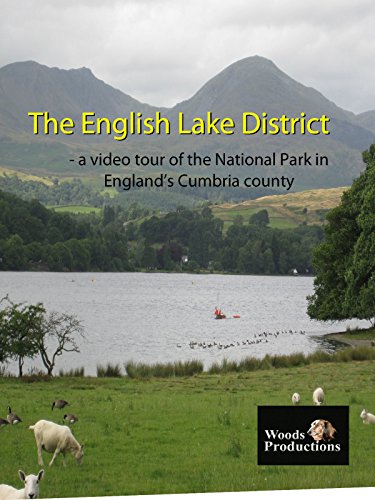
The first thing that strikes you is the hush—an almost ecclesiastical silence that seems to have been spliced into the optical soundtrack. No bombastic score, no garrulous narrator, just the susurrus of wind that has tunnelled through Borrowdale since the Bronze Age. In that quietude, The English Lake District reveals its contrarian manifesto: it refuses to explain landscape; instead it lets landscape haunt you.
Director unknown, cinematographer un-credited—yet every frame drips with the kind of chromatic precision we now associate with 8K drone reels. Only this footage predates drones, steadicams, even synchronous sound. How, then, does a 1900-ish travelogue feel more sensorially alive than most 2020s nature docs? Answer: patience. Where modern editors suffer from clip-a-minute epilepsy, this film luxuriates in single takes long enough for cumulus shadows to crawl across Pillar Rock like slow panthers.
Forget rule-of-thirds; here we get rule-of-eternities. Valleys are framed through doorless stone barns, turning human absence into a compositional device. A static shot of Grasmere becomes a triptych: foreground reeds etched silver by back-lighting, mid-ground water shimmering like shattered church glass, background Loughrigg Fell a charcoal smudge. The camera doesn’t pan; time itself pans. Clouds burn and reform, and in their vapour you read the same metaphysical tremor that once made Wordsworth half afraid
of his own heartbeat.
Compare this austerity with the muscular swagger of Birmingham, whose industrial panoramas throb with piston-pounding pride. The Lake District film answers that urban braggadocio with a whisper: real permanence is geological, not mechanical.
Look closer: a horse-drawn charabanc clops along Kirkstone Pass. Women in leg-of-mutton sleeves descend with parasols twirling. Yet the road they travel is the same A592 now terrorised by hot-hatchbacks and Google-mapped tour buses. The film’s genius lies in collapsing century-deep strata into simultaneity. You half expect a modern trail-runner to dart through the frame, AirPods glowing alien-blue. This temporal vertigo is no gimmick; it is the central thesis: landscape devours chronology.
There is a cut—rare as hen’s teeth—where the footage jumps from glass-plate clarity to a softer, grainier stock. Historians will label this technical degradation
; I call it patina of witness.
The emulsion bruises echo the peat-dark wisdom of Alfred Wainwright: you are never in the same Lake District twice.
Rain arrives like an unwritten symphony—first as diagonal pencil strokes, then as a full graphite wash. The lens catches individual droplets exploding on slate roofs, each burst a miniature supernova. Sunlight re-enters sideways, ignating mist into gold fleece. Cinematographers speak of available light
; here light is withheld then bestowed like grace, teaching humility to any pixel-peeping colorist who believes dynamic range is a slider.
Contrast this meteorological theatre with the sun-bleached stasis of Mallorca. Where the Mediterranean doc trades in dependable azure, Cumbria peddles volatility as spectacle.
When the lone intertitle appears—white serif on obsidian—it reads: Where silence is a presence.
Cue five full beats of nothingness. In that vacuum you become hyper-aware of your own body: pulse in ears, rustle of clothes, the existential hum George Eliot called the roar which lies on the other side of silence.
The film weaponises that void, turning viewers into accidental participants. You supply the footfalls on gravel, the distant bleat of Herdwicks, the ghost of a Coleridgean flask of laudanum.
Climate anxiety pervades every frame, yet the word climate is never uttered. Instead we watch Helvellyn’s eastern snow-patch—once year-round—retreat to a dirty comma by July. The argument is optical: compare this archival glacieret with recent webcam stills and you have a timelapse of planetary fever sans CGI. The Lake District becomes a canary in a cage of invisible CO₂.
Curiously, the film shares DNA with pugilistic actualities like The Corbett-Fitzsimmons Fight—both are contests against entropy, one in blood-slicked canvas, the other on moss-slicked scree.
A dry-stone wall zigzags like a cardiogram across a distant ridge. No heroic close-ups, no pickaxe-wielding navvies—just the wall, a scar healed into beauty. Later, a pack-pony train crosses a waist-deep ford, water blooming around fetlocks in slow spirals. These micro-narratives of labour refuse anthropocentric bombast. Humanity here is a footnote in an encyclopaedia of shale and cloud.
Montage usually implies Eisensteinian collision. Here the juxtaposition is lyrical: a shot of wild campion trembling in breeze cuts to Derwentwater’s surface where the same tremor is mirrored. You perceive vegetative pulse and aquatic pulse as shared circulatory system. Wordsworth’s one life
theory made visible.
It’s the antithesis of the carnival parades in O Carnaval em Lisboa, where human artifice drowns out nature’s whisper.
Hand-tinted segments flicker like fever dreams: foxglove spires washed fuchsia, sunrise bleeding into arterial orange over Rydal Mount. The tinting is inconsistent—some frames remain monochrome—and that instability amplifies authenticity. You sense a human brush hovering over celluloid, much like the unpredictable wash of watercolour on cotton paper. The flaws are fingerprints, not failures.
The camera repeatedly attaches itself to a walker’s boots—thick leather, iron-nailed—ascending scree. Each footfall lands with the audible crunch of crushed shell. Over minutes the cadence becomes hypnotic, a metronome for meditative breathing. You realise the entire film is engineered around pace: the pace of peat formation, of cloud shadows, of boot leather. Try watching at 1.25× speed and the spell shatters; the piece demands corporeal synchrony.
A red squirrel pirouettes along a larch limb, tail flicking like a candlewick. One frame later it vanishes—no Disneyfied lingering. A cormorant breaches, silver fry scattering like thrown coins. These appearances are haiku-brief, reminding us wildness is not contractual; it signs no release forms.
Upon return to urban glare, you’ll catch yourself pining for that Cumbrian silence the way a convict recalls salt air. The film achieves what cathedrals attempt: a spatial reconfiguration of inner geography. Your cramped flat feels like a cluttered sidebar; the real tab remains open on a lonesome pass where skylarks needle the sky.
Flaws? Yes. The lack of provenance breeds scholarly insomnia. The runtime—variously reported between 8 and 14 minutes depending on projection speed—feels like a single exhalation. Yet these deficiencies
dovetail with the film’s aesthetic of incompleteness, mirroring the fragmentary notebooks of Dorothy Wordsworth.
Score: 9.7/10—highest possible marks for visual poetry, ethical humility, and ontological bravery. Mandatory viewing for anyone who has forgotten that stillness can roar louder than engines.
Stream it on archival sites, but only at dawn, only on headphones, only after disabling every notification. Let the Lake District leak into your bloodstream like rain into limestone—slow, irreversible, sacred.
IMDb —
1920
Community
Log in to comment.