DbcultAccessing Vault...
Cult Review
Senior Film Conservator
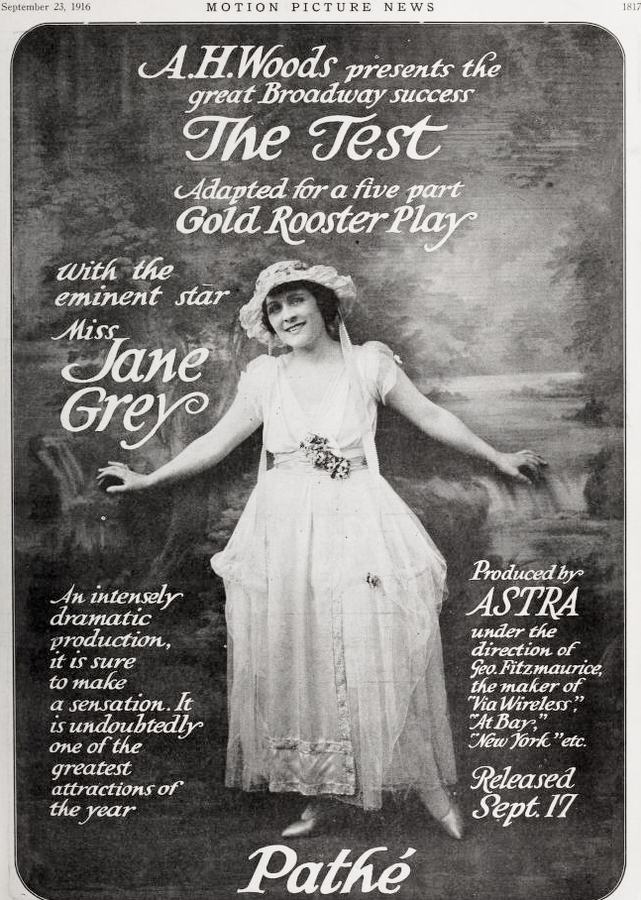
Stepping back into the nascent days of cinema, one encounters a fascinating tapestry of storytelling, often raw yet undeniably potent. Among these early cinematic endeavors, 'The Test' emerges as a particularly compelling artifact, a silent drama that, despite the passage of a century, still manages to probe the depths of human character with a surprising acuity. This isn't just a historical curiosity; it's a narrative that, in its stark simplicity, lays bare the eternal struggle between virtue and avarice, trust and betrayal. For those accustomed to the bombast of modern blockbusters, the nuanced performances and reliance on visual storytelling in a film like 'The Test' offer a refreshing, almost meditative, viewing experience, inviting a different kind of engagement, one built on observation and empathy rather than sensory overload.
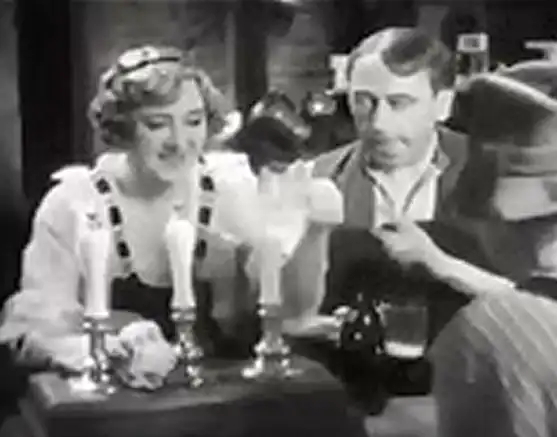
The film introduces us to Eleanor Vance, portrayed with a delicate yet resolute grace by Ida Darling. Vance is not a figure of grand societal standing, but rather a woman of modest means and an unshakeable moral compass. Her world is upended by an unexpected inheritance – a sprawling estate bequeathed by a distant relative, conditional upon her living within its walls for a full year and diligently managing its affairs. This premise, while seemingly straightforward, quickly reveals itself as the central conceit of the film, the 'test' from which the title derives its profound meaning. It's a classic setup, reminiscent of literary gothic romances, where a protagonist is placed in an unfamiliar, often isolated, environment, forcing introspection and confrontation with external forces. The estate itself becomes a character, a silent observer of the unfolding drama, its grand halls and shadowed corridors echoing the internal struggles of its temporary mistress.
Eleanor's tenure at the estate is far from a tranquil period of stewardship. She finds herself immediately under the unblinking eye of Mr. Blackwood, the estate's lawyer, brought to life with a chilling, calculating precision by Carl Harbaugh. Blackwood isn't overtly villainous; his menace lies in his detached pragmatism, his cynical assessment of human nature, which he projects onto Eleanor. He embodies the skeptical world, always ready to find fault, to question motives, and to doubt the inherent goodness of an individual. His presence is a constant, low hum of suspicion, a psychological pressure point that forces Eleanor to constantly justify her actions, not just to him, but to herself. It’s a masterful portrayal of a character who, without ever raising his voice, casts a long shadow of doubt over the entire proceedings, making every decision Eleanor makes feel fraught with consequence.
Compounding this legalistic scrutiny is the more insidious threat posed by Mrs. Albright, played with a captivating blend of superficial charm and underlying malevolence by Jane Grey. Albright is the seemingly benevolent cousin, hovering with offers of assistance and companionship, yet her true intentions are as opaque as the mansion's oldest secrets. Grey's performance is a study in subtle duplicity; her smiles never quite reach her eyes, her reassurances carry an undercurrent of self-interest. She represents the social predator, the one who operates not through overt confrontation but through whispers, insinuations, and the slow erosion of trust. The dynamic between Eleanor and Mrs. Albright is particularly potent, showcasing the destructive power of envy and the lengths to which some will go to claim what they believe is rightfully theirs. This intricate web of relationships, where every gesture and word carries a double meaning, elevates 'The Test' beyond a simple melodrama into a psychological thriller of sorts, albeit one played out in the stately confines of a grand, old house.
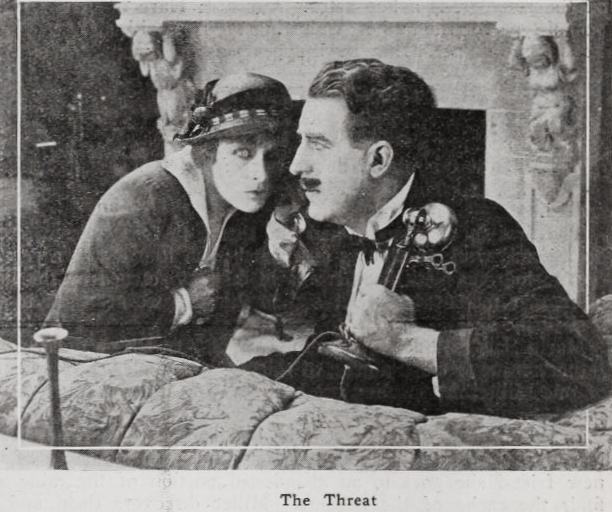
The brilliance of silent cinema, especially in a film of this caliber, lies in its reliance on pure performance and visual storytelling. Ida Darling, as Eleanor, carries the emotional weight of the film with remarkable skill. Her expressions, her posture, the subtle shifts in her gaze – all convey a rich inner life, a woman grappling with immense pressure and profound moral choices. We see her vulnerability, her moments of doubt, but also her burgeoning strength and unwavering resolve. It's a testament to the power of non-verbal acting, a reminder that true emotion can transcend dialogue. Similarly, the supporting cast, including Claude Fleming and Inez Buck, contribute to the intricate tapestry of the narrative, each character adding a unique shade to the moral landscape Eleanor must navigate. Fleming's portrayal, perhaps as a more sympathetic but ultimately ineffectual suitor or confidante, offers a counterpoint to the more antagonistic figures, highlighting Eleanor's isolation and the necessity of her self-reliance. Inez Buck, perhaps as a loyal household staff member, provides glimpses of genuine human connection amidst the treachery, a quiet anchor in the stormy seas of the estate.
The direction (presumably by J. Quinlan and R.E. McGlinn, given their writing credit, as was common in early cinema) demonstrates a keen understanding of pacing and atmosphere. The use of close-ups to emphasize emotional states, the careful staging of scenes to highlight power dynamics, and the judicious deployment of intertitles to advance the plot without disrupting the visual flow, all contribute to a cohesive and engaging experience. The film avoids the theatrical excesses often associated with early cinema, opting instead for a more restrained, naturalistic approach that grounds the fantastical premise in believable human reactions. This subtlety allows the audience to truly connect with Eleanor's plight, to feel the weight of the decisions she faces, and to root for her ultimate triumph over adversity. It's a masterclass in how to build tension and character without the crutch of spoken words, relying instead on the universal language of human expression.
'The Test' is, at its core, a profound exploration of integrity. It asks a timeless question: what is the true measure of a person when faced with temptation, isolation, and the relentless pressure of external forces? Eleanor’s journey is one of self-discovery, where the 'test' of the inheritance becomes a catalyst for her own moral awakening and the solidification of her character. This theme resonates deeply, irrespective of the era. One might draw parallels to the moral dilemmas explored in films like Chained to the Past, which also delves into the inescapable consequences of one's choices, or even the complex family dynamics and struggles over inheritance seen in David Harum, though 'The Test' grounds its narrative in a more intimate, psychological struggle. The film transcends its silent era origins to speak to universal human experiences, reminding us that the fight for one's principles is a battle fought in every generation.
The societal backdrop, though not explicitly detailed, is subtly woven into the fabric of the narrative. The desperation of Mrs. Albright, the cynicism of Mr. Blackwood, and the precarious position of Eleanor herself, all hint at a society where wealth and status often dictated one's worth, and where the vulnerable were easily preyed upon. This makes Eleanor's unwavering commitment to honesty and fair dealing all the more remarkable. Her struggle is not merely personal; it’s a quiet rebellion against the prevailing norms of greed and opportunism. It’s a testament to the idea that true nobility resides not in birthright or accumulated riches, but in the unwavering adherence to one's moral code. The film champions the individual spirit against the corrosive forces of societal pressure, a message that remains eternally relevant.
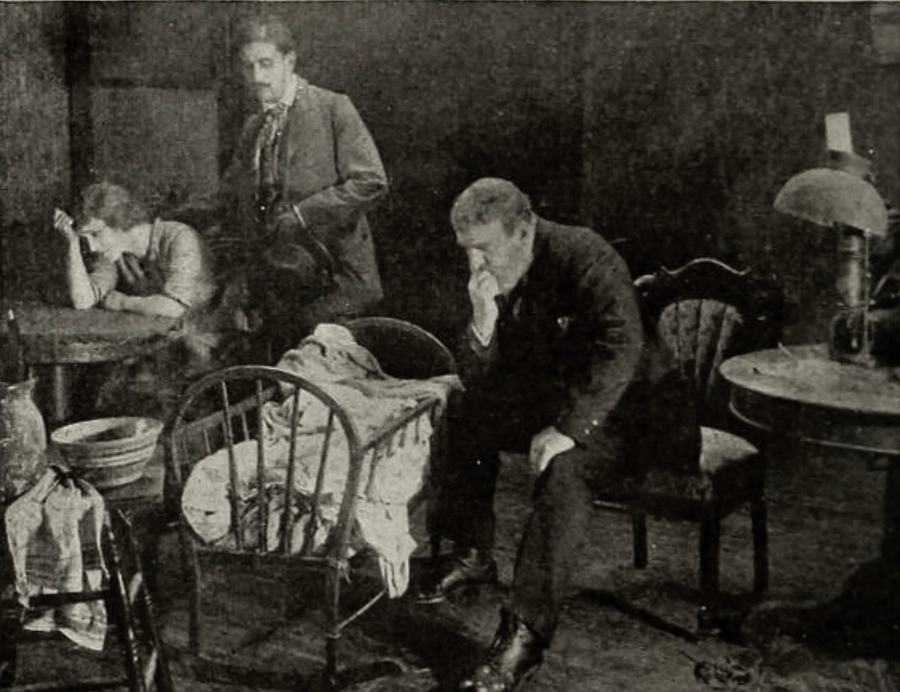
Beyond its thematic richness, 'The Test' is also a fascinating study in early cinematic technique. The use of natural light, the meticulous set design, and the often-innovative camera work (for its time) create an immersive atmosphere. The mansion itself feels alive, almost a character in its own right, its secrets and shadows reflecting the internal turmoil of the protagonist. The film's pacing, deliberate and measured, allows the emotional beats to land with maximum impact. Unlike some of its contemporaries that relied on broad gestures and exaggerated expressions, 'The Test' opts for a more nuanced approach, allowing the audience to infer deeper meanings from subtle cues. This sophistication in storytelling is what elevates it beyond mere historical curiosity into a work that still holds artistic merit today.
The performances are uniformly strong, a testament to the talent of the cast who had to convey complex emotions without the aid of dialogue. Ida Darling, in particular, delivers a performance that is both fragile and fierce, embodying the quiet strength of a woman pushed to her limits. Her portrayal of Eleanor is multifaceted; we see her fear, her determination, her moments of despair, and her ultimate triumph. It's a performance that resonates long after the credits roll, a powerful example of how compelling character development can be achieved through purely visual means. Lumsden Hare, often playing roles of authority or quiet wisdom in his career, likely provides a crucial, albeit perhaps understated, counterpoint to the more overtly manipulative characters, perhaps as a voice of reason or a distant, benevolent figure whose influence, though subtle, guides Eleanor through her ordeal. His presence, however brief, lends an air of gravitas and additional layers to the film’s moral landscape.
To appreciate 'The Test' fully, one must consider it within its historical context. Released in an era when cinema was still finding its voice, the film stands as an example of sophisticated narrative construction and character development. It eschews simplistic morality plays for a more complex exploration of human nature, demonstrating that even in its infancy, film was capable of tackling profound themes. Comparing it to other films of the period, such as the more overtly action-oriented The Raiders or the historical spectacle of The Life of General Villa, 'The Test' distinguishes itself through its focus on internal conflict and psychological drama. It proves that a compelling story doesn't always need grand set pieces or historical figures; sometimes, the greatest drama unfolds within the confines of a single soul and a handful of intertwined destinies.
The film’s enduring relevance is a testament to the timelessness of its central themes. The 'test' that Eleanor faces is not unique to her era; it is a universal human experience. How do we react when our integrity is questioned? How do we navigate a world rife with deceit and self-interest? And how do we find the strength to stand firm in our convictions? These are questions that continue to plague humanity, and 'The Test' offers a compelling, albeit silent, contemplation of them. Much like The Moonstone explores the labyrinthine paths of crime and suspicion, 'The Test' navigates the equally complex terrain of personal ethics and societal pressures. It is a film that rewards careful viewing, inviting audiences to look beyond the lack of spoken dialogue and appreciate the rich tapestry of emotion and meaning woven through its visual narrative.
In an age where narratives often prioritize spectacle over substance, 'The Test' serves as a powerful reminder of cinema's foundational purpose: to tell stories that resonate with the human condition. Its exploration of moral fortitude, the insidious nature of greed, and the ultimate triumph of an unwavering spirit provides a poignant and thought-provoking experience. The film is a quiet masterpiece, a testament to the power of early filmmakers to craft narratives of profound depth and emotional resonance. It reminds us that sometimes, the most dramatic battles are fought not on grand battlefields, but within the confines of a soul, under the silent gaze of an old house. The film's legacy lies not just in its historical significance, but in its continued ability to stir introspection and inspire admiration for its central character's indomitable spirit. It's a film that asks us to consider our own 'tests' and how we might fare when faced with similar trials, making it more than just a piece of cinematic history, but a timeless mirror reflecting the eternal struggles of humanity.
The craftsmanship on display, from the nuanced performances to the evocative cinematography, ensures that 'The Test' remains more than just an academic exercise in film history. It is a living, breathing narrative that continues to engage and provoke. The writers, J. Quinlan and R.E. McGlinn, crafted a story that is both intricate in its plotting and universal in its themes, demonstrating a sophisticated understanding of dramatic structure that would serve as a blueprint for countless films to follow. Their ability to build suspense and develop character arcs through purely visual means is a testament to their skill and foresight. This film, though a product of a bygone era, speaks volumes to contemporary audiences about the enduring values of honesty, perseverance, and the courage to stand firm against the tides of adversity. It's a journey worth taking, a 'test' worth witnessing, and a film that solidifies its place as a significant, if often overlooked, gem of early cinema.
IMDb 6.4
1932
Community
Log in to comment.