DbcultAccessing Vault...
Cult Review
Senior Film Conservator
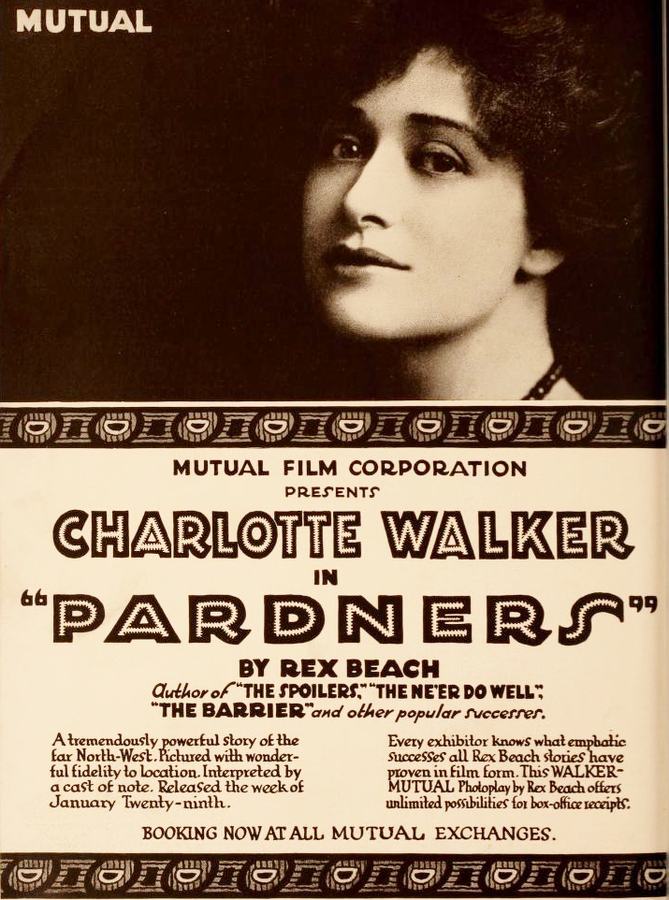
The early 20th century, a crucible of cinematic experimentation, often found its most potent narratives in the grand, sweeping sagas of human endeavour against formidable backdrops. Pardners, a compelling silent drama from 1917, plunges us headfirst into the exhilarating, yet treacherous, milieu of the Alaskan gold rush. It’s a world where the promise of untold riches beckons, but where reputation, once tarnished, can prove more elusive than any vein of gold. This film, a fascinating artifact of its era, transcends its simple plot to explore profound themes: the burgeoning power of media, the fragility of truth, and the enduring strength of human loyalty.
Our protagonist, Justus Morrow, an Englishman of discernible breeding and inherited means, embodies the adventurous spirit that drew countless souls to the frozen north. His decision to forsake the comforts of home – a brilliant actress wife and a young son – for the rugged anonymity of Caribou Creek is a testament to the era's pervasive dream of self-made prosperity. Morrow's arrival in Rampart City, a quintessential boomtown teeming with prospectors, gamblers, and dance hall denizens, immediately sets the stage for a dramatic clash of cultures and moralities. The film deftly establishes his character not through verbose exposition, but through decisive action. His swift and unequivocal 'cleaning out' of the gambling establishment run by the unsavoury duo 'Single-Out' Wilmer and 'Curley' Bud is a masterstroke, instantly cementing his status as a man of principle and prowess. This pivotal act not only earns him the respect of the entire community but, more significantly, forges an unbreakable bond with 'Bill' Joyce, a miner whose quick-draw proficiency is matched only by his unwavering sense of right and wrong. Their immediate partnership forms the thematic bedrock of the entire narrative, promising a saga of mutual support in a land where trust is a currency more valuable than gold itself.
It is during the aftermath of Morrow's heroic intervention at Wilmer's gambling house that the film introduces its central antagonist, R. Alonzo Struthers, a Sunday supplement photographer whose ethical compass points firmly towards sensationalism. Struthers captures the authentic drama of Morrow's victory, but his ambition quickly outstrips his integrity. In a move that feels chillingly modern, Struthers stages additional, more 'picturesque' scenes of carousing in the dance halls, even participating in them himself. This early exploration of photographic manipulation is remarkably prescient. When Struthers proudly presents his portfolio to Morrow, our hero immediately recognizes the perilous implications, particularly the potential for his wife to misinterpret the fabricated revelry. His stern prohibition against the publication of these images underscores his acute awareness of societal judgment and the precariousness of a man's reputation, especially one tied to a respectable family. However, the vast distances and slow communication of the arctic frontier conspire against him. The film subtly highlights the nascent power of mass media, a power that, even in its infancy, could be wielded to devastating effect, shaping public perception and shattering personal lives with astonishing speed.
The narrative takes a heart-wrenching turn with the arrival of a long-delayed mail delivery, bringing with it the crushing news of a divorce suit filed by Morrow's wife in San Francisco. The audience, privy to Struthers' duplicity, understands the tragic irony: the very images Morrow had forbidden were not only published but maliciously altered, with his head superimposed onto Struthers' body in the most compromising of dance hall poses. This act of photographic forgery, a stark betrayal of the medium's supposed objectivity, serves as the film's central dramatic engine. Morrow's desperate journey back to the States, accompanied by his steadfast 'pardner' Bill Joyce, is imbued with a palpable sense of urgency and injustice. The film compellingly portrays the emotional devastation wrought by false accusations, particularly when amplified by the seemingly irrefutable 'evidence' of a photograph. In an era before Photoshop, the public's trust in the camera's veracity was near absolute, making Morrow's predicament all the more agonizing.
Upon reaching San Francisco, Morrow's accidental discovery of his wife and son performing in a vaudeville house is a moment of profound poignancy. Yet, the reunion is marred by his wife's indignant refusal to grant him an audience, her unwavering belief in the photographic 'truth' forming an impenetrable barrier. It is here that 'Bill' Joyce, the archetypal loyal companion, steps into the spotlight, transforming from a frontier enforcer into a diplomatic, albeit forceful, advocate. Joyce's character is a fascinating study in early cinematic heroism. He embodies a pragmatic, no-nonsense approach to problem-solving, perfectly suited to the melodramatic conventions of the time. His invasion of Mrs. Morrow's apartments by 'ruse,' his threats to the San Francisco police force (a delightful moment of genre-bending bravado), and his dramatic retrieval of Struthers at gunpoint are not merely plot devices; they are expressions of an unshakeable belief in his 'pardner's' innocence. This unwavering loyalty is the emotional core of the film, elevating it beyond a simple tale of mistaken identity. It speaks to the profound human need for trust and advocacy, especially when one's own voice is silenced by calumny.
As a silent film, Pardners relies heavily on visual storytelling, exaggerated gestures, and the emotional resonance of its performers. The acting, while perhaps appearing overly theatrical to modern sensibilities, was perfectly calibrated for the absence of spoken dialogue, conveying complex emotions through facial expressions and body language. Redfield Clarke, as Justus Morrow, effectively portrays the journey from confident adventurer to desperate man, his anguish palpable in the close-ups. Charlotte Walker, as Mrs. Morrow, conveys the pain of perceived betrayal and the rigidity of a woman convinced by what she believes is undeniable proof. However, it is Charles Sutton as 'Bill' Joyce who truly shines, embodying the rugged charm and moral certitude that defines the film's title. His physical presence and decisive actions drive the latter half of the narrative, providing the much-needed impetus for resolution. The film's pacing, while deliberate, builds suspense effectively, particularly during Morrow's journey back to San Francisco and Joyce's subsequent detective work. The use of intertitles is economical, providing essential dialogue and plot points without overwhelming the visual narrative.
The themes explored in Pardners remain remarkably pertinent today. The film serves as an early, almost prophetic, commentary on the power of manipulated imagery and the ease with which public perception can be distorted. In an age saturated with deepfakes and viral misinformation, the core conflict of Pardners – the camera's perceived infallibility versus the insidious nature of deceit – resonates with startling clarity. It forces us to question the veracity of what we see and to consider the ethical responsibilities of those who control the dissemination of images. The film also champions the ideal of unwavering loyalty, a timeless virtue. 'Bill' Joyce's commitment to his 'pardner' transcends mere friendship; it is a profound declaration of shared humanity and mutual trust, a beacon of hope against the machinations of treachery. This theme of steadfast partnership is echoed in other films of the era, where the bonds forged in adversity often prove more durable than fleeting romantic attachments or material wealth. While not directly comparable in plot, the enduring spirit of human connection and resilience against external forces can be seen in films like The Soul of a Child, albeit through a different lens of personal struggle.
Ultimately, Pardners culminates in a satisfying, if somewhat dramatically heightened, resolution. Joyce's forceful intervention, culminating in Struthers' coerced confession, not only vindicates Morrow but also brings Mrs. Morrow to a realization of her hasty judgment. The final scene, depicting the reunited family, is a powerful affirmation of truth's triumph over deception and the restorative power of forgiveness. The film, written by Paul Sloane, demonstrates a keen understanding of narrative structure and character motivation, even within the confines of silent cinema. It stands as a compelling example of how early filmmakers grappled with complex moral questions, using the burgeoning medium to entertain, enlighten, and provoke thought. While the dramatic conventions may seem quaint by today's standards, the underlying human drama – the struggle for truth, the pain of false accusation, and the solace of loyal companionship – remains as potent and relevant as ever. For enthusiasts of early cinema, or anyone interested in the historical evolution of media ethics, Pardners offers a rich and rewarding viewing experience, a silent echo from a time when the camera was just beginning to shape, and sometimes distort, our perception of reality.
The film's exploration of reputation, specifically how easily it can be undone by visual misinformation, is particularly striking. In a society that increasingly relies on visual evidence, Pardners serves as a powerful reminder that what we see is not always the unvarnished truth. This thematic thread runs deep, making the film a surprisingly relevant piece of historical cinema. The almost naive trust placed in the photograph by Mrs. Morrow highlights a significant cultural shift that was occurring at the time—the emergence of photography as an authoritative source of information. This trust, when betrayed, leads to profound personal consequences, underscoring the film’s cautionary message about the new media landscape. The contrast between the wild, untamed Alaskan frontier, where justice is often swift and personal, and the more 'civilized' San Francisco, where legal processes and public opinion hold sway, further enriches the narrative. Yet, it is the frontier spirit, embodied by Bill Joyce, that ultimately cuts through the legal and social complexities to restore order and truth. This juxtaposition provides a nuanced view of justice, suggesting that sometimes, direct action, guided by an unwavering moral compass, is necessary to correct a profound wrong.
The performances, particularly that of Charles Sutton as Bill Joyce, are emblematic of the era’s acting styles but carry a genuine emotional weight. Joyce isn't just a sidekick; he is the moral anchor and the active force that drives the plot towards its resolution. Without his steadfast belief and decisive actions, Morrow would likely have remained trapped in a web of deceit, his family irrevocably broken. This highlights the importance of the 'pardner' relationship, a bond forged not just in shared enterprise but in mutual trust and loyalty that transcends personal risk. It’s a compelling portrayal of friendship as a redemptive force, a theme that resonates deeply and makes the film more than just a simple melodrama. The film also offers a fascinating glimpse into the social dynamics of the early 20th century, from the adventurous spirit of the gold rush to the burgeoning vaudeville scene in urban centers. These elements combine to create a rich tapestry against which the personal drama unfolds, making Pardners a valuable historical document as well as an engaging piece of cinematic art.
In conclusion, Pardners, while a product of its time, offers a timeless narrative about the battle between truth and deception, the consequences of misinformation, and the enduring power of human connection. Its exploration of photographic manipulation feels eerily contemporary, making it a film that speaks across the decades. For those seeking to understand the foundational elements of cinematic storytelling and the evolving relationship between media and society, this silent gem provides a compelling and thought-provoking experience. It reminds us that some stories, like the loyalty between true 'pardners,' are eternal, regardless of the technological advancements that change how they are told or how easily they can be threatened by the deceitful.
IMDb 5.8
1933
Community
Log in to comment.