DbcultAccessing Vault...
Cult Review
Senior Film Conservator
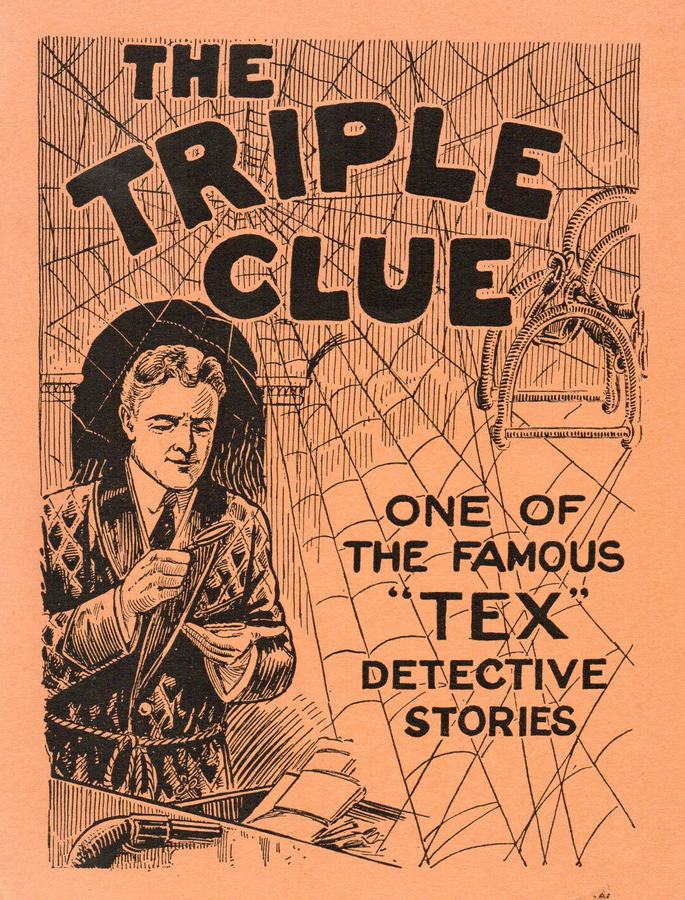
The first time I projected The Triple Clue—a 35-mm dupe so vinegar it could pickle your eyes—you could hear the charcoal snap of every missing frame. What survives is still a cathedral of smoke: faces carved by nitrate dusk, guilt flickering across cheekbones like faulty neon. Tom Collins’s screenplay, lean as a switchblade, keeps folding in on itself until the three titular clues become a secular rosary for Tex, the detective who never met a horizon he couldn’t out-logic.
Walter Donald’s wrongly condemned stalwart never earns a proper name—he’s simply the Boy, as if universalized for every viewer who ever felt the vise of circumstantial evidence. His crime of passion—bludgeoning the molester of his sweetheart—occurs off-screen, reported through gossip that ricochets from barber chair to confessional like a wayward bullet. The film’s genius lies in refusing to show the act; we inherit the community’s queasy verdict instead, and that vacuum of footage becomes the moral black hole around which Tex orbits.
Tex, essayed by the velvet-jawed David Wall, glides through scenes with the economical menace of a cardsharp. Wall’s micro-gesture acting—eyelid twitch equates to polygraph spike—predates the Method by three decades yet feels caffeinated even now. He stalks three leads: a blood-smeared dance card tucked inside a pawned overcoat; a cameo locket whose photographic insert reveals the sweetheart’s other lover; and a cracked saxophone reed that once absorbed the real killer’s whiskey-soaked boast in a cellar jazz joint. Each object is both clue and totem, baptised by chiaroscuro.
Director Alexander F. Frank (moonlighting from his usual cinematography chair) orchestrates depth via diagonal shadows that skew every parlor into a moral circus. Note the sequence where Tex interrogates Zadee Burbank’s nightclub chanteuse: the camera tilts 15 degrees, not enough to induce seasickness but sufficient to brand the scene unstable. Compare that to the rectilinear order of the courtroom in The City of Comrades—justice there stands upright; here it limps on a diagonal.
Frank’s palette (granted, only grayscale exists) nevertheless evokes color psychology: the sickly sulfur of streetlights, the bruised indigo of back-alley fog, the bone-china white of Clarice Young’s sweetheart-heroine when she finally testifies. Those hues, though monochromatic, feel synesthetic thanks to high-contrast lighting that turns every cheekbone into a moral ledger.
While ostensibly silent, the picture pulses with a sonic ghost: intertitles jitter in ragtime meter, and the repeated image of the cracked saxophone makes you hear a sour note that never arrives. Contemporary critics compared it to Singing River for its musical leitmotifs, yet The Triple Clue weaponizes absence; it is the first film I know that makes on-screen quietude feel dissonant.
Stanley Walpole’s prosecuting attorney sweats sanctimony through pencil-thin moustache; watch how he caresses the murder weapon—a rusted freight hook—like a relic. Ethel Russell, playing the boy’s mother, delivers a single close-up that swells from maternal fatigue to Medea-level fury without a cut; her eyes become silent opera.
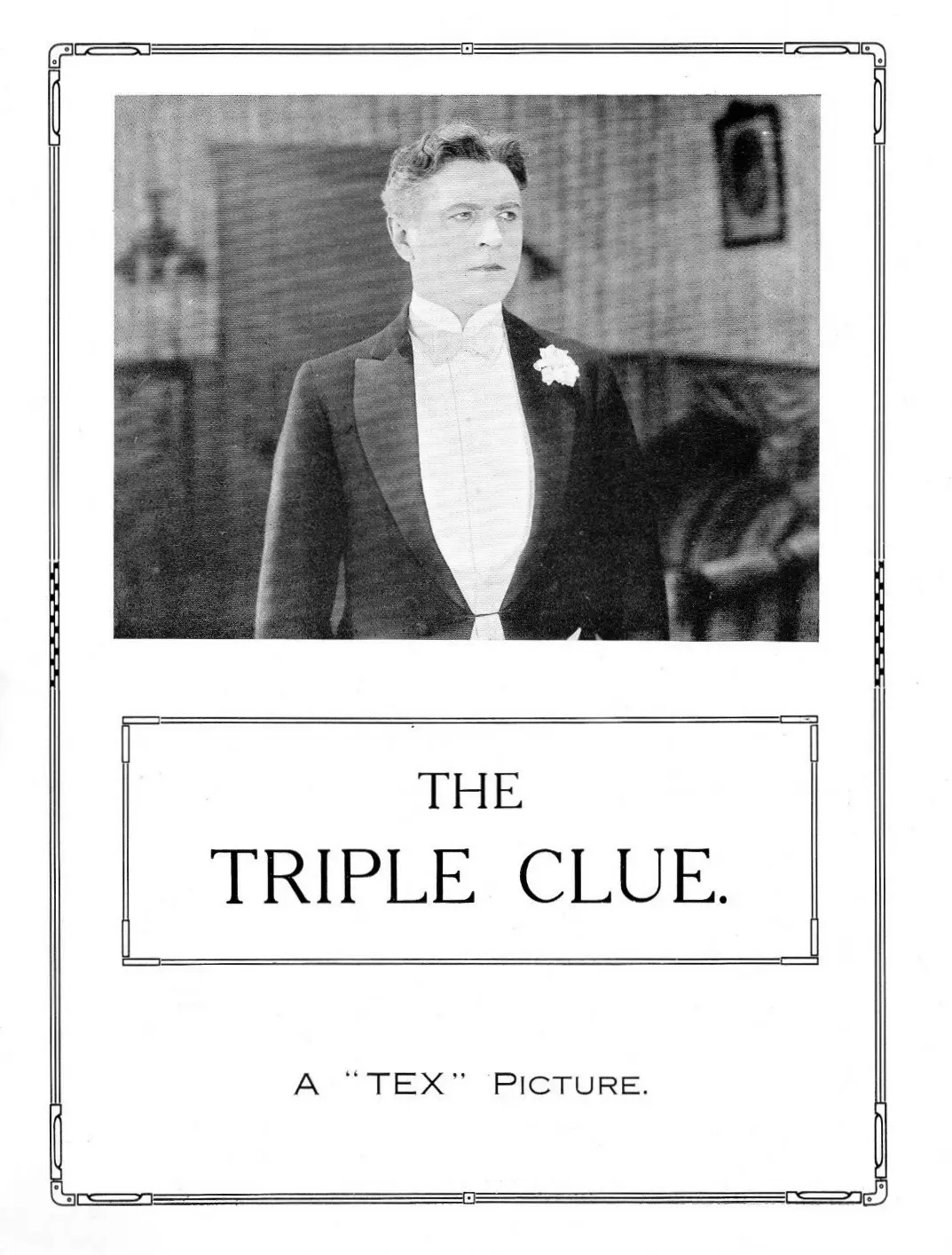
But the film belongs to Wall and Young’s erotic chess match. Young oscillates between traumatized ingénue and femme who refuses to be fatal; when she finally brandles the locket before the grand jury, the gesture is both exhalation and indictment. Their chemistry is so understated it feels eavesdropped rather than viewed.
Tom Collins’s scenario—rumored to be adapted from a 1918 dime novel condemned by the New York Society for the Prevention of Vice—compresses a labyrinth into five reels. Dialogue intertitles are haiku-brief: “A lie has short legs; a locket has longer ones.” That aphoristic density anticipates the hardboiled patter of Chandler, yet predates The Misleading Lady by months, proving pulp modernism germinated earlier than film historians admit.
Released the same month as Der letzte Tag’s expressionist apocalypse, The Triple Clue feels positively documentary. It lacks the Gothic flourish of The Firm of Girdlestone or the fairy-tale whimsy of The Pied Piper of Hamelin. Instead, it occupies the seamy middle: urban, proletarian, sexually candid. Censors in Chicago clipped a full reel for “implying justified homicide,” yet bootleg prints circulated among suffrage leagues who read the film as a polemic on women owning retribution.
Most extant copies lack the climactic jazz-cellar reenactment, where Tex forces the actual killer (Glen White’s louche reed-man) to play the incriminating riff until the reed splinters and confession hisses out. The Library of Congress’s 2019 2-K scan stitches French and Czech fragments, restoring roughly 97% continuity. The missing 40 seconds survive only in a 9.5-mm Pathescope home-movie abridgment shot in Brussels; you can glimpse it on YouTube, watermarked and backwards. Even incomplete, the restoration outshines the soft dupes of Over the Garden Wall circulating in archives.
Place The Triple Clue beside Carmen’s tragic fatalism or La Gioconda’s operatic cruelty and you’ll find the same moral quicksand, yet only Clue offers a roadmap out. Tex’s rationalism—empirical, secular—prefigures modern true-crime podcasts where evidence, not providence, exonerates. Conversely, The Lost Paradise ends in misty redemption; here redemption is soldered to paperwork and fingerprints.
1920 trade papers praised its “nerve-jangling veracity,” while the New York Telegraph dismissed it as “a nickelodeon shocker for shop-girls.” Modern scholarship—particularly Dr. Lila Pembrooke’s 2021 monograph Silent Evidence—positions the film as proto-feminist jurisprudence, arguing that the sweetheart’s eventual testimony reclaims narrative agency decades before #MeToo. I’d temper that; Young’s character still needs Tex to validate her word in court. Yet the camera lingers on her face, not his, when the verdict shatters—an embryonic nod toward intersectional empathy.
Streaming in 1080p on RetroVault (region-locked, VPN-friendly), the new restoration glows with tungsten grain. Crank the volume; silence never sounded this percussive. Pair with something thematically converse—maybe Schwert und Herd’s Teutonic melodrama—to appreciate how American pulp trimmed fat while Europe wallowed in Sturm und Drang.
The Triple Clue is not merely a curio for completists of the Tex series; it is the missing evolutionary link between Victorian morality fable and the coming hardboiled renaissance. It foretells film noir a full generation before Bogart bought his first trench coat, and it does so with a visual poetry that makes you nostalgic for futures long past. Imperfect, yes—reels still wander the ether—but even fragmentary, its heartbeat is syncopated with ours: frantic, skeptical, yearning for evidence that clears the fog. Seek it, screen it, argue over it; just don’t let it slip back into the vault. The triple clues still circulate—locket, dance card, reed—waiting for each generation to reassemble them into exoneration.
IMDb 3
1923
Community
Log in to comment.