DbcultAccessing Vault...
7.1/10
Senior Film Conservator
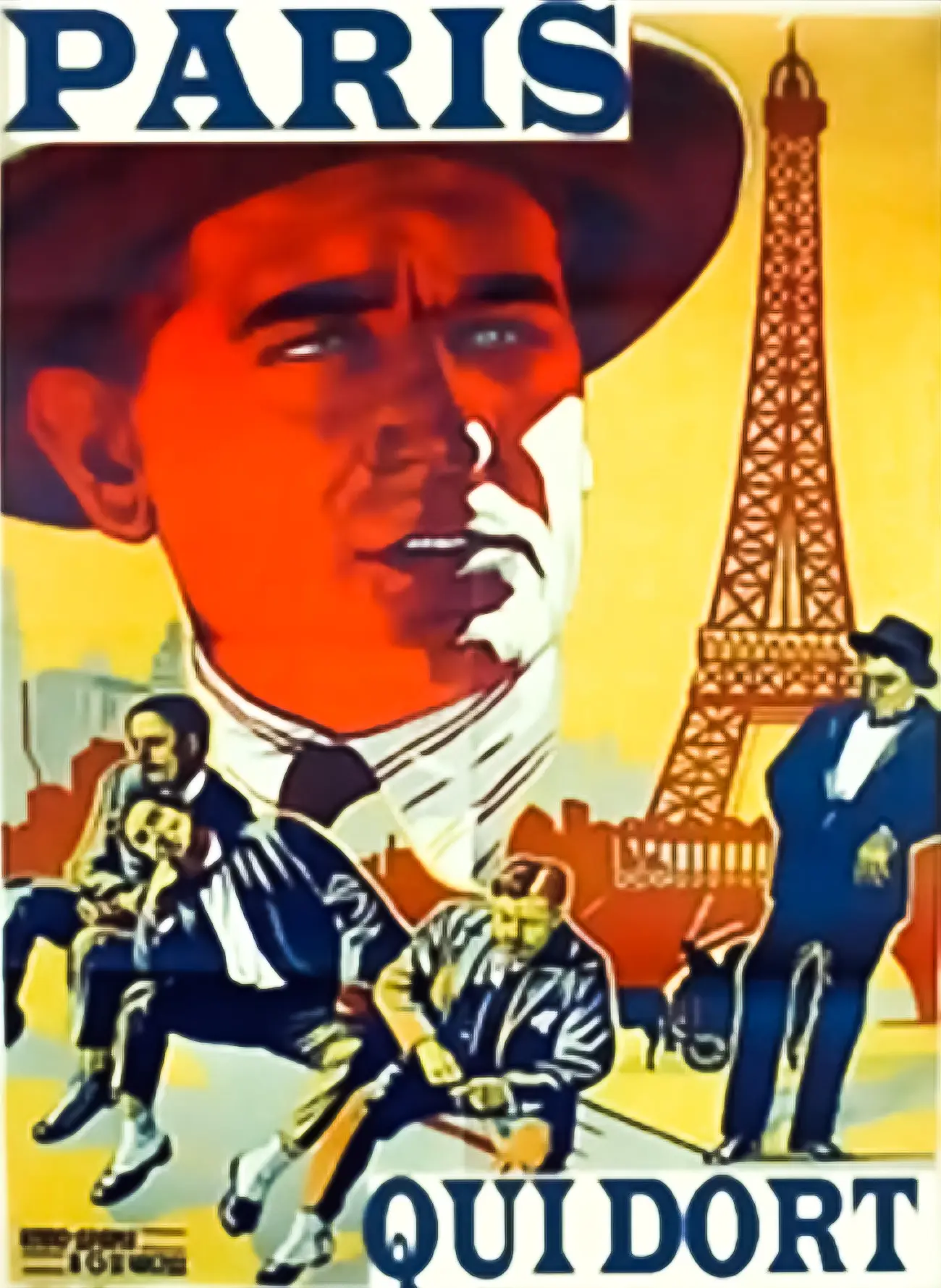
A definitive 7.1/10 rating for a film that redefined the boundaries of cult cinema. Paris Asleep remains a cornerstone of transgressive art.
In the annals of cinematic history, few films capture the whimsical yet profound spirit of early 20th-century French avant-garde quite like René Clair's 1925 silent science fiction marvel, Paris Asleep (originally Paris qui dort). This extraordinary picture, brought to life through the astute lens of its writer-director, René Clair, transcends its simple premise to deliver a rich tapestry of philosophical inquiry, comedic escapade, and visual poetry. It stands as a testament to Clair's burgeoning genius, showcasing his ability to blend the fantastic with the deeply human, creating a narrative that resonates with an eerie prescience even a century later. The film doesn't merely tell a story; it invites the audience into a thought experiment, a dreamscape where the very pulse of a bustling city is brought to an abrupt, inexplicable halt.
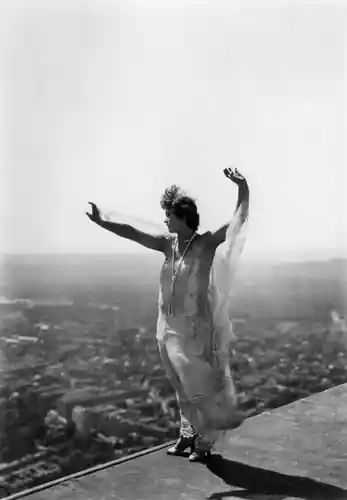
The narrative unfolds with a deceptively simple yet utterly captivating conceit: a scientist, Dr. Craze, invents an invisible ray capable of freezing all living things within its radius into absolute immobility. The epicenter of this unprecedented scientific caprice? Paris, the city of light, now rendered a colossal, breathing monument to stasis. Our initial guide into this bewildering new reality is Albert (played with charming earnestness by Charles Martinelli), a night watchman at the Eiffel Tower. His solitary existence atop the iconic landmark positions him uniquely to witness the dawn of this new, silent world. As the sun rises, he observes the customary morning bustle failing to materialize, replaced instead by a tableau of frozen life: cars suspended mid-turn, pedestrians caught mid-stride, a smoker with a perpetual puff of smoke about to escape his lips. The world has become a vast, intricate diorama, and Albert, shielded by the tower’s elevation from the ray’s direct impact, is one of the very few who remain untouched by its enigmatic power.
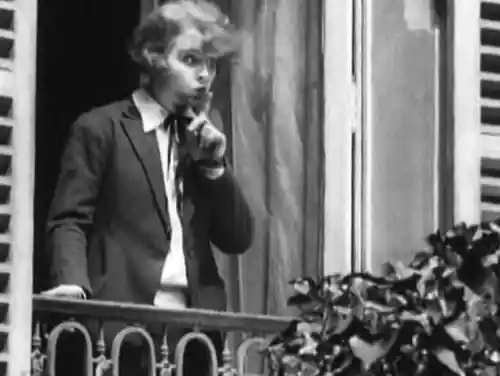
Albert's initial bewilderment soon gives way to a profound sense of isolation, until he discovers a small band of fellow unaffected individuals. This motley crew comprises a pilot (Louis Pré Fils) and four passengers (Myla Seller, Antoine Stacquet, Marcel Vallée, and Madeleine Rodrigue) whose airplane, having been in flight above the ray's reach, landed safely, yet stranded in a city of statues. Their convergence marks the true beginning of the film’s exploration of human nature under extraordinary duress. The dynamic among these survivors, each a distinct archetype, forms the emotional core of the narrative. There's the spirited young woman, the skeptical old man, the resourceful pilot, and the opportunistic businessman – a microcosm of society’s responses to the unprecedented.
Their initial reactions are a fascinating study. The fear of the unknown quickly morphs into a heady mix of wonder, mischief, and a disturbing sense of omnipotence. They roam the frozen streets, indulging in petty thefts, playful pranks, and a general disregard for societal norms that no longer apply. The spectacle of a world paused for their amusement is intoxicating. They can enter any shop, take any item, manipulate the frozen figures around them into comical poses. This segment of the film, while infused with Clair's characteristic lightheartedness, subtly hints at the darker implications of unchecked freedom and the fragility of morality when external constraints are removed. It’s a compelling exploration of what happens when the 'rules' of civilization are suspended, albeit temporarily.
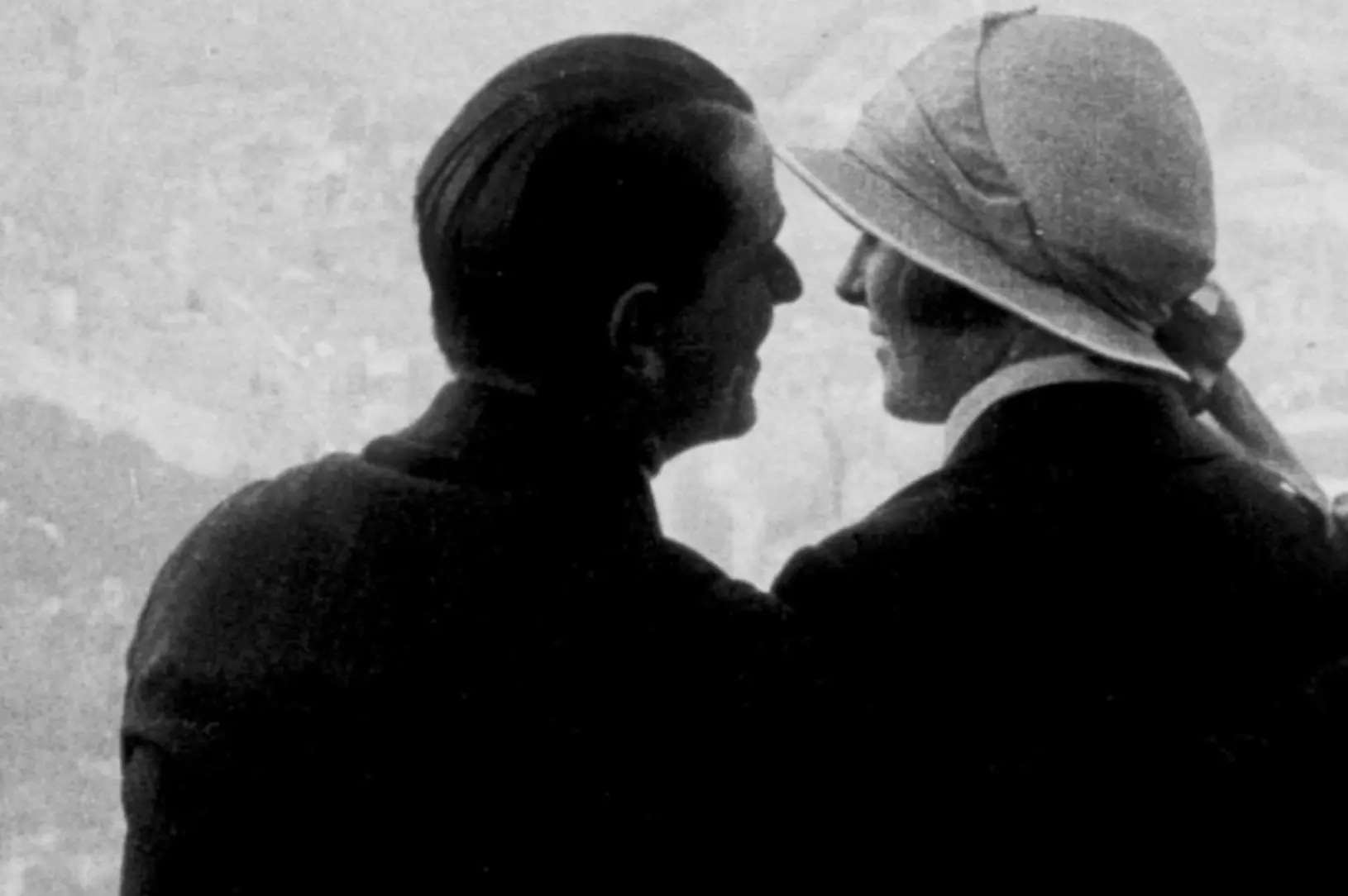
Beyond the surface-level adventure, Paris Asleep delves deep into profound existential questions. What is time, if not a shared, continuous experience? When time stops for almost everyone, what does it mean for the few who remain in motion? The film brilliantly visualizes the abstract concept of arrested development. People are caught in moments of joy, despair, boredom, or haste, their expressions locked in a perpetual present. This visual metaphor forces the audience to contemplate the fleeting nature of each moment and the often-unnoticed beauty (or absurdity) of daily life. The film’s power lies in its ability to make us reflect on our own relentless march through time, contrasting it with the serene, yet terrifying, stillness of Paris.
The theme of autonomy is equally potent. The survivors initially exult in their freedom, but this quickly gives way to a gnawing sense of isolation. The absence of interaction, of shared experience, of the very hum of humanity, becomes a crushing burden. The city, once a vibrant hub of millions, is now a silent tomb, its inhabitants mere mannequins. This shift from initial exhilaration to existential dread is masterfully handled, demonstrating Clair's nuanced understanding of the human psyche. The freedom they possess is ultimately meaningless without others to share it with, highlighting the inherent social nature of humanity. It’s a subtle commentary on the very definition of 'living' versus merely 'existing'.
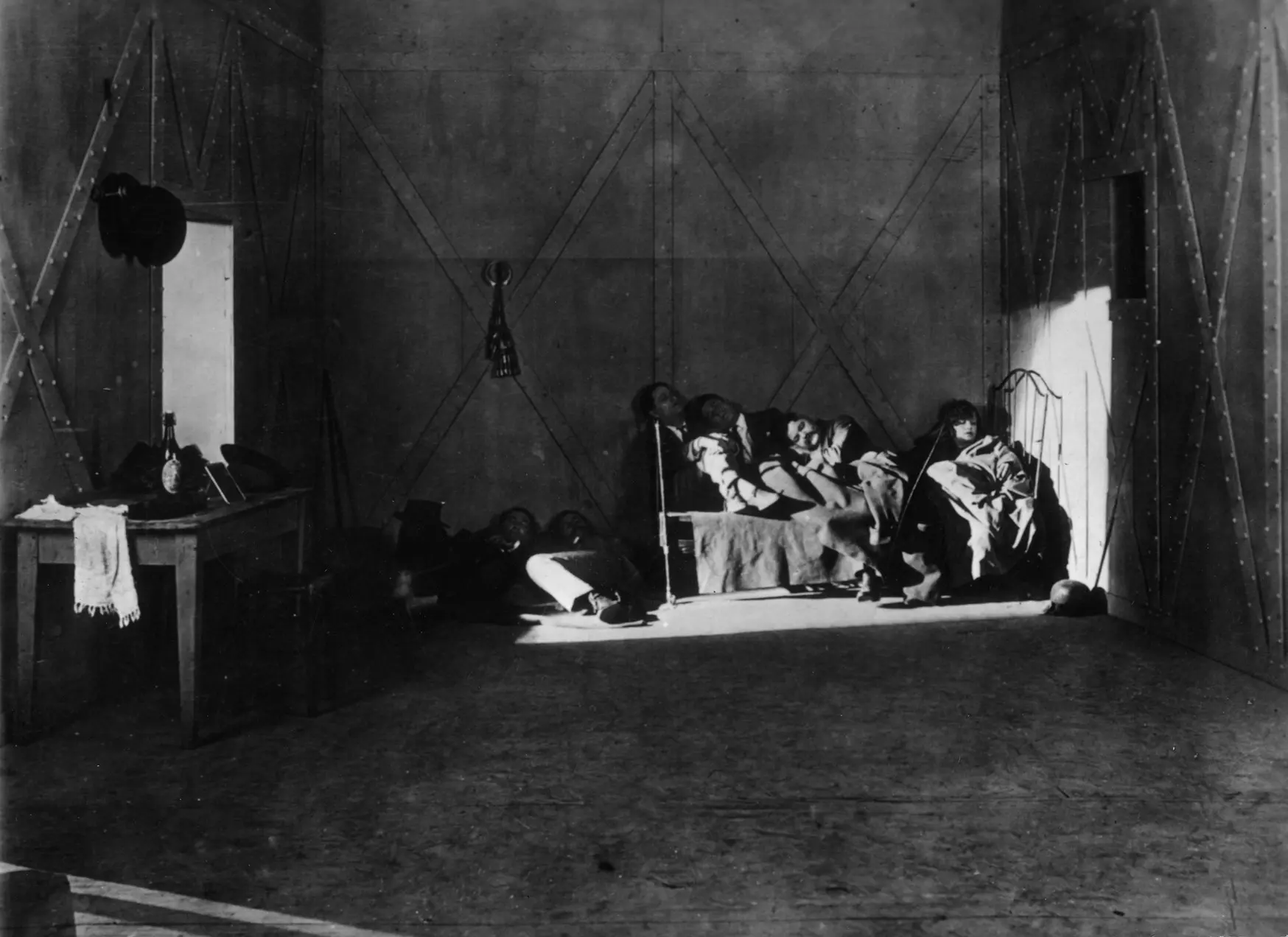
René Clair, even in this early work, showcases a directorial flair that would define his illustrious career. His innovative use of camera tricks and editing techniques, particularly for the era, is nothing short of remarkable. The visual effects, achieved through stop-motion photography and careful staging, are incredibly convincing for 1925. The scenes of the group navigating a frozen street, interacting with motionless figures, or even playfully rearranging them, are executed with a meticulous precision that lends a profound sense of realism to the fantastical premise. Clair's camera often adopts playful angles, mirroring the characters' shifting perspectives and moods. He masterfully balances wide shots that emphasize the vastness of the frozen city with intimate close-ups that reveal the nuanced emotions of his cast.
Clair's unique authorial voice, blending elements of comedy, drama, and science fiction, is fully formed here. The film never devolves into mere spectacle; instead, it uses the spectacle as a springboard for character development and thematic exploration. The pacing is deliberate, allowing the audience to fully absorb the eerie beauty of the silent city before accelerating into the more frantic quest for a solution. His ability to evoke both laughter and a sense of unease within the same scene is a hallmark of his genius, distinguishing Paris Asleep from many of its contemporaries. It’s a testament to Clair’s vision that even without sound, the film’s narrative flows seamlessly, carried by compelling visuals and expressive performances.
In the silent era, the burden of conveying emotion, narrative, and character fell squarely on the shoulders of the actors' physical expressions and gestures. The ensemble cast of Paris Asleep rises to this challenge admirably. Charles Martinelli as Albert, the watchman, anchors the film with his relatable blend of bewilderment, curiosity, and eventual melancholy. His eyes, in particular, convey a depth of feeling that transcends the need for dialogue. Myla Seller, the spirited young woman, brings a vivacious energy that injects life into the static surroundings, her reactions often mirroring the audience's own sense of wonder. The various passengers, including Louis Pré Fils, Albert Préjean, Antoine Stacquet, Marcel Vallée, Madeleine Rodrigue, and Henri Rollan, each contribute distinct personalities to the group dynamic. Their subtle interactions, their arguments, their moments of shared joy or despair, are all communicated through a finely tuned choreography of movement and facial expression. It's a masterclass in silent film acting, where every gesture, every glance, carries significant weight and meaning.
The film’s power is amplified by the absence of spoken words, forcing viewers to engage more deeply with the visual storytelling. The silence itself becomes a character, emphasizing the eerie quiet of the frozen city and the isolation of the protagonists. This deliberate choice, a hallmark of the era, is utilized by Clair not as a limitation but as an artistic tool, enhancing the film's dreamlike quality and focusing attention squarely on the incredible visuals and the actors' emotive performances.
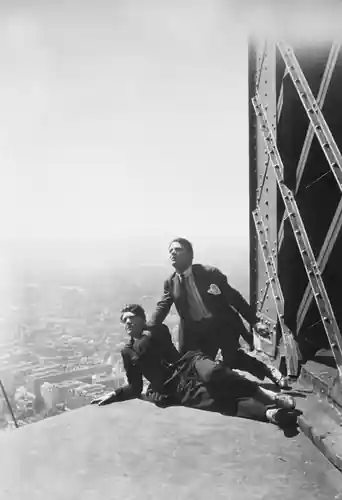
The city of Paris itself is not merely a backdrop but an active participant in the narrative. Clair exploits its iconic landmarks – the Eiffel Tower, the streets, the cafes – transforming them into surreal monuments to a suspended reality. The familiar becomes alien, the mundane, extraordinary. This visual juxtaposition is central to the film’s charm and its lasting impact. Imagine the bustling boulevards, usually teeming with life, now a ghostly gallery of frozen figures, each telling an untold story in their permanent pose. This transformation of a vibrant urban landscape into a vast, silent sculpture garden is one of the film's most enduring images.
In the context of French cinema, Paris Asleep emerged during a period of intense artistic experimentation. It perfectly encapsulates the spirit of the French avant-garde, pushing boundaries of narrative and visual storytelling. While not as overtly surrealist as some contemporary works, its premise certainly flirts with the dream logic and absurdism that would come to define the movement. It stands as a pivotal work, demonstrating the potential of cinema to explore complex ideas through imaginative scenarios, laying groundwork for future science fiction and surrealist narratives.
The film culminates in the discovery of Dr. Craze, the eccentric scientist responsible for the ray, and the eventual, chaotic reversal of the phenomenon. The return to normalcy, however, is anything but smooth. The world snaps back into motion, and the sudden resumption of life is depicted with a frantic energy that contrasts sharply with the earlier stillness. The characters who experienced this unique interlude are left with a profound, almost dreamlike memory of their time as masters of a frozen world. The film cleverly avoids a neat, tidy ending, instead opting for a resolution that highlights the ephemeral nature of their adventure and the swift return to the ordinary, albeit with a lingering sense of wonder and perhaps a touch of melancholy.
Paris Asleep is more than just a charming curiosity from the silent era; it is a seminal work that foreshadowed many tropes of science fiction and surrealist cinema. Its influence can be seen in countless films that explore altered realities, the fragility of societal order, and the psychological impact of extraordinary events. While it might not share direct plot parallels with films like The West~Bound Limited's focus on a train accident or the personal dramas of The Betrothed, Clair's film does resonate with the broader theme of human beings confronting sudden, disruptive forces. The individual's response to an altered reality, the search for meaning or control in chaos, echoes the spirit found in the introspective journey of characters in Eyes of Youth, which explores fate and perception, or the quest for self-discovery in Real Adventure. The profound sense of isolation, even amidst a city of millions, also touches upon universal human experiences of detachment, albeit through a fantastical lens. Its unique blend of imaginative premise, technical ingenuity, and thoughtful exploration of the human condition ensures its place as a timeless classic, a film that continues to enchant and provoke thought almost a century after its debut. It remains a vibrant, essential piece of cinematic history, a silent scream of wonder in a world temporarily silenced.
IMDb —
1923
Community
Log in to comment.