DbcultAccessing Vault...
Cult Review
Senior Film Conservator
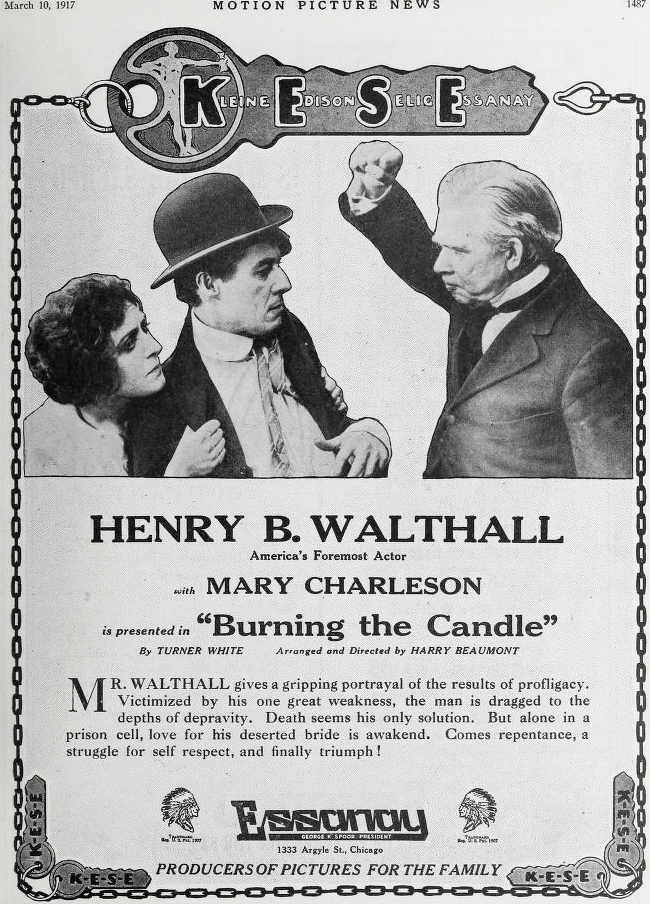
The year 1917 stands as a fascinating bridge in cinematic history, a period where the primitive techniques of the early decade began to fuse with a more sophisticated, character-driven narrative structure. Burning the Candle, directed by the prolific Harry Beaumont, is an evocative artifact of this transition. It isn't merely a temperance fable; it is a visceral exploration of the American Dream’s dark underbelly, anchored by a performance from Henry B. Walthall that vibrates with a nervous, electric energy. Unlike the more pastoral pacing of Rebecca of Sunnybrook Farm, this film plunges into the psychological abyss of its protagonist with a startling lack of sentimentality.
The film opens with an idyllic visual language that feels almost like a memory. The Southern skies, captured through the hazy lens of early cinematography, provide a backdrop for Molly Carrington (Mary Charleson) and Jimmie Maxwell (Walthall). Their engagement is framed as a sacred union, a tether to the earth and tradition. However, the narrative quickly shifts its geography, moving from the rhythmic calm of the South to the jagged, percussive environment of New York City. This shift is more than a change of scenery; it is an ontological shock. Maxwell’s expertise in cotton—a commodity of the soil—is suddenly thrust into the abstract, high-stakes world of a Manhattan brokerage office. This clash between the organic and the synthetic is a recurring motif that elevates the film above standard melodrama.
In the metropolis, the 'maelstrom of worldly battle' isn't just a figure of speech. Beaumont uses the urban space to symbolize a loss of self. The towering buildings and the relentless pace of the cotton exchange act as a crucible that Maxwell is ill-equipped to survive. While films like The Valley of the Moon often seek refuge in the wilderness to escape industrial rot, Burning the Candle forces its hero to confront his demons within the very heart of the machine.
Henry B. Walthall, often remembered for his intense roles in Griffith’s epics, brings a nuanced fragility to Jimmie Maxwell. His descent into alcoholism is portrayed not as a sudden moral failing, but as a slow erosion of the soul. The 'Demon Rum' of the plot description is rendered on screen through Walthall's increasingly erratic physicality. His eyes, always his most potent tool, mirror the flickering light of a candle nearing its wick’s end. The brilliance of his performance lies in the subtle shifts—the way a confident stride becomes a desperate shuffle, the way a steady hand begins to tremble at the sight of a ledger.
Compare this to the protagonists in Souls Enchained, and you see a different kind of imprisonment. Where others are trapped by circumstance, Maxwell is trapped by his own neurochemistry and the mounting pressures of a society that demands constant productivity. The film captures the 'down-and-outer' phase with a grit that must have been jarring for 1917 audiences. The loss of his position is not just a financial blow; it is a total erasure of his identity as a 'stalwart husband.'
Mary Charleson’s Molly is not a passive victim. Her decision to leave Maxwell and return to the South is presented with a pragmatic dignity. In an era where many films, such as The Sentimental Lady, might have portrayed the wife as a long-suffering martyr who stays regardless of the abuse, Molly chooses self-preservation. This choice creates the narrative vacuum that Maxwell must eventually fill with his own redemption. Her return to the South is a symbolic retreat to the moral clarity of her roots, highlighting the film’s underlying skepticism of the Northern urban experience.
The introduction of Alfred Lewis, the former rival, serves as a classic dramatic foil. He represents the path not taken—a life of stability and sobriety that mocks Maxwell’s current state. When Maxwell reads the rumor of their impending marriage in a Mobile newspaper, the film shifts gears from a tragedy of addiction to a thriller of the will. This moment of 'smoldering love' flaring up is the pivot point of the entire cinematic structure.
The title, Burning the Candle, is expertly woven into the visual language of the film. Beaumont and his cinematographer utilize high-contrast lighting to emphasize the duality of Maxwell’s life. The bright, overexposed whites of the Southern scenes contrast sharply with the shadowed, claustrophobic interiors of the New York bars and boarding houses. There is a sense of chiaroscuro that predates the noir movement, using light to delineate the boundaries between Maxwell’s former glory and his current depravity.
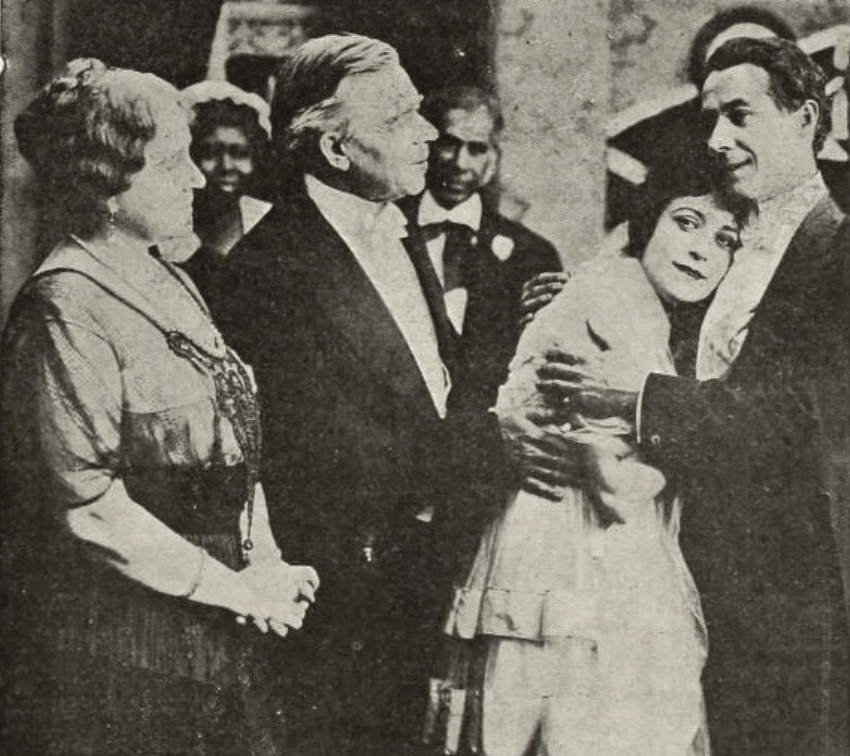
The use of the newspaper as a narrative device—a common trope of the era—is handled here with a specific emotional weight. It acts as the bridge between the two worlds, bringing the consequences of Maxwell's failure into his squalid reality. This technique of 'information as a catalyst' is also seen in The Hidden Hand, though here it serves a much more internal, psychological purpose rather than a plot-driven mystery.
The final act of the film is a masterclass in silent era pacing. Maxwell’s decision to 'throw off his alcoholic yoke' is not depicted as an instantaneous miracle but as a grueling process of re-habituation. He has to win back his position, a task that requires him to re-enter the very environment that triggered his downfall. This circularity adds a layer of tension; the office is both the site of his failure and the stage for his triumph.
The climax, where Maxwell finds Molly waiting for him on his first day back, might seem convenient by modern standards, but within the logic of 1917 melodrama, it is a profound affirmation of the era's belief in the possibility of rebirth. It mirrors the structural resolution found in The Pines of Lorey, where the environment eventually yields to the tenacity of the human heart. However, Burning the Candle feels more earned because of the sheer depth of Maxwell’s degradation.
To view this film today is to look through a window into the pre-Prohibition American psyche. The 'Demon Rum' was a very real social anxiety, and films were often the primary medium for exploring these fears. Yet, Beaumont avoids the preachy didacticism found in works like The Fifth Commandment. Instead, he focuses on the personal cost of addiction. The cotton industry itself serves as a metaphor for the volatility of the era—fortunes made and lost on the whim of a market, much like a man’s character can be made or lost on the whim of a bottle.
The supporting cast, including Frances Raymond and Patrick Calhoun, provide a solid foundation for the central drama. While their roles are archetypal, they are performed with a sincerity that prevents them from becoming caricatures. Julien Barton’s presence adds a layer of gravitas to the professional world Jimmie strives to rejoin. The ensemble works in harmony to create a world that feels lived-in and consequential.
Burning the Candle is a significant entry in the filmography of Harry Beaumont and a testament to Henry B. Walthall's enduring power as an actor. It navigates the treacherous waters of moralistic storytelling without losing sight of the human element. The film’s exploration of the 'metropolis maelstrom' vs. the 'calm home life' remains a relevant theme in an age where the work-life balance continues to be a central struggle of the human condition.
While some may find the silent era’s emotive acting style to be hyperbolic, a closer inspection of Walthall’s work here reveals a sophisticated level of psychological realism. He doesn't just play a drunk; he plays a man who has lost his connection to his own history and must fight to reclaim it. In the end, the candle that was being burnt at both ends is replaced by a steady, enduring flame of domestic and professional stability.
For those interested in the evolution of cinematic drama, Burning the Candle is essential viewing. It lacks the surrealism of Her Double Life or the sheer adventure of Dr. Mawson in the Antarctic, but it possesses a grounded, emotional honesty that is rare for its time. It is a story of how we lose ourselves in the noise of the world, and more importantly, how we find our way back to the people who were waiting for us all along.
IMDb 5.1
1923
Community
Log in to comment.