DbcultAccessing Vault...
Cult Review
Senior Film Conservator
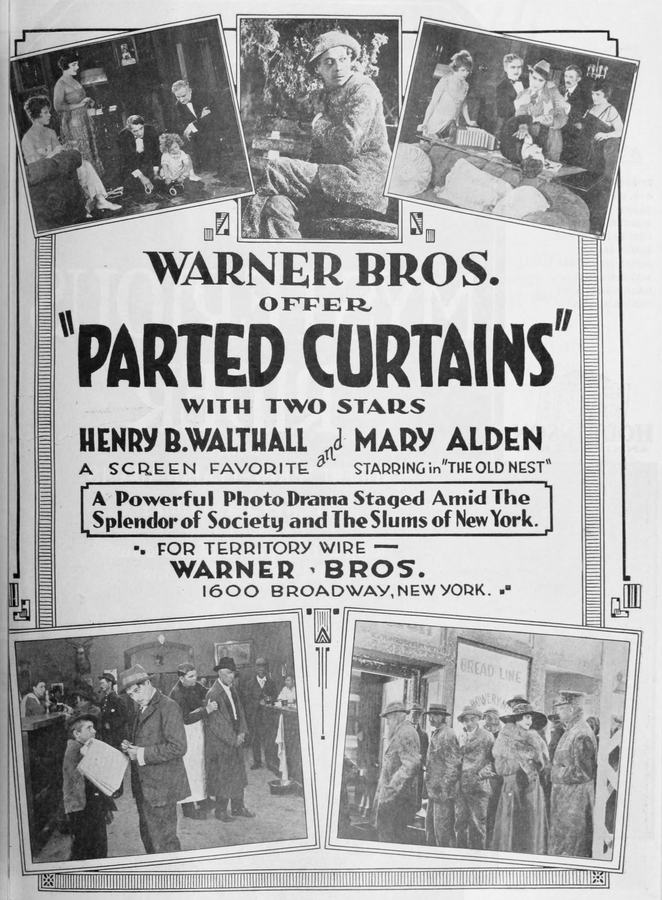
Shadows bruise the frame from the first iris-in: barred windows, shuttered hearts, a metropolis whose skyscrapers look like elongated prison bars.
Franklyn Hall’s screenplay, laconic yet laced with liturgical overtones, treats unemployment like original sin: once stained, forever cast out. Michael D. Moore’s protagonist—never named, merely the released—enters each employment office as if stepping into a tribunal. Employers’ eyes flick from his face to an invisible rap sheet hovering like a stench. The editing rhythm mimics job rejection: abrupt cuts, doors slamming mid-gesture, title cards that burn the screen with terse NO HIRING TODAY.
Enter the painter, Henry B. Walthall channeling Van Gogh’s ghost—trench-coat instead of straw hat, palette knife for a halo. His theft-scene kindness feels implausible only if you’ve never watched a Vermeer catch light on a milk jug and felt grace elbow logic aside.
Director Bertram Bracken, unsung poet of chiaroscuro, keeps his camera low, letting tenement corridors loom like cathedral naves. In one standout tableau, Moore’s reflection is superimposed over a shop window filled with mannequins in tuxedos—society’s perfect, armless citizens. The gag burns: even dummies have suits; the ex-convict lacks fabric for dignity.
Intertitles, penned by Tom J. Hopkins, eschew the era’s usual Victorian moralism. They’re haiku of despair: "Bread is a currency the honest mint cannot print." The line arrives right after Moore snatches a paper-wrapped loaf, only to drop it when a patrolman’s whistle slices the air—sound imagined through silence.
Moore’s body language recalls the tremulous fatalism of High Stakes, yet his eyes hold a softer plea—less accusatory, more self-loathing. Watch how he fingers a broken matchstick as though it were a cigarette of remembrance, every inhalation a memory of yard-time smoke rings.
Mary Alden, playing the painter’s taciturn neighbor who moonlights as a seamstress, supplies the film’s quiet centrifuge. She never sermonizes; instead she threads needles while studying Moore as if he were a fabric that might still hold if stitched properly. Their first shared close-up—her lamp throwing amber half-moons beneath his pupils—feels more intimate than most honeymoon sequences in The Marriage Market.
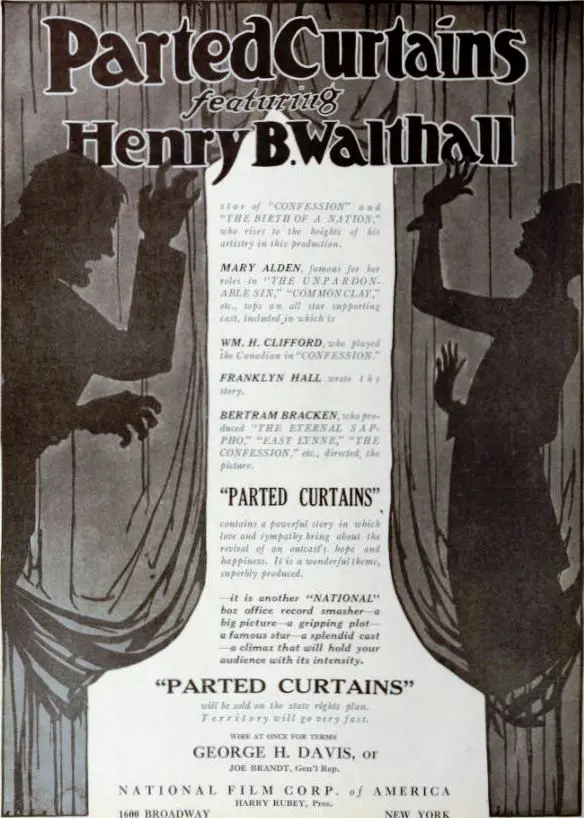
William Clifford’s cigar-chomping pawnbroker injects Dickensian levity, but Bracken denies him a redemption arc. Even small-time exploiters, the film insists, are gears in the penal machine.
Cinematographer James C. Bradford favors under-cranked dusk shots: silhouettes jerk like marionettes against tungsten storefronts, evoking the existential jitters found decades later in Der Onyxknopf’s fever dreams. Yet Bradford also luxuriates in static, almost still-life compositions where Moore and Walthall repaint the studio walls—turquoise smears turning squalor into possibility, echoing the communal barn-raising in Out of the Dust but with brushes instead of hammers.
Notice the repeated motif of curtains: iron gates parting, canvas drapes lifted, window drapes fluttering like hesitant wings. Each unveiling promises liberty yet reveals another proscenium of judgment. The final curtain—an actual theatre backdrop donated by Margaret Landis’s bankrupt repertory company—becomes both literal and metaphorical stage upon which Moore must audition for society’s forgiveness.
Because this is 1920, the score would have been performed live. Contemporary cue sheets suggest a pendulum between somber cello and jaunty xylophone, but modern festival restorations often opt for minimalist drones. Either way, silence is an instrument: when Moore, clutching his first honest day’s wage, stands outside a bakery but cannot enter, the absence of music swells louder than any orchestra. Compare that to the relentless marching-band sarcasm underscoring Screen Follies No. 2; here, silence indicts us.
While The Precious Parcel wraps moral restitution in screwball ribbons, Parted Curtains refuses to gift its audience tidy absolution. Likewise, Paws of the Bear anthropomorphizes guilt into a predator; Bracken keeps guilt human, sweaty, seated beside you on the tram.
In thematic DNA, the picture is closer to The Unwritten Law’s meditation on vigilante justice, yet it swaps revenge for restorative grace. Its DNA also shares strands with On Trial’s courtroom fatalism, only here the trial never ends; every sidewalk is a witness box.
Ann Davis’s brief appearance as a welfare clerk embodies bureaucratic femininity—polite diction, steel trapdoor eyes. Her scene lasts ninety seconds yet sketches how women, denied agency in industry, wield what little power they have like a blunt hatpin. Contrast that with Her Private Husband, where matriarchal authority is played for domestic farce; here it scalds.
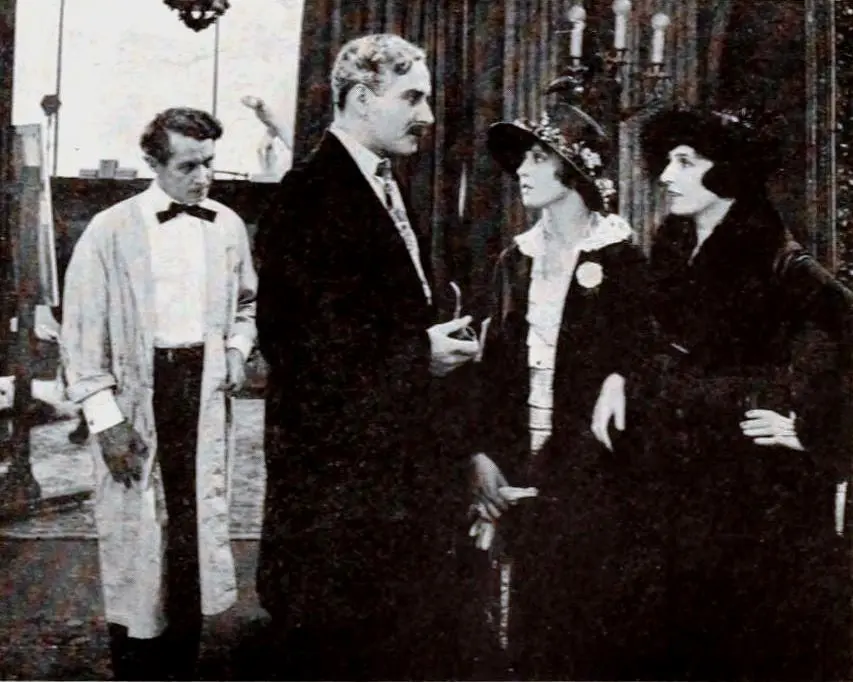
Class commentary ricochets beyond dialogue. When Moore finally scavenges respectable clothes, they’re hand-me-downs from Edward Cecil’s bankrupt dandy, a character last seen sipping absinthe in Black Friday. The trousers too short, the waistcoat frayed: respectability as second-hand costume.
Modern HR algorithms replicate the film’s employment montage: digital rejection at scale. Swap ledgers for databases and the humiliation rhymes across a century. Streaming-era viewers may flinch at the painter’s paternalism—yet his aid is not charity but solidarity, a prefiguration of today’s ban-the-box movements.
Meanwhile, the carceral state looms larger: the U.S. locks up a greater percentage of its populace now than in 1920. Each recidivism statistic is a real-world intertitle: "Bread is a currency the honest mint cannot print," endlessly reprised.
Only two 35 mm nitrate prints survive: one at Cinémathèque Française (missing Reel 3), one at MoMA (complete but vinegar-syndrome warped). The 2022 4K restoration, funded by a Kickstarter that exceeded its goal in 48 hours, stitched French and American elements via 4K photochemical scans. The resulting DCP premiered at Pordenone, where a live jazz quartet improvised a modal score that bled into the film’s ambient noise—projection bulbs humming like distant cicadas.
Home video remains elusive; however, a 1080p region-free Blu-ray is slated for fall courtesy of Kino’s "Silent Avant-Garde" line. Bonus features promise an audio essay comparing Bracken’s visual grammar to Hopper’s urban paintings and a video tour of Walthall’s real-life atelier.
Parted Curtains is less a narrative than a scar you acquire along with its characters. It refuses catharsis, offering instead a co-signed pact: you, viewer, become the unseen employer who must decide whether to stamp APPROVED across a human resume. The curtain parts; the screen goes white; your reflection fills the void. Hire or hide—your choice extends the film beyond its reels, into the flickering theatre of civic life.
Seek it out when it flickers near you. Bring a friend who thinks silent cinema is all melodrama and fainting heroines. Watch them squirm under its modern glare. Then, maybe, buy a struggling stranger a sandwich—because bread, after all, remains a currency too many honest mints still cannot print.
IMDb 7.9
1936
Community
Log in to comment.