DbcultAccessing Vault...
Cult Review
Senior Film Conservator
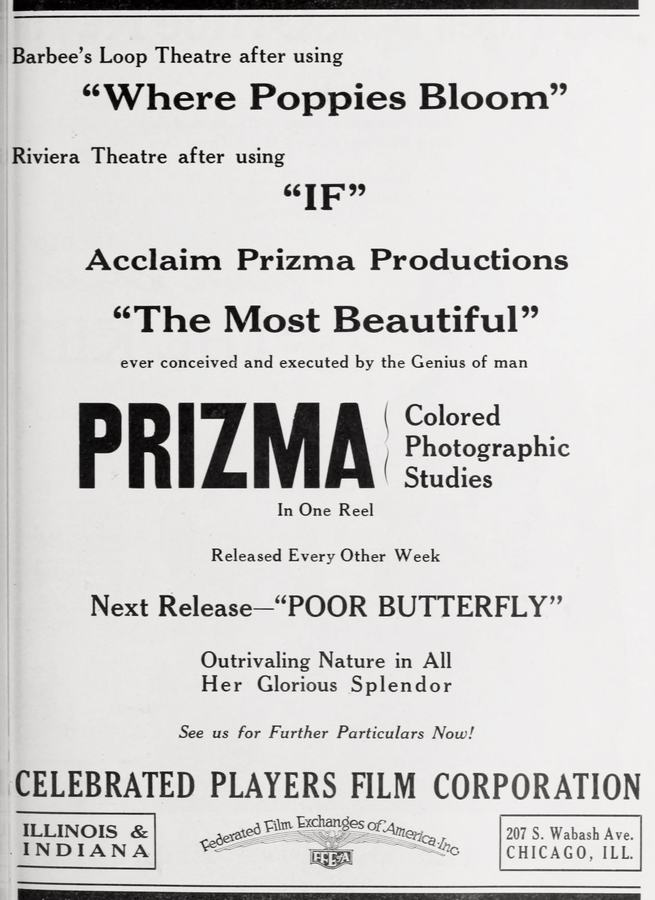
Released in the immediate wake of the Armistice, Where Poppies Bloom is not merely a film; it is a cultural artifact vibrating with the collective trauma of a generation. While many contemporary productions sought to provide escapist levity, Howard M. Mitchell’s direction leans into the somber chiaroscuro of the era's psychological state. The film functions as a bridge between the Victorian melodrama of the previous decade and the burgeoning realism that would eventually define the 1920s. It captures a world in flux, where the static certainty of the home has been replaced by a pervasive sense of dread and the unsettling realization that the enemy is often found within one's own walls.
In terms of thematic depth, the film shares a spiritual kinship with Evangeline, yet where that film finds solace in the pastoral and the epic, Where Poppies Bloom remains claustrophobically tethered to the intimate. The cinematography utilizes the stark contrast of the silent era to mirror the internal bifurcation of its protagonist, Marianne. Every frame is saturated with a sense of absence—the empty chair at the table, the unread letters, the lingering scent of a life interrupted by the machinery of war.
To discuss this film without centering on the luminous Gladys Brockwell would be an exercise in futility. Known as the "Woman of a Thousand Faces," Brockwell delivers a performance of such nuanced restraint that it transcends the typical histrionics associated with the silent medium. Her portrayal of Marianne is a masterclass in internal monologue expressed through the flicker of an eyelid and the tension in her posture. Unlike the overt theatricality found in The Iron Test, Brockwell’s work here is subterranean, suggesting depths of grief and burgeoning desire that the intertitles can only hope to approximate.
"The camera lingers on her face as if searching for an answer to the war's senselessness, and in her eyes, we find only the reflection of a world that has lost its moral compass."
The chemistry—or perhaps more accurately, the friction—between Brockwell and her co-stars provides the film's primary engine. When the mysterious stranger enters her life, the film shifts from a study of grief into a high-stakes psychological thriller. This transition is handled with a sophistication that rivals the tension found in The Yellow Traffic, though Mitchell replaces that film's kinetic energy with a slow-burn dread that is far more effective in the long run.
The plot’s foray into the world of spies and double-dealings serves as a potent metaphor for the instability of the post-war social contract. In 1919, the fear of the 'other'—the infiltrator who looked and spoke like a neighbor—was a palpable anxiety. Where Poppies Bloom taps into this zeitgeist with surgical precision. The antagonist is not a caricature of villainy but a seductive force of disruption. This nuanced approach to antagonism is a significant departure from the more binary morality seen in Her Condoned Sin.
The screenplay, written with a keen eye for the subtext of betrayal, avoids the pitfalls of easy resolution. Marianne’s struggle is not just against an external spy, but against her own yearning for connection in a world that has become a vacuum. The film suggests that the scars of war are not just physical or territorial; they are etched into the very fabric of human relationships. This theme of a woman's internal battle against external societal pressures is a recurring motif in the era, echoed in works like A Woman's Fight and Armstrong's Wife, yet Mitchell’s vision feels uniquely bleak and uncompromising.
The titular poppies are utilized with an almost obsessive frequency, serving as a visual leitmotif that evolves throughout the narrative. Initially representing the romanticized memory of the fallen, they gradually take on a more sinister connotation, representing the blood-soaked soil from which the new world must grow. This symbolic density elevates the film above the standard melodrama of its time. While a film like The Fatal Sign relies on overt plot devices, Where Poppies Bloom relies on the power of the image to convey its most profound truths.
The set design further reinforces this atmosphere. The interiors are often cluttered, feeling like cages rather than homes, contrasting sharply with the expansive, yet desolate, exterior shots of the French countryside. This visual dichotomy emphasizes Marianne’s entrapment. It is a stylistic choice that brings to mind the sophisticated framing of Die Liebschaften des Hektor Dalmore, yet it is applied here to a much more somber and urgent narrative context.
When placing Where Poppies Bloom alongside its contemporaries, its unique position in the 1919 cinematic landscape becomes clear. It lacks the whimsical artifice of En hustru till låns, opting instead for a gritty verisimilitude that was rare for the period. Even when compared to action-oriented fare like Flying Colors or the high-altitude thrills of Woman Against Woman; or, Rescued in the Clouds, this film stands out for its psychological density. It understands that the most harrowing battles are not fought in the clouds or on the battlefield, but in the quiet moments of decision-making when the heart is at its most vulnerable.
The pacing of the film is deliberate, almost agonizingly so, mirroring the protracted wait of the families left behind during the conflict. It doesn't offer the cathartic violence of When You Hit, Hit Hard; instead, it offers a slow dissolution of hope. The final act, which involves a confrontation that is both inevitable and shocking, leaves the viewer with more questions than answers—a hallmark of truly great art.
Technically, the film is a triumph of early lighting techniques. The use of natural light in the outdoor sequences provides a haunting clarity, while the interior scenes utilize shadows to create a sense of impending doom. This mastery of the visual medium ensures that the film remains watchable over a century later. It shares a certain aesthetic grimness with Die toten Augen, though Mitchell’s film is more grounded in the immediate political reality of the post-war era. The editing, too, is remarkably modern, using cross-cutting to build tension during the espionage subplots in a way that feels surprisingly contemporary.
While often overshadowed by the more bombastic epics of the era, such as The Corsican or the artistic experimentation of The Painter, Where Poppies Bloom deserves a place in the pantheon of significant silent cinema. It is a film that demands much from its audience—patience, empathy, and a willingness to stare into the abyss of human fallibility. It does not provide the easy comforts of a traditional romance, nor does it simplify the complexities of war into a binary of good versus evil. Instead, it offers a profound and moving exploration of what it means to survive when the world you knew has been utterly decimated.
In the final analysis, the film is a testament to the power of silent cinema to communicate complex emotional states without the crutch of dialogue. It is a haunting, beautiful, and ultimately devastating work that continues to bloom in the memory long after the final frame has flickered out. For those willing to venture into the shadows of 1919, Where Poppies Bloom offers a cinematic experience that is as intellectually stimulating as it is emotionally resonant.
IMDb 6.3
1932
Community
Log in to comment.