DbcultAccessing Vault...
5.2/10
Senior Film Conservator
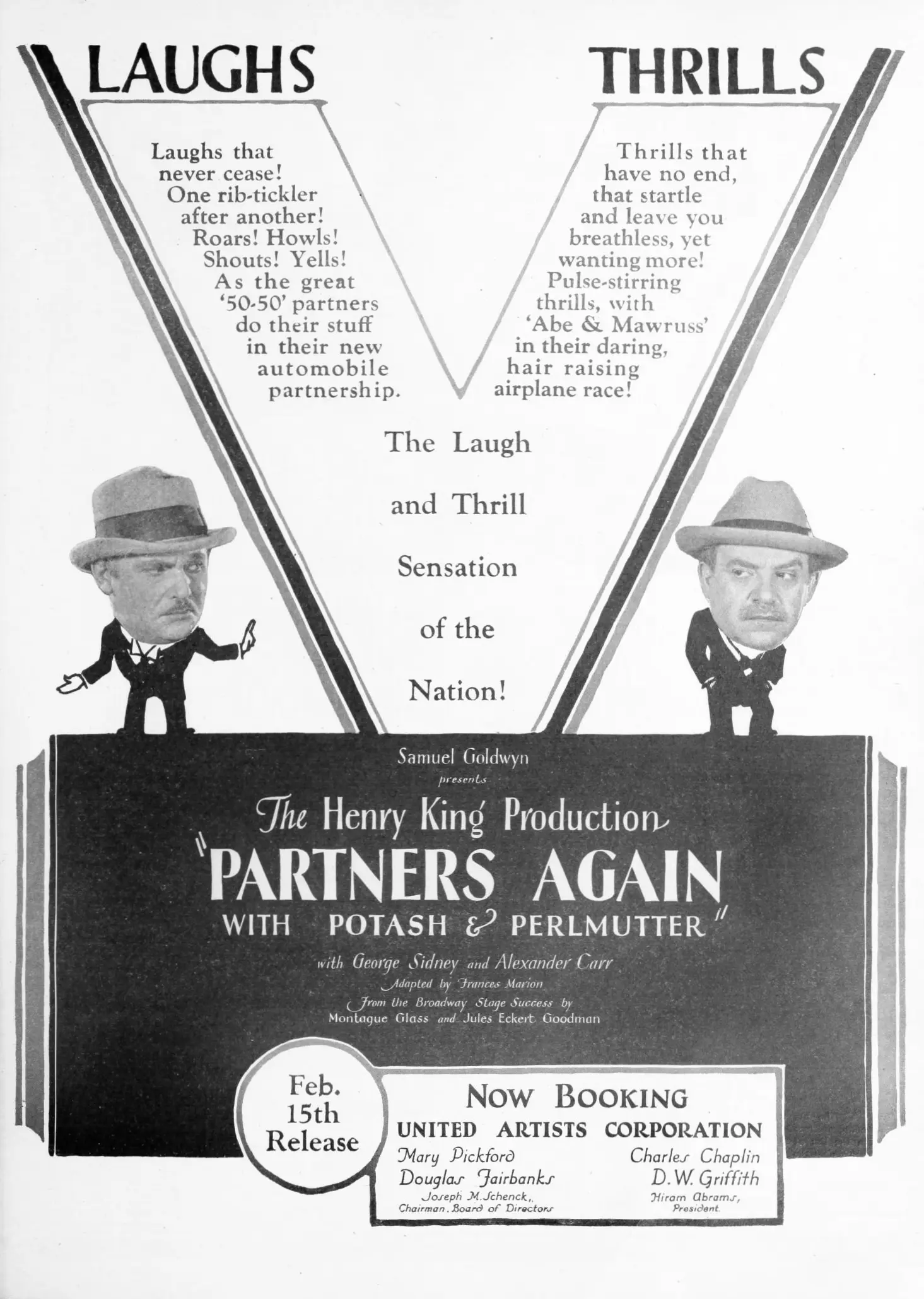
A definitive 5.2/10 rating for a film that redefined the boundaries of cult cinema. Partners Again remains a cornerstone of transgressive art.
Short answer: yes, but only if you have a high tolerance for the frantic, repetitive energy of 1920s ethnic comedies. This film is for silent era buffs who appreciate high-stakes slapstick and the evolution of the 'buddy comedy' dynamic; it is absolutely not for those seeking subtle character development or modern, nuanced social sensitivities.
Partners Again (1926) serves as a fascinating, if occasionally exhausting, artifact of a time when the American Dream was often portrayed as a series of get-rich-quick schemes and narrow escapes from the law. While it lacks the poetic grace of a Chaplin feature or the architectural precision of a Buster Keaton set piece, it offers a raw, energetic look at the 'Potash and Perlmutter' phenomenon that once dominated American stage and screen. It is a film of two halves: a plodding business satire and a terrifyingly impressive aerial stunt show.
1) This film works because the central chemistry between George Sidney and Alexander Carr is ironclad, honed by years of playing these characters on stage, which translates into a rhythmic, almost musical style of physical bickering.
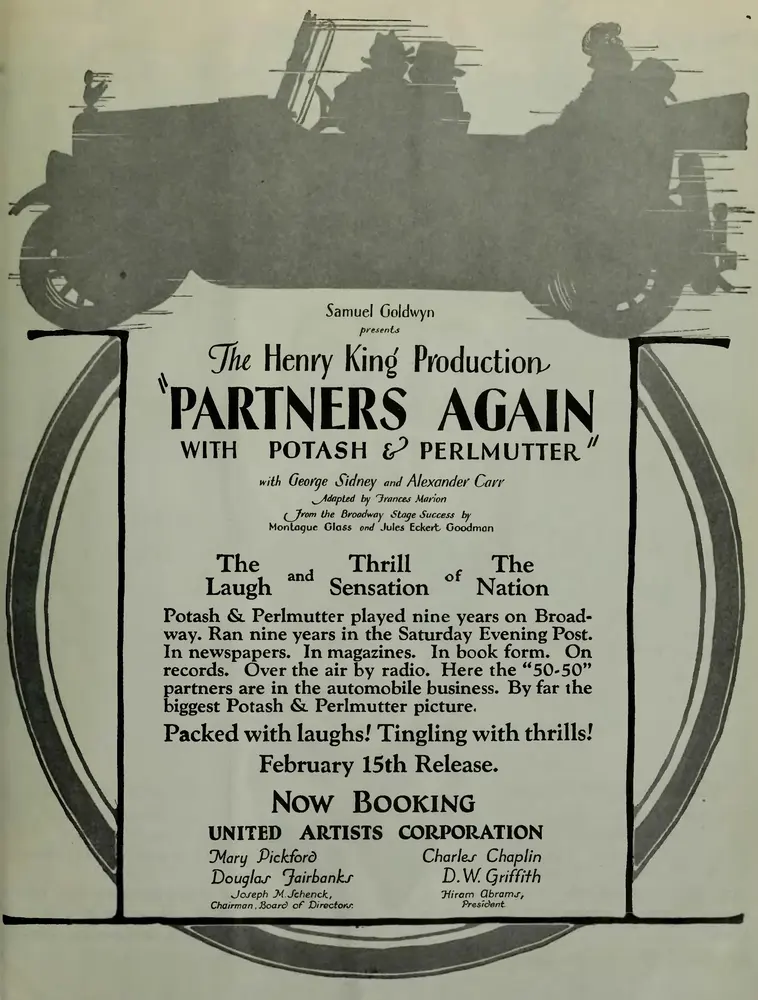
2) This film fails because the middle act becomes bogged down in the minutiae of the 'Schenckman 6' auto business, losing the comedic momentum established in the opening scenes.
3) You should watch it if you want to see one of the most daring and genuinely frightening wing-walking sequences of the silent era, performed with a level of recklessness that modern CGI simply cannot replicate.
The narrative of Partners Again hinges on the transition from the garment trade to the automotive boom. George Sidney (Potash) and Alexander Carr (Perlmutter) are perfectly cast as the perpetually stressed-out partners. The film spends a significant amount of time establishing the 'Schenckman 6,' a car that seems to be a character in its own right—prone to failure and representative of the duo's misplaced optimism. Unlike the more grounded drama found in The Other Woman, Partners Again leans heavily into the absurdity of the business world.
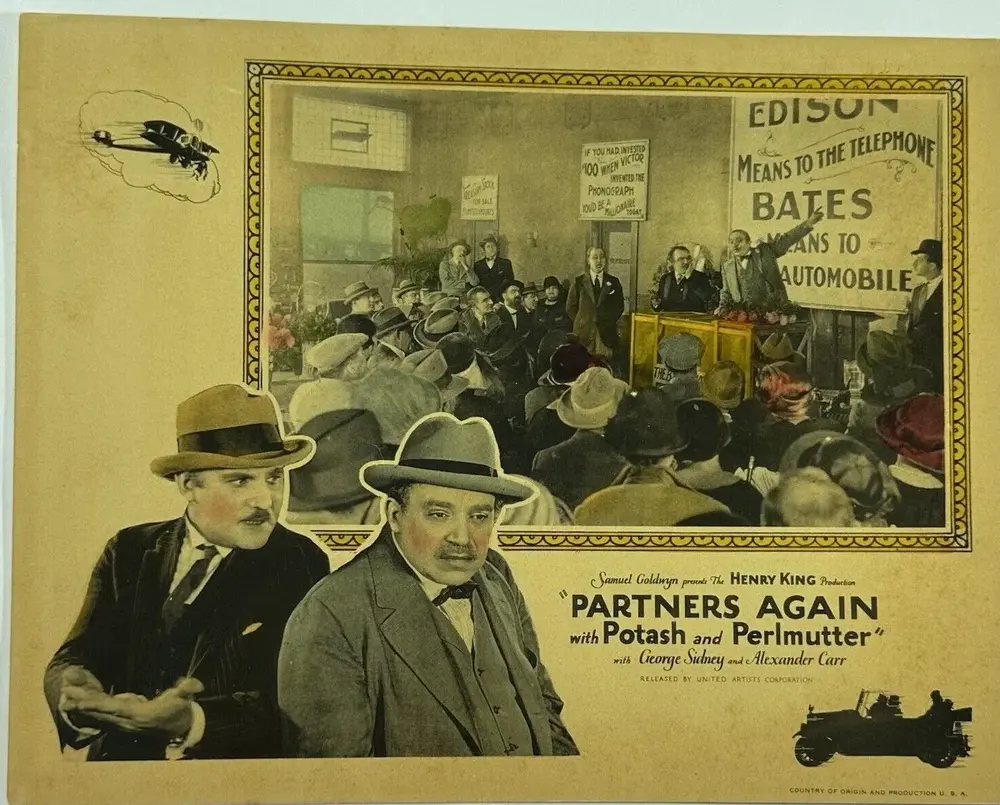
The pacing in the first forty minutes is deliberate, perhaps too much so. We see the duo being swindled by a 'phony invention'—a classic trope of the era that reflects a general public anxiety about the rapid pace of technological change. The way they hustle other investors into the scheme provides a cynical look at 1920s capitalism. It’s a dog-eat-dog world, and Potash and Perlmutter are usually the ones being bitten. The tension builds not from the stakes of the business itself, but from Potash’s increasing paranoia. His fear of jail isn't just a plot point; it's a driving force that shifts the film from a domestic comedy into a surrealist nightmare.
The performances are the backbone of the film. George Sidney’s Potash is a masterclass in high-anxiety acting. His facial expressions, particularly when he begins to lose his grip on reality, are haunting. There is a specific scene where he stares at a set of bars on a window, convinced he is already in a cell, that is genuinely unsettling. It’s a tonal shift that reminds one of the psychological depth found in The Dream Cheater, though here it is played for dark laughs.
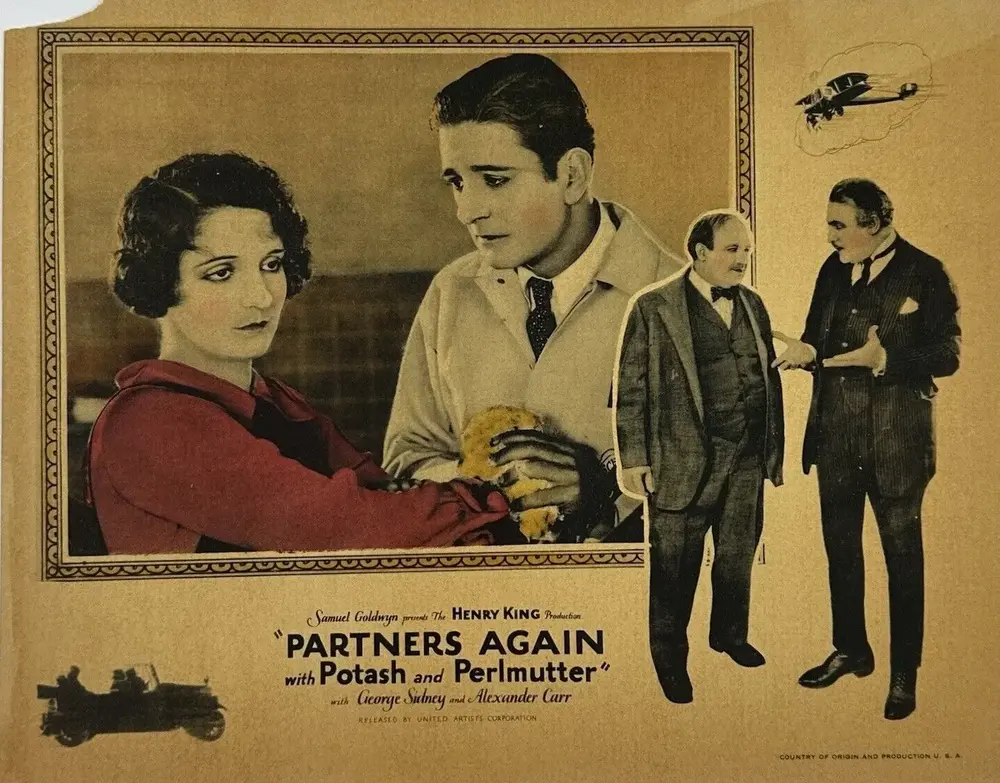
Alexander Carr’s Perlmutter acts as the perfect foil—more grounded, more frustrated, but ultimately just as complicit. Their bickering feels lived-in. It’s clear these actors knew each other's timing down to the millisecond. The supporting cast, including Allan Forrest and Betty Jewel, do their best with somewhat thin roles, but the film rightfully belongs to the titular partners. The chemistry here is what makes the film's eventual descent into madness believable. Without that foundation of mutual frustration and loyalty, the climax would feel unearned.
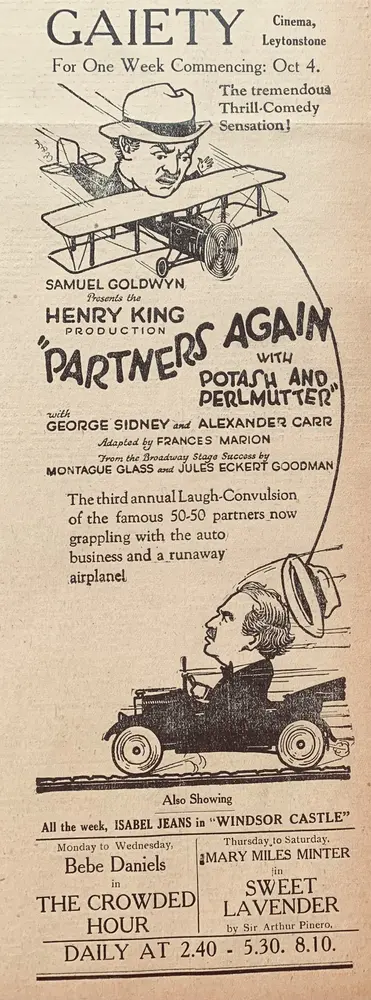
Director Henry King (though often associated with more sweeping dramas) handles the comedic timing with a steady hand, but the real star of the direction is the final act. The airplane sequence is, quite frankly, insane. As Potash takes to the wings of the escape plane, the cinematography shifts from static, stage-like shots to dynamic, wind-swept realism. The camera captures the sheer height and danger of the situation in a way that makes your stomach drop.
Compared to the more standard action in The Fear Fighter, the stunt work in Partners Again feels more visceral because of the character's incompetence. Potash isn't a hero; he's a terrified man who has completely lost his mind. Seeing him dangle from a biplane while the ground rushes by beneath him is a highlight of 1920s cinema. The editing in this sequence is sharp, cutting between the panicked faces in the cockpit and the flailing Potash on the wing, creating a sense of genuine peril that balances the humor.
If you are looking for a historical curiosity that captures the transition of comedy from the stage to the spectacles of the screen, then yes. It is a vital piece of the Potash and Perlmutter legacy. However, if you are looking for a film with a tight, logical narrative, you might find yourself checking the clock during the middle section. The film's value lies almost entirely in its two leads and its breathtaking finale. It’s a film that demands you sit through the 'business talk' to get to the 'wing-walking.'
Most critics point to the airplane scene as the film's peak, but the most interesting part of Partners Again is actually its depiction of mental health. Potash’s 'delusion' is played for laughs, but it’s a surprisingly dark portrayal of a nervous breakdown. The film suggests that the pressure of the American dream—the constant need to hustle and the fear of failure—is enough to drive a man to literally walk on air. It’s a surprisingly bleak subtext for a slapstick comedy. It works. But it’s flawed.
While it lacks the sheer chaotic energy of The Human Tornado, Partners Again offers a more character-driven experience. It’s less about the 'tornado' of action and more about the 'tornado' inside Potash's head. It also stands in contrast to films like Just Off Broadway, which deal with the legal system more seriously. Here, the law is a looming shadow that turns a businessman into a madman.
Partners Again is a lopsided but ultimately rewarding experience. It captures a specific moment in American culture where the line between a businessman and a con artist was razor-thin. The film doesn't just stumble; it face-plants into its own ambition during the second act, but it recovers with a final sequence that is nothing short of legendary. It is loud. It is silent, but it is loud in its energy. Watch it for the history, stay for the stunts, and ignore the occasionally creaky plot mechanics. It’s a piece of cinema that proves that even in 1926, the only way to escape your problems was to fly away from them—literally.
IMDb —
1922
Community
Log in to comment.