DbcultAccessing Vault...
6.5/10
Senior Film Conservator

A definitive 6.5/10 rating for a film that redefined the boundaries of cult cinema. Just Pals remains a cornerstone of transgressive art.
In an era often romanticized for its grandiosity and nascent cinematic experiments, 1920's Just Pals emerges as a surprisingly nuanced and deeply affecting portrait of human connection. Far from being a mere relic of the silent age, this film, penned by Paul Schofield and John McDermott, transcends its period trappings to deliver a narrative rich in emotional texture and social commentary. It's a testament to the power of simple storytelling when imbued with genuine sentiment and compelling character arcs. At its core, it’s a story about an unlikely bond blooming in the arid landscape of societal judgment, proving that kinship can be found in the most unexpected of places, and that even the most hardened hearts can be softened by a touch of innocence. The film masterfully navigates the complexities of small-town gossip and the innate human desire for belonging, painting a vivid picture of a community grappling with its own preconceptions.

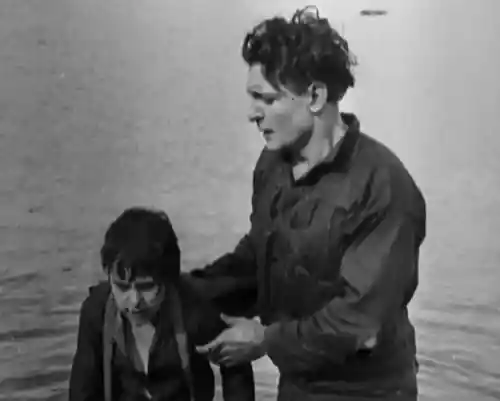
The premise is deceptively straightforward: a small-town tramp, Bim, finds his aimless existence irrevocably altered by the arrival of a runaway boy. Yet, within this seemingly simple framework, director John Ford (uncredited, but widely acknowledged for his influence) and the writers construct a compelling exploration of character transformation and societal dynamics. Bim, portrayed with a captivating blend of rugged charm and underlying vulnerability by Buck Jones, is initially a figure of casual disdain for the town's more respectable citizens. His days are spent in amiable idleness, marked by a certain detachment from the community's expectations. Jones, known for his prolific career as a Western star in films like Riders of the Purple Sage and This Hero Stuff, brings a surprising depth to this non-Western role, showcasing his range beyond the saddle. His portrayal of Bim is not merely a caricature of a drifter, but a man whose carefree exterior masks a deeper yearning for purpose, a yearning that only the unburdened presence of a child can awaken. This evolution is the narrative's beating heart, demonstrating a profound shift from self-interest to selfless devotion.

The boy, Georgie Stone, is the catalyst for Bim’s metamorphosis. His arrival, a silent plea for protection and belonging, pierces through Bim’s carefully constructed apathy. Stone’s performance, though wordless, conveys a heartbreaking vulnerability that instantly endears him to the audience and, crucially, to Bim. The initial awkwardness of their cohabitation gradually gives way to a tender, unspoken understanding, a bond forged in shared solitude and mutual need. This relationship is depicted with a delicate touch, avoiding maudlin sentimentality in favor of genuine emotional resonance. It’s a powerful illustration of how companionship can mend fractured spirits, offering a sanctuary from a world that often seems indifferent or even hostile. The visual language of the silent film excels here, with subtle gestures and expressions communicating volumes about their developing affection.
The town itself functions as a character, its collective consciousness shaping the struggles and triumphs of Bim and the boy. Initially, it embodies the harsh realities of small-town prejudice, where appearances and social standing dictate acceptance. Bim, with his unkempt demeanor and lack of conventional ambition, is an easy target for suspicion and scorn. The narrative cleverly uses the townspeople’s reactions to highlight the arbitrary nature of judgment, forcing viewers to question their own preconceived notions. Helen Ferguson, as the kind-hearted Mary Bruce, serves as a vital counterpoint to this prevailing skepticism. Her character embodies the latent compassion that exists even in seemingly rigid communities, her belief in Bim’s inherent goodness acting as a beacon of hope. Her quiet strength and unwavering faith in humanity provide a crucial moral compass, guiding both Bim and the audience toward a more empathetic understanding of the situation. She represents the potential for individual goodness to challenge and ultimately soften collective harshness.

The screenplay by Schofield and McDermott is particularly adept at crafting a believable social milieu. The dialogue, conveyed through intertitles, is economical yet impactful, allowing the visual storytelling to take precedence. This is the hallmark of great silent cinema: the ability to communicate complex emotions and intricate plot points without uttering a single word. The film doesn't shy away from depicting the ugliness of gossip and unfounded accusations, yet it also celebrates the eventual triumph of truth and kindness. The shifting attitudes of the townspeople, from outright hostility to eventual acceptance, are portrayed with a credible gradualism, reflecting a nuanced understanding of human nature. This slow thawing of the community’s heart is one of the film’s most satisfying developments, illustrating the transformative power of genuine affection and unwavering loyalty. It reminds us that collective perception can be swayed, not by grand gestures, but by consistent acts of quiet devotion.

At its heart, Just Pals is a profound meditation on redemption. Bim, in taking on the responsibility of the boy, embarks on a journey of self-discovery that ultimately redeems him in the eyes of the community and, more importantly, in his own. His transformation isn't instantaneous or miraculous; it's a gradual process, punctuated by setbacks and moments of despair, making his eventual triumph all the more resonant. This arc resonates with timeless narratives of the outcast finding purpose, a motif that continues to captivate audiences across generations. The film subtly argues that true family isn’t solely defined by blood ties but by the bonds of love, care, and mutual support. Bim and the boy create their own unconventional family unit, one built on trust and protection, defying societal norms and proving that belonging can be found in the most unexpected configurations. This chosen family concept is powerfully rendered, offering a hopeful vision of human connection in the face of adversity.
The emotional crescendo of the film arrives as Bim fights to secure a stable future for the boy, facing down legal challenges and the entrenched biases of the town. These sequences are charged with a quiet intensity, relying on Buck Jones's expressive acting and the evocative power of silent cinema to convey the urgency and desperation of his struggle. The challenges Bim faces are not merely external; they are internal battles against his own past, his self-doubt, and the ingrained societal expectations that have long defined him. The film effectively portrays the resilience of the human spirit when motivated by genuine affection, making Bim's journey a compelling testament to the transformative power of love. It’s a narrative that champions the underdog, celebrating the quiet heroism found in everyday acts of kindness and perseverance. The ultimate resolution, while perhaps leaning towards the sentimental, feels earned through the arduous journey of its protagonists, leaving the viewer with a sense of profound satisfaction.
From a purely cinematic perspective, Just Pals is a masterclass in silent film storytelling. The direction, often attributed to John Ford's early influence, demonstrates a keen understanding of visual composition and pacing. Each shot is meticulously framed to convey emotion and advance the plot, minimizing the reliance on intertitles. The camera work, while perhaps not as overtly experimental as some of its contemporaries, is incredibly effective in capturing the vastness of the rural landscape and the intimacy of human interactions. The performances, particularly from Buck Jones and Helen Ferguson, are exemplary, showcasing the nuanced acting required for silent cinema – where every gesture, every facial expression, must speak volumes. Ferguson, as Mary, projects an aura of gentle strength and moral rectitude that perfectly complements Jones's more rough-hewn portrayal of Bim. Their chemistry, subtle and understated, adds another layer of emotional depth to the narrative, providing a quiet romantic thread without overshadowing the central relationship between Bim and the boy. The supporting cast, including Edwin B. Tilton and Duke R. Lee, contribute significantly to the film’s authentic small-town atmosphere, each character, no matter how minor, feeling distinct and purposeful within the narrative fabric.
The enduring appeal of Just Pals lies in its universal themes. While set in a specific time and place, its exploration of prejudice, redemption, and the search for belonging resonates deeply with audiences even today. It reminds us that compassion is a powerful force, capable of breaking down barriers and fostering unexpected connections. The film’s emotional honesty prevents it from descending into mere melodrama; instead, it achieves a genuine poignancy that lingers long after the final frame. Its narrative simplicity belies a sophisticated understanding of human psychology and social dynamics, making it far more than just a historical curiosity. It stands as a testament to the fact that compelling cinema doesn't always require elaborate special effects or complex narratives; sometimes, all it takes is a powerful story about the human heart, told with sincerity and skill. The impact of such films on the nascent art form of cinema cannot be overstated, laying groundwork for character-driven dramas that would follow in subsequent decades. It’s a film that, despite its age, still feels remarkably fresh in its emotional beats and character development, proving the timelessness of its core message. A true cinematic treasure, it warrants rediscovery by anyone appreciative of profound storytelling.

IMDb 5.6
1915
Community
Log in to comment.