DbcultAccessing Vault...
Cult Review
Senior Film Conservator

Stepping back into the nascent days of cinema, one encounters narratives that, despite their age, possess a timeless resonance. Such is the case with The Girl from Outside, a compelling expedition into the human spirit, set against the formidable backdrop of the Alaskan mining frontier. This isn't merely a tale of adventure or crime; it's a poignant exploration of transformation, of light piercing through the darkest corners, driven by the unexpected arrival of a singular, pure soul. It speaks to an era where moral clarity, even amidst rugged landscapes and morally ambiguous characters, often found its way to the screen, serving as both entertainment and a reflection of societal ideals. The film, a product of its time, leverages the nascent power of visual storytelling to weave a narrative that, while simple in premise, is rich in emotional texture and thematic depth. It invites us to consider the profound impact one individual can have on a collective, particularly when that individual embodies an innocence so potent it becomes a catalyst for profound change.
Our protagonist, a young woman portrayed with a delicate yet resilient grace by Billie Bennett, arrives in this unforgiving landscape as a veritable tenderfoot. Her inexperience with the harsh realities of the Alaskan mining country is palpable, a stark contrast to the grizzled, hardened faces that populate her new surroundings. She is an anomaly, a splash of vibrant color in a monochromatic world, utterly unprepared for the intricate web of danger and camaraderie that awaits her. This initial naiveté is not a weakness, however; rather, it forms the bedrock of her character's strength, allowing her to perceive the world and its inhabitants through an unjaded lens. Her journey is not one of conquering the wilderness, but of navigating its human element, an endeavor far more complex and ultimately, more rewarding. Bennett’s performance, stripped of dialogue, relies entirely on gesture, expression, and the subtle nuances of her physical presence to convey this profound innocence, a feat that speaks volumes about the artistry of silent film acting.
It is in this raw, elemental setting that she inadvertently crosses paths with the notorious Curly Kid and his motley gang. These are men forged by the frontier's unforgiving demands, their lives likely a tapestry of desperation, survival, and illicit enterprise. Sidney Ainsworth as Curly Kid and Wilton Taylor contribute significantly to the gang's menacing yet ultimately vulnerable portrayal. The film masterfully establishes their reputation without resorting to gratuitous violence, instead hinting at their criminal activities through their demeanor, their interactions, and the subtle fear they inspire in others. Yet, when confronted with the young woman's guileless presence, a different facet of their character begins to emerge. Their initial interactions are laden with suspicion and a rough protectiveness, a testament to the film's nuanced character development. The contrast between her inherent purity and their hardened existence sets the stage for the dramatic shifts that are to follow, creating a compelling dynamic that anchors the film's central conflict and its eventual resolution.
Crucially, the young woman remains blissfully unaware of the true nature of their criminal endeavors. This narrative device is key to the film's emotional impact, allowing for genuine connection to form before any moral judgment can cloud the burgeoning relationships. Her perception of them is untainted by their past deeds, seeing only the men beneath the hardened exteriors. This innocence acts as a powerful mirror, reflecting back to the gang members a forgotten sense of their own humanity. It’s a remarkable testament to the power of unblemished perception, illustrating how a lack of preconceived notions can open doors that judgment would otherwise seal shut. This narrative choice elevates The Girl from Outside beyond a simple crime drama, transforming it into a study of human potential for good, even in the most unlikely of circumstances. The film does not shy away from the dangers inherent in her situation, yet it persistently emphasizes the transformative power of her presence, creating a tension between peril and hope that keeps the audience thoroughly invested.

As the narrative unfolds, a subtle but profound transformation begins to ripple through the gang. Her unwavering kindness, her unassuming strength, and her mere presence cultivate an unexpected affection within their ranks. The men, once solely focused on their nefarious pursuits, find themselves drawn to her light, their rough edges gradually softening. This isn't an overnight conversion but a gradual, organic shift, depicted with careful artistry. We witness glimpses of their burgeoning protectiveness, their clumsy attempts at chivalry, and the dawning realization that their current path is incompatible with the purity she represents. This internal conflict is exquisitely portrayed, particularly in the performances of Louie Cheung, Jacob Abrams, and Clara Horton, whose ensemble work effectively conveys the group's evolving dynamic. The film, in this respect, treads a path similar to The Debt, where the weight of moral choices and the potential for redemption form the core of the drama, albeit in vastly different settings and contexts. Here, the catalyst for change is external, yet its impact is deeply internal and personal for each member of the gang.
The collective performances are a standout, particularly given the constraints of silent film. Billie Bennett, as the titular 'Girl from Outside', embodies an ethereal yet grounded presence, her every gesture conveying a world of emotion without uttering a single word. Her ability to project both vulnerability and an unyielding moral core is central to the film's success. Sidney Ainsworth as Curly Kid masterfully navigates the character's arc from a hardened outlaw to a man touched by grace, his internal struggle often visible in his eyes. Wilton Taylor, alongside other supporting players like Walter MacNamara, Hallam Cooley, and Colin Kenny, each contribute to the gang's believable transformation, showcasing a remarkable range of expressions and physical acting. The ensemble truly shines, creating a believable microcosm of society where even the most hardened individuals are susceptible to the influence of genuine goodness. This level of nuanced character work, without spoken dialogue, is a powerful reminder of the artistic heights achieved during the silent era, requiring actors to communicate with an intensity and precision often overlooked today. The chemistry among the cast, particularly in their evolving interactions with Bennett's character, is critical in rendering the narrative arc plausible and emotionally resonant.
The narrative's backbone is undeniably the vision of writer Rex Beach, whose storytelling prowess is evident in the film's compelling structure and character development. Beach, known for his adventure stories often set in the Alaskan wilderness, brings a robust sense of place and an understanding of human nature to the screenplay. His thematic depth, which often explores the rugged individualism and moral complexities of frontier life, translates beautifully to the screen, even in its silent incarnation. The plot, while straightforward, is imbued with a sense of moral gravity, reminiscent of other narratives that pit innocence against corruption, or explore the profound impact of a single virtuous individual on a flawed community. One might draw parallels to the enduring narrative of La capanna dello zio Tom, not in specific plot points, but in the central theme of an individual's innate goodness challenging and ultimately softening the harsh realities of their environment, inspiring a shift towards empathy and a better way of living. Beach's ability to craft a story that feels both epic in its setting and intimate in its human drama is a testament to his enduring legacy as a storyteller.
The central theme of redemption and the inherent goodness of humanity is perhaps the film's most enduring legacy. It posits that no individual is beyond salvation, and that a genuine connection, unburdened by judgment, can unlock a desire for a virtuous life. This moral compass guides the entire narrative, elevating it beyond a simple genre piece. The film suggests that the 'better life' isn't necessarily about material wealth or societal acceptance, but about an internal shift, a reclaiming of one's moral integrity. It’s a powerful message, delivered with a sincerity that resonates. This focus on moral transformation is a recurring motif in cinema, seen in different guises across various eras. For instance, films like A Modern Monte Cristo, while dealing with revenge and justice, ultimately touch upon the protagonist's moral evolution, albeit through a more convoluted path. Even in the more fantastical realm of The Wolf Man, the struggle between inherent nature and the desire for good echoes this fundamental human conflict. The Girl from Outside distills this struggle to its purest form, showing how the gentle hand of compassion can guide even the most wayward souls back to a path of righteousness. It’s a beautifully optimistic outlook, particularly considering the harsh realities often depicted in films of this era.
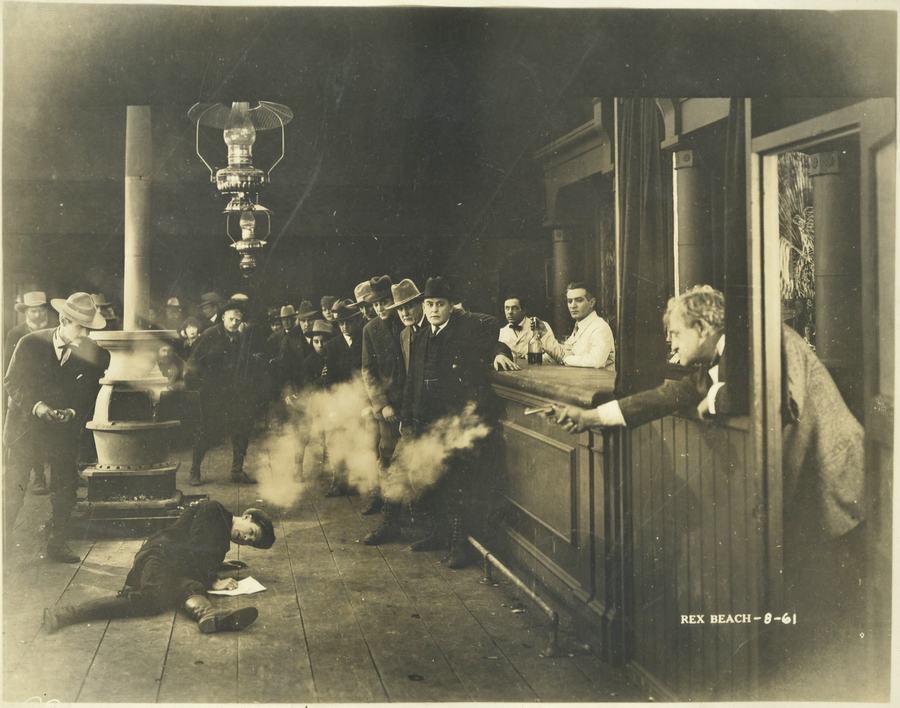
From a cinematic perspective, The Girl from Outside provides a fascinating glimpse into the storytelling techniques of the silent era. The use of intertitles is judicious, allowing the visual narrative to carry much of the emotional weight. The cinematography, though perhaps rudimentary by today's standards, effectively captures the austere beauty and isolation of the Alaskan setting, making the environment a character in itself. The performances, as mentioned, are a masterclass in non-verbal communication, relying on exaggerated yet heartfelt expressions and body language to convey complex emotions. This reliance on visual storytelling distinguishes it from later, more dialogue-heavy films, forcing the audience to engage more actively with the images presented. Comparing its depiction of the rugged frontier to films like The Country That God Forgot, one can appreciate the consistent allure of such untamed landscapes in early American cinema, often serving as a crucible for human character. The dramatic tension is built not through explosions or rapid cuts, but through the slow, deliberate unfolding of character arcs and the palpable shift in the gang's collective conscience. This deliberate pace allows for a deeper immersion into the psychological journey of the characters, making their eventual redemption all the more earned and impactful.
The transformation of the gang members, guided by the young woman, culminates in their collective pursuit of a 'better life.' This isn't merely a cessation of criminal activity, but a profound shift in their values and aspirations. The film subtly suggests that this better life is one characterized by honest work, community, and a newfound respect for themselves and others. It's a powerful statement on the potential for rehabilitation and the inherent human desire for dignity. The sacrifices they make to achieve this are not explicitly detailed but are implied through their changed demeanor and commitment to their new path. This narrative arc, where individuals choose to abandon a life of crime for moral uprightness, is a timeless one, echoing in various forms across cinematic history. One might find a thematic echo in The Birth of a Man, which similarly explores personal growth and the forging of character through adversity, albeit with a focus on individual struggle rather than group redemption. The film avoids a simplistic 'happily ever after,' instead focusing on the journey of change itself, suggesting that the true reward lies in the act of striving for betterment.
The supporting cast, including Cullen Landis, Bert Sprotte, Ernest Spencer, and Gus Saville, all contribute to the rich tapestry of characters, each adding a layer of authenticity to the mining community and the gang itself. Their performances, though often in smaller roles, are crucial in building the believable world within which this remarkable transformation occurs. The collective effort of these actors, under the vision of the filmmakers, creates a sense of a living, breathing community, making the gang's eventual shift more impactful. The meticulous attention to character detail, even for minor roles, is a hallmark of quality filmmaking from any era. The silent film medium, in particular, often demanded a certain theatricality and clarity of expression from all its players, ensuring that even a fleeting appearance could convey significant meaning or emotion. This ensemble strength ensures that the narrative feels grounded and the emotional stakes remain high, even as the tone shifts from potential peril to burgeoning hope.
Revisiting The Girl from Outside today offers more than just historical curiosity; it provides a window into enduring human themes that transcend the technological limitations of its time. It reminds us of cinema's foundational power to tell stories that touch the heart and provoke thought. The film’s quiet strength, its belief in the redemptive power of innocence, and its compelling portrayal of transformation make it a valuable piece of early cinematic history. It’s a testament to the fact that compelling narratives about moral growth and the impact of pure-hearted individuals are timeless. In an age often preoccupied with cynicism, this film offers a refreshing dose of optimism, demonstrating that even in the most rugged and seemingly hopeless environments, humanity's better angels can prevail. It stands as a compelling counterpoint to more cynical narratives, proving that stories of hope and transformation have always held a profound place in our collective consciousness, much like the enduring appeal of narratives found in The Market of Vain Desire or The Golden Lotus, which, despite their cultural differences, explore the intricate dance of human desire and its consequences. The film's message, delivered through the stark beauty of silent cinema, continues to resonate, proving that some stories are simply too powerful to be confined by time.
The enduring appeal of such a narrative lies in its universal message: that the most profound changes often stem from the simplest of interactions, from the unexpected arrival of an outsider who sees beyond the surface. This film, crafted with the raw tools of early cinema, manages to convey a depth of emotion and a complexity of human nature that belies its age. It’s a quintessential tale of the American frontier, not just in its physical setting, but in its exploration of rugged individualism meeting communal transformation. The journey of the Curly Kid and his gang, from feared outlaws to men seeking a better path, is a powerful testament to the influence of genuine empathy and the inherent human capacity for evolution. If you have an appreciation for cinema that delves into the core of human morality and the transformative power of connection, then The Girl from Outside is an essential viewing experience, a quiet masterpiece that speaks volumes without uttering a single word. Its place in the annals of film history is well-earned, a beacon demonstrating that even in the earliest days of the art form, filmmakers were grappling with profound questions of identity, morality, and the potential for human redemption. It's a reminder that storytelling, in its purest form, can inspire and uplift, regardless of the era or the technological advancements. This film, with its unassuming yet powerful narrative, continues to serve as a compelling artifact of a bygone cinematic age, yet its themes remain as relevant and impactful as ever before, much like the timeless lessons embedded in a film such as The Truth About Helen, which similarly probes the depths of character and consequence.

IMDb 5.8
1914
Community
Log in to comment.