DbcultAccessing Vault...
Cult Review
Senior Film Conservator
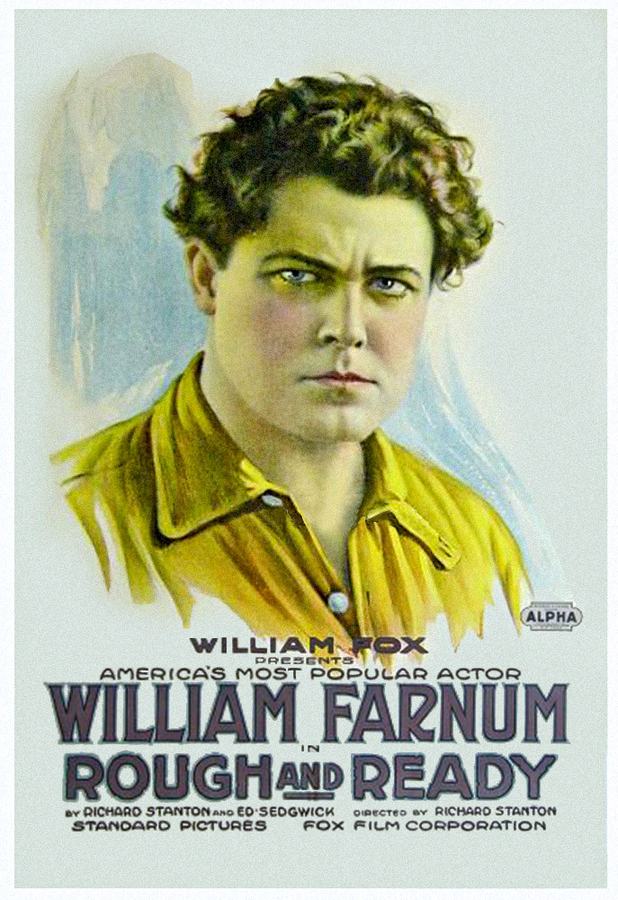
Stepping back into the nascent days of cinema, one occasionally unearths a gem that, despite the passage of a century, still resonates with a surprising force. Edward Sedgwick’s 1917 silent drama, Rough and Ready, is precisely such a discovery. It’s a narrative tapestry woven with threads of noble intentions, tragic misinterpretations, and the rugged individualism demanded by the Alaskan frontier. This isn't merely a historical curiosity; it's a testament to the power of early filmmaking to craft compelling human dramas, even without the benefit of spoken dialogue. The film plunges us headfirst into a world where honor is both a shield and a vulnerability, and where the stark realities of a new landscape often mirror the complexities of the human heart.
The story commences not in the eponymous rough-and-ready wilderness, but in the sophisticated, yet equally treacherous, milieu of New York City. Here, we are introduced to Bill Stratton, portrayed with a compelling earnestness by Alphonse Ethier. Bill is a man of unwavering moral fiber, a quality that drives him to intervene in a friend's crumbling marriage. His efforts, though born of pure altruism, are tragically misconstrued by his fiancée, Evelyn, played by the expressive Mabel Bardine. In a pivotal moment of dramatic irony, Evelyn interprets Bill’s intricate maneuvering to save his friend’s union as a sign of his own infidelity. This devastating misunderstanding shatters their engagement, propelling Bill into a profound state of remorse and disillusionment. The city, once a symbol of his future, now represents a painful past he must escape. This initial urban entanglement sets the stage for a journey of both geographical and emotional exile, a common trope in silent cinema, yet handled here with a particular poignancy. It immediately establishes a sympathetic protagonist whose moral compass, though true, has led him down a path of personal anguish.
The decision to abscond to Alaska is more than a mere change of scenery; it's a symbolic seeking of purification, a flight from judgment into a land where one might hope to shed the weight of past mistakes. This narrative device, of a character seeking solace or a new identity in a harsh, untamed environment, finds echoes in many films of the era. One might draw a parallel to the struggles depicted in The Squatter's Son, where the frontier similarly tests the mettle and moral fiber of its characters. The vastness of Alaska, with its unforgiving landscape, becomes an external manifestation of Bill’s internal turmoil, a crucible in which his character will be re-forged or utterly broken.
Upon arriving in the remote outpost of Yellow Gulch, fate, with its often-cruel sense of humor, orchestrates a series of encounters that bring Bill full circle to the very troubles he sought to escape. Here, he crosses paths with "Silver" Jack Belmont, portrayed with suitable villainy by William Farnum. Belmont is not just any antagonist; he is revealed to be the very individual responsible for nearly wrecking Bill’s friend's marriage back in New York. This revelation is a masterful stroke of narrative economy, instantly connecting Bill’s past pain with his present predicament and providing a clear, personal antagonist. Belmont embodies the opportunistic, morally bankrupt character often found lurking in frontier narratives, a stark contrast to Bill's earnestness. His presence in Yellow Gulch transforms Bill's quest for peace into an inescapable confrontation with his past.
The intricacies deepen further with the introduction of "Lucky" Matthew Durant, an old miner brought to life by Frank McGlynn Sr. Durant carries a secret that will profoundly impact Bill’s journey: he is Evelyn’s father. However, Durant is not the prosperous figure he claims to be; he has been living a lie, fabricating tales of wealth to his daughter. This layer of paternal deception adds another dimension to the film’s exploration of truth and illusion. It’s a classic setup for dramatic irony, where the audience is privy to information that the characters are not, heightening the tension and anticipation. The theme of concealed truths and their eventual, often explosive, revelation is one that resonates across many dramatic works, from the domestic melodramas like Wives of Men to more overtly suspenseful tales. Here, it underpins the entire Alaskan segment of the story.
Bill, ever the man of integrity, feels compelled to reveal the truth about Durant’s financial pretense to Evelyn. His intention is pure: to spare her further disillusionment and to reconcile her with her father, albeit under honest pretenses. Yet, the deep-seated distrust Evelyn harbors towards Bill, stemming from their New York misunderstanding, proves an insurmountable barrier. Her belief in him shattered, she instead falls prey to Belmont’s cunning machinations. Belmont, ever the opportunist, seizes this vulnerability, promising to lead Evelyn to her father’s supposedly rich mine, a promise he knows to be false. This moment is crucial; it underscores the devastating ripple effect of initial misjudgment and highlights how easily a vulnerable heart can be swayed by deceit when trust in a genuine advocate has been eroded.
The tragic irony here is palpable: Bill, the honest man, is disbelieved, while Belmont, the scoundrel, is embraced. This narrative thread explores the fragility of perception and the power of a carefully constructed lie, even in the face of truth. It’s a theme that echoes the moral quandaries found in films like The Straight Way, which often explored the difficult choices characters face and the consequences of their adherence to or deviation from moral principles. The audience, having witnessed the purity of Bill's intentions, feels the weight of Evelyn's misplaced trust acutely, creating a powerful sense of dramatic tension as the story hurtles towards its inevitable confrontation.
The stage is thus set for the climactic confrontation between Bill and Belmont. This isn’t just a physical skirmish; it’s a symbolic battle between integrity and deceit, between selfless love and cynical exploitation. The silent era, often relying on exaggerated gestures and clear character archetypes, excels at such clear-cut moral contests. Bill’s victory over Belmont is not merely a triumph of physical prowess but a vindication of his honor, a dramatic unraveling of the web of lies that has entangled him and Evelyn. The fight sequence, though perhaps simplistic by modern standards, would have been a visceral release for contemporary audiences, a satisfying resolution to the mounting tension.
With Belmont defeated, the path is cleared for the final act of reconciliation. Bill, having proven his worth and exposed Belmont’s villainy, can now bridge the chasm between Evelyn and her father. The film culminates in a poignant reunion, where the truth, finally accepted, allows for healing and forgiveness. This resolution is deeply satisfying, embodying the era's preference for moral order restored. It speaks to the enduring power of familial bonds and the human capacity for forgiveness, themes that resonate in classics like The Colleen Bawn, where misunderstandings and familial conflicts ultimately give way to resolution. The narrative arc, from urban misunderstanding to Alaskan redemption, is complete, leaving the audience with a sense of justice served and relationships mended.
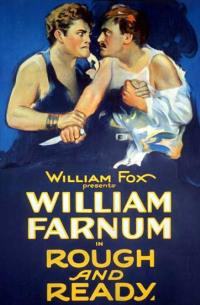
Edward Sedgwick, credited as both director and co-writer with Richard Stanton, demonstrates a keen understanding of silent film grammar in Rough and Ready. The pacing is deliberate yet propulsive, ensuring that the emotional beats land effectively despite the absence of dialogue. Sedgwick's direction emphasizes clear visual storytelling, relying on expressive close-ups and well-composed wider shots to convey narrative and emotion. The choice of Alaska as a backdrop is particularly effective; the vast, untamed landscape is not merely scenery but an active participant in the drama, reflecting the characters' struggles and providing a stark contrast to the urban beginning. This use of setting as a character is a hallmark of strong visual storytelling, a technique explored in various ways across silent cinema, from the domestic interiors of The Martinache Marriage to the expansive landscapes of frontier tales.
The performances in Rough and Ready are a masterclass in silent film acting. Alphonse Ethier, as Bill Stratton, embodies the virtuous hero with a nuanced portrayal that goes beyond mere melodrama. His expressions convey a spectrum of emotions – the initial resolve, the crushing remorse, the determined pursuit of justice, and the ultimate relief of reconciliation – all without uttering a single word. Mabel Bardine's Evelyn is equally compelling; her initial trust, her heartbreaking misunderstanding, and her eventual realization are communicated through subtle gestures and powerful gazes. The challenge for silent actors was immense, requiring them to externalize complex internal states, and Bardine rises to this occasion with grace and conviction.
William Farnum, as the villainous "Silver" Jack Belmont, is suitably menacing. His performance is a study in calculated duplicity, making him a believable foil to Bill’s heroism. The contrast between Ethier’s uprightness and Farnum’s conniving nature creates a clear moral dichotomy, a staple of early cinema that allowed audiences to easily invest in the narrative’s ethical stakes. Frank McGlynn Sr.’s portrayal of "Lucky" Matthew Durant captures the pathos of a man caught in his own web of lies, lending a touch of tragic humanity to the character. The ensemble, including David Higgins, Violet Palmer, Frank Newton, and Jessie Arnold, contribute to a rich tapestry of supporting roles that populate Yellow Gulch, giving the film a sense of lived-in authenticity.
Beyond its historical context, Rough and Ready explores universal themes that transcend the silent era. The central role of misunderstanding as a catalyst for dramatic conflict is timeless. It reminds us how easily intentions can be skewed and how profound the consequences of misjudgment can be. The film also delves into the concept of honor and the lengths to which a good man will go to restore his reputation and protect those he cares about. Bill Stratton's journey is a powerful testament to personal redemption, not just for himself, but for the relationships he strives to mend.
The stark contrast between the urban sophistication of New York and the raw, untamed wilderness of Alaska serves as a powerful metaphor for the characters' internal landscapes. The frontier strips away societal pretenses, forcing individuals to confront their true selves and the fundamental truths of human nature. This thematic exploration of environment shaping destiny is a common thread in American cinema, from the early Westerns to contemporary dramas. It's a reminder that sometimes, one must journey to the ends of the earth to find one's way back home, both literally and figuratively.
Comparing Rough and Ready to other films of its time reveals its strengths and highlights common narrative trends. The theme of a character's reputation being unfairly tarnished, only to be vindicated through action, is reminiscent of the moral struggles in A Square Deal, where justice, though delayed, is ultimately achieved. The intricate web of deceit and the eventual triumph of truth also bring to mind the dramatic tension found in Bought, which often explored the moral compromises people make.
The journey of self-discovery and the impact of setting on character development can also be seen in films like The Barnstormers, where travel and new environments serve to challenge and transform protagonists. Furthermore, the strong female character, Evelyn, who navigates betrayal and disillusionment, shares a spirit with the resilient women often depicted in narratives like Fires of Rebellion, where societal norms are often challenged by personal conviction. While not a direct comparison, the exploration of human folly and the redemptive power of understanding can even be loosely tied to more fantastical narratives like Das Wunder der Madonna, which, in its own way, delves into the miraculous transformation of hearts.
Rough and Ready stands as a compelling example of early cinematic storytelling, showcasing how directors and actors of the silent era masterfully conveyed complex human emotions and intricate plots without spoken dialogue. It's a film that speaks to the enduring power of visual narrative, demonstrating that a well-crafted story, coupled with expressive performances and a resonant setting, can transcend the limitations of its medium and era. Its exploration of themes like mistaken identity, the corrosive nature of deceit, and the arduous journey towards redemption remains as potent today as it was over a century ago.
For cinephiles and historians alike, Rough and Ready offers a valuable window into the narrative conventions and artistic sensibilities of its time. It reminds us of the foundational elements of storytelling that continue to inform cinema, even as technology and techniques evolve. The film's ability to engage audiences with its dramatic tension, its clear moral compass, and its ultimate message of reconciliation solidifies its place as more than just a relic; it is a vibrant piece of cinematic heritage, truly a silent saga worth revisiting. Its raw emotional power and straightforward yet intricate plot make it an engaging watch, proving that some stories are truly timeless, regardless of how they are told.
IMDb —
1917
Community
Log in to comment.