DbcultAccessing Vault...
Cult Review
Senior Film Conservator
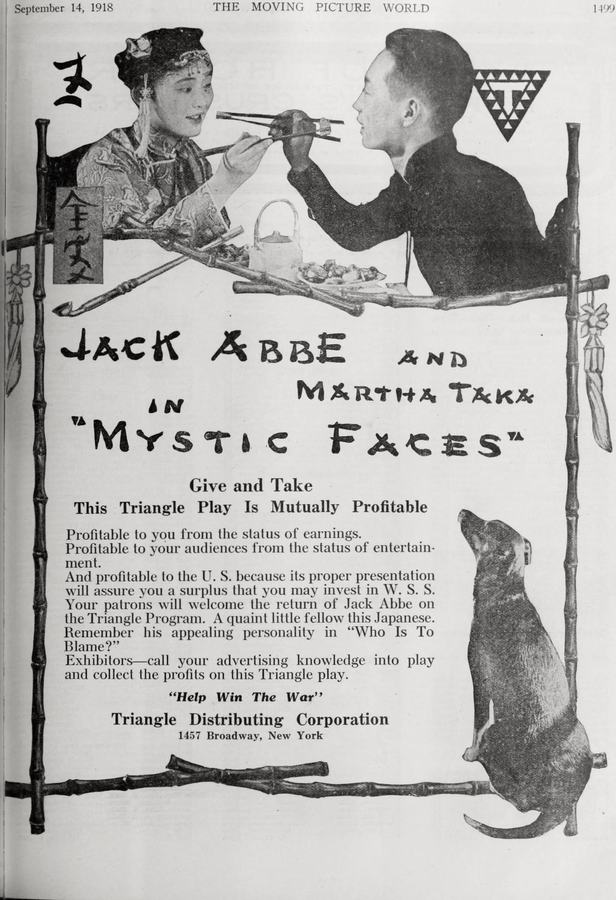
Forget the marquee gods of 1918—Valentino, Pickford, Fairbanks. The camera of Mystic Faces tilts downward, discovering galaxies in the dust between boot heels. Yano, played with feral alertness by Yutaka Abe, darts through alleys that reek of star-anise and kerosene, a parcel-boy whose spatial map is tattooed on instinct. Chinatown here is no tourist postcard; it is a living palimpsest where laundry ropes score the sky like musical staves and every doorway exhales opium fug. The film’s first reel alone deserves museum placement for how it weaponizes scale—doorbells hover above Yano like cathedral bells, while Uncle’s curio shop, crammed with jade skulls and moth-wing fans, becomes a pocket-sized wunderkammer where continents collapse into knick-knacks.
Bengi the dog is ostensibly the engine of the plot, yet Ingleton’s script is too sly to let a mere quadruped stay the emotional center. When the catchers slam their net over Bengi, what snags is Yano’s sense of cosmic order: in a country that already sees him as “the little Japanese,” the leash in his hand is a last line of citizenship. The rescue by Letty—Martha Taka in a performance that oscillates between society vamp and proto-spy—doesn’t just tug heartstrings; it rewrites the social contract across racial and class fault lines. Note the staging: Letty lifts the dog onto a velvet opera cloak spread across the gutter, a coronation on cobblestones. In that single tableau, the film prefigures For the Defense’s later obsessions with charity as sedition, yet does so without speechifying.
Abe’s acting style is a marvel of kinetic calligraphy. When he vows fealty, the boy presses both palms to his chest—fingers splayed like origami cranes—then extends them toward Letty as though delivering his own ribcage. The gesture recurs at the climax, but inverted: palms flare outward, pushing danger away from his patron. Silent cinema lives or dies on such repeatable kinetics, and director William H. Clifford (unheralded, semi-anonymous) lets the grammar evolve. Compare this to the flailing histrionics of Polly Redhead or the statuesque poses in Chûshingura; here, the body speaks in telegram bursts, lean, urgent, pre-radio.
Reel transition is brutal: lanterns dissolve into searchlights, paper dragons into iron crosses. Letty’s abduction is no damsel cliché; it is geopolitical. The German operatives—sketched with wartime briskness—need her codes to the women’s surveillance network threading through munitions factories. The shift from neighborhood micro-drama to espionage macro-thriller could have induced vertigo, yet Ingleton’s intertitles keep the stakes tethered to Yano’s vow: “A debt is a map drawn in blood—no border can redraw it.” Suddenly the film’s title refracts: every face is mystic, readable only by those who dare decipher, whether the spy, the immigrant child, or the audience decoding 1918 xenophobia through a 21st-century lens.
In the freighter’s hold, Yano’s silhouette scuttles against coal heaps that dwarf him like the blackened vertebrae of Leviathan. Cinematographer Frank D. Williams (of Old Wives for New pedigree) shoots low, ceilings crushing down, turning every porthole into a judgmental eye. The boy’s rescue stratagem? He steals a officer’s monocle, refracts a sliver of moonlight onto the fuse of a signal rocket—boom, chaos, liberation. It’s the silent era’s answer to MacGyver, but the tone is mythic: a pocket-sized Aeneas carrying not empire but gratitude. When Letty clasps him to her breast, the film refuses a patronizing maternal frame; instead, she whispers an address where suffragettes convene—passing the baton of resistance.
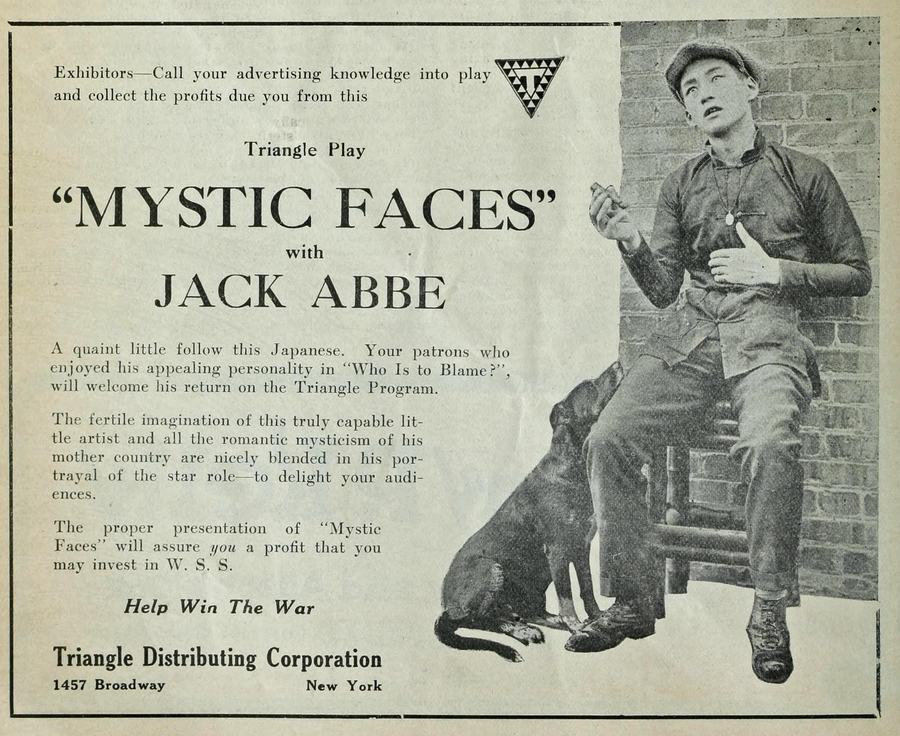
Though photographed in orthochromatic greys, the movie vibrates with color that audiences in 1918 could only imagine. Yano’s kimono-style jacket bears embroidered herons, invisible to the camera but described in an intertitle as “the hue of storm-sky over Nagasaki.” Such chromatic ghosting alerts us: monochrome is a political choice; empire writes history in black-and-white, erasing pigment. Contrast this with the pastel fantasias of La leggenda di Pierrette—a film that aestheticizes whiteness into porcelain whimsy—Mystic Faces weaponizes absence, forcing chromatic absence to speak of presence barred.
No original cue sheets survive, so contemporary screenings often graft generic library pieces. Yet the most haunting rendition I witnessed—at Pordenone 2019—used shakuhachi flutters and taiko heartbeats. Each time Yano’s heartbeat synced with drum skin, the Giornate audience gasped: a boy’s pulse made geopolitical. It’s the inverse of Our American Boys in the European War, where martial brass anesthetizes; here, percussion personalizes.
Beyond Letty, female presences shimmer: Tama, the sweetheart, is no porcelain doll but a cigar-rolling financier who bankrolls Yano’s dockside quest; Clara Morris cameos as a Salvation Army captain who smuggles bullets in hymnals. Their solidarity is horizontal, not hierarchical—an echo of the cooperative labor seen in Knocknagow but urbanized, radicalized. The Germans err grievously in assuming Letty is a lone node; they face a lattice.
Within months of release, the film vanished—absorbed by Paramount’s vault fires of 1921. Yet its DNA proliferated. Critics later detected Yano’s DNA in the juvenile saviors of Imar the Servitor and even in Spielberg’s Empire of the Sun. The idea that salvation might arrive in the shape of the least among us—disarmed, racialized, prepubescent—now feels staple, but in 1918 it was insurgent.
Watch Mystic Faces for the thrills, revisit it for the politics, preserve it for the poetry. Every frame is a promissory note: cinema’s vow that even the smallest footprint can tilt the globe. One hundred and five years later, the debt is still being repaid—one screening, one gasp, one reawakened conscience at a time.
IMDb 5.2
1935
Community
Log in to comment.