DbcultAccessing Vault...
5.6/10
Senior Film Conservator
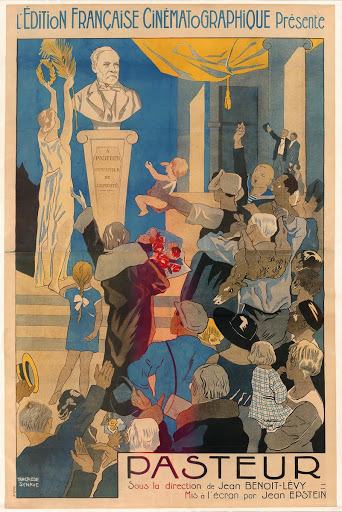
A definitive 5.6/10 rating for a film that redefined the boundaries of cult cinema. Pasteur remains a cornerstone of transgressive art.
To commemorate the centenary of Louis Pasteur’s birth, a figure whose intellectual contributions irrevocably altered the trajectory of human health and scientific thought, the film Pasteur emerges not merely as a historical recounting but as a profound cinematic homage. This production, born from a national imperative to honor one of France's most illustrious sons, endeavors to capture the essence of a man whose dedication to empirical truth transcended the conventions of his era. It’s a challenging undertaking, translating the cerebral battles of a scientist into compelling visual drama, yet the film largely succeeds in illuminating the arduous journey from audacious hypothesis to undeniable, life-saving fact. The narrative, guided by the pens of René Vallery-Radot and Edmond Épardaud, who brought an intimate understanding of their subject, navigates the complex terrain of Pasteur’s life with a gravitas befitting its subject.
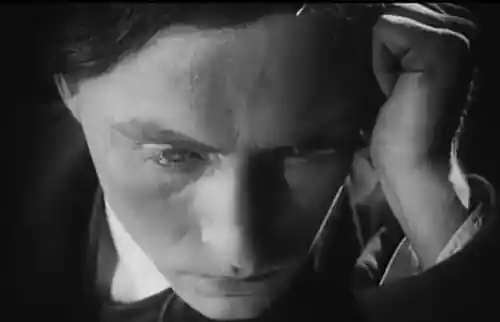
Robert Tourneur, in the titular role, delivers a performance that transcends mere impersonation, delving into the very psyche of the pioneering microbiologist. His Pasteur is not a one-dimensional hero, but a man consumed by an almost monastic devotion to his work, often at the expense of personal comfort and societal acceptance. Tourneur masterfully conveys the intellectual rigor, the quiet intensity, and the occasional flashes of frustrated genius that characterized Pasteur. We witness the subtle shifts in his demeanor, from the youthful academic brimming with revolutionary ideas to the seasoned, battle-hardened scientist whose every pronouncement carries the weight of countless experiments and profound insights. The film wisely focuses on the crucible of discovery, portraying Pasteur’s laboratory not as a sterile environment but as a dynamic arena where raw curiosity clashed with meticulous methodology, and where setbacks were merely preludes to renewed, more focused efforts. The supporting cast, including Maurice Touzé, Jean Rauzena, Paul Jorge, and Charles Mosnier, provides a robust ensemble, each contributing to the rich tapestry of characters who either championed or challenged Pasteur’s radical theories, thereby underscoring the revolutionary nature of his work.
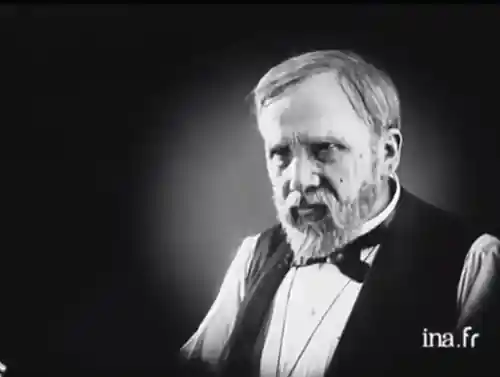
The film’s strength lies in its ability to dramatize the often-unseen struggles of scientific advancement. It’s easy, in retrospect, to view Pasteur's discoveries as inevitable, but Pasteur meticulously reconstructs the intellectual climate of 19th-century France, where established medical dogma held sway and germ theory was met with skepticism, even derision. The film doesn't shy away from depicting the fierce resistance Pasteur encountered, particularly from the medical establishment that clung to ancient miasma theories. These confrontations are not mere historical footnotes; they are presented as genuine intellectual duels, with Pasteur, armed only with evidence and logic, standing against a tide of entrenched belief. This dynamic provides a compelling undercurrent throughout the film, elevating the biographical narrative beyond a simple recounting of achievements to a more profound exploration of the nature of scientific progress itself – a relentless pursuit against inertia and ignorance.
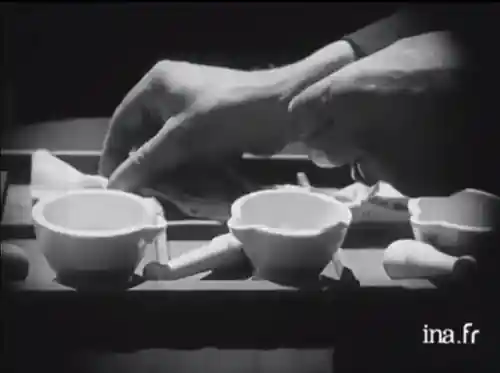
Visually, the film, while perhaps constrained by the filmmaking techniques of its era, manages to evoke the period with a commendable authenticity. The sets and costumes transport the viewer to the laboratories, lecture halls, and rural settings that defined Pasteur’s life. The direction, while perhaps less flashy by modern standards, possesses a quiet dignity, allowing the weight of Pasteur's discoveries and the power of Tourneur’s performance to take center stage. There's a deliberate pacing that mirrors the scientific process itself – slow, methodical, occasionally punctuated by moments of intense breakthrough. One could draw a fascinating parallel to the philosophical underpinnings of Har jeg Ret til at tage mit eget Liv?, where the profound question of individual autonomy over life and death is explored. In contrast, Pasteur champions the relentless fight *for* life, illustrating the monumental effort required to extend human existence and alleviate suffering, making the value of life a central, albeit unspoken, thematic pillar.
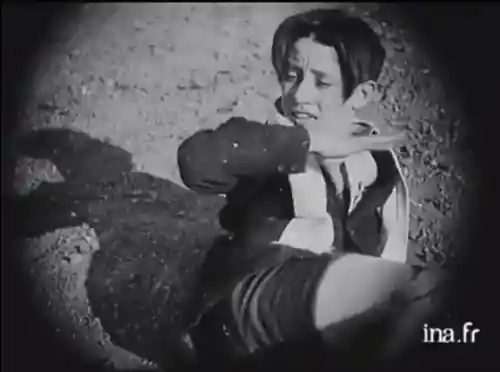
The screenplay, penned by Vallery-Radot and Épardaud, is particularly adept at distilling complex scientific concepts into accessible, dramatic moments. We witness the pivotal experiments, from the swan-neck flask demonstrations disproving spontaneous generation to the harrowing trials of the anthrax vaccine and, ultimately, the development of the rabies cure. These moments are imbued with a palpable sense of tension and consequence, reminding us that each scientific step was a leap into the unknown, fraught with potential failure and immense responsibility. The film avoids overly technical jargon, instead focusing on the human drama inherent in these breakthroughs. For instance, the scene depicting the first human trial of the rabies vaccine is handled with a delicate balance of apprehension and hope, making the scientific achievement deeply personal and emotionally resonant. This approach allows even those unfamiliar with the nuances of microbiology to grasp the monumental impact of Pasteur’s work.
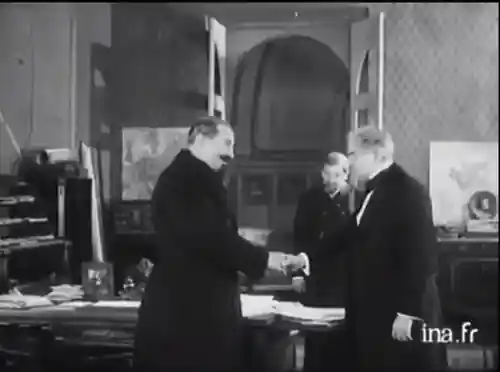
Beyond the scientific narrative, the film subtly explores the personal sacrifices demanded by such an all-consuming vocation. Pasteur's dedication to his research often came at a significant personal cost, a theme that resonates deeply. His family life, while not the central focus, is portrayed with enough nuance to highlight the support system that allowed his genius to flourish, yet also the inherent isolation that often accompanies profound intellectual pursuit. This aspect lends a layer of human vulnerability to the otherwise towering figure, preventing the film from descending into mere hero-worship. It reminds us that behind every monumental discovery stands a human being, with their own struggles, doubts, and unwavering resolve.
Considering the film in the broader context of biographical dramas, it offers a compelling counterpoint to more romanticized narratives like The Valley of the Moon. While Jack London’s tale revels in the pursuit of an idyllic life and personal freedom, Pasteur champions a different kind of freedom—the freedom from disease and ignorance—achieved through rigorous intellectual discipline and communal benefit. This contrast highlights the diverse forms of human aspiration and achievement that cinema can explore. Similarly, while films like Patria nueva might celebrate national identity through political or social movements, Pasteur grounds its celebration of French identity in the realm of scientific excellence, proposing that true national pride can be forged in the quiet halls of a laboratory as much as on a battlefield or political stage. The film skillfully intertwines Pasteur's personal story with the burgeoning scientific and industrial advancements of France, presenting his work as a cornerstone of the nation’s progress and prestige.
The thematic richness extends to the ethical considerations, subtle though they may be, of scientific experimentation. While modern bioethics are far more complex, Pasteur portrays a nascent awareness of the responsibility that comes with wielding such powerful knowledge. The decision to administer the rabies vaccine to the young Joseph Meister, a moment of profound moral weight, is handled with appropriate gravity, emphasizing the immense pressure and the calculated risk involved. This ethical dimension, though not overtly explored with contemporary philosophical depth, is nevertheless present, underscoring the high stakes of Pasteur's pioneering work. It’s a testament to the script’s nuance that such weighty decisions are presented not as facile plot points but as the agonizing choices of a man aware of the profound implications of his actions.
Furthermore, the film's commitment to historical accuracy, largely due to Vallery-Radot's intimate connection as Pasteur's son-in-law and biographer, lends it an undeniable authority. This is not a fanciful retelling but a conscientious effort to present the facts as faithfully as possible, while still crafting a compelling narrative. This dedication to truth elevates Pasteur beyond mere entertainment, positioning it as an educational tool, a historical document, and a source of inspiration. It serves as a powerful reminder of the transformative power of individual genius coupled with relentless dedication. The film, in its quiet dignity, asserts that the greatest battles are often fought not with swords, but with microscopes and test tubes, yielding victories that benefit all of humanity.
In conclusion, Pasteur stands as a compelling and meticulously crafted biographical film. It is a work that manages to imbue the often-austere world of scientific research with genuine human drama, celebrating the intellectual fortitude and unwavering spirit of one of history’s most significant figures. Robert Tourneur's portrayal is a tour de force, anchoring a narrative that is both historically informative and emotionally resonant. The film’s lasting impact lies not only in its commemoration of Pasteur’s centenary but in its timeless message about the relentless pursuit of knowledge, the courage required to challenge established norms, and the profound, enduring legacy of those who dedicate their lives to the betterment of humanity. It is a testament to the idea that true heroism often resides in the quiet, painstaking work that shifts the very foundations of our understanding of the world, making it a more comprehensible and, ultimately, a healthier place.
IMDb —
1931
Community
Log in to comment.