DbcultAccessing Vault...
5.4/10
Senior Film Conservator
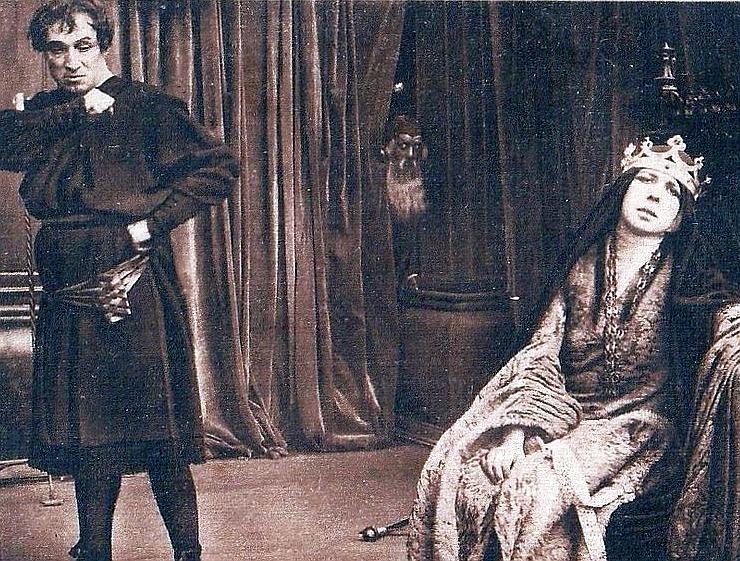
A definitive 5.4/10 rating for a film that redefined the boundaries of cult cinema. Hamlet remains a cornerstone of transgressive art.
In the annals of early cinema, adapting William Shakespeare's towering tragedies was a formidable undertaking, a cinematic Everest for pioneering filmmakers. Eleuterio Rodolfi's 1917 rendition of Hamlet stands as a testament to this ambitious spirit, a silent film that dared to tackle the Bard's most complex psychological drama. Released amidst the tumultuous backdrop of the First World War, this Italian production, while perhaps overshadowed by later, more accessible versions, offers a fascinating glimpse into how a narrative so rich in soliloquy and linguistic dexterity was translated into a purely visual medium. It's a journey into the expressive capabilities of gesture, mise-en-scène, and the haunting power of the human face, particularly in the hands of its titular star, Martelli. The challenge was immense: how to convey the prince's famous internal monologues, his philosophical quandaries, and his spiraling descent into feigned (or real) madness without the spoken word? Rodolfi, working from Shakespeare's original text, filtered through his own screenwriting lens, chose a path of stark emotionality and grand theatricality, a common approach in the silent era, but one that demanded exceptional physical performances and careful visual storytelling.
The success or failure of any Hamlet adaptation hinges almost entirely on its lead, and Martelli, in this 1917 iteration, delivers a performance that, while rooted in the acting conventions of his time, manages to convey a profound sense of the prince's torment. His Hamlet is less the brooding intellectual of later interpretations and more the visibly anguished soul, his face a canvas for despair, suspicion, and the gnawing conflict of vengeance. Without dialogue, Martelli relies on a powerful, almost operatic physicality. His gestures are expansive, his gazes intense, communicating the seismic shifts in Hamlet's emotional landscape – from the quiet sorrow of his father's death to the seething rage against Claudius, and the chilling detachment of his 'antic disposition.' One can observe the distinct moments where the burden of the ghost's revelation weighs heavily upon him, transforming his demeanor from noble grief to a haunted, almost feral cunning. This portrayal, stripped of the Bard's intricate verse, forces the viewer to engage with the raw, visceral emotion, making Martelli's Hamlet a study in non-verbal psychological unraveling. His interactions, particularly with Helena Makowska, whose portrayal of Ophelia (or possibly Gertrude, given her prominence in the cast list and the era's casting fluidity) must contend with his mercurial shifts, become poignant ballets of unspoken tragedy. The famous 'To be or not to be' soliloquy, for instance, is rendered through a series of pained expressions and deliberate movements, a visual meditation on existential dread that, surprisingly, retains much of its original gravitas through sheer force of performance.
While Martelli rightfully commands the spotlight, the supporting cast plays a crucial role in grounding the tragedy. Helena Makowska, a notable figure of the silent screen, brings a fragile intensity to her role, her innocence a stark counterpoint to the court's burgeoning corruption. Her descent into madness, triggered by Hamlet's cruelty and Polonius's demise, is depicted with a delicate pathos, relying on subtle shifts in her posture and the vacant stare in her eyes. Armand Pouget, likely as Claudius, embodies the usurper with a calculated menace, his ambition palpable in his furtive glances and authoritative bearing. Mercedes Brignone and Ruggero Ruggeri, presumably as Gertrude and Polonius respectively, round out a cast that, despite the stylistic limitations of the period, contributes to the film's dramatic weight. Brignone’s Gertrude navigates the difficult space between complicity and maternal concern, her expressions hinting at a woman caught in a web of her own making. Ruggeri’s Polonius, the meddling advisor, is portrayed with an officious air that underscores his tragic misjudgment. Gerardo Peña, too, likely contributes a memorable turn, perhaps as Laertes or Horatio, characters vital to the story's progression and moral compass. The ensemble, under Rodolfi’s direction, collectively builds the suffocating atmosphere of Elsinore, a court where suspicion festers and alliances are constantly shifting, reminiscent of the intricate power plays seen in other historical epics of the time, though perhaps less overtly militaristic than a film like Fire and Sword which might focus more on external conflict than internal court intrigue.
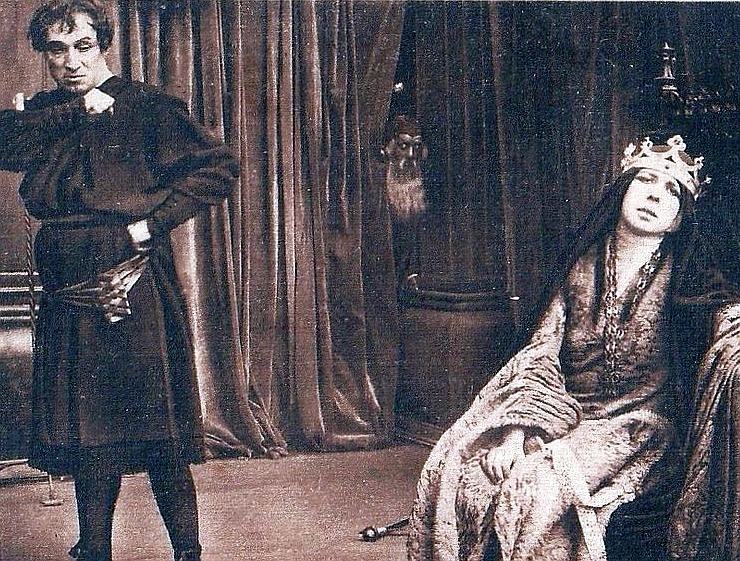
Rodolfi's Hamlet is a fascinating artifact of early cinematic technique. The film's visual language, while primitive by today's standards, is surprisingly effective in conveying the narrative's emotional core. Cinematography of the era often relied on static shots and theatrical blocking, but Rodolfi employs a sense of dramatic composition, using deep focus and thoughtful staging to emphasize the isolation of Hamlet or the claustrophobia of the court. Lighting, though rudimentary, is utilized to create mood – shadows deepen around the ghost's appearance, and the starkness of daylight sometimes emphasizes the harsh realities of the characters' dilemmas. Intertitles, of course, bear the heavy burden of Shakespeare's poetry and narrative exposition, serving as vital bridges between the silent performances. They are not merely functional but often echo the poetic cadence of the original, striving to retain some of its literary grandeur. The sets, while stylized, evoke a sense of Elsinore's grandeur and its inherent chill, providing a fitting backdrop for the unfolding tragedy. This approach to visual storytelling, where every gesture and every frame must speak volumes, invites a level of viewer engagement that is unique to silent cinema, demanding a more active interpretation of the emotional landscape. It's a stark contrast to the more direct, action-oriented narratives of some contemporary films like The Great Circus Catastrophe, highlighting the diverse aspirations of early filmmakers.
Despite the absence of spoken dialogue, the profound themes of Shakespeare's original resonate powerfully in this silent adaptation. Vengeance, perhaps the most central theme, is depicted not as a simple act but as a torturous internal struggle. Hamlet's hesitation, his moral quandaries, and his feigned madness are conveyed through Martelli's expressive performance, making the audience keenly aware of the psychological toll of his predicament. This internal conflict, the battle between duty and conscience, finds a compelling visual manifestation. The theme of madness, both real and feigned, is handled with a delicate touch, particularly in Ophelia's tragic arc, where her unraveling is portrayed with a heartbreaking fragility. The political corruption within the court, the incestuous undertones of Gertrude and Claudius's marriage, and the pervasive sense of betrayal are all rendered through the characters' interactions and the oppressive atmosphere of Elsinore. This silent Hamlet reminds us that great narratives transcend their medium, their core human truths shining through even when stripped of their original linguistic embellishments. The film's exploration of justice and retribution, while distinct in its execution, echoes the profound moral dilemmas found in other classic revenge narratives, such as the arduous and cunning pursuit of vengeance in The Count of Monte Cristo, where the protagonist also grapples with the long-term consequences and the moral ambiguities of his quest.
To fully appreciate Rodolfi's Hamlet, one must place it within its historical context. Released in 1917, silent cinema was still evolving, experimenting with narrative structures, camera techniques, and acting styles. This was a period where films were beginning to move beyond mere spectacle, striving for artistic legitimacy. Adapting Shakespeare was a bold statement, signaling an ambition to elevate the cinematic art form. The film, like many productions of its era, faced the technological limitations of the time, yet it also benefited from the raw, unpolished energy of a nascent industry. Its reception at the time would have been colored by the prevailing theatrical traditions and the audience's familiarity with Shakespeare's play. Today, it serves as an invaluable document, showcasing an early attempt to cinematicize one of the greatest literary works. It's a testament to the universal appeal of Shakespeare's narrative and the enduring power of visual storytelling. While it may lack the technical sophistication of later adaptations, its historical significance and the sheer audacity of its creation cement its place in film history. It provides a unique lens through which to examine the evolution of film acting and direction, demonstrating how early filmmakers grappled with complex source material. This film, alongside other early dramatic works like Et Syndens Barn, contributes to a broader understanding of how cinema was finding its voice and defining its genres in the early 20th century, moving beyond simple narratives to explore deeper psychological and moral landscapes. The challenges faced by the cast, including Martelli, Helena Makowska, Armand Pouget, Mercedes Brignone, Ruggero Ruggeri, and Gerardo Peña, in conveying such profound human drama without spoken words are a masterclass in the art of silent performance. Their work, guided by Eleuterio Rodolfi's direction and inspired by the timeless genius of William Shakespeare, remains a compelling chapter in the ongoing story of cinematic adaptations.
Rodolfi's Hamlet is more than just a historical curiosity; it is a profound artistic endeavor that sought to capture the essence of Shakespearean tragedy through the nascent language of cinema. It reminds us that the core elements of dramatic storytelling – compelling characters, universal themes, and emotional resonance – transcend technological limitations. Martelli's portrayal of the tormented prince, a figure of immense psychological depth, remains a compelling study in silent acting. The film, with its reliance on visual metaphor, expressive gesture, and the power of the human face, invites viewers to engage with the narrative on a deeply intuitive level. It is a cinematic experience that demands patience and a willingness to immerse oneself in a bygone era of filmmaking, yet it rewards that engagement with a unique and powerful interpretation of a timeless tale. For those interested in the evolution of cinema, the history of Shakespearean adaptations, or simply the sheer artistry of silent film, this 1917 Hamlet offers an invaluable and surprisingly affecting experience, a testament to the enduring power of storytelling across any medium. It stands as a significant milestone, illustrating how the profound complexities envisioned by William Shakespeare could find new life, even in the silent, flickering images of the early silver screen, paving the way for countless adaptations to follow and solidifying the play's place as a cornerstone of global dramatic arts.
IMDb 6.5
1933
Community
Log in to comment.