DbcultAccessing Vault...
Cult Review
Senior Film Conservator
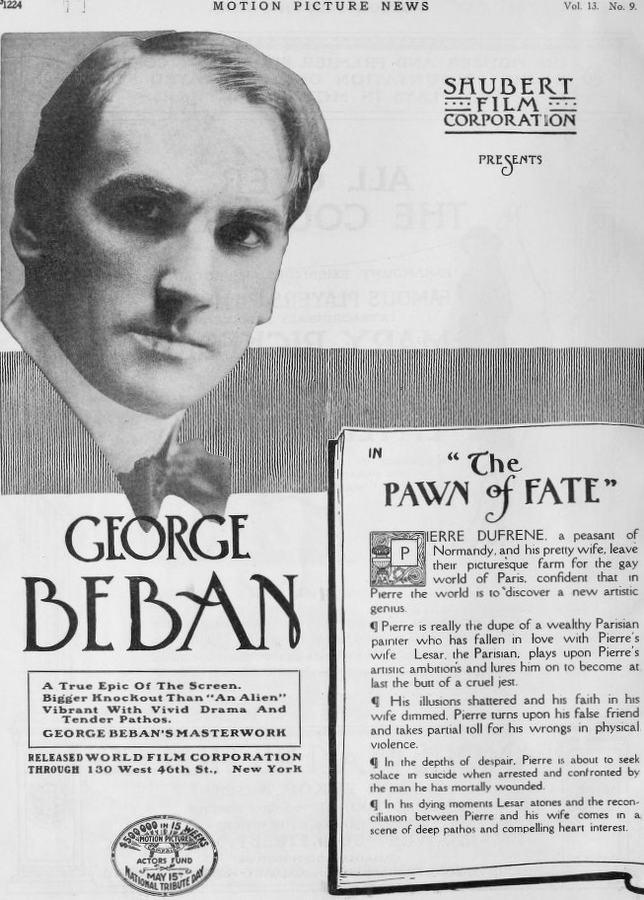
Cinema in 1916 was a medium grappling with its own burgeoning power to dissect the human condition, and Pawn of Fate stands as a poignant, if devastating, example of this evolution. Directed and written by George Beban, who also commands the screen with a visceral intensity, the film navigates the treacherous waters of class disparity and the inherent vanity of the art world. It is not merely a melodrama; it is a psychological inquiry into the way the wealthy treat the poor as playthings—aesthetic objects to be picked up, examined, and discarded when the novelty fades.
The film opens in the bucolic splendor of Normandy, a setting that feels almost mythic in its purity compared to the smog-choked artifice of the Paris that awaits our protagonists. Here, we meet Pierre Dufrene (Beban), a man whose life is defined by the soil and the sea. His existence is grounded, tactile, and honest. However, the arrival of Andre Lesar (John Davidson) introduces a jarring dissonance. Davidson plays Lesar with a chilling, feline grace—a man who views the world through a monocle of detached irony. His interest in the Dufrenes is not born of altruism but of a profound, soul-rotting boredom.
The central conceit of the film—Andre’s manipulation of Pierre into believing he is a burgeoning master of the canvas—is a brilliant narrative engine. It speaks to a universal vulnerability: the desire to be seen as more than one is. When Pierre is uprooted from his ancestral home and transplanted into a Parisian garret, the film shifts its visual language. The wide, sun-drenched vistas of Normandy are replaced by cramped, shadow-heavy interiors that mirror Pierre’s narrowing focus. He becomes obsessed with his 'still life' paintings, a title that carries heavy irony as his actual life, and his marriage to Marcine (Doris Kenyon), begins to stagnate and rot.
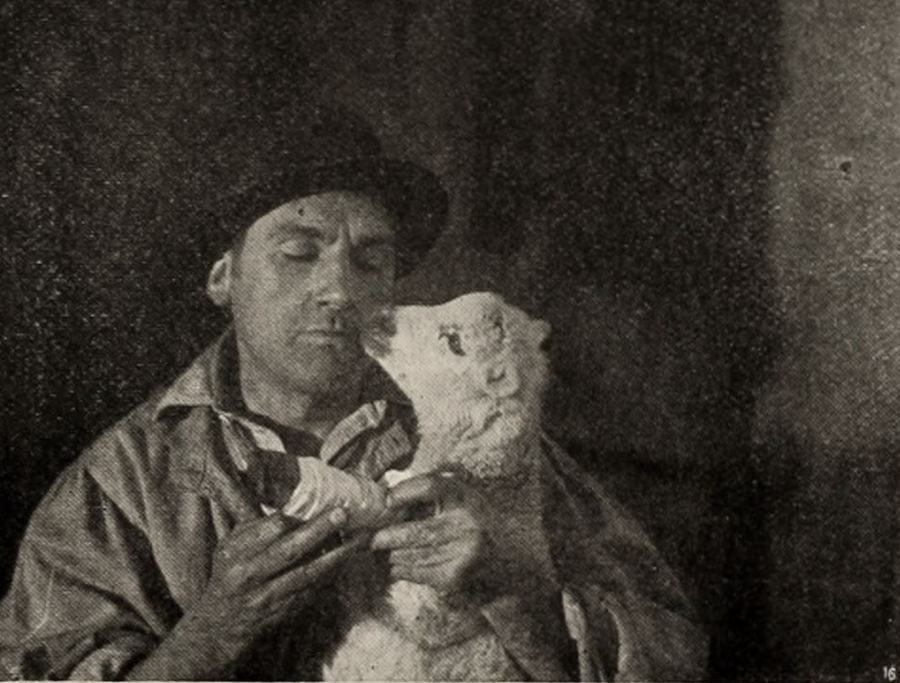
Doris Kenyon’s performance as Marcine is a masterclass in silent-era pathos. She is the 'pawn' of the title as much as Pierre, yet her victimization is more intimate. While Pierre is distracted by the false promise of fame, Marcine is left to fend off the increasingly aggressive advances of Lesar. The tension here is palpable, and Beban’s direction ensures that the audience feels the claustrophobia of her situation. Unlike the overt theatricality found in films like Salome, Kenyon’s acting is remarkably restrained, relying on micro-expressions that convey a deepening sense of dread.
The emotional zenith of Pawn of Fate occurs during the exhibition of Pierre’s work. It is a sequence that remains profoundly uncomfortable to watch even a century later. Beban captures the sneering elitism of the Parisian salon with a sharp, satirical edge. As Pierre stands proudly by his crude, earnest paintings, the high society crowd erupts into laughter. It is a moment of total, public emasculation. The realization that dawns on Pierre’s face—the slow, agonizing transition from pride to confusion to crushing humiliation—is perhaps Beban’s finest moment as an actor.
This scene invites a fascinating comparison to Reputation, where the fragility of one's social standing is similarly explored. However, in Pawn of Fate, the stakes feel more primal. Pierre isn't just losing a career; he is losing his sense of reality. He has been tricked into betraying his own nature, and the laughter of the crowd is the sound of his world collapsing. The 'dilettante' Lesar has succeeded in his game, but he has underestimated the explosive potential of a man who has lost everything.
The film’s final act descends into the territory of a thriller. Pierre’s rage is not directed solely at his tormentor, but also, tragically, at his wife. The sequence where he finds Marcine and Andre together is staged with a frantic, kinetic energy. The cinematography becomes more erratic, mirroring Pierre’s fractured mental state. Despite Marcine’s truthful protestations of innocence, Pierre’s spirit is too broken to accept the truth. The ensuing assault on Andre is brutal and visceral, a far cry from the stylized combat seen in other films of the era like The Law of the North.
The suicide attempt at the Seine is a haunting visual motif common in early 20th-century drama, yet here it feels uniquely earned. The police intervention serves as a narrative pivot, shifting the film from a tragedy toward a tenuous redemption. The recovery of Andre and his subsequent repentance might seem like a concession to the moral standards of 1916 audiences, but within the context of the film, it serves a deeper purpose. It acknowledges that even the most cynical 'players' can be touched by the wreckage they leave behind.
When we look at Pawn of Fate alongside its contemporaries, its narrative sophistication becomes even more apparent. While The Romance of the Utah Pioneers focuses on the external struggle against the elements, Beban’s film is concerned with the internal struggle against the self and the corruptive influence of 'civilization.' There is a thematic kinship with The Marked Woman in its exploration of how society labels and discards individuals, but Pawn of Fate offers a more pessimistic view of the possibility of reinvention.
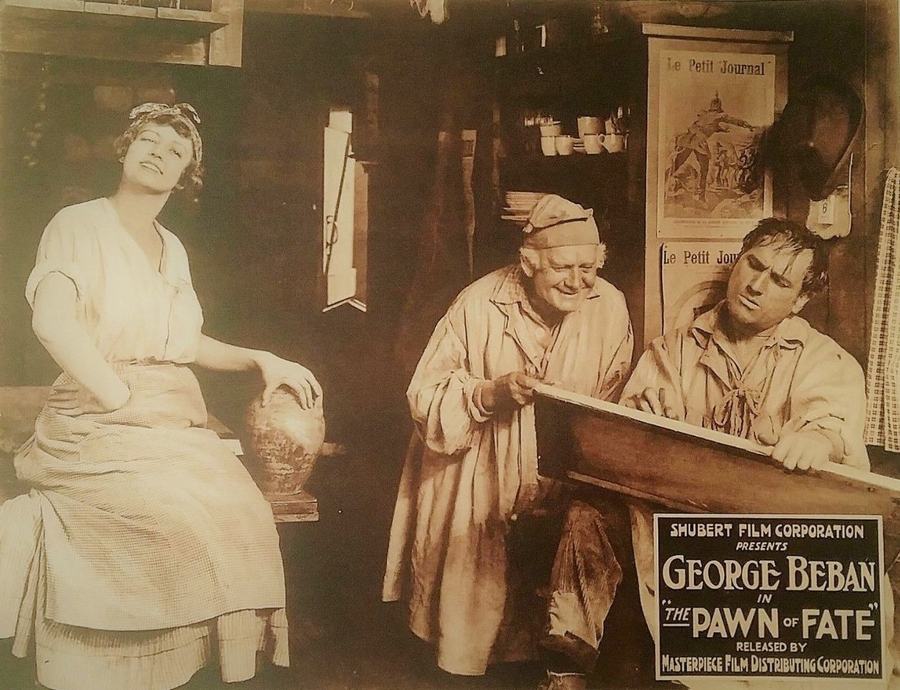
Technically, the film is a testament to the prowess of World Film Corporation. The lighting, particularly in the Parisian studio scenes, uses high contrast to emphasize the moral ambiguity of the characters. We see shades of the expressionism that would later define European cinema in films like Die weißen Rosen, yet Beban keeps the story grounded in a gritty, American realism. The pacing is deliberate, allowing the psychological weight of the Dufrenes' displacement to sink in before the final, violent outburst.
Ultimately, Pawn of Fate is a cautionary tale that remains disturbingly relevant. In an era where 'clout' and curated personas often override authentic existence, Pierre’s journey from honest laborer to mocked 'artist' serves as a stark warning. The film suggests that the most dangerous lies are the ones that flatter our ego. George Beban, often remembered for his portrayals of immigrant characters, here crafts a universal story of the loss of innocence. The reconciliation at the end is not a return to the status quo; the Dufrenes are forever changed, their Normandy simplicity shattered by the cold light of Parisian 'sophistication.'
For the modern viewer, the film is a rewarding experience that transcends its silent-era tropes. It is a work of high lexical diversity in its visual storytelling, utilizing every frame to communicate the shifting power dynamics between the three leads. It is a film that demands to be seen not just as a historical artifact, but as a living, breathing piece of social commentary. If you find yourself drawn to the melodramatic depths of The Bondman or the atmospheric tension of The Ghost of Old Morro, then Pawn of Fate is an essential addition to your cinematic lexicon. It is a haunting reminder that in the grand game of life, we are often playing on a board we don't fully understand, moved by hands we cannot see.
IMDb —
1924
Community
Log in to comment.