DbcultAccessing Vault...
Cult Review
Senior Film Conservator
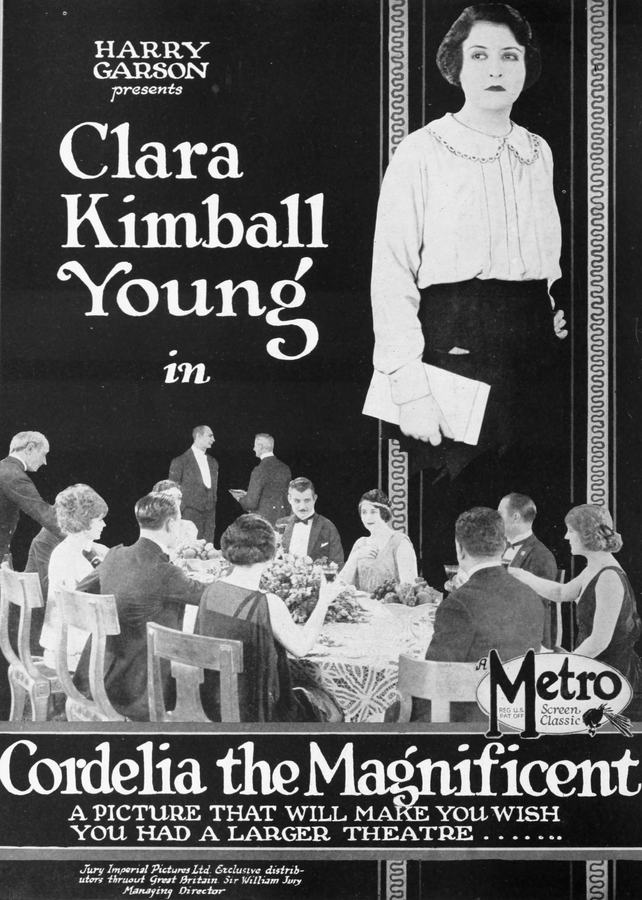
The silent era often provides a lens into the anxieties of a world caught between the rigid structures of the 19th century and the chaotic liberation of the 20th. In Cordelia the Magnificent, we find a quintessential artifact of this transition, a film that manages to be both a cautionary tale of social descent and a proto-feminist manifesto of agency. Clara Kimball Young, an actress whose expressive capabilities were often the sole reason for a film's success, delivers a performance here that transcends the melodramatic tropes of 1923, providing a nuanced portrayal of a woman whose 'magnificence' is not found in her lost fortune, but in her moral fortitude.
The film opens with a palpable sense of decay, though not the physical kind. It is the decay of a lineage. Cordelia Marlowe is introduced as the scion of a family whose name still carries weight even as their bank accounts carry nothing but air. This juxtaposition sets the stage for a narrative that explores the psychological toll of maintaining appearances. Unlike the lighthearted optimism found in Little Mary Sunshine, there is a certain gravity here, a weight that pulls at the corners of the frame. The direction emphasizes the claustrophobia of the upper class—the velvet curtains and heavy mahogany furniture seem to press in on Cordelia, reminding her of the life she can no longer afford.
Enter D.K. Franklin, played with a chilling, bureaucratic malice by Lloyd Whitlock. Franklin is not a mustache-twirling villain; he is a predator of the modern age, a man who uses the law as a scalpel to excise the wealth of others. His interest in Cordelia is purely utilitarian. He recognizes that her social standing is a weapon, and he intends to wield it. The blackmail plot he orchestrates is complex, involving a family friend whose only crime is their own prosperity. It is here that the film shifts from a social drama into something resembling an early noir. The shadows become longer, and the pacing quickens as Cordelia is forced to navigate Franklin's demands.
Clara Kimball Young was always a master of the 'look.' In Cordelia the Magnificent, her eyes tell the story of a thousand compromises. When she first meets Franklin, there is a flicker of disdain that quickly turns to fear, and finally, to a cold, hard resolve. This evolution is the heartbeat of the film. While some might compare her role here to her work in The Divine Sacrifice, there is a sharper edge to Cordelia. She is not merely sacrificing herself; she is plotting. The way she carries herself—shoulders back, head held high even when her world is crumbling—is a testament to the character's internal strength.
Huntley Gordon provides a solid, if somewhat overshadowed, presence as the male lead. His chemistry with Young is grounded in a mutual understanding of the high stakes involved. However, the film belongs to the women. Carol Holloway’s contribution to the ensemble adds a layer of complexity to the social dynamics, mirroring the intricate character work seen in The Heart of a Girl. The script, penned by Leroy Scott and Frank S. Beresford, avoids the easy path of having a male savior swoop in to resolve the conflict. Instead, it places the burden and the triumph squarely on Cordelia’s shoulders.
Visually, the film employs a sophisticated use of space. The Marlowe estate is filmed with a sense of emptiness, emphasizing what has been lost. In contrast, Franklin’s office is cluttered, filled with the paperwork of a hundred ruined lives. This visual dichotomy reflects the moral landscape of the film. The cinematography captures the nuances of the 1920s aesthetic without falling into the trap of mere ornamentation. Every frame feels purposeful, a trait that reminds one of the poetic dedication found in Kino-Pravda No. 13, albeit in a vastly different narrative context.
The editing is particularly noteworthy for the era. The cross-cutting between Cordelia’s social engagements and Franklin’s clandestine meetings creates a mounting sense of dread. We see the two worlds colliding, the elegance of the ballroom clashing with the grit of the blackmail scheme. This tension is what keeps the viewer engaged for the duration of the film’s runtime. It lacks the whimsical nature of The Dream Doll, opting instead for a gritty realism that was quite daring for its time.
At its core, Cordelia the Magnificent is a critique of the American class system. It highlights how easily the 'blue blood' of society can be spilled when the financial foundation is removed. This theme is echoed in Blue Blood and Red, but here it is handled with a more cynical touch. Cordelia’s struggle is not just about money; it is about identity. Who is she if she is not the wealthy Marlowe heiress? The film suggests that her true identity is found in her actions, not her bank balance. This message of self-actualization is a powerful one, especially in the context of the early 1920s.
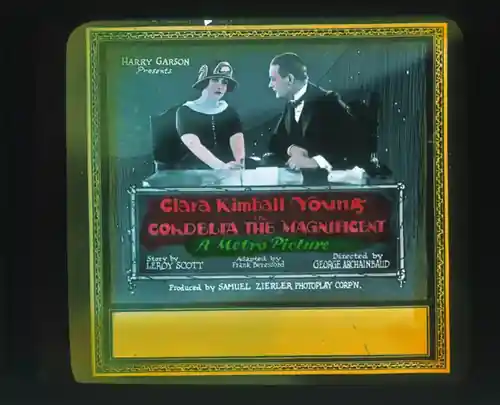
The lawyer, Franklin, represents the new power in America—the power of information and manipulation. He is a precursor to the corporate villains of later cinema. His defeat is not just a personal victory for Cordelia, but a symbolic victory over the forces of corruption that threaten to undermine the social order. The film deals with these heavy themes without becoming overly didactic, maintaining its entertainment value through sharp dialogue and compelling performances.
When placed alongside other films of the period, such as Lovely Mary or The Quitter, Cordelia the Magnificent stands out for its sophistication. It avoids the broad comedy of Rip & Stitch: Tailors and the overt religious overtones of John Redmond, the Evangelist. Instead, it occupies a middle ground of high-stakes drama and character-driven narrative. It shares a certain DNA with The Closing Net, particularly in its depiction of a protagonist caught in a web not of their own making.
The film’s exploration of betrayal and loyalty also brings to mind the ancient themes of Joseph and His Coat of Many Colors, but transposed to the Jazz Age. The 'coat' here is Cordelia’s reputation, and it is Franklin who seeks to tear it from her. The resolution, while satisfying, leaves the viewer with much to ponder regarding the nature of justice in a world where the law can be so easily twisted.
The direction by George Archainbaud (though often uncredited in contemporary discussions, his influence is felt) is precise. He understands how to use the camera to create intimacy. Close-ups of Young are used sparingly but effectively, punctuating the emotional highs and lows of the story. The set design is equally impressive, capturing the fading grandeur of the Marlowe lifestyle. The contrast between the bright, airy spaces of the elite and the dark, cramped quarters of Franklin’s world is a masterclass in visual storytelling. Unlike the epic scale of De Voortrekkers, this is an intimate epic, a battle fought in drawing rooms and over mahogany desks.
The title cards are written with a literary flair that complements the high-society setting. They provide necessary context without being overly wordy, allowing the visual performances to take center stage. There is a rhythmic quality to the film’s progression, a slow build-up that leads to a crescendo of revelation and retribution. It has the narrative density of a novel, perhaps a reflection of Leroy Scott’s background as a writer. This isn't just a film to be watched; it is a film to be read and decoded.
In the grand tapestry of silent cinema, Cordelia the Magnificent is a thread that deserves more attention. It is a film that challenges its audience to look beyond the surface of wealth and status. It asks what we are willing to do to protect those we love, and at what point we must stand up against those who seek to exploit us. Clara Kimball Young’s performance remains a high-water mark for the era, a display of talent that is as relevant today as it was in 1923.
While it may not have the historical notoriety of Long Live the King or the high-octane energy of The Daredevil, it possesses a quiet intensity that is far more enduring. It is a story of resilience, of a woman who refuses to be a victim and instead chooses to be the architect of her own salvation. For any student of film history or lover of silent drama, this is a mandatory viewing experience. It is, quite simply, magnificent.
Reviewer's Note: The restoration of such films is vital for our understanding of cinematic evolution. Cordelia the Magnificent serves as a bridge between the Victorian sensibilities of the past and the modern complexities of the future.
IMDb 5.1
1935
Community
Log in to comment.