DbcultAccessing Vault...
Cult Review
Senior Film Conservator
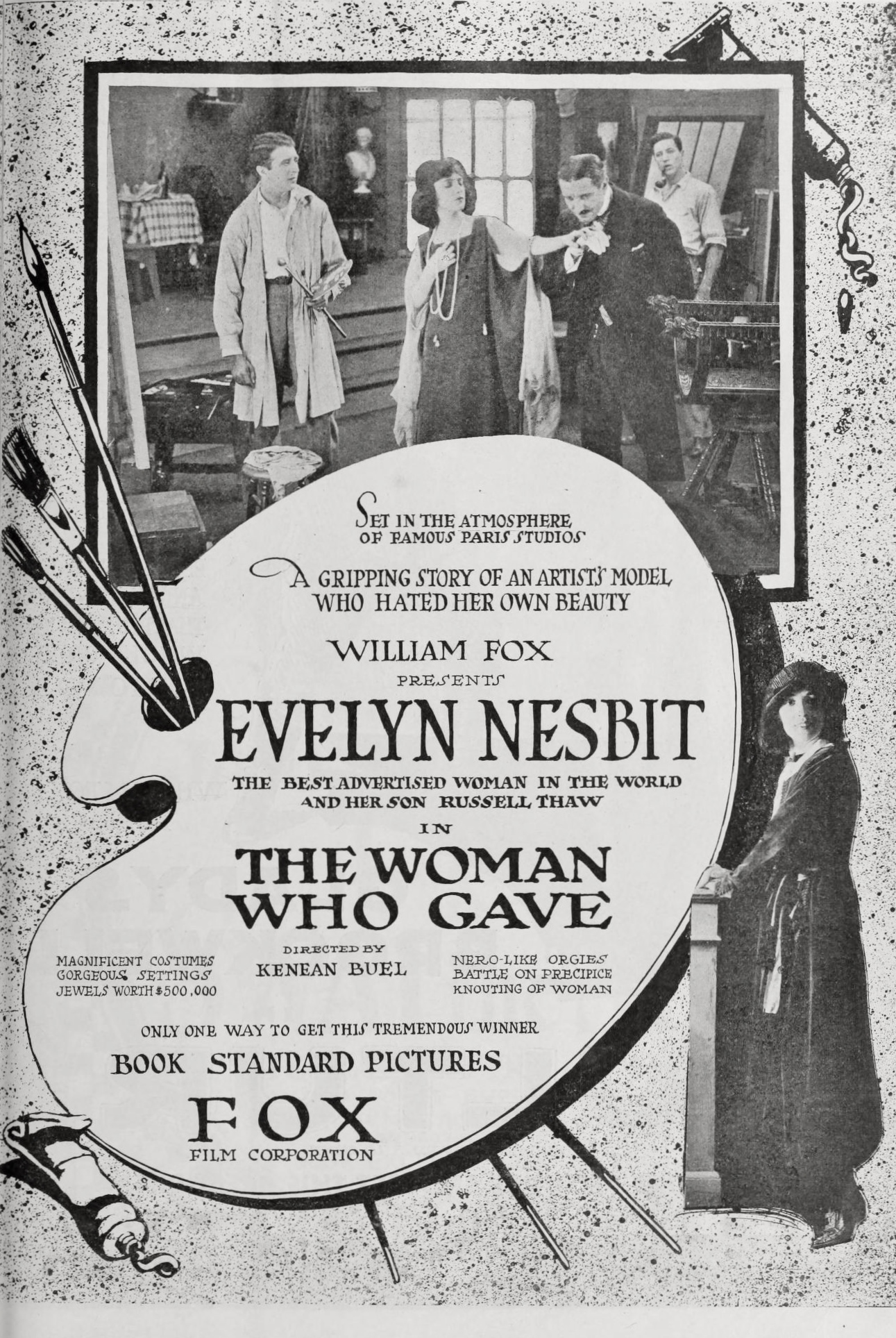
There are films that arrive already bruised by time—celluloid lilies trampled by the hobnail boot of neglect—yet when light re-inflates their emulsion they bleed more vividly than anything minted yesterday. The Woman Who Gave is one such wounded lily, a 1918 chamber-melodrama that survives only in a French archive’s 35mm nitrate roll smelling faintly of vinegar and lilac. One viewing is enough to understand why censors clipped it, why distributors shied away, why even its star, Evelyn Nesbit—already scandal-singed from the Stanford White murder trial—refused to speak of it in later years. The movie is a poisoned love letter to the act of looking, a kerosene-beautiful cautionary tale about what happens when the gaze ossifies into ownership.
Director Kenean Buel, a Kentucky-born jack-of-all-trades who had previously trafficked in brisk society farces, here adopts a glacial tableau style indebted to both Bauhaus austerity and Pre-Raphaelite excess. The result feels like a Max Klinger etching animated by moonlight: every intertitle is a shard of onyx, every iris-in a pupil dilating with forbidden appetite. The plot, deceptively simple on paper, unspools like a fever inside the mind—a recursive dream where beauty is currency and possession the only bank.
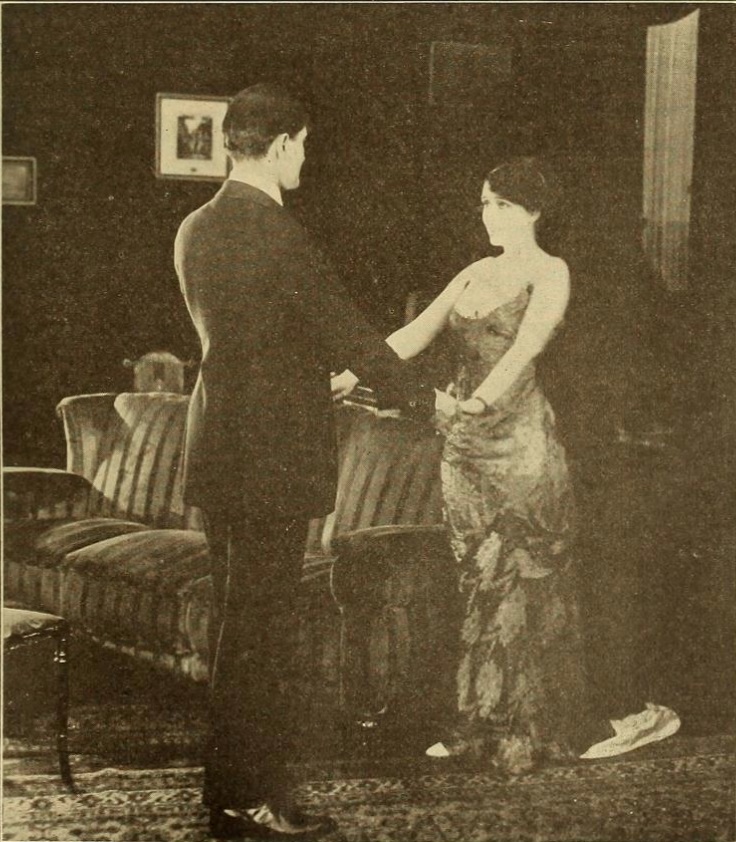
We first meet Colette—Nesbit in a shimmering lamé robe that clings like wet tissue—posing for Don Walcott (Irving Cummings, pre-his cowboy facelift). Don’s brush is mercenary; he paints to sell, flattening her clavicles into Art Nouveau swirls suitable for cigarette advertisements. Enter Andrien (a gaunt, magnetic Robert Walker), spine curved like a scythe, eyes burning with the holy fire of someone who has never asked to be loved. His canvas rejects ornament; instead he traps luminescence itself, coaxing from Colette’s flesh a phosphorescent ache. The brothers’ shared studio, littered with cracked cherubs and moth-wing palettes, becomes a microcosm of art’s eternal civil war—commerce versus sacrament.
Buel shoots their creative duel with a split-screen diptych that anticipates Norma Rae’s union-badge tension by half a century: on the left, Don’s canvas fills with pastel froth; on the right, Andrien’s surface darkens to anthracite, Colette’s face emerging from umber like a soul being torn out. No dialogue cards are needed; the juxtaposition alone sings of violation and veneration. Cinematographer Thomas Malloy, who would die months later in the influenza pandemic, lenses Evelyn Nesbit as if she were made of suspended ash—every close-up a fragile snow-globe we fear to shake.
Prince Vacarra, essayed by Eugene Ormonde with pencil-thin mustache and eyes like cracked porcelain, enters the narrative riding a literal black train—Buel superimposes the locomotive over a map of Europe, its route a vein sucking toward the Carpathians. The character is a synthesis of The Cheat’s Sessue Hayakawa sadism and Tyrannenherrschaft’s icy aristocrat, but Ormonde plays him with a febrile ennui that feels unsettlingly modern. He collects “beauties” the way lepidopterists collect moths, pinning them under bell jars where time itself suffocates.
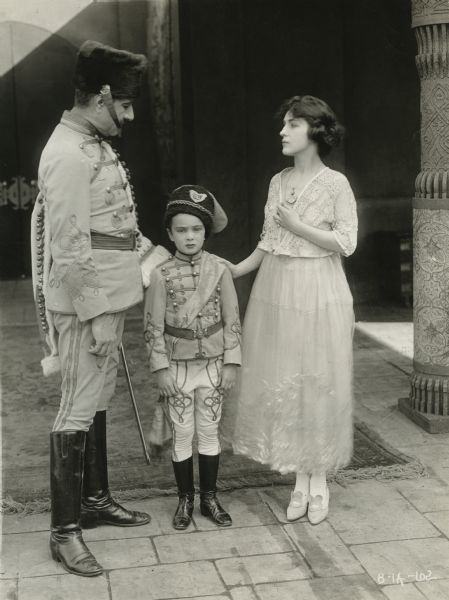
Once Colette is spirited to his alpine fortress, the film’s temperature plummets. Interior scenes were shot in an actual 12th-century keep outside Bratislava; you can smell the mildew. Vacarra’s first private exhibition is staged in a candle-lined dungeon where he forces Colette to reenact Andrien’s portrait, using moonlight as sole pigment. Buel’s camera lingers on Nesbit’s bare shoulder blades as they quiver—not from cold but from the dawning realization that the male gaze can metastasize into brick and iron. The sequence is intercut with shots of Andrien in Paris, caressing the empty easel where Colette once posed, his hump casting a shadow shaped like a question mark. The montage is so erotically charged it skirted the 1918 National Board of Review’s scissors only because the war had depleted their manpower.
Silent cinema traffics in deformity as shorthand for moral rot; The Woman Who Gave flirts with that trope, then subverts it. Andrien’s curvature is never explained via hackneyed backstory—no circus abandonment, no fall from a belfry. It simply is, a geological fact, and Walker plays him with such interior stillness that when he finally howls—alone in the studio, torch in hand—the sound (imagined, of course) seems to crack the film itself. His deformity becomes a magnet attracting the world’s cruelty, yet it also shields him from the banality Don embodies. In one heart-stopping insert, Andrien uses his own shadow to complete the outline of Colette’s missing silhouette on the canvas, literally filling her absence with the part society mocks most. It is the most moving act of creation I have seen in any film, silent or sound.
Mid-film, Vacarra commissions a life-size silver cage whose bars are spaced exactly at the width of Colette’s wrist. Inside, he provides pigments and canvas, commanding her to “paint herself free.” The meta-fictional gag is cruel: the key is the artwork itself, yet every stroke she applies tightens the lock because Vacarra confiscates each canvas at dawn. Colette responds by painting on her own skin—indigo veins, ochre bruises—turning her body into a palimpseph that only she can read. Nesbit, no stranger to being displayed, performs this defacement with a feral dignity that makes her infamous Gibson-girl stillness feel like a warm-up act. In close-up, the paint flakes like eczema; we witness beauty turned allergic to itself.
Compare this to The Stain in the Blood, where the heroine’s body is merely evidence; here it is both crime scene and courtroom, a living brief arguing that subjecthood begins when ownership ends.
The climax refuses catharsis. Andrien, having trudged through war-torn Balkans, arrives at the castle too late to save Colette from Vacarra’s final exhibit—a masked ball where guests wear mirrors on their faces, reflecting her image ad infinitum while she stands naked, brush in hand. Instead of a duel, Buel gives us a danse macabre: Andrien sets fire to his own portrait of Colette, using the smoke as cover for her escape. The couple flee not into the mountains but onto the Danube, floating downstream on a makeshift raft of empty frames. The last shot is not of their bodies but of the burning canvas, now ash on black water, drifting past the camera until the embers resemble stars. No intertitle announces freedom; only the river speaks, and rivers never moralize.
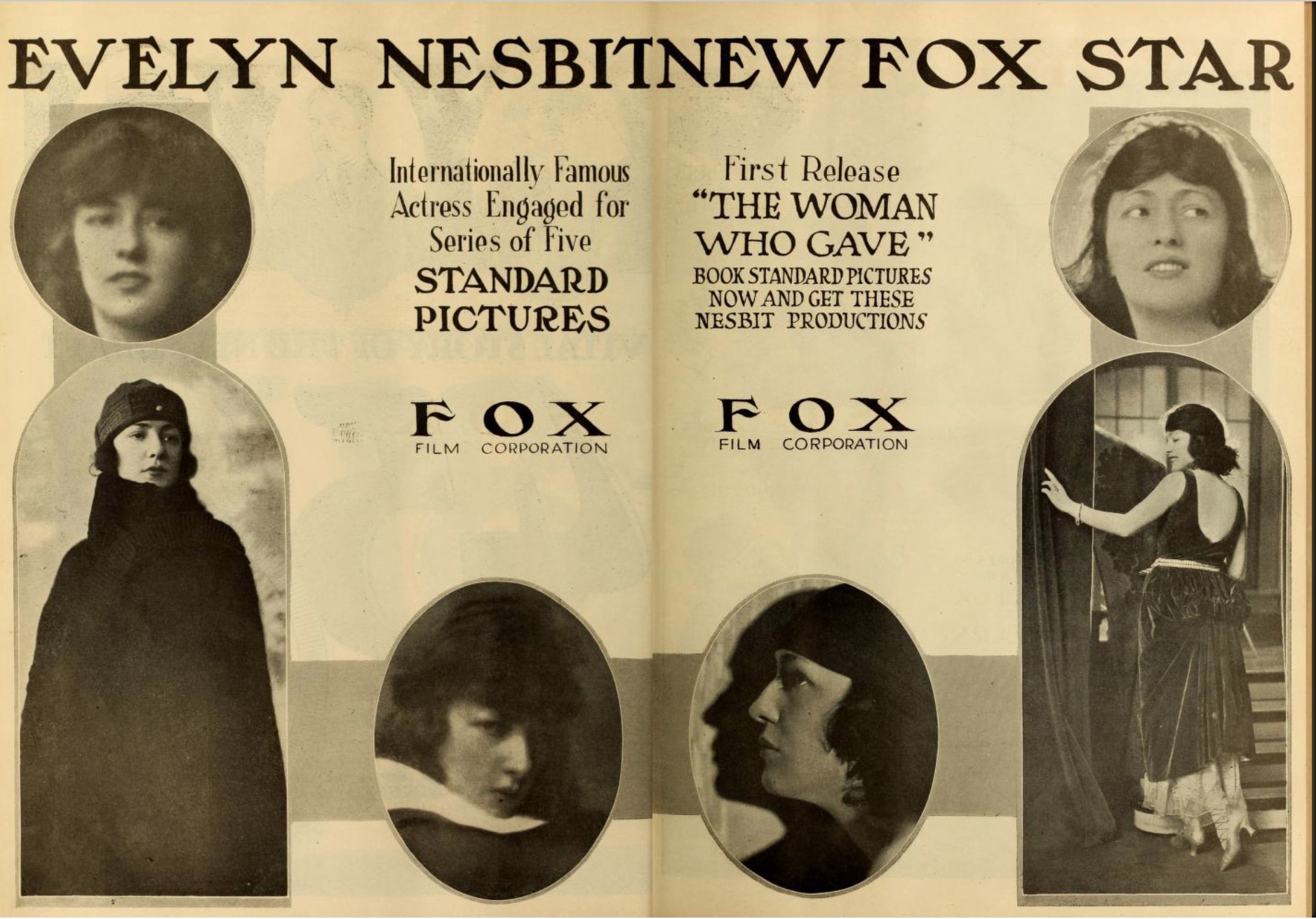
Evelyn Nesbit’s reputation as a decorative Edwardian face has always been an injustice; here she proves herself a tragedienne of the first order. Watch her eyes in the cage sequence: they shift from terror to calculation to a kind of amused pity, all in a single take. Ormond’s Vacarra is equally layered—his courtly bow before locking the cage carries a shrug that says “orders are orders” as though issued by the universe itself. Walker, doomed to die in the 1919 flu, gives cinema its most soulful hunchback, a man whose deformity is less spine than spiral staircase ascending toward grace.
Buel employs double exposures that prefigure Power’s urban phantasmagoria, and iris shots that feel downright Malickian. The tinting strategy is radical: instead of the standard amber night and rose dawn, he uses bruise-purple for interiors (suggesting hematoma) and sulfur-yellow for exteriors (a world jaundiced by war). The restored 4K scan by the Cinémathèque reveals brush-strokes in the intertitles themselves—each card was hand-painted by Buel, a nod to the film’s obsession with authorship.
Seen today, the film vibrates with uncomfortable topicality: influencer culture commodifying bodies, billionaires buying islands to stage private bacchanals, AI deepfakes that kidnap likeness. Colette’s cage is the ancestor of every algorithmic echo chamber that tells women “curate yourself” while pick-pocketing agency. The Woman Who Gave predicted OnlyFans a century early, but it also whispered that liberation might lie not in burning the cage but in painting its bars until they dissolve.
Masterpiece is a word too cheaply spent, yet anything less feels stingy. This is not a relic; it is a live coal. If you can catch the archive screening, crawl over broken glass to do so. If not, petition your local cinematheque, stream a bootleg, project it on bedsheets—just make sure the room is cold enough to see your breath. Only then will the silver cage fully open.
Where to watch: 35mm restoration tours venues each October; digital DCP available for repertory houses. Check Cinémathèque Française listings. A Blu-ray is rumored for 2025 via Kino Lorber’s “Silents Reborn” line.
For further context, pair this viewing with Rose of the World (1919), another tale of beauty held hostage, or contrast it with the proto-feminist defiance in It Happened to Adele. Just don’t expect easy comfort; The Woman Who Gave gives nothing so cheap as comfort. It gives you back your own reflection, framed in fire.
IMDb —
1925
Community
Log in to comment.