DbcultAccessing Vault...
Cult Review
Senior Film Conservator
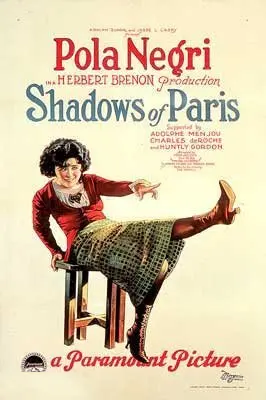
The cinematic landscape of 1924 was one of profound transition, a year where the silent medium began to grasp the intricate psychological nuances that would define the modern era. At the heart of this evolution stands Shadows of Paris, a film that doesn't merely depict a story of class migration but serves as a visceral conduit for the anxieties of a post-war Europe. Directed by the visionary Herbert Brenon, the film is a sprawling tapestry of light and shadow, capturing the duality of a city caught between the grit of the Apache underworld and the sterile brilliance of the haute monde.
Pola Negri, an actress whose very presence on the silver nitrate seemed to vibrate with a prehistoric intensity, delivers a performance here that transcends the melodramatic archetypes of the period. As Claire, she is tasked with portraying a woman whose soul is bifurcated. In the early sequences, set within the smoke-choked dives of the Paris underground, Negri is all sharp angles and predatory grace. She embodies the 'Apache'—that uniquely French subculture of flamboyant criminality—with a ferocity that makes contemporary attempts at 'gritty' realism look positively anemic. Unlike the more subdued roles found in Lena Rivers, Negri’s Claire is a creature of pure impulse.
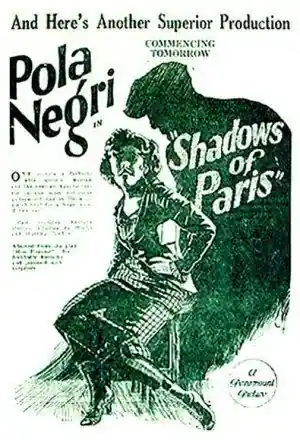
When the narrative shifts to the opulent salons of the French officialdom, Negri’s physical vocabulary undergoes a startling transformation. The jagged edges soften, replaced by a calculated, almost brittle elegance. It is a masterclass in the art of the 'performance within a performance.' We see Claire playing the role of the refined lady, while her eyes—those dark, cavernous voids of expression—betray the constant fear of the interloper. This tension is the engine of the film, a psychological suspense that rivals the atmospheric dread of Lulù (1923).
The screenplay, a collaborative effort involving the likes of Francis Carco and Eve Unsell, navigates the treacherous waters of class warfare with a surprisingly cynical edge. The character of De Croy, played with a chilling, serpentine precision by Adolphe Menjou, represents the true rot at the heart of the establishment. Menjou, who would later perfect the role of the suave boulevardier, here plays a man whose sophistication is merely a cloak for a predatory opportunism. His blackmail of Claire isn't just a plot device; it’s a commentary on how the upper echelons of society maintain their boundaries—not through virtue, but through the weaponization of the past.
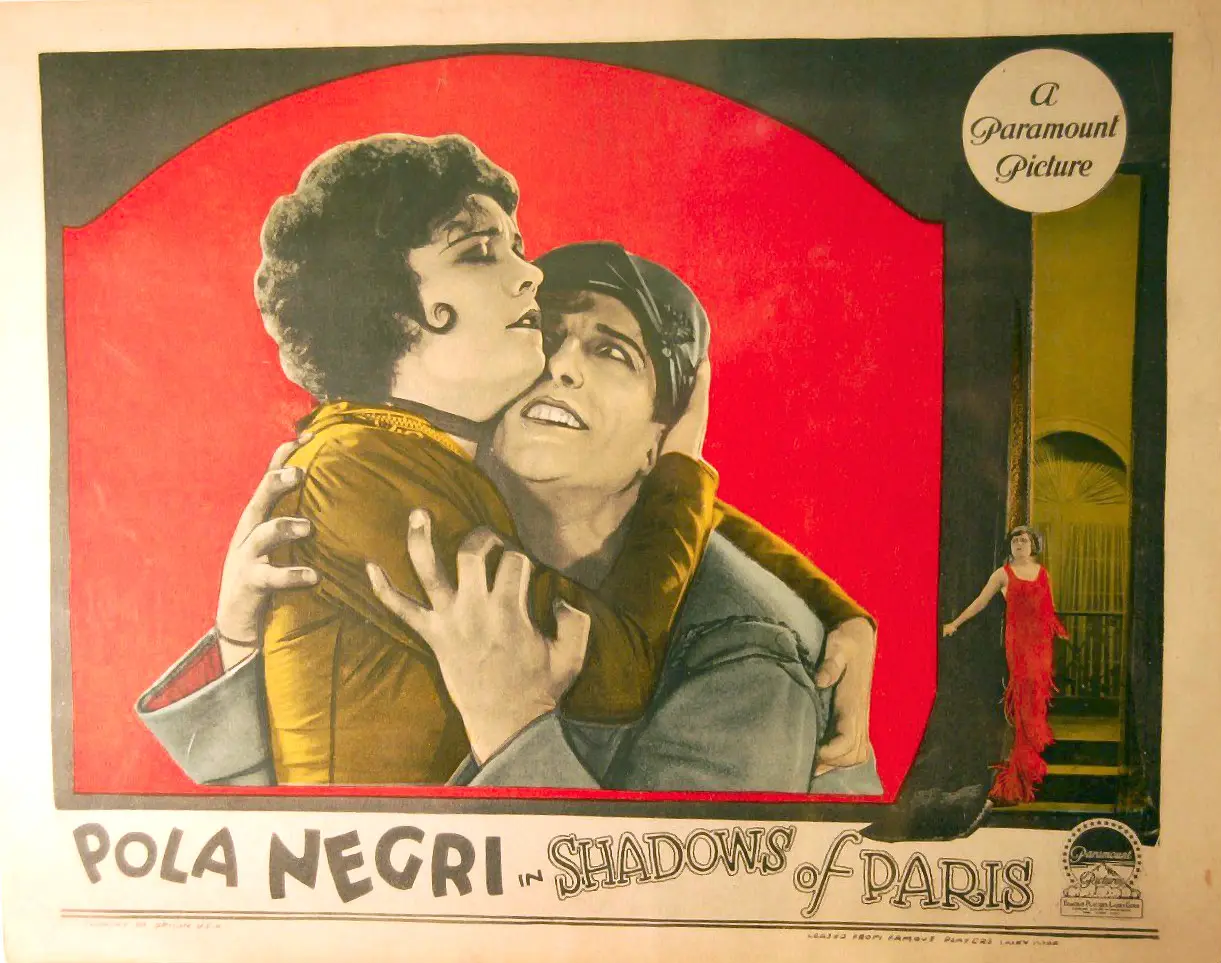
Compare this to the more straightforward moral binaries of Paradise Lost. In Shadows of Paris, the 'villain' is not the criminal Fernand, who returns from the dead like a vengeful specter of the trenches, but the 'respectable' secretary who uses his social standing to coerce a woman into sexual and emotional servitude. The return of Fernand (Charles de Rochefort) introduces a tragic irony. He is the man Claire once loved, but he is also a reminder of a poverty and violence she has desperately tried to excise from her memory. His presence in her boudoir—a space of newfound sanctity—is a violation that can only end in blood.
Technically, the film is a marvel of the late silent era’s capability. The cinematography by James Wong Howe (uncredited but widely acknowledged for his contributions to the era's look) and others captures the soot-stained cobblestones of the underworld with a tactile quality. You can almost smell the cheap wine and the damp earth. When the action moves to the high-society settings, the lighting shifts to a high-key brilliance that feels almost exclusionary, highlighting the artificiality of Claire’s new life. This visual dichotomy is far more sophisticated than the aesthetic seen in Sands of the Desert, where the environment is often treated as mere exotic backdrop.
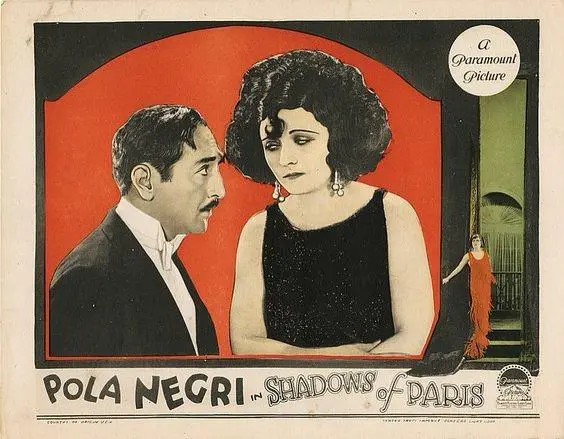
The climax of the film—the struggle between Fernand and De Croy—is staged with a frantic, claustrophobic energy. It’s a sequence that avoids the stagey choreography of many 1920s dramas, opting instead for a messy, desperate scramble that reflects the internal chaos of the characters. When Raoul (Huntley Gordon) enters the fray, the film pivots from a thriller into a profound moral drama. De Croy’s decision to cover for Claire, framing the event as a simple robbery, is a fascinating moment of character ambiguity. Is it an act of sudden nobility, or a final, cruel reminder that he still holds the power to shape her narrative?
What sets Shadows of Paris apart from contemporaries like The Man Who Played God is its refusal to offer a simplistic redemption arc. While Raoul ultimately forgives Claire, the ending isn't a sunny resolution. There is a lingering sense of melancholy, a recognition that the 'shadows' of the title aren't just the literal darkness of the Paris alleys, but the indelible marks left by trauma and social upheaval. Claire’s confession is an act of radical honesty in a world built on artifice, a theme that resonates with the existential searching found in The Sin of Martha Queed.
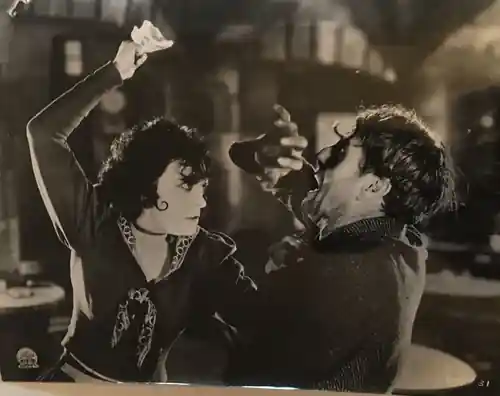
The supporting cast, including a young George O'Brien and the ever-reliable Rose Dione, provides a rich texture to the world-building. Each character feels like a fragment of a city trying to find its soul after the devastation of war. The inclusion of figures like the 'Apache' isn't just for pulp thrills; it’s a nod to the actual social unrest of the time, where the demobilized soldiers and the disenfranchised poor created a volatile undercurrent in French society. In this regard, the film shares a certain spiritual DNA with Back from the Front, though with a much darker, more cynical heart.
In the grand pantheon of silent cinema, Shadows of Paris deserves a higher seat than it is often afforded. It is a film that understands the fluidity of identity and the heavy toll of social mobility. It doesn't shy away from the ugliness of the human condition, yet it finds a strange, haunting beauty in the struggle to be honest. Whether it's the meticulous costume design that tracks Claire’s ascent or the innovative camera work that captures the frenetic energy of a Parisian brawl, the film remains a testament to a time when cinema was discovering its power to tell complex, adult stories without the need for a single spoken word.
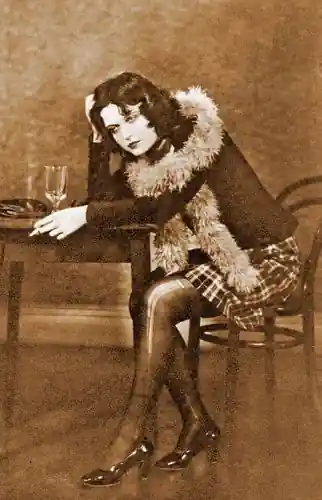
To watch Shadows of Paris today is to witness a collision of eras. It has the grandeur of the old-world epic and the psychological interiority of the coming sound era. It is as much a character study as it is a social document, standing alongside works like Egyenlöség in its attempt to parse the complexities of human equality and the barriers that prevent it. For any serious student of film history or lover of the avant-garde spirit of the 1920s, this is essential viewing—a dark orange sunset over a city that has seen too much, yet continues to dance in the shadows.
Ultimately, the film's power lies in its silence. Every glance between Negri and Menjou, every shadow cast across the Seine, tells a story of a world in flux. It is a reminder that while the sets may be silent, the emotions they evoke are deafening. In the end, Claire is forgiven, but she is also changed—a survivor of a war that didn't end in 1918, but continued in the hearts and homes of those who were left behind.
IMDb —
1928
Community
Log in to comment.