DbcultAccessing Vault...
3/10
Senior Film Conservator
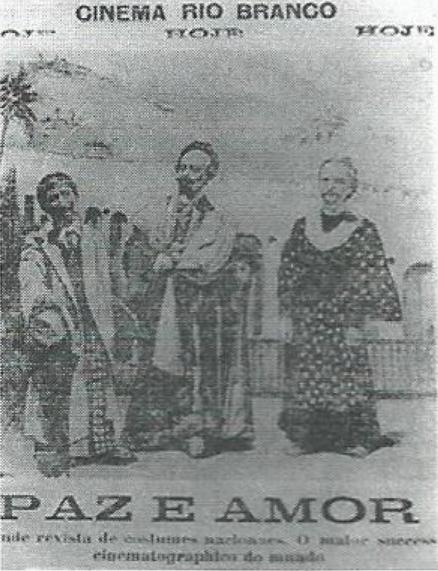
A definitive 3/10 rating for a film that redefined the boundaries of cult cinema. Paz e Amor remains a cornerstone of transgressive art.
Rio de Janeiro, 1910. A president who bathes in confetti while his police buy batons in bulk. A seamstress who stitches grenades into cravats. A photographer who traps arrogance in silver halide. They never share the same frame, yet together they detonate the first political satire ever spliced in Brazil—Paz e Amor, five reels of nitrate nitroglycerin now presumed lost, surviving only in whispers, censorship memos and the occasional fever dream of cinephiles.
Imagine, if you can, a world where the monarch of your morning headlines steps off the page, pirouettes into the street and promptly slips on the banana peel of his own propaganda. That is the opening gambit of José do Patrocínio Filho’s incendiary little film, shot clandestinely in the catacombs of Rio’s bankrupt studios and smuggled through customs inside coffins labeled “malaria samples.” The censors, distracted by the recent import of European actualities like The Corbett-Fitzsimmons Fight, never suspected that domestic cameras could bite back.
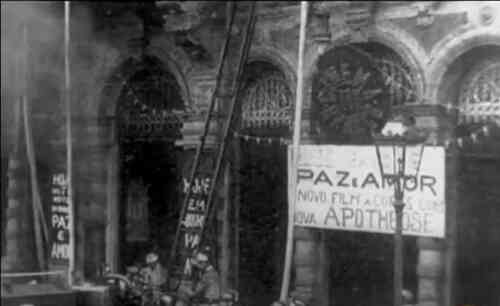
Paz e Amor unfolds like a Mardi Gras mask cracking under the spotlight. Act I is pure pageantry: President Peçanha—never named, always implied—rides a white mare down Avenida Central. But the camera, operated by Cataldi’s icy lens, tilts ever so slightly upward, revealing the overhead tram cables that resemble a noose. Intertitles, lettered in Grassi’s own embroidery floss, proclaim “Peace and Love” in Portuguese so ornate it borders on sarcasm. Meanwhile, Bastos’ bankrupt baron stalks the periphery, auctioning his last coffee sacks to buy a single saxophone whose bleating notes undercut every trumpet blast of officialdom.
Act II relocates us to the hot breath of the Valongo docks, where Piedade’s orator—part Circe, part Rosa Luxemburg—preaches to stevedores beneath flickering gas lamps. The film stock itself seems to sweat; frames blister around the edges as if the emulsion is allergic to its own content. Here, the satire metastasizes: Peçanha’s dove logo is silk-screened onto shipping crates full of rifles, a visual pun that lands harder than any speech. The montage is propulsive, almost Soviet in rhythm, yet laced with Brazilian saudade—a melancholy that whispers, “We laughed so we would not burn.”
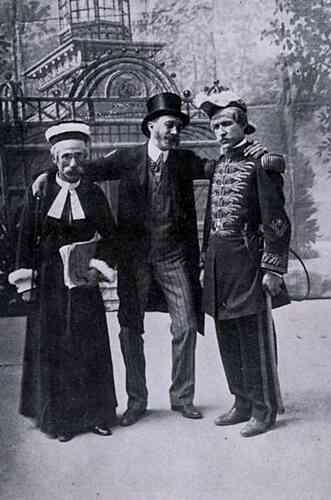
What makes Paz e Amor radical for 1910 is its contempt for continuity. Patrocínio Filho, allegedly trained on pirated prints of The Life and Passion of Jesus Christ, refuses to let the narrative settle. He cross-cuts between a society ball where debutantes wear peace-symbol brooches and a back-alley police raid where those same symbols are branded onto prisoners’ forearms with red-hot coins. The juxtaposition is so brutal, so deliberate, that the audience is forced to become co-conspirators: you supply the connective tissue, you indict the regime.
“We did not need dialogue,” Grassi later wrote in her confiscated diary. “Our stitches were the subtitles; our silences were the scream.”

Each actor weaponizes their star persona. Grassi, known in Rio’s underground theatres for playing Lady Macbeth with a sewing needle instead of a dagger, brings that same domestic menace to her seamstress. Watch how she measures a politician’s neck with a tape marked in centimeters and cemeteries. Piedade, a real-life activist who had already survived two arrests, glares down the barrel of the camera as if daring it to blink. Bastos, a former coffee magnate whose own empire collapsed under export tariffs, channels personal ruin into a vaudeville of desperation—his saxophone solos sound like laughter drowning in caipirinha. And Cataldi, the Italian immigrant, uses his outsider status to full voyeuristic advantage; his shutter clicks like a metronome counting down to coup d’état.
Within a week of its clandestine premiere at the now-demolished Cine Ideal, Paz e Amor was seized by order of the Minister of Justice. Rumor claims the negative was melted into shoe heels for the president’s personal guard; others swear a single print crossed the Atlantic and influenced the anarchic tone of later European agitprop. What survives are fragments: a production still of Grassi’s needle poised above a miniature presidential sash; a censorship form stamped “morally corrosive”; and the persistent echo of its final image—an overhead shot of Rio’s central plaza spinning like a zoetrope, the populace reduced to ants scrambling across a cracked portrait of the president.
Compare this to the static pageantry of A Procissão da Semana Santa or the colonial postcard aesthetics of O Cortejo da Procissão da Senhora da Saúde. Those films embalm reality; Paz e Amor sets it on fire and invites you to inhale the smoke.
Because satire ages like gunpowder. A century later, when world leaders still tweet peace while signing arms deals, the film’s central gag—peace as a brand, love as a logo—feels nauseatingly contemporary. Because its formal DNA—jump cuts, ironic intertitles, found-text collage—anticipates not just 1920s Soviet montage but also the TikTok mash-ups that eviscerate authority six seconds at a time. And because, in an age where every dissenting clip risks vanishing into the digital void, the story of a film erased by decree reminds us that cinema’s most subversive act is sometimes simply to exist, to bear witness, to refuse amnesia.
Final verdict: Paz e Amor may be lost, but its aftershock lingers—in every protest video that cuts from politician kissing babies to police swinging batons, every meme that stitches a peace sign onto a riot shield. It is the ghost in Brazil’s archival machine, laughing, needle in hand, waiting for the next reel to unravel.
IMDb 7.4
1935
Community
Log in to comment.