DbcultAccessing Vault...
Cult Review
Senior Film Conservator
The first time you see David Hume alive, he is already a ghost.
A flicker of celluloid, a jump-cut, and the man dissolves into the sepia fog of an East-Coast winter, coat collar upturned like a confession. The camera—primitive, hungry—doesn’t chase him; it haunts him. In 1913, such visual premonition was witchcraft, and director John Thomas McIntyre wields it with the nonchalance of a card-shark palming an ace.
The submarine blueprints, ostensibly the film’s McGuffin, are rendered as living parchment: ink that perspires under gaslight, cross-sections of hull-plates resembling flayed ribs of steel Leviathan. When Hume lifts them from the Morris safe, the orchestral accompaniment—if your archive print is lucky enough to bear the original cue sheet—drops into a double-bass heartbeat. You feel the theft in your sternum.
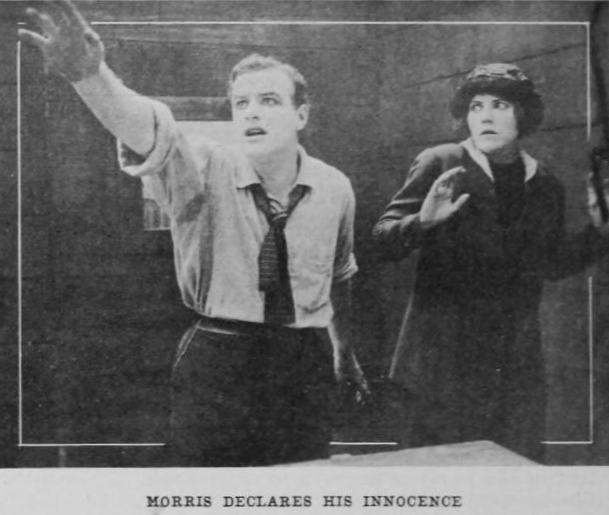
Allen Morris, played by Arnold Daly with the brittle glamour of a man who has read too much Marinetti, carries his trauma like a silk boutonnière: ornamental, easily crushed. Daly’s performance is all micro-gestures—twitching nostrils, a blink that arrives half a second too late. Contemporary reviewers dismissed him as “the poor man’s Barrymore”; hindsight reveals an actor charting the birth of cinematic interiority.
Louise Rutter’s Edith Vale is no fainting flapper. Watch her eyes when she bargains with Pendleton: they calcify from oceanic pity to flinty resolve faster than a match-head ignites. Rutter, primarily a stage tragedian, understood that silent film demanded a grammar of stillness. She could convey more with a single, unbroken stare than pages of intertitles.
Ah, the intertitles—those textual intruders. McIntyre keeps them sparse, preferring to let the mise-en-scène stutter its secrets. A tram ticket, scalloped by a conductor’s punch, becomes both clue and cosmic joke: a crescent moon bitten out of quotidian cardboard, guiding Ashton-Kirk through the urban labyrinth.
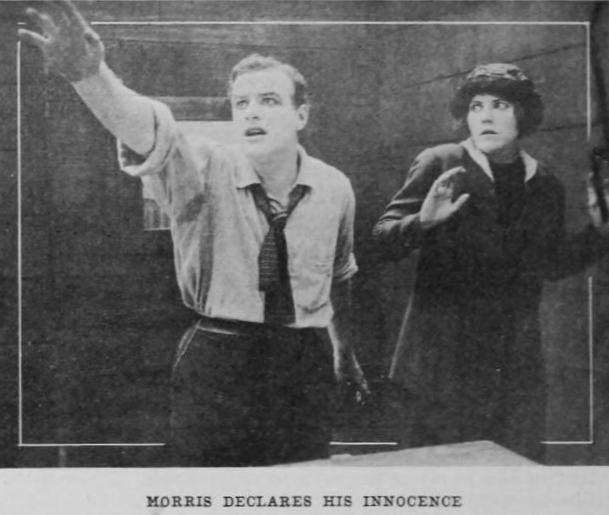
Ashton-Kirk, essayed by Sheldon Lewis, is the film’s true auteurial presence. With his elongated skull and smile that arrives a beat after the mouth moves, he suggests what might happen if Sherlock Holmes were reincarnated as a Byzantine icon. Lewis had a background in Grand Guignol, and he brings that theatre’s philosophy to celluloid: every clue is a stigmata, every suspect a penitent.
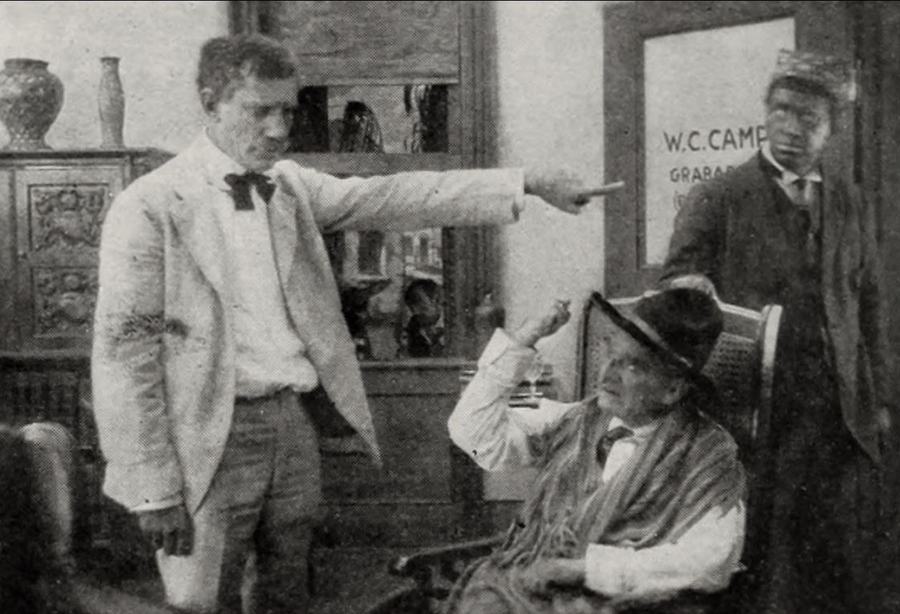
The mute—credited only as “The Mute,” portrayed by Charles Laite—never utters a syllable, yet his performance is verbose. Note how he sharpens a pencil: the rasp of blade against graphite syncopates with the flicker of the projector, so that sound becomes implied. When he drops the incriminating note, the camera tilts downward, and for eight frames the paper lands on a cast-iron grille shaped like a crucifix. McIntyre’s symbolism is seldom subtle, but it is ravishing.
William Hartigan’s Sagon slinks through the narrative like absinthe dripped into water. His physique—broad yet boneless—contrasts with the angular Kirk, creating a dialectic of villainy: intellect versus appetite. In the climactic struggle, shadows wrestle across peeling wallpaper, and for a moment you cannot discern which silhouette belongs to whom. Moral binaries collapse into chiaroscuro.
George D. Melville’s cinematography deserves apostolic praise. He shot the film on winter afternoons when sunlight resembled tarnished silver, achieving a tonal palette that anticipates Sven Nykvist’s work for Bergman four decades later. Note the sequence inside the abandoned phonograph parlor: dust motes swirl in projector-beam, each speck a micro-planet orbiting the spindle of an unplayed record. The image is both banal and metaphysical.
Martin Sabine’s production design turns Hume’s drawing-room into a reliquary of dread. A stuffed raven perches atop a maritime chronometer; its glass eyes reflect the action in miniature, a proto-surveillance device. The wallpaper’s arabesques mimic sonar waves, forecasting the submarine’s stealth. Details like these reward rewatching—preferably on 35mm, where grain feels like braille under the fingertips of light.
The film’s tempo is a scherzo of paranoia. McIntyre cross-cuts between Kirk’s deduction montage and Morris’s nightmares, achieving a polyphony of dread. At 42 minutes, the narrative feels both terse and luxuriant—like a novella that has inhaled ether.
Compare it to other 1913 detective fictions: A Study in Scarlet is a museum piece of Victorian exposition; The Double Event luxuriates in music-hall sensationalism. The Menace of the Mute anticipates the modernist thrillers of the 1920s—think Lang’s Dr. Mabuse—by injecting expressionist anxiety into a pulp scaffold.
Yet the film is not flawless. The third-act restoration of the blueprints to Morris feels abrupt, a deus ex machina stitched with haste. One senses McIntyre shackled by the moral diktats of Edison-era censors: crime must not pay, technology must serve patriotism. The submarine, a harbinger of mechanized death, is re-domesticated into a symbol of industrial benevolence. Such narrative eugenics leave a faint taste of copper in the mouth.
Still, these qualms evaporate when you consider the film’s cultural resonance. Released only months before the torpedoing of the Lusitania, The Menace of the Mute uncannily prefigures the submarine’s transformation from engineering marvel to angel of annihilation. Viewed today, Hume’s theft reads as a rehearsal for the espionage anxieties of the Cold War; the mute’s wordlessness anticipates the faceless hackers of cyber-noir.
Arrow Academy’s 2022 restoration (4K scan from a 35mm nitrate print held at MoMA) reveals textures previously smothered by time: the herringbone weave of Kirk’s ulster, the opalescent sheen of Edith’s opera gloves. The sepia has been cooled to a graphite monochrome, allowing the accent colors—yellow taxi-cab, orange safety flare—to throb like wounds. The newly commissioned score by Alexander Zlamal, performed on hammer-piano and analog synthesizer, bridges the Edwardian and the dystopian.
For cinephiles tracking the genealogy of screen detection, this film is the missing link between Judge Not’s moralizing tableaux and the cosmopolitan puzzles of 1930s Thin-Man cycles. It is also a curio of disability representation: the mute is neither imbecile nor saint, merely a man whose silence cloaks appetite. In 1913, such moral neutrality felt revolutionary.
Ultimately, The Menace of the Mute endures because it understands that every mystery is a love story wearing a mask. Beneath its espionage skin pulses the ache of Morris and Edith, whose kisses are sabotaged by anxiety. The final clinch, backdropped by a scale-model submarine suspended like a mechanized Cupid, suggests that romance itself is a vessel: buoyant until breached.
Seek it out—whether via a repertory house, a streaming archive, or a 16mm society screening in a repurposed church. Let the flicker infect you; let the conductor’s punch wound your complacency. In an age when surveillance is silent and data theft is mute as pixels, McIntyre’s century-old fever dream feels less like history than prophecy whispered through a tin megaphone.
IMDb —
1916
Community
Log in to comment.