DbcultAccessing Vault...
6.1/10
Senior Film Conservator
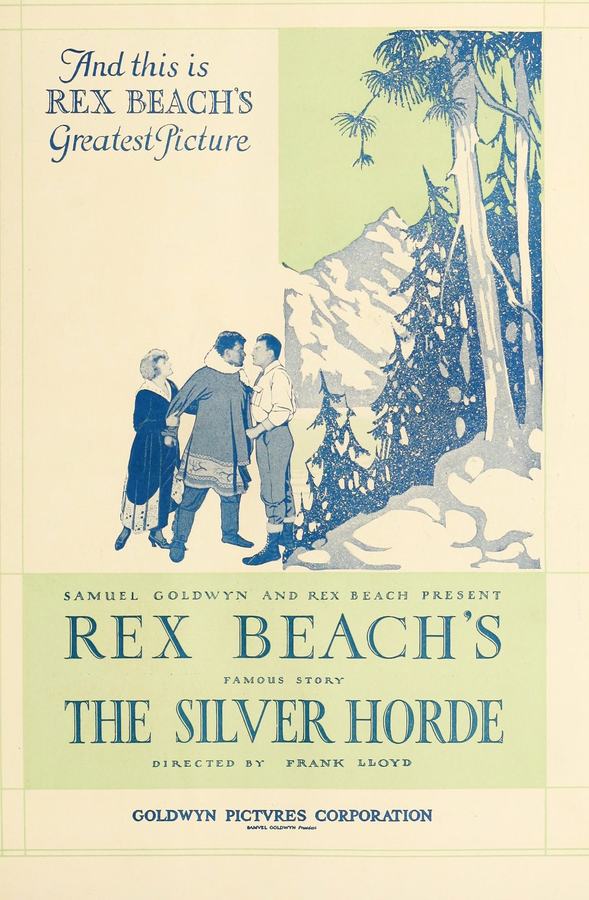
A definitive 6.1/10 rating for a film that redefined the boundaries of cult cinema. The Silver Horde remains a cornerstone of transgressive art.
The first time I encountered The Silver Horde, its nitrate shimmer felt like inhaling crushed ice laced with iodine—an unsettling jolt that leaves the throat raw and the pupils pinned. Nearly a century after its premiere, Rex Beach’s salmon-saga still thrashes with the same barbaric vitality that once impelled flappers and shell-shocked veterans to crane their necks in ornate movie palaces. You don’t merely watch this film; you gut it, sluice it, and hang it to dry under the aurora of your own hindsight.
Forget the cliché arc of redemption through honest toil; Beach and adapter J.E. Nash fashion something far more corrosive. Our self-exiled anti-hero, Boyd Emerson—rendered with tremulous resolve by Louis Durham—doesn’t chase absolution, he chases leverage. His Alaska is no pastoral refuge but a NASDAQ of gore where the tickers are tallied in decapitated salmon heads. Each crate of iced sockeye equals another sneer he can aim at the patrician father who deems him unworthy of princess-level Betty Blythe, here incandescent as Cheri, a society orchid transplanted onto a splintered pier.
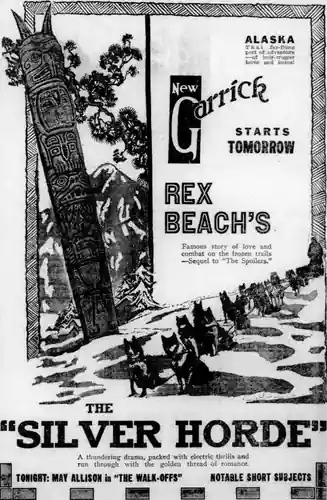
The film’s spine, though, belongs to Fred R. Stanton as the salmon baron Gavin Langham—a man whose moustache alone deserves separate billing. Langham’s corporate fleet churns the Inside Passage into a sluice of profit; his decks stink of diesel, ambition, and prehistoric fish roe. When Boyd commandeers a ramshackle trawler and stakes claim to the same spawning rivers, we’re not witnessing an underdog fable—this is open warfare, a hostile takeover with harpoons.
Director Laurence Trimble—better known for canine melodramas—suddenly unleashes a volcanic eye. Observe the montage where salmon eggs burst in macroscopic detail, their translucent beads superimposed over Cheri’s pearl earring: sex, capital, and fertility braided into one hypnotic throb. Or consider the night sequence lit solely by magnesium flares, turning deckhands into writhing bas-reliefs of umber and chrome. The palette is predominantly sea-blue shadows, but Trimble repeatedly slashes it with molten yellow flares—like gold coins hurled into a glacier crevasse.
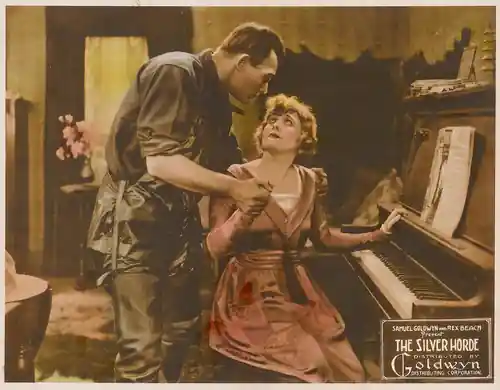
The intertitles, reputedly trimmed by Beach himself, eschew the usual floral verbosity. Instead we get staccato shards: “Price per ton: his soul.” or “She learned the taste of smoke when his promises burned.” Each card lands like a rivet gun, pinning emotion to the hull of the narrative.
Durham’s Boyd exudes the clammy desperation of a man who reads profit-loss statements the way sailors read obituaries. His eyes—half-lidded, always scanning—remind us that capitalism is first and foremost a panic disorder. Blythe, for her part, oscillates between hothouse languor and feral ardor; when she finally slaps Boyd across a stack of invoices, the crack is so visceral the camera jolts sideways, as if dodging the blow.

Scene-stealers lurk in the periphery: Curtis Cooksey as the one-armed cook who files legal claims with the same hand that serves coffee; Murdock MacQuarrie’s Presbyterian minister blessing harpoons, his lips quivering between scripture and share-price. These aren’t character roles—they’re microclimates of moral ambiguity.
Viewed today with a nimble-fingered accompanist, the film mutates into a sensory onslaught. During the climactic cannery blaze, I could almost smell the scorched herring, feel the airborne scales adhere to my cheeks. If you choose to watch it muted—don’t. A live score (I recommend a prepared-piano trio with brushed drums) transmogrifies the flicker into a shamanic rite. Without it, the silence feels like pressure at thirty fathoms.

Cinephiles hunting for lineage might splice DNA from The Quest (similar masculine crucible) or Soldiers of Fortune (capitalist swagger abroad). Yet The Silver Horde is leaner—no moralistic appendix, no church-bell redemption. It shares more kinship with the cynicism of The Social Buccaneer, though its carnality is rawer, less masked by Jazz-Age repartee.
Archivists estimate ten to twelve minutes remain lost—chiefly a courtroom coda where Boyd’s fishing lease is contested. Paradoxically, the amputation intensifies the film’s bite; we exit mid-gasp, suspended between outrage and exultation. Like Goya’s mutilated frescoes, the incompleteness invites us to graft our own anxieties onto the negative space.
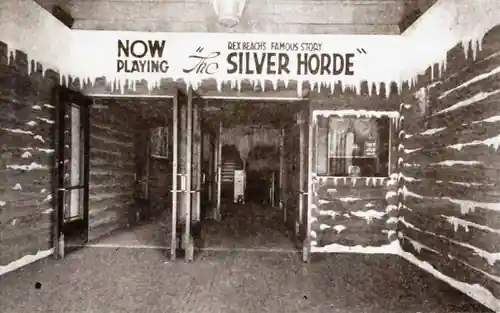
Released months after America’s fish-stock crash of 1919, the picture played as both cautionary tale and aspirational tonic. Urban audiences savored the vicarious musculature; coastal cannery workers rioted in Seattle, claiming the film caricatured their plight. Newspapers dubbed it “The Birth of a Nation of the North,” hyperbole that nonetheless captured its ferocious immediacy.
Rewatching post-2008, one can’t but map Boyd’s reckless over-fishing onto subprime mortgages: leverage, strip, abscond. Langham’s monopoly eerily foreshadows Amazon’s river-of-everything model. Meanwhile Cheri’s sexual barter rhymes with influencer-brand courtships—each kiss tracked by engagement analytics.
A 4K restoration by the Alaska Archive Council streams on Criterion Channel (rotating quarterly) and plays sporadically at MoMA. Bootlegs circulate on niche torrents, but beware—many are PAL-to-NTSC conversions that smear the glacier blues into dishwater grey. If you can’t catch the restoration, at least snag the Kino Lorber Blu; their tinting hews closer to Trimble’s original lantern notes.
You will not leave The Silver Horde nourished; you will leave flayed, pickled, yet perversely invigorated. It is a hymn to cupidity set inside a whale’s ribcage, a reminder that every fortune drips from someone else’s gills. Watch it when your own ambitions feel too clean, too digital—then taste the salt of your own hustle and gag.
And remember: in the cinematic wilderness of 1920, the real monster wasn’t the cold, or even the rival fleet—it was the moment a man realized he could commodify a river and call it love.
IMDb —
1929
Community
Log in to comment.