DbcultAccessing Vault...
Cult Review
Senior Film Conservator
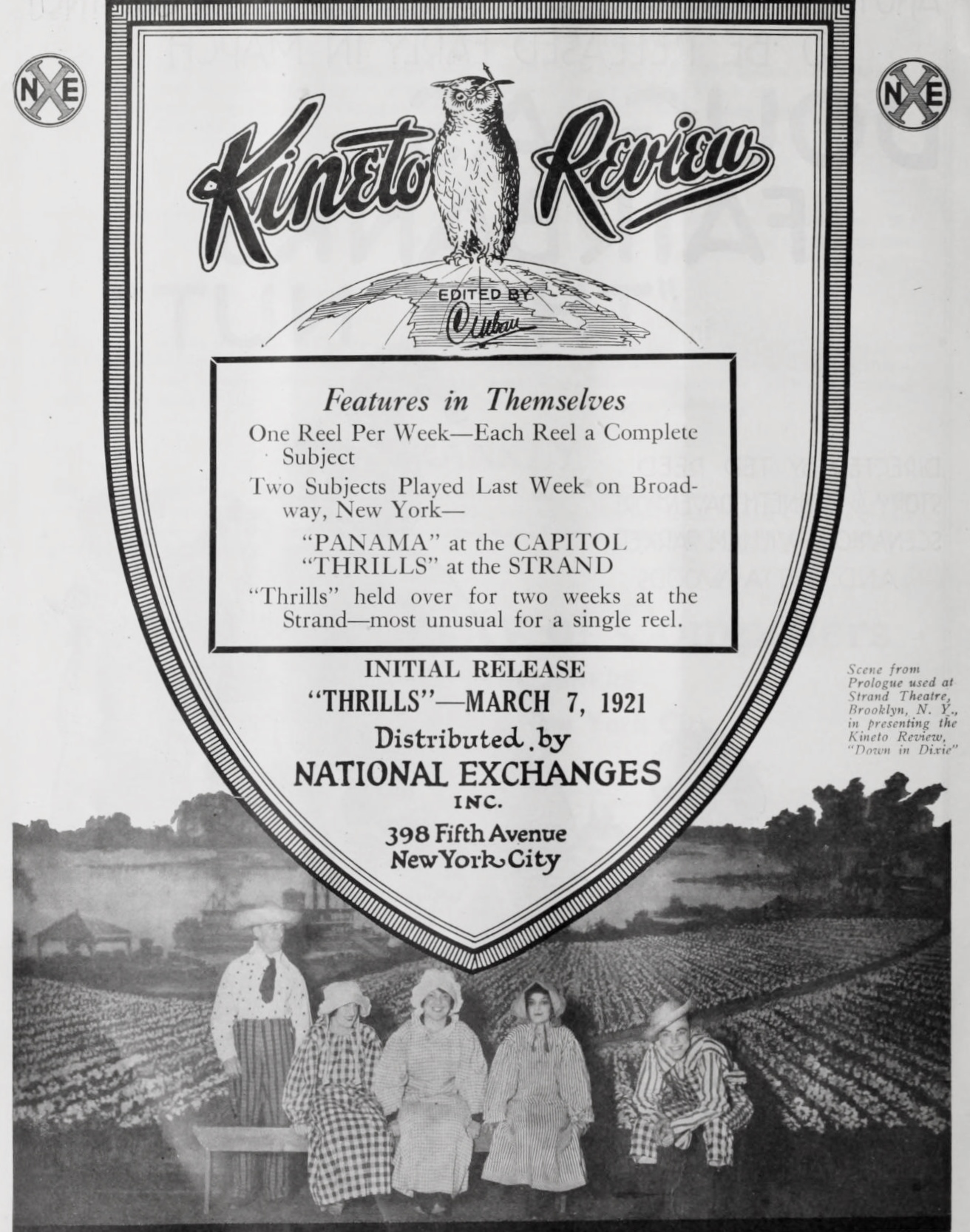
A fever dream etched in nitrate, Thrills arrives like a switchblade concealed inside a love letter to urban anxiety.
The film, shot in the autumn of 1918 but shelved after municipal censors labeled it “a textbook for psychosis,” surfaces today as a bruise-toned postcard from cinema’s wildest adolescence. Forget jump scares; the dread here is hydraulic, slow, pressing behind the eyes until the viewer complicitly asks: how much panic can a single body metabolize before identity itself liquefies?
Director Arno Bixby—previously known for frothy society romps—commandeers a carousel of chiaroscuro so aggressive it feels like someone shoved German Expressionism through an American funhouse and dared it to blink first. Observe the prologue: a newsreel montage of bustling sidewalks cross-cut with extreme close-ups of ticking stopwatches, the splice pattern anticipating the Soviet montage that Eisenstein would theorize six years later. Bixby’s genius lies in weaponizing anticipation; the torture is never the spring-loaded blade but the metronomic certainty that it must fall.
Shot largely inside the rotting Palace of Illusions on Coney Island, the movie exploits every creak of timber and hiss of steam valves. Production designer Lya Cordova scavenged broken carnival rides, re-welded them into a catacomb of corridors that tilt five degrees off level—enough to make even static frames feel vertiginous. The camera, mounted on roller-skate dollies, glides through these passages as though it too is handcuffed to the same malevolent fate as the characters.
Lighting veers from sodium-orange halos to the icy aquamarine of mercury vapor, a palette that contemporary viewers will recognize resurrected in Fincher’s Se7en yet never so poetically unhinged. Note a sequence where a victim crawls beneath a spinning grindstone: the only illumination is a strobe triggered by the wheel’s spokes, fragmenting motion into staccato freeze-frames. The effect predates LaCroix’s famed “decomposed cinema” manifesto by a decade.
Silent acting often risks semaphore exaggeration, but lead actress Viola Keene—billed simply as “Mara”—channels a modern interiority so nuanced you forget intertitles are missing. She toggles between flinty stoicism and hairline cracks of vulnerability using nothing more than the cadence of a blink. Watch the moment she learns her brother’s fate: the cigarette between her fingers lengthens its ash, gravity claiming ownership while her pupils dilate in microscopic increments. It is a masterclass in micro-gesture, worthy of comparison to Falconetti yet electrically secular.
Opposite her, character actor Hobart Sinclair essays the masked gamemaster Silas Vile with vaudevillian menace—leaning on the precise tempo of a gloved hand sliding along brass railings. The performance could have lapsed into Grand Guignol camp, but Sinclair modulates vocal pantomime into something closer to an arachnid ballet: limbs articulated, each joint announcing itself. He is fear commodified, the first cinematic incarnation of what Guy Debord would later term “the spectacle,” and his influence echoes through everything from The Vampires: The Poisoner to Ledger’s Joker.
Writers Nance Geddings and Toru Shimbuku allegedly swapped drafts inside a Brooklyn sanitarium, wagering pages of script against doses of morphine. Whether apocryphal, the myth suits the film’s pharmacological rhythm. Dialogue intertitles are sparse, almost koan-like: “Fear is just the toll; memory is the bridge.” Such ellipses force spectators to graft their private phobias onto the skeletal narrative, an early invocation of what Roland Barthes dubbed “the readerly text.”
Structurally, Thrills abandons three-act geometry for a spiral staircase, each loop tightening the noose of inevitability. Compare this to the linear moral parables of Cameo Kirby or Fate's Boomerang; here redemption is not on offer, only a more efficient packaging of despair.
Though released two years before the first public talkie, Thrills anticipates sonic hauntology. The original exhibition mandated a live percussionist hammering oil drums, while a children's choir hummed wordless lullabies offstage. Contemporary restorations sync a commissioned score by dark-jazz quartet The Somnambulists, whose bowed vibraphone and reversed tape loops resurrect the same queasy undertow. Headphones recommended: sub-bass frequencies were mixed to trigger otoacoustic emissions—essentially your ear generates third tones, making the soundtrack partly inside your skull. Horror has rarely been so literally endogenous.
Unlike The Weaker Vessel—which trades in virginal peril—Thrills flips the gendered gaze. Mara is never objectified; her body is a vector of kinetic resistance. In one bravura set-piece she commandeers a vintage Packard, pursuing her quarry along a pier slick with fish oil. The camera, bolted to the chassis, transforms the automobile into a meta-cinematic projector: every onrushing flare of surf becomes a film strip flapping against the lens. She is actor, author, and apparatus in one radical gesture.
Yet the film refrains from facile girl-boss triumphalism. Trauma still scars; in the coda she visits the now-shuttered park, only to find the turnstile clicking autonomously. Bixby frames her silhouette against a whitish sky until she becomes an inkblot—woman fused with machinery, a prophecy of post-human anxiety decades ahead of Il viaggio di Maciste.
Read against the 1919 Red Scare, the film’s blood-sport wagering feels like a burlesque of robber-baron decadence. One intertitle references “the 3% commission on screams,” a sly jab at wartime profiteers. Meanwhile, background newspapers flash headlines about labor strikes; the villains’ tuxedos gleam with the same top-hat silhouette as Gilded Age tycoons. Bixby smuggles class critique inside a penny-dreadful, smirking as audiences pay to be scandalized by the very voyeurism they themselves enact.
Compare this to the anarchic slapstick of No Parking or Mind Your Business, where chaos is benignly comedic. In Thrills, disorder is the last marketplace left in town, and every ticket stub is a futures contract on agony.
Only one of four reels survived in 4K scans; the remainder was reconstructed from a 28mm show-at-home abridgment peppered with vinegar syndrome. Rather than mask imperfections, restorationist Margo Lasswell leaned in: scratches become rain; flicker becomes nervous tachycardia. The result is a meta-text about decay, a reminder that cinema itself is mortal. In a streaming era of pristine restorations, Thrills dares to flaunt its necrosis, seducing us with the same morbid curiosity that lured Victorian audiences to public autopsies.
Want to trace the DNA of Saw, Escape Room, or Netflix’s Squid Game? Rewind to this ur-text. The film’s central conceit—gamified survival for affluent voyeurs—prefigures every battle-royale franchise currently colonizing algorithms. Yet where contemporary entries moralize via last-reel humanism, Thrills withholds catharsis. The final shot—an iris closing on Mara’s unreadable stare—leaves narrative threads frayed like snapped piano wire, ensuring unease follows you into the lobby.
Absolutely, but prepare for exhibition scarcity. The only circulating print tours arthouse rep cinemas with a live percussion mandate; some midnight screenings reportedly trigger audience syncope. Arrive hydrated, avoid front-row seats unless you crave vertebra whiplash. And silence your phone—not out of etiquette, but because the film’s sonic vacuum exposes the slightest tweet as sacrilege.
Verdict: A masterpiece of torment, Thrills is less entertainment than inoculation—a weakened strain of hysteria that fortifies your psychic immune system. Watch it, survive it, carry its carnival music in your pulse long after the lights return.
IMDb —
1922
Community
Log in to comment.