DbcultAccessing Vault...
5.4/10
Senior Film Conservator
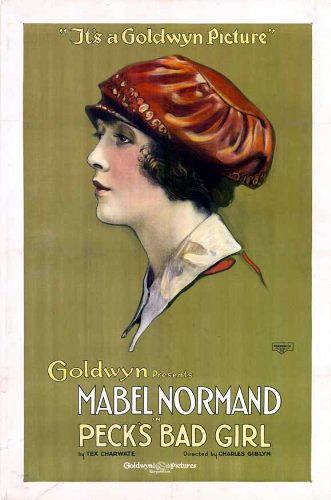
A definitive 5.4/10 rating for a film that redefined the boundaries of cult cinema. Peck's Bad Girl remains a cornerstone of transgressive art.
The year 1918 stood as a precipice in cinematic history, a moment when the primitive slapstick of the early decade began to coalesce into the sophisticated narrative structures of the roaring twenties. At the heart of this evolution was Mabel Normand, an actress whose comedic timing was surpassed only by her capacity for startling vulnerability. In Peck's Bad Girl, directed with a brisk, almost breathless pace by Charles Giblyn, we witness the 'I Don't Care' girl of the screen transcending her Keystone roots to inhabit a character of genuine sociological complexity. Minnie Penelope Peck is not merely a 'scamp'; she is a disruption of the patriarchal equilibrium of Yaptank, a village that feels as claustrophobic as the sets in The Woman.
The film’s inciting incident—a dispute over a nine-dollar debt—serves as a poignant critique of the precarious nature of labor in rural America. When the bank president dismisses the elder Peck’s legitimate claim for wages, he isn't just being a miser; he is exercising a class-based dominance that Minnie refuses to acknowledge. Her decision to post a sign claiming the bank is 'bust' is a masterstroke of psychological warfare. It taps into the primal fear of the proletariat: the loss of accumulated labor. The ensuing riot is filmed with a visceral energy that reminds one of the chaotic crowd dynamics in War Brides, though here the stakes are played for a dark, satirical humor.
Normand’s performance during the fire hose sequence is a masterclass in physical comedy. Unlike the choreographed rigidity of her contemporaries, Normand moves with a liquid spontaneity. She doesn't just play the scene; she inhabits the chaos. When the water nozzle escapes her grasp, drenching the local dignitaries, it is a symbolic cleansing of the town’s hypocrisy. The water, much like the narrative itself, refuses to be contained by the 'proper' channels of Yaptank society.
The second act of the film introduces a fascinating tonal shift. The arrival of Hortense Martinot (played with a chilling, serpentine grace by Corinne Barker) offers Minnie an escape from the looming threat of the reformatory. This segment of the film explores the performative nature of gender. Minnie, who has spent her life in the utilitarian garb of a tomboy, is forced into the restrictive elegance of a fashion model. This transition is not portrayed as a simple 'Cinderella' moment; there is a palpable sense of loss in Minnie’s eyes as her freckles are powdered over. It echoes the thematic weight of identity found in The Beautiful Lie, where the facade becomes more real than the person beneath.
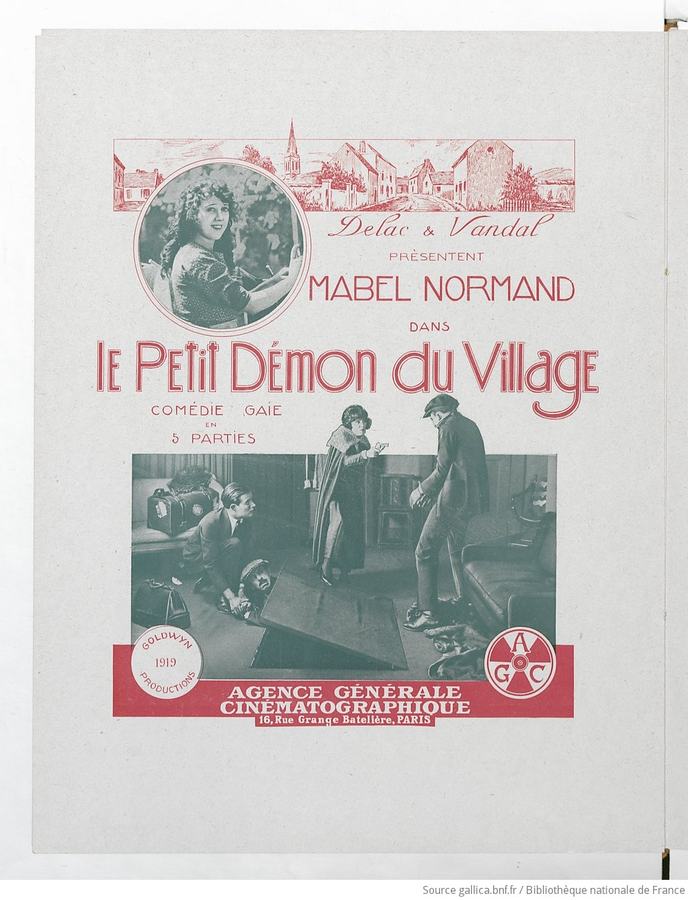
The fashion shop becomes a liminal space where the 'bad girl' is refined into a 'lady,' yet the film cleverly suggests that this refinement is merely a different kind of mask. Hortense is the ultimate foil to Minnie; where Minnie is honest in her mischief, Hortense is deceptive in her elegance. The irony that a criminal is the one teaching Minnie how to be 'good' is a delicious narrative twist that Tex Charwate’s script handles with surprising subtlety for the era.
Enter Dick, the jewelry store proprietor, portrayed by Earle Foxe with a dashing, if somewhat stoic, charm. The romance between Minnie and Dick is built on a foundation of mutual observation. Dick is not fooled by Minnie’s rough exterior, nor is he blinded by the glamor of the city slickers who frequent Hortense’s shop. The revelation that Dick is an undercover detective adds a layer of genre-bending intrigue that elevates Peck's Bad Girl above the standard comedy fare of 1918. It shares a certain DNA with the investigative suspense of The Silent Battle, though it maintains a lighter touch.
The climax of the film, involving a midnight bank heist, allows Normand to synthesize her two personas. She utilizes the agility of the tomboy and the access of the fashion model to thwart the villains. The sequence in the bank vault is particularly well-lit for a production of this vintage, using shadows to create a sense of genuine peril that contrasts sharply with the sunny disposition of the film’s opening. When Minnie finally captures the crooks, it is not an act of luck, but an act of agency. She has outgrown the need for chaotic signs; she now understands the mechanics of the world well enough to dismantle its criminal elements.
To fully appreciate Peck's Bad Girl, one must view it alongside other Goldwyn productions of the time. While films like Betsy Ross were preoccupied with historical myth-making, and Fire and Sword chased exoticism, this film remains grounded in a uniquely American vernacular. It captures the transition from the 19th-century village ideal to the 20th-century reality of urban encroachment. The 'gentlemen from the city' who assist Hortense represent a predatory modernity that Yaptank is ill-equipped to handle, save for the intervention of a 'bad girl' who doesn't play by the rules.
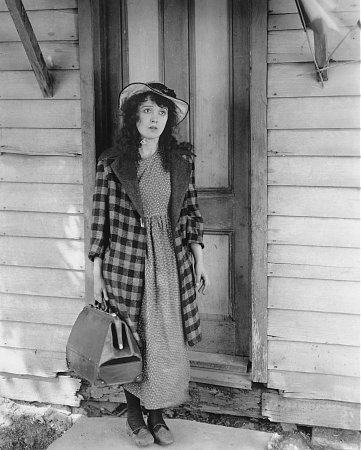
The film also serves as a poignant reminder of Mabel Normand’s range. Often overshadowed by her associations with Chaplin and Arbuckle, here she stands alone as a formidable dramatic and comedic force. Her ability to pivot from the slapstick of a fire hose disaster to the genuine pathos of a girl seeking approval is remarkable. It is a performance that anticipates the 'flapper' archetype of the 1920s, much like the spirited heroines in The Secretary of Frivolous Affairs.
Visually, the film benefits from the crisp cinematography that became a hallmark of the Goldwyn Studio. The use of deep focus in the bank lobby scenes allows the viewer to track the mounting tension among the depositors while Minnie remains the focal point in the foreground. The editing, particularly during the transition from the fashion show to the heist planning, shows a sophisticated understanding of parallel action. It lacks the experimental jarring of The Fates and Flora Fourflush, opting instead for a narrative clarity that serves the story’s momentum.
The costume design also deserves mention. Minnie’s evolution is told through her clothes—from the oversized, grease-stained overalls of the first act to the structured, almost architectural gowns of the second. Each garment is a cage, and Normand’s physical performance subtly rebels against the fabric. When she finally accepts the wedding ring from Dick, she is wearing a dress that finally seems to fit her—not just in size, but in spirit. It is a reconciliation of her disparate halves.
In the final analysis, Peck's Bad Girl is more than a mere vehicle for its star. It is a sharp-witted exploration of class, gender, and the deceptive nature of appearances. It avoids the saccharine sentimentality that plagued many films of the era, such as Hearts United, and instead embraces a gritty, comedic realism. While it may not have the epic scale of A Celebrated Case, its intimacy is its strength.
For the modern viewer, the film offers a window into a world where a nine-dollar debt could spark a revolution and a tomboy could save a town. It is a testament to the enduring power of Mabel Normand, whose spirit remains as unquenchable as the fire hose that once drenched the citizens of Yaptank. Whether she is racing through the streets like the protagonist of A Motorcycle Adventure or outsmarting a villain as formidable as That Devil, Bateese, Minnie Peck is a character for the ages. She is the 'little speck in garnered fruit,' as mentioned in Little Speck in Garnered Fruit—the tiny imperfection that makes the whole world more interesting. This is silent cinema at its most vibrant, a technicolor performance in a black-and-white world, proving that sometimes, the 'bad girl' is the only one doing anything right.
IMDb —
1925
Community
Log in to comment.