DbcultAccessing Vault...
Cult Review
Senior Film Conservator
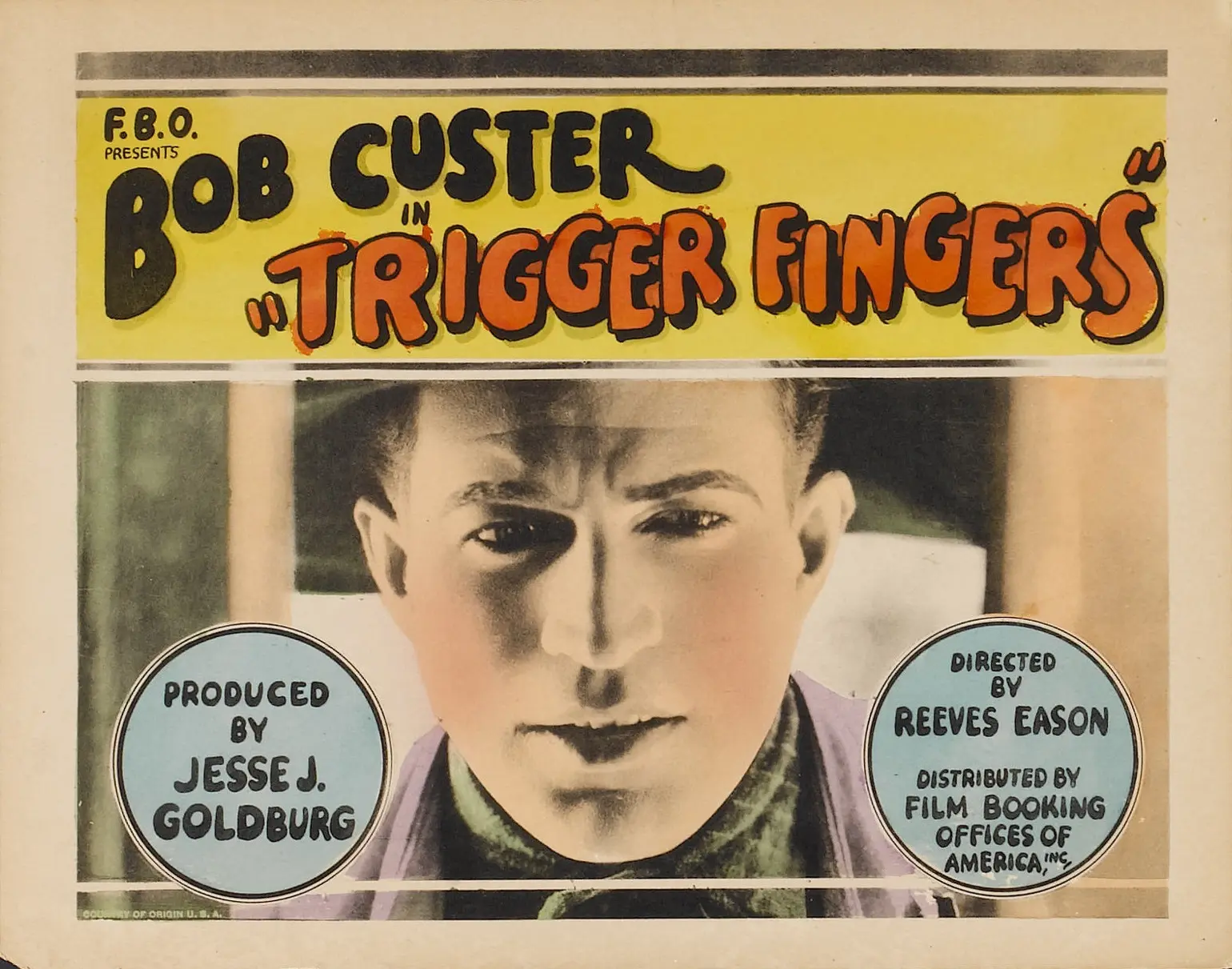
In the realm of early 20th-century cinema, few films have managed to encapsulate the essence of the Western genre as effectively as 'Trigger Fingers.' This riveting tale of undercover justice, penned by William Berke, masterfully interweaves themes of deception, loyalty, and redemption, crafting a cinematic experience that continues to captivate audiences to this day.
The film's narrative is set against the backdrop of a lawless Texas, where the nefarious 'Black Hawk' and his gang have been wreaking havoc on unsuspecting communities. Enter Sergeant Bob Steele, a rugged and principled Texas Ranger, tasked with bringing the gang to justice. Steele's mission necessitates an audacious plan: to assume the alias 'Lightning' Brady, an outlaw with a reputation for cunning and bravery.
This deliberate blurring of lines between lawman and outlaw serves as the film's central tenet, expertly ratcheting up tension as Steele navigates the complex web of alliances and rivalries within the gang. As 'Lightning' Brady, Steele finds himself torn between his loyalty to the Rangers and his fabricated persona, all while working tirelessly to thwart 'The Black Hawk's' malevolent plans.
The cast, comprising George Field, Bob Custer, and Max Asher, deliver performances that are at once convincing and captivating, lending credence to the film's taut narrative. The cinematography, though rudimentary by modern standards, effectively captures the stark beauty of the Texas landscape, serving as a fitting backdrop for the drama that unfolds.
One of the most striking aspects of 'Trigger Fingers' is its thematic resonance with other films of the era. For instance, The Life of Our Saviour; or, The Passion Play and The Love Tyrant also explore the tensions between good and evil, albeit in markedly different contexts. Similarly, The Spy and Sands of Sacrifice feature protagonists grappling with dual identities, highlighting the enduring appeal of such narratives.
In terms of directorial finesse, William Berke's vision for 'Trigger Fingers' is noteworthy, particularly in its pacing and tone. The film's measured tempo allows for a thoughtful exploration of its themes, while the score effectively heightens the sense of tension and urgency. These elements combine to create a viewing experience that is at once engaging and immersive.
Upon closer inspection, it becomes apparent that 'Trigger Fingers' also engages with the notion of performance and identity. Steele's dual roles as both Sergeant Bob Steele and 'Lightning' Brady serve as a metaphor for the performative nature of self, highlighting the malleability of identity in the face of adversity. This theme is echoed in films like Billy Blazes, Esq. and The Escape, where characters also navigate complex social hierarchies and personas.
The film's use of symbolism is another aspect worthy of consideration. The enigmatic 'Black Hawk' serves as a symbol of lawlessness and chaos, while Steele's 'trigger fingers' represent the instrument of justice. This dichotomy is expertly exploited throughout the narrative, underscoring the eternal struggle between order and disorder.
From a technical standpoint, 'Trigger Fingers' demonstrates a keen understanding of the cinematic language of its time. The use of close-ups and medium shots effectively conveys the emotional intensity of key scenes, while the editing is economical and efficient. These technical aspects combine to create a film that is both a product of its era and a timeless classic.
In conclusion, 'Trigger Fingers' is a gripping tale of undercover justice that continues to enthrall audiences with its intricate narrative and memorable performances. As a cinematic artifact, it provides valuable insights into the Western genre and the thematic preoccupations of early 20th-century cinema. For fans of classic Westerns and those interested in the evolution of film language, 'Trigger Fingers' is an essential viewing experience.
Additional films that may be of interest to viewers of 'Trigger Fingers' include The Light of Victory, Un día en Xochimilco, and The Greatest of These. These films, while distinct in their narratives and themes, share a common concern with issues of identity, morality, and social justice.
Ultimately, 'Trigger Fingers' stands as a testament to the enduring appeal of the Western genre and the power of cinema to captivate and inspire audiences. As a film critic, it is a pleasure to revisit and reevaluate this classic tale, and to recommend it to readers seeking a compelling and thought-provoking cinematic experience.
IMDb —
1924
Community
Log in to comment.