DbcultAccessing Vault...
4.7/10
Senior Film Conservator
A definitive 4.7/10 rating for a film that redefined the boundaries of cult cinema. The Doughboy remains a cornerstone of transgressive art.
Is 'The Doughboy' worth watching today? Short answer: yes, but with significant caveats that speak to its specific historical context and comedic sensibilities. This particular silent film will resonate most strongly with dedicated cinephiles, film historians, and those with a genuine appreciation for the foundational elements of early 20th-century slapstick. Casual viewers seeking modern narrative sophistication or rapid-fire humor might find its charms elusive, even a little frustrating.
Released during an era when the scars of the Great War were still fresh, The Doughboy (1921) stands as a fascinating artifact. It's not merely a film; it's a window into how audiences of the time processed trauma and sought escapism through humor. Starring the inimitable 'Snub' Pollard, this silent comedy attempts to blend the grim reality of war with the buoyant spirit of physical gags and a heartwarming tale of unlikely camaraderie. It's an ambitious tightrope walk, and its success is debatable, but its historical significance is undeniable.
Before we delve into the trenches of its critical analysis, let's set the stage. This is a film from a different cinematic universe, one where exaggerated expressions and precisely timed pratfalls were the language of laughter. It demands a specific kind of engagement, a willingness to meet it on its own terms. For those who can make that leap, The Doughboy offers genuine insights and moments of unexpected charm.
This film works because it showcases the magnetic physical comedy of 'Snub' Pollard at his peak, delivering a unique blend of wartime adventure and genuine, if simplistic, human connection. Its brevity and earnestness contribute to a surprising warmth that transcends its technical limitations. Pollard’s commitment to his character, even when faced with the most absurd situations, anchors the film.
This film fails because its humor, while groundbreaking for its time, is undeniably dated, relying on broad stereotypes and a narrative simplicity that can feel underdeveloped by contemporary standards. The pacing can also test the patience of an audience accustomed to faster cuts and more complex character arcs. It asks for a certain historical generosity that not all viewers possess.
You should watch it if you are fascinated by the silent film era, a fan of 'Snub' Pollard's unique brand of slapstick, or interested in how cinema grappled with sensitive topics like war through comedy in its infancy. It’s a valuable historical artifact, offering a glimpse into early cinematic attempts at balancing lighthearted entertainment with a serious backdrop.
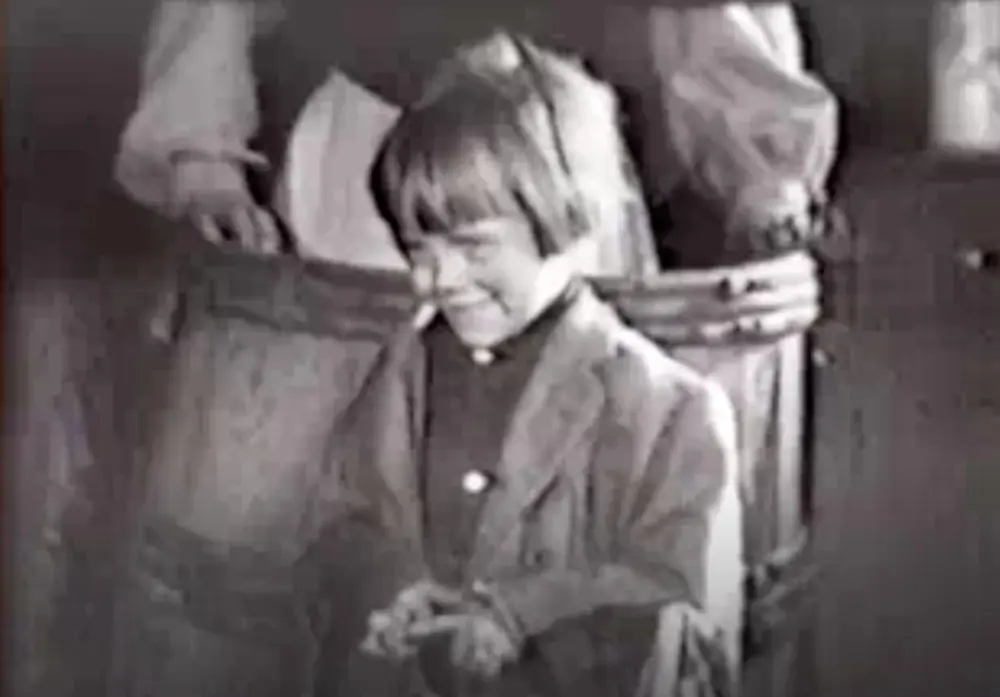
The narrative thrust of The Doughboy is deceptively simple, yet it carries the weight of a world still reeling from conflict. We follow Snub, a fresh-faced American recruit, as he’s flung into the European theater of World War I. His initial journey is less about grand battles and more about the mundane absurdities of military life, until fate intervenes. Behind enemy lines, a chance encounter with a young, resilient orphan girl and her even younger brother reshapes his purpose entirely.
From this point, the film pivots from a general wartime comedy to a more personal quest. Snub, transforming from a mere soldier into an impromptu guardian, takes it upon himself to protect these children. This shift imbues the film with a surprising emotional core, however lightly it’s explored. The ensuing escapades are driven by Snub’s attempts to outwit the German forces, who are portrayed with a level of bumbling incompetence that borders on the farcical. This portrayal serves as the primary engine for the film's comedic set pieces.
The plot, then, is less a war epic and more a series of vignettes illustrating Snub’s ingenuity and the Germans' consistent failure to grasp even the simplest tactics. It’s a classic underdog story, with Snub and the children navigating a perilous landscape through sheer luck and comedic timing. The underlying message, perhaps, is that even in the gravest of circumstances, human kindness and a touch of absurdity can offer a path to survival.
The undeniable heart and soul of The Doughboy lies squarely with 'Snub' Pollard. His performance is a masterclass in silent-era physical comedy, reminiscent of the great talents like Buster Keaton and Harold Lloyd, yet possessing a distinct, almost endearing clumsiness. Pollard doesn't just perform gags; he embodies them. His lanky frame, expressive eyes, and perpetually bewildered facial expressions are tools in a meticulously crafted comedic arsenal.
Consider, for instance, a sequence where Snub attempts to outmaneuver a German patrol by disguising himself. It's not just the costume that's funny; it's the way Pollard contorts his body, the nervous twitch of his mustache, the exaggerated tiptoe that speaks volumes without a single intertitle. He sells the absurdity through sheer physical commitment. Unlike Chaplin’s pathos or Keaton’s stone-faced stoicism, Pollard often leans into a kind of frantic, well-meaning ineptitude that makes him instantly relatable.
His interactions with Mavis Clair as the orphan girl and Bobby Nelson as her younger brother are particularly noteworthy. Clair, with her wide-eyed innocence, provides a grounding presence, while Nelson's youthful energy adds another layer of charm. Pollard doesn't overshadow them; rather, his performance elevates their roles, allowing their vulnerability to shine through his comedic antics. There's a genuine tenderness in his portrayal of the protector, a quality that prevents the film from becoming mere slapstick and elevates it to something more human.
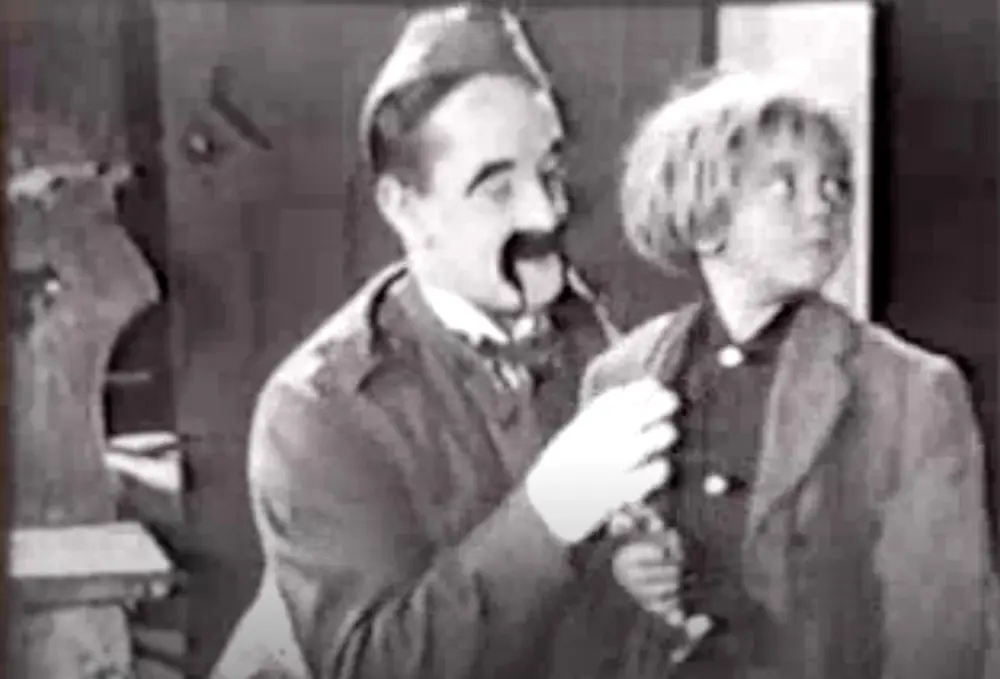
One memorable moment sees Snub trying to silently cross a room filled with sleeping German soldiers, only to get tangled in a series of tripwires and falling objects. His silent screams and desperate attempts to catch everything before it crashes are pure Pollard – a frantic ballet of impending disaster that somehow, miraculously, avoids catastrophe. It's this blend of meticulous choreography and seemingly spontaneous chaos that defines his unique appeal.
The direction of The Doughboy, while not attributed in the provided context, navigates the tricky terrain of wartime comedy with a clear, if unsophisticated, vision. The primary challenge for any director in this genre, especially in the immediate aftermath of a global conflict, is balancing humor with respect for the gravity of the situation. This film opts for a largely lighthearted approach, portraying the war as a backdrop for comedic hijinks rather than a source of genuine dread.
The pacing is characteristic of silent shorts: brisk when it needs to be for a chase or a gag, but also allowing moments for the audience to absorb the visual humor. Intertitles are used sparingly but effectively, often delivering punchlines or crucial plot points with succinct clarity. For instance, a title card announcing the 'inept Germans' immediately sets the expectation for their bumbling behavior, rather than trying to establish it through nuanced character work. This directness is a hallmark of the era.
One particular directorial choice that stands out is the consistent framing of the German soldiers as almost cartoonish villains. They are not menacing; they are foils. Their attempts to capture Snub are consistently thwarted by their own stupidity, rather than Snub's superior intellect or fighting prowess. This simplifies the moral landscape of the war, making it palatable for comedic treatment. While this approach might feel simplistic to modern eyes, it was a common trope in propaganda and entertainment of the time, serving to demonize the enemy through ridicule.
The director also makes effective use of practical effects and clever staging for the gags. From collapsing tents to perfectly timed slips and falls, the visual humor is well-executed, relying on the audience's understanding of physical comedy. There's a scene where Snub inadvertently causes a domino effect of explosions and collapses, all orchestrated with a sense of escalating comedic chaos, demonstrating a clear understanding of how to build a visual gag.
The cinematography of The Doughboy, while not groundbreaking, is entirely functional for its purpose. Shot in classic black and white, the film relies on clear framing and sufficient lighting to convey its narrative and gags. Close-ups are used to capture Pollard’s expressive face, amplifying the comedic impact of his reactions, while wider shots establish the (often sparse) environments.
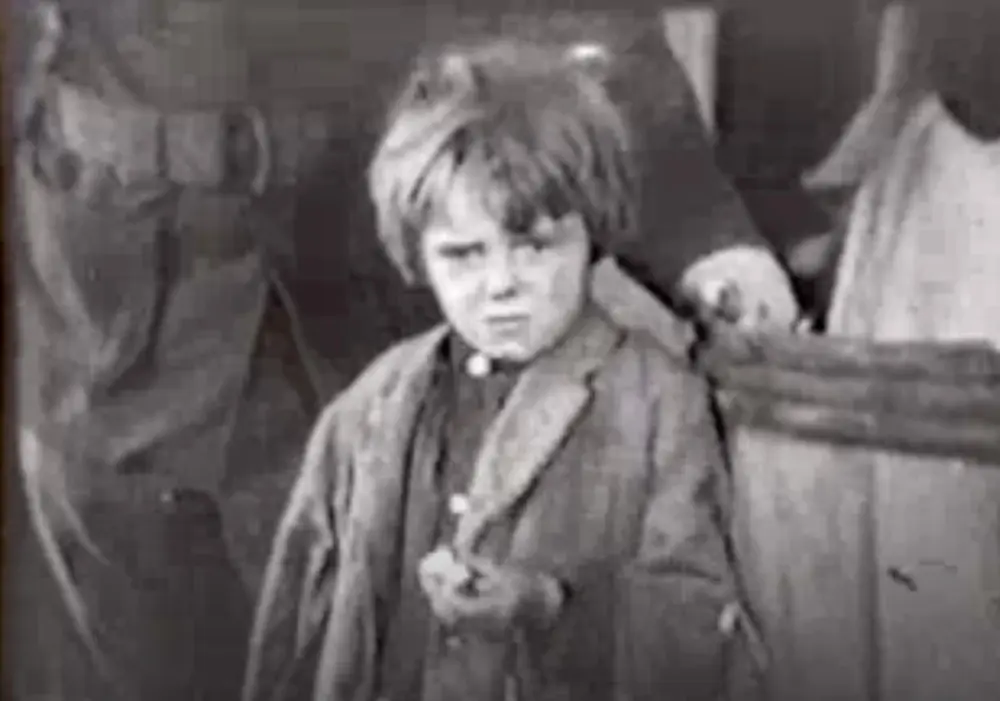
The 'French countryside' and 'enemy lines' are depicted with a mix of studio sets and what appear to be exterior locations, likely backlots or nearby fields. While not aiming for gritty realism, the sets effectively create the illusion of a war-torn landscape, albeit one sanitized for comedic purposes. We see trenches that are clearly constructed, and barracks that are functional but minimal. The focus isn't on immersive world-building, but on providing a stage for the action.
A specific example of the film's visual approach is the contrast between the rough-and-tumble 'battlefield' exteriors and the slightly more intimate, if still rudimentary, interiors where Snub interacts with the orphans. The shift in setting helps to visually underscore the dual nature of Snub's mission: soldier first, but then protector. The lighting in these interior scenes often feels a touch softer, drawing attention to the human element amidst the broader comedic chaos.
There's a utilitarian beauty to the cinematography of early silent films, and The Doughboy is no exception. It serves the story without drawing undue attention to itself, focusing on clarity and the effective delivery of visual gags. The visual language is direct, ensuring that even without dialogue, the audience can follow the fast-paced action and emotional beats.
The pacing of The Doughboy is a fascinating study in early cinematic rhythm. For modern audiences accustomed to rapid-fire editing and constant narrative propulsion, silent films can often feel slow. However, within its own context, The Doughboy maintains a surprisingly brisk pace, particularly during its numerous comedic sequences. Gags build quickly, deliver their punchline, and then move on, rarely overstaying their welcome.
The film relies on a cadence dictated by the visual flow of action and reaction. There are moments of quiet setup, where Snub's predicament is established, followed by an explosion of physical comedy. Consider a scene where Snub is attempting to steal food. The tension builds through his cautious movements, the watchful eyes of the German guards, and then it's released in a flurry of dropped dishes and frantic scrambling. The rhythm is almost musical, a crescendo and decrescendo of comedic energy.
However, it’s also important to acknowledge that the film’s pacing, while effective for its era, might still be a hurdle for contemporary viewers. The absence of spoken dialogue means that emotions and plot points are conveyed through exaggerated gestures and intertitles, which can feel less immediate than modern storytelling. This requires a different kind of engagement, an active participation from the viewer to fill in the unspoken gaps.
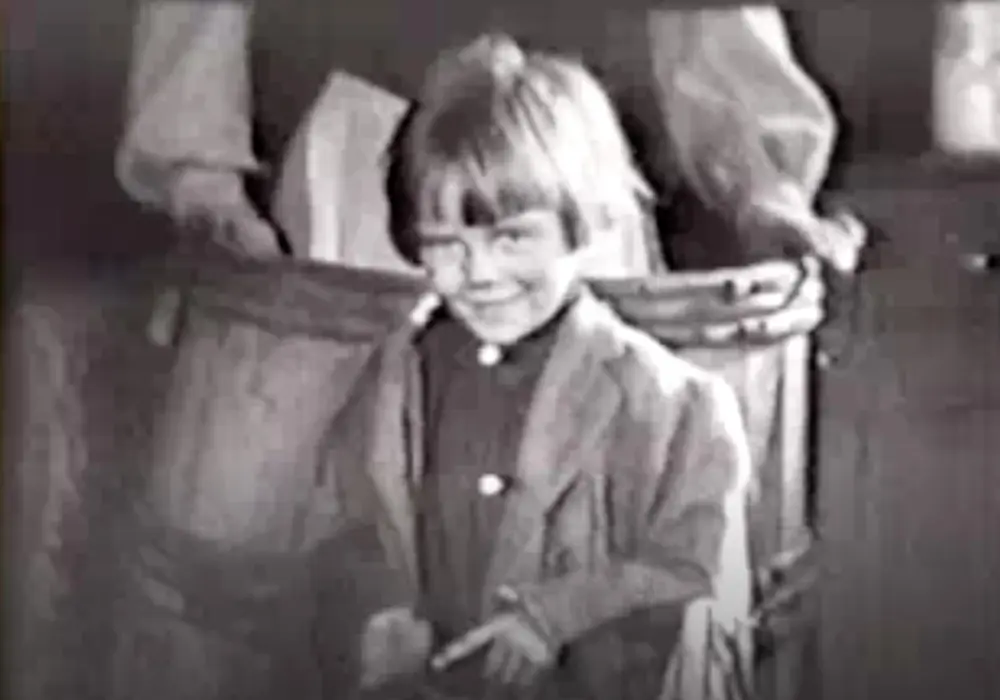
Yet, for those attuned to it, the rhythm is part of its charm. It allows for a greater appreciation of the performers' physical talents and the ingenuity of the gags. The film doesn't rush its humor; it lets it breathe, allowing the audience to fully absorb the visual punchline. This deliberate pacing is a hallmark of silent comedy, and The Doughboy exemplifies it well.
For those who appreciate the foundational elements of cinematic comedy and a unique historical lens on WWI, The Doughboy offers genuine, if sometimes dated, pleasures. It is a time capsule, providing insight into the humor and sensibilities of a bygone era, making it a valuable watch for specific audiences.
This film is best suited for silent film enthusiasts, students of film history, and fans of physical comedy. It serves as an excellent example of 'Snub' Pollard's unique comedic style.
It is likely not for viewers seeking modern pacing, sophisticated narrative complexity, or politically correct humor. Those expecting a realistic portrayal of war will also be disappointed.
Its value lies more in its historical context and the enduring appeal of its star than in its universal contemporary entertainment value. It’s a film that asks for patience but offers a unique reward.
One of the most intriguing, and perhaps debatable, aspects of The Doughboy is its approach to war. Does the film trivialize the devastating conflict of WWI, or does it offer a necessary comedic outlet, a coping mechanism for audiences still scarred by the reality of the trenches? I argue that it leans heavily towards the latter, though perhaps inadvertently. The sheer absurdity of the German soldiers' incompetence, while politically charged for the time, serves to defuse the inherent terror of war, transforming it into a playground for slapstick. It allows audiences to laugh at the 'enemy' and, by extension, at the very idea of conflict, making it less frightening.
This portrayal of the German forces as inept, bumbling figures is an unconventional observation for modern eyes. While understandable in the immediate post-war period as a form of nationalistic ridicule, it strips the 'enemy' of any humanity, making them caricatures rather than complex antagonists. This simplification is both a strength and a weakness. It enables the comedy but prevents any deeper exploration of the war's impact. It's a stark reminder of how public sentiment was shaped through popular entertainment.
Furthermore, the emotional core with the orphans — is it genuinely touching, or merely a plot device for sentimentality? My stance is that it's surprisingly effective, if not deeply explored. The silent film era often relied on broad strokes for emotional impact, and the simple act of Snub protecting these vulnerable children against the backdrop of war creates an undeniable pathos. It humanizes Snub beyond his comedic persona and provides a moral compass for his actions. It’s a classic Hollywood trope, but one that largely succeeds in adding a layer of warmth to the otherwise chaotic narrative.
The film doesn't aim for complex social commentary; it aims for laughter and a simple, feel-good resolution. And in that limited scope, it largely succeeds, reflecting the desire for comfort and escapism that defined the 1920s.
IMDb 7.2
1931
Community
Log in to comment.