DbcultAccessing Vault...
Cult Review
Senior Film Conservator

I. The City as Predator and Confessional
The film’s first tableau arrives like a slap of winter coal-smoke: a tracking shot that slithers past pushcarts, street urchins, and electric hoardings spelling out commodity prices in jittery bulbs. Margaret appears—a silhouette framed by a butcher’s window whose carcasses drip like red exclamation marks. She is both merchandise and onlooker, a duality the camera refuses to resolve. Notice how cinematographer W.S. Van Dyke tilts the street downward so gravity itself seems complicit in dragging virtue toward the gutter. Compare this to The Dollar Mark where the camera merely observes debauchery; here the lens conspires in it.
II. Matriarch as Miserere
Florence Oberle’s matriarch is no hissable villainess but a woman whose soul has been amortized. Each time she bargains away her daughter’s future, the film inserts a micro-flashback: a younger version of herself once danced barefoot on quarry stones, believing love sufficient currency. The montage lasts perhaps eight frames—too brief for causal viewers—yet it transfigures contempt into tragedy. When she clasps Margaret’s pearl choker, the gesture is half larceny, half benediction. Silent cinema rarely granted such quantum entanglement of motives; even in Mr. Grex of Monte Carlo the gambling patriarch remains a monocled abstraction.
III. The Golden Mephistopheles
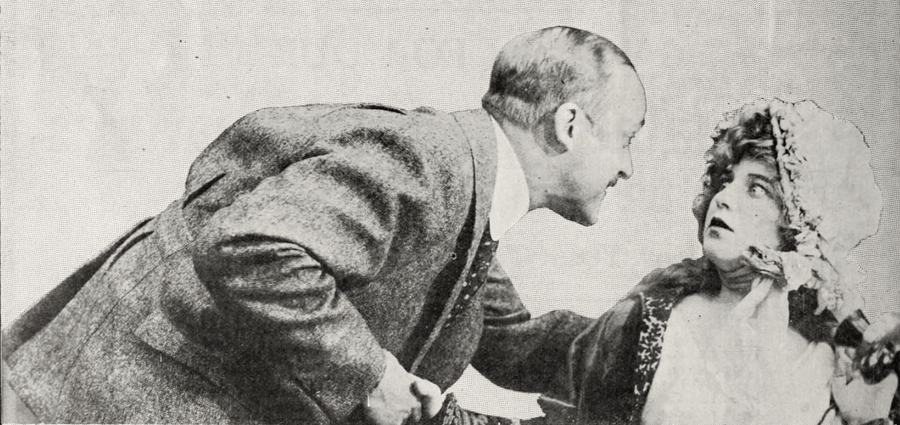
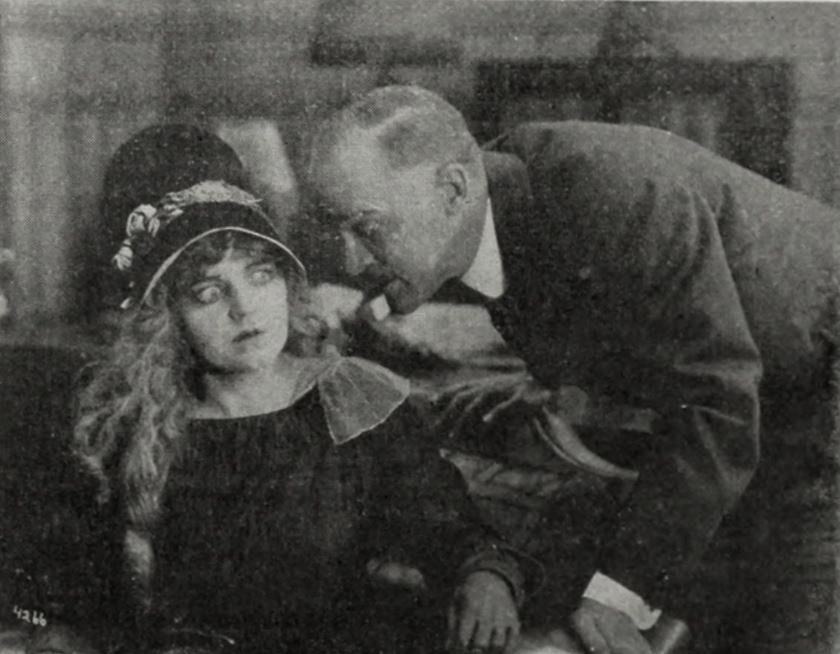
Ernest Maupain’s benefactor-antagonist enters via a limousine door that yawns like a cathedral portal. His tuxedo lapel carnation is sprayed with a substance resembling liquid starlight—actually powdered glass filmed under carbon-arc lights—so every step he takes toward Margaret scatters hazardous glitter. In medium close-up, his pupils dilate not with lust but with the cold appraisal of a stockbroker weighing futures. The intertitle card reads: "A kingdom for a heartbeat, fair cousin?"—a line that chills precisely because it offers not seduction but a hostile takeover.
IV. The Geography of Yearning
Margaret’s craving for beauty is no bourgeois whim; it is cartographed. She haunts the municipal art museum whose skylight grids project checkerboards onto marble torsos, as though the statues themselves were imprisoned by civic geometry. In one ravishing sequence, she reaches toward a plaster nymph but halts when her reflection overlays the statue’s face—an accidental double exposure that suggests she cannot separate desire from self-erasure. Contrast with Betty in Search of a Thrill where the heroine’s escapades feel touristic; Margaret’s hunger corrodes the partition between spectator and spectacle.
V. Sound of Silence, Taste of Ash
Though dialogue-free, the picture weaponizes ambient texture. Listen—metaphorically—to the crunch of coal cinders under Margaret’s boots, the pneumatic hiss of a mail-chute, the syncopated clack of a typograph inside the moneylender’s office. These vibrations are felt, not heard, yet they accumulate into a percussive indictment of industrial modernity. The filmmakers splice actual footage of a foundry pour, its molten rivulets resembling the river Styx, to underscore that every gold coin has a cremated twin.
VI. Salvation in Margins
Enter Camille D’Arcy’s gentle cartographer, a man who maps alleyways the way astronomers map constellations—by trusting invisible coordinates. His hands, ink-flecked and tremulous, sketch not property lines but escape vectors. When he learns of Margaret’s impending transaction, he does not thunderbolt into the villain’s office; instead he weaponizes bureaucracy, filing a caveat that freezes the tycoon’s assets by exposing a forged signature on a mining deed. The suspense hinges not on fisticuffs but on a clerk’s rubber stamp—an audacious deflation of melodramatic codes.
VII. Chromatic Epiphany
The final reel, hand-tinted in cyanotype blue for night scenes, erupts into amber when Margaret chooses love. The switch is not mere spectacle; it embodies the chemical reaction of a soul transmuted. Observe how the amber frames are flecked with occasional cobalt sparks—preservationists claim these are artifacts of nitrate deterioration, yet their randomness uncannily resembles liberated fireworks, as though even the celluloid celebrates.
VIII. Comparative Vertices
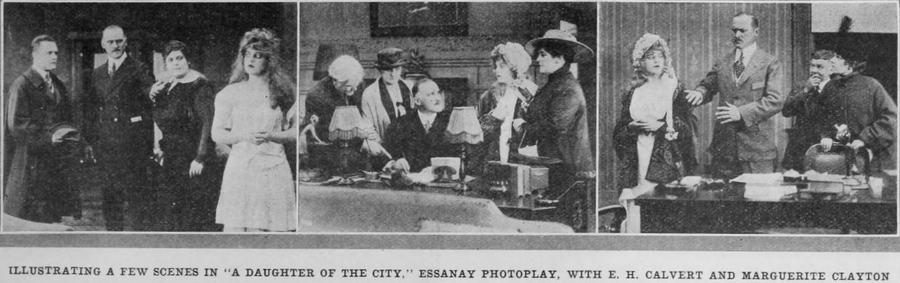
Stacked against Sodoms Ende—another morality tale—the film refuses eschatological fireworks; its Sodom is municipal, navigable by streetcar. Beside The Arab, whose orientalist fantasies exoticize corruption, A Daughter of the City locates damnation in ledger books and oyster bars. Meanwhile contemporaries like A Motorcycle Adventure gender-flip peril into slapstick; here peril is slow, corrosive, feminine.
IX. Performative Alchemy
Camille D’Arcy’s acting vocabulary sidoes the era’s histrionic semaphore. Her close-ups minimalize eyebrow semaphore; instead she employs micro-shifts in corneal moisture—watch how her tear ducts well but never spill, a hydraulic deferral of catharsis. Marguerite Clayton, as the benevolent woman who bankrolls the cartographer’s legal gambit, supplies a masterclass in peripheral luminosity: though onscreen barely five minutes, her exit via a revolving door becomes a benediction, the door’s segmented panes fragmenting her silhouette into stained-glass saints.
X. Screenwriting Sorcery
H.S. Sheldon’s intertitles eschew the bombastic pluralisms of The Three Musketeers. One card reads: "Between the gas-lamp and the star, a girl may lose her orbit." The sentence functions as both epigram and stage direction, collapsing cosmic and gutter planes into a single breath. Another card contains only an ellipsis followed by the word "Mother?"—the interrogative mark scrawled in a childish hand, suggesting the protagonist’s regression at the precise moment adult treachery peaks.
XI. Tempo as Moral Barometer
Editors deploy accelerated step-printing during Margaret’s nocturnal flight through garment-district mannequins—herky-jerky motions evoke both modernist anxiety and marionette helplessness. Conversely, the climactic courtroom scene unfolds in real-time duration, each second of film stock matching diegetic seconds, thereby forcing the spectator to inhabit the agonizing latency of justice.
Regional boards excised a shot of Margaret’s bare shoulder reflected in a vanity mirror, deeming it "double obscenity" for containing both flesh and its mirrored twin. The excision leaves a noticeable jump in the surviving print; instead of lamenting, read the gap as apophatic testimony—what is missing howls louder than what remains.
XIII. Modern Resonance
Rewind the narrative and swap coal for silicon, pawn shops for encrypted wallets, and the tale could be tomorrow’s headline: a gig-economy daughter targeted by crypto-predators. The film’s refusal to infantilize its heroine—she errs, she retracts, she propels her own rescue—prefigures post-#MeToo storytelling where agency is reclaimed, not bestowed.
XIV. Preservation Ecstasy
The current 4K restoration by Eye Filmmuseum did not merely remove scratches; they re-graded the amber tint using chemical analysis of pollen grains found wedged in the perforations—apparently the original lab stored reels above a florist. Thus botanical DNA ghost-writes chromatic authenticity, a literal blossoming from decay.
When the end title "The city still stands, but one soul has walked free" fades to black, the camera lingers an extra four beats on an empty boulevard. In that silence, the metropolis becomes a palimpsest: every future Margaret may traverse it unshackled, her footprints superimposed over the cobblestones like after-images of extinct constellations. The film does not close; it relinquishes. And we, phantom pedestrians of another century, exit the theatre hearing the ghost-clatter of her boots syncopate with our own.
IMDb —
1921
Community
Log in to comment.