DbcultAccessing Vault...
Cult Review
Senior Film Conservator
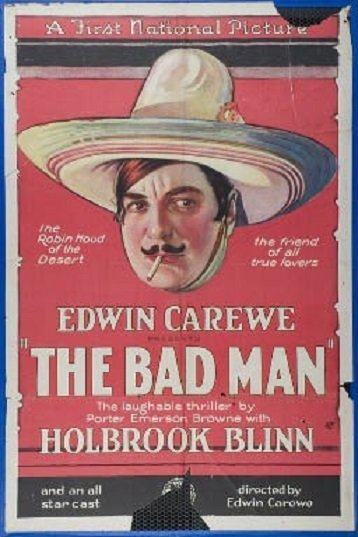
Stepping back into the dusty, morally ambiguous terrain of the early 20th-century Western, one encounters The Bad Man (1923), a silent film that, despite its seemingly straightforward title, delves into a remarkably intricate web of loyalty, love, and lawlessness. This isn't just another tale of cowboys and outlaws; it's a fascinating exploration of an unconventional code of honor, where the lines between hero and villain blur into a compelling, sun-baked haze. From its very premise, the film promises a narrative less concerned with clear-cut morality and more with the complex, often contradictory impulses that drive human action in a harsh, unforgiving landscape. It's a testament to the storytelling prowess of Finis Fox, John Lynch, and Porter Emerson Browne that such a nuanced narrative could be conveyed with the inherent limitations of the silent medium, relying heavily on visual storytelling and the expressive capabilities of its cast.
The narrative pivot, the very heart of this cinematic endeavor, rests upon the formidable figure of Pancho López, portrayed with a compelling blend of menace and peculiar rectitude. López, an infamous Mexican bandit whose reputation precedes him like a dust storm across the plains, harbors a profound, almost spiritual, debt to Gilbert Jones. Jones, it turns out, once performed an act of profound kindness, an unsolicited gesture that saved López's life. This singular event casts a long shadow over the subsequent events, transforming what might otherwise be a simple tale of villainy into a meditation on gratitude and the unforeseen consequences of compassion. When Jones finds his ranch, a sprawling expanse of land rumored to possess the lucrative secret of subterranean oil, on the verge of being lost to mortgage default, López perceives not an opportunity for plunder, but an imperative to repay a life-debt. This central conflict, the benevolent intervention of a notorious criminal, immediately elevates The Bad Man beyond the typical genre fare, inviting viewers to question the very nature of 'good' and 'bad' deeds.
As if the stakes weren't already sufficiently high, the plot introduces Morgan Pell, a character embodying pure avarice and manipulative intent. Pell, aware of the potential oil riches beneath Jones's property, orchestrates a scheme to defraud him, offering a sum of money that, while seemingly generous, comes with insidious conditions designed to strip Jones of his birthright. This adds a layer of capitalist greed to the frontier drama, juxtaposing the bandit's old-world code of honor against the calculated, legalistic villainy of the businessman. It's a clever thematic counterpoint that highlights different forms of predation, suggesting that not all threats come with a smoking gun. The arrival of Mrs. Pell further complicates this already volatile mix. Her presence, initially perhaps a mere accessory to Morgan's machinations, quickly becomes a central emotional axis around which the narrative, and indeed López's actions, will irrevocably turn. The film masterfully builds this tension, allowing the audience to witness the converging forces of desperation, ambition, and burgeoning affection.
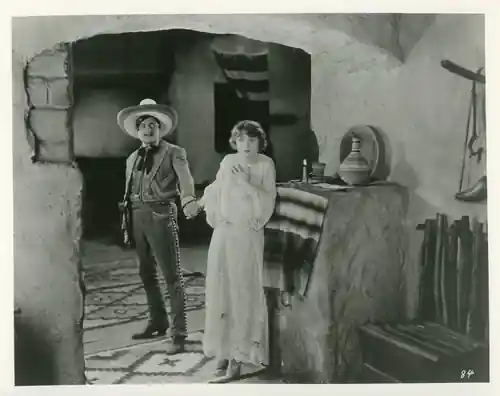
The true spark that ignites the film's dramatic crescendo is López's astute observation of the undeniable, if illicit, connection between Gilbert Jones and Mrs. Pell. This forbidden romance, a quiet storm brewing amidst the financial turmoil, does not escape the bandit's keen eye. López, a man of unconventional ethics but undeniably sharp perception, recognizes the profound yearning between them. It is this discovery, perhaps more than the simple desire to save a ranch, that galvanizes him into his most audacious and morally compromising acts. He becomes, in effect, a twisted arbiter of fate, a dark cupid with a revolver. The decision to have Morgan Pell eliminated is not presented as a random act of violence, but as a calculated, if brutal, means to an end: clearing the path for the lovers and securing Jones's future. This narrative twist, where a bandit acts as a facilitator of romance and justice, albeit a harsh one, is audacious for its time and still resonates with a certain dark poetry. It’s a bold stroke that distinguishes The Bad Man from more conventional melodramas, hinting at the depths of passion and the lengths to which a 'bad man' might go when bound by his own peculiar moral compass.
The aftermath of Pell's removal sees López doubling down on his commitment to Jones. The bandit orchestrates a daring bank robbery, not for personal gain, but with the explicit purpose of acquiring the funds necessary to clear Jones's mortgage. This act, while undeniably criminal, is framed within the narrative as an act of restorative justice, a means to right a wrong through unconventional means. Furthermore, López, in a surprising display of his unique brand of ethical conduct, returns the cattle he had previously stolen, an act that further complicates his 'bad man' moniker. These actions solidify López's role as a protagonist who operates outside the law but within his own rigorous, if brutal, code of honor. With Morgan Pell decisively out of the picture and the ranch's financial stability restored through López's audacious interventions, the path is finally clear for Gilbert Jones and the newly widowed Mrs. Pell to formalize their clandestine affection. Their marriage, the film's concluding resolution, is not merely a happy ending, but a testament to the bandit's strange, violent, yet ultimately effective brand of frontier justice. It's a conclusion that forces the audience to grapple with the idea that morality is rarely black and white, especially when survival and love hang in the balance.
The performances in The Bad Man are, as one might expect from the silent era, characterized by a heightened theatricality that nonetheless conveys profound emotion. Holbrook Blinn, as Pancho López, is the undeniable gravitational center of the film. He imbues the bandit with a captivating duality – a man capable of ruthless violence yet equally bound by an almost chivalrous sense of obligation. Blinn’s expressive eyes and commanding physicality communicate volumes without the aid of dialogue, making López a figure of both fear and a strange, compelling admiration. His portrayal avoids caricature, instead crafting a complex individual whose motivations, while extreme, are comprehensible within the film's unique moral framework. One can draw parallels to other silent era anti-heroes, figures whose charisma often overshadowed their transgressions, perhaps even hinting at the nuanced villainy seen in The Sphinx, where ambiguity of character drives much of the tension. Enid Bennett, as Mrs. Pell, navigates the delicate balance of a woman trapped by circumstance yet emboldened by love. Her silent expressions convey a poignant vulnerability and a growing resolve, making her forbidden romance with Gilbert Jones believable and deeply felt. Walter McGrail, as Gilbert Jones, portrays a man caught between dire financial straits and burgeoning affection, his earnestness providing a sympathetic counterpoint to López's more flamboyant character. The ensemble, including Harry Myers and Charles Sellon, collectively contributes
IMDb 5.7
1933
Community
Log in to comment.