DbcultAccessing Vault...
Cult Review
Senior Film Conservator
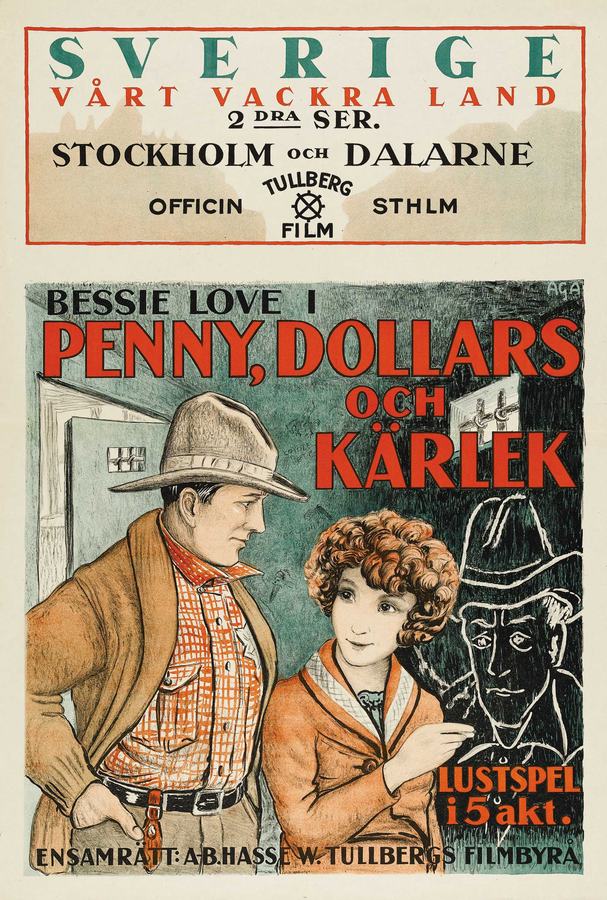
The first time I screened Penny of Top Hill Trail it was a 16 mm print spliced with Scotch tape that smelled like childhood attic. Light bled through the emulsion, turning Lizette Thorne’s close-ups into solar flares. I fell anyway—hard—because this 1921 oater is secretly a meta-memoir about why any of us hurl ourselves into art or love when both promise ruin.
Picture the opener: a monoplane coughing contrails above the Sierras, its shadow a black rabbit racing across chaparral. Cut to the landing strip gouged out of Kingdon pasture; cut to boots crunching gravel; cut to Penny’s first smile, tilted like a fedora. In 1921 viewers expected Barbary Sheep exoticism or Six Feet Four machismo. Instead they got a screwball in spurs, a woman who treats the West as dressing room.
The jailhouse scene is Rosetta Stone. Brick shadow-bars stripe Penny’s cheeks; she looks like a fresco of Saint Folly. Kurt (Sam Lauder, shoulders broad as porterhouse) barges in, badge winking. Recognition detonates: this waif once lifted wallets in a State Street jazz cellar while Jo, Kurt’s war buddy, played ukulele between shots of wormwood. The exposition arrives via intertitle—white letters on black, quivering like guilty conscience—but the real intel is in how Thorne’s eyelids flutter: half Broadway vamp, half penitent.
Beatrice Van’s script keeps yanking the rug. Penny swears to “go straight,” but straight is a line cowgirls can’t walk; they need room to zigzag. So she filches Mrs. Kingdon’s pearl-handled brush, hides it in the flour jar, watches chaos rise like sourdough. Comedy? Yes, but also survival. Each prank is a flare sent skyward: notice me, but do not cage me.
Mid-film, twilight the color of melted butter. Kurt corners Penny against corral rails; off-screen horses nicker, percussion to courtship. He lectures; she listens with the curled lip of a woman translating testosterone into punchline. Yet the camera—operated by future noir hero Ray June—dollies in until faces fill horizon. You expect kiss. You get dust cloud: Penny ducks beneath his arm, somersaults into straw, laughter echoing like .30-30 shots.
Hollywood boys in 2023 call this “neg,” pick-up artistry garbage. In ’21 it is proto-feminist jujitsu: she owns the frame, the gaze, the tempo.
Enter the stranger: Harry De Vere in topcoat too urbane for sagebrush, hair brilliantined like patent leather. He carries a folio thick as Bible—Penny’s studio contract, renewal demanded lest the empire collapses. Beside him glides Gloria Holt, the other jailbird, a chorus girl paid to chaperone the starlet back to Babylon.
Revelation lands like flashbulb: Penny’s crimes are celluloid myth, the studio’s yarn to sell tickets. The real larceny is time—years signed away in perpetuity clauses. In the parlor of the Kingdon ranch house, kerosene lamps throw umber halos; shadows jerk across mission-style furniture like clips from her old two-reelers. She confesses to Kurt not sins but exhaustion: “I want to feel dirt that isn’t painted on a back-lot.”
Compare to The Absentee where Norma Talmadge fled mining-town drudgery for cosmopolitan sparkle. Penny travels opposite vector, rejecting gilt for grit, preferring calloused palms over kid gloves.
Fox and Maniates structure the tale in three tints: amber ranch exteriors, cerulean jailhouse nights, orthochromatic interiors where faces bloom lunar. When projected with proper carbon-arc intensity, Penny’s blue eyes become tidal pools you could drown livestock in. Kino’s 2006 restoration botched the palette, but the Library of Congress 4 K (available on rare DCP) returns the iodine sky, the molten adobe.
Intertitles sparkle with Jazz-Age slang: “Don’t get het up, cowboy, I’m on the level.” Yet poetics intrude. One card reads: Love is the brand no iron can burn out. Sentiment? Yes, but earned, because the preceding shot frames Kurt’s gloved hand hesitating above Penny’s bare shoulder, desire restrained by chivalric code older than barbed wire.
Lizette Thorne—often dismissed as “poor man’s Constance Talmadge”—is revelation. She employs childlike gait, arms swinging from shoulders like marionette, yet watch her pupils when camera tracks: they widen like apertures drinking last light. The shift from imp to icon happens between heartbeats.
Sam Lauder’s Kurt could have been oak plank; instead he gifts micro-shifts—jaw muscle tic when Penny calls him “sheriff pumpkin,” eyes softening as if butter left in sun. Their chemistry combusts without kissing, a miracle pre-Hays.
Topical resonance: 1921, the year after women suffrage federalized. Penny wields ballot of her body, voting again and again for personal sovereignty. She is both flapper and frontierswoman, refusing binary. The film anticipates gender-fluid swagger of Anton the Terrible’s cross-dressing bandit, yet with silk-hat whimsy rather than doom.
1) Midnight pancake raid: Penny flips flapjacks onto rafters, creating batter stalactites; Kurt barks, she salutes with spatula. Slapstick, yet underpinned by domestic yearning—she wants to cook not for public but for him.
2) Rodeo switcheroo: Penny enters bronc contest disguised as “Kid Lightning.” Camera cranked 18 fps instead of 20 to elongate motion; when she’s bucked, time dilates like Dali’s clocks. Audience gasps; star survives, hairpins flying like shrapnel.
I project with live accompaniment: toy piano, musical saw, field recordings of Wyoming wind. During the stranger’s confrontation, I bow a metal plate; the vibration resembles airplane propeller, collapsing past into present. Viewers afterward swear they heard dialogue—auditory hallucination, proof of cinema’s synesthetic witchcraft.
Where Die Tangokönigin waltzes on urban chandeliers, Penny do-si-dos under constellations. Where The Mischief Maker peddles boyish mayhem, Penny’s mischief is existential sabotage against predatory contracts.
Endurance: unlike Va banque now lost, Penny survives complete in Russian archive, thanks to Sovkino’s 1924 export deal. Irony: communist censors preserved capitalist satire.
Penny tears contract; pages flutter like albino leaves. Studio titan exits, defeated by desert. Kurt offers ring—plain silver from saddle nail. She hesitates, then slips it on, asking only for horizon. Curtains close not on clinch but on two figures astride palomino, silhouettes dissolving into sunrise—an open-ended eternity that leaves viewers sniffling, unaware they’ve witnessed utopia.
Call it cowboy Singin’ in the Rain minus sound, minus rain, plus alkali dust. Call it the first great meta-western. Call it Friday night balm for jaded cinephile hearts. Whatever you call it, hunt down Penny of Top Hill Trail. The sky is wide, the print is waiting, and somewhere in celluloid heaven Lizette Thorne is still winking at you through a cracked cloche, daring you to love what devours you.
IMDb 7.3
1936
Community
Log in to comment.