A definitive 7.8/10 rating for a film that redefined the boundaries of cult cinema. The Battling Kangaroo remains a cornerstone of transgressive art.
Is The Battling Kangaroo worth watching today? Short answer: yes, but with significant caveats that speak to its specific niche. This film is an absolute must-see for dedicated silent film historians and those with an appreciation for the era's unique brand of slapstick and narrative absurdity.
However, it is decidedly not for viewers accustomed to contemporary pacing, nuanced character development, or humor that doesn't rely on broad physical comedy and the sheer novelty of its premise.
This early cinematic curiosity, a relic from 1926, doesn’t just lean into its outlandish premise; it practically dives headfirst, emerging with a grin. It’s a film that demands a certain level of historical empathy from its audience, a willingness to engage with storytelling conventions that are now, frankly, alien.
But within that historical context, there’s genuine charm and a surprising amount of heart, even if the execution is often as clunky as a kangaroo in boxing gloves.
This film works because: Its audacious, almost surreal central premise is executed with an earnestness that transcends its technical limitations, offering a unique glimpse into the boundless imagination of early cinema.
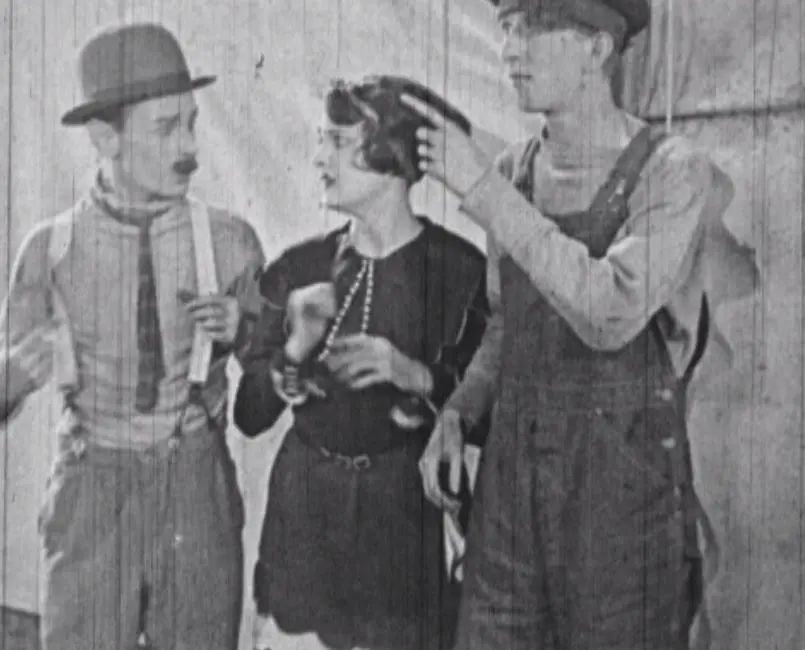
Scene from The Battling Kangaroo
Cinematic perspective: Exploring the visual vocabulary of The Battling Kangaroo (1926) through its definitive frames.
This film fails because: The narrative is painfully thin, relying almost entirely on the novelty of its concept rather than robust character development or sophisticated comedic timing, leading to moments that feel more quaint than genuinely funny.
You should watch it if: You possess a deep-seated love for the silent era, revel in the peculiar oddities of early filmmaking, and appreciate physical comedy that doesn't shy away from the absurd, particularly if you're keen to witness a truly one-of-a-kind cinematic event.
A Bizarre Premise, Boldly Executed
The narrative engine of The Battling Kangaroo is a classic silent film trope: a damsel in distress, caught in the financial web of a villain. Mildred, portrayed by Mildred June, is a tightrope walker whose fate is tragically tethered to her father's debt. One thousand dollars, a sum that in 1926 would have represented a significant fortune, binds them to the malevolent circus villain, a character whose ominous presence is established with minimal but effective menace.
This debt is the catalyst, driving the villainous heavyweight, Al Kaufman, to offer an open challenge: stay three rounds with him, and the thousand dollars is yours. It's a setup designed for the underdog, a narrative device meant to highlight the overwhelming odds against our heroes. The film wastes no time establishing these stakes, pushing Mildred's precarious situation to the forefront with an almost blunt efficiency.
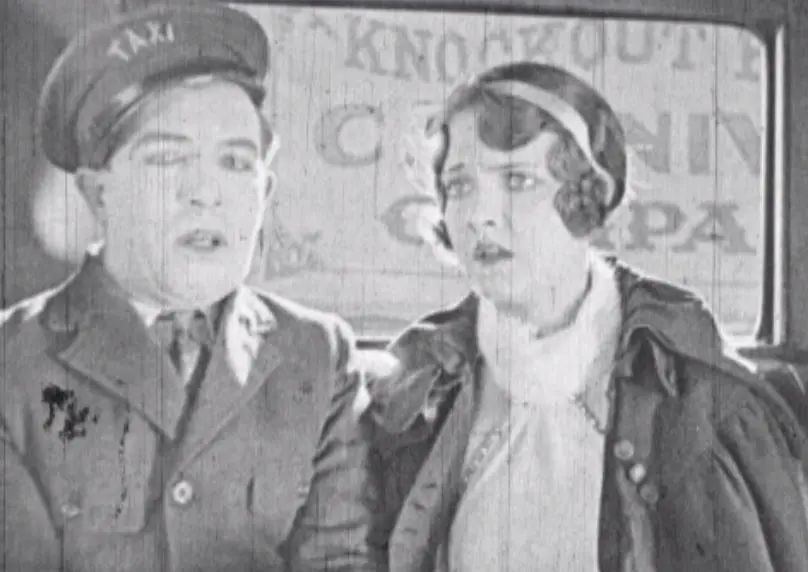
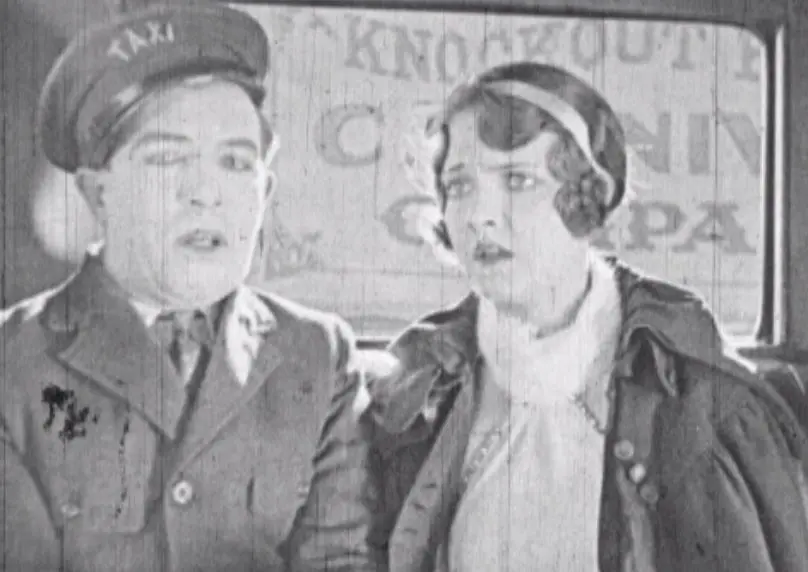
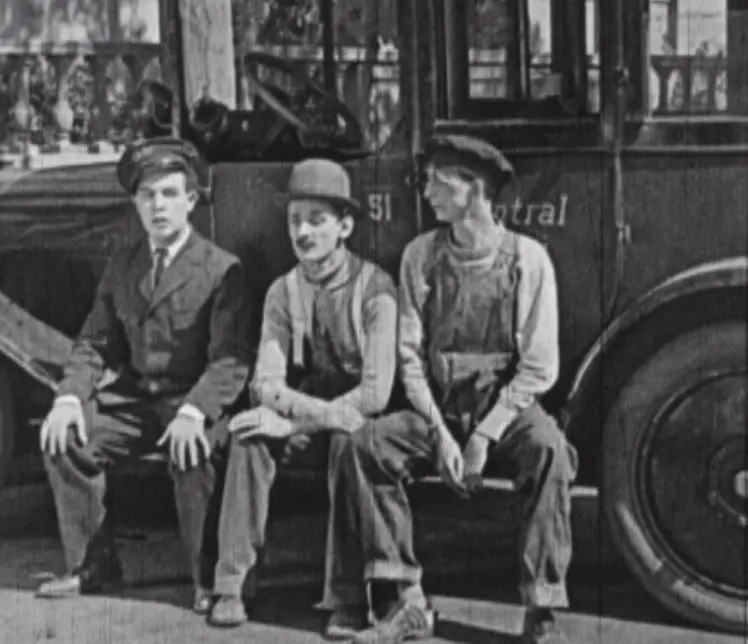
Enter Lige Conley as Sweetheart Lige, a taxicab driver whose heart is clearly larger than his pugilistic prowess. His initial attempts to face Kaufman are a masterclass in physical comedy, a succession of flailing limbs and exaggerated defeats that showcase Conley's talent for broad, expressive performance. He is the everyman, the well-meaning but ultimately incapable hero, a common archetype in silent comedies.
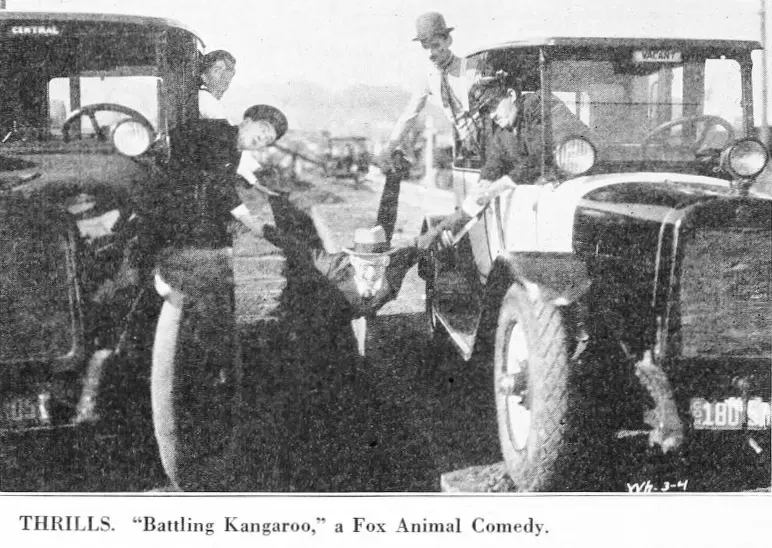
Scene from The Battling Kangaroo
Cinematic perspective: Exploring the visual vocabulary of The Battling Kangaroo (1926) through its definitive frames.
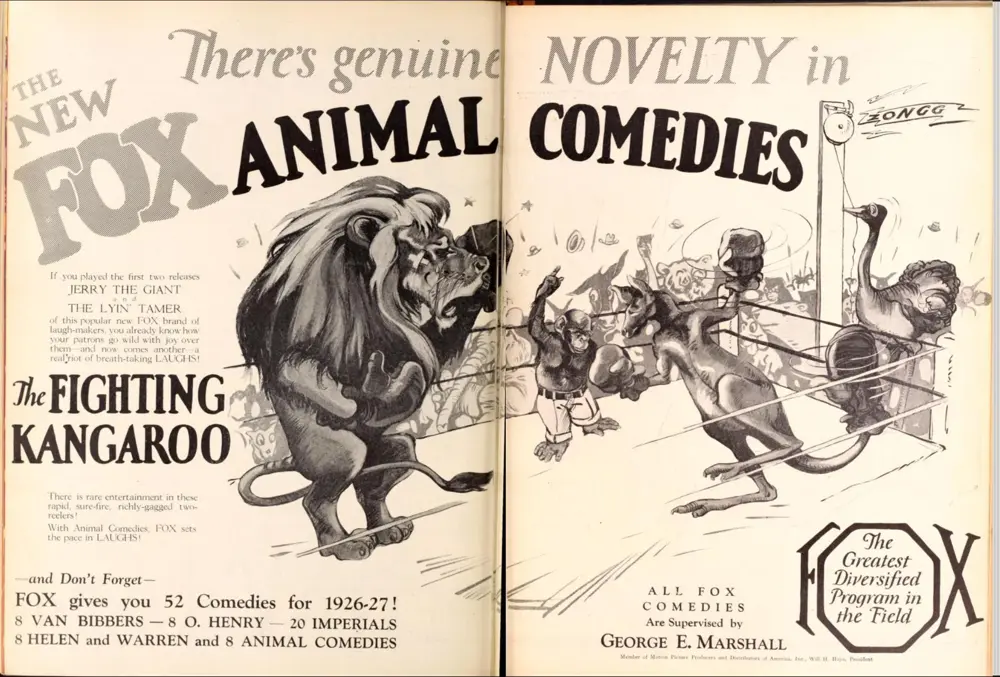
The true narrative pivot, and indeed the film's entire reason for existing, arrives in the form of a boxing kangaroo. Found on the steamship docks, this marsupial is not merely a plot device but the very embodiment of the film's audacious spirit. The casual introduction of such an extraordinary character, almost as an afterthought, speaks volumes about the era's willingness to embrace the utterly fantastic without extensive explanation.
This isn't subtle storytelling; it's a sledgehammer of delightful absurdity. The film’s commitment to its outlandish premise is its greatest strength, turning what could have been a forgettable short into a memorable curiosity. It’s a bold choice, and one that, against all logical odds, works.
The Unsung Hero: Lige Conley's Physicality
While the title promises a boxing marsupial, much of the film's humanistic charm and comedic impact rests squarely on the shoulders of Lige Conley. As Sweetheart Lige, he embodies the quintessential silent film hero – earnest, a little naive, and prone to exaggerated physical expressions. Conley’s performance is a joyful display of slapstick, from his earnest but clumsy attempts to engage Al Kaufman in the ring to his bewildered yet determined interactions with his newfound animal ally.
Conley's comedic style, while perhaps not as iconic or refined as a Chaplin or a Keaton, possesses a unique frenetic energy. He’s less the graceful acrobat and more the lovable oaf, whose every stumble and wide-eyed reaction elicits genuine chuckles. His character's initial helplessness against the imposing Al Kaufman is crucial; it sets the stage for the kangaroo's intervention as an almost divine, if utterly ridiculous, solution.
The chemistry, or rather the lack thereof, between Conley and the kangaroo is part of the charm. It’s not about sophisticated interaction but about the sheer novelty of the pairing. Conley acts as the audience's surrogate, reacting with a mixture of awe and disbelief at the kangaroo's improbable talents. His physical comedy, particularly in scenes leading up to the main event, is a testament to the power of non-verbal storytelling, conveying fear, determination, and ultimate triumph through gesture alone.
Scene from The Battling Kangaroo
Cinematic perspective: Exploring the visual vocabulary of The Battling Kangaroo (1926) through its definitive frames.
Mildred June, as the imperiled Mildred, fulfills her role adequately, providing the emotional stakes without demanding extensive character development. Her performance is typical of the era, relying on expressive facial gestures and body language to convey distress and hope. George Gray and Al Kaufman, as the heavy and the villain respectively, are archetypal. Kaufman, a real-life boxer, brings a menacing physicality that grounds the threat, making the eventual defeat by a kangaroo all the more humiliating and comedic.
It's a cast that understands the assignment: deliver broad strokes of character to serve a singular, outlandish premise. Conley, however, elevates his role beyond mere caricature, infusing Lige with a relatable vulnerability that makes his eventual success, however indirect, feel earned.
Directing and Cinematography: Capturing the Absurdity
The directorial efforts of Edward Marshall and Hewlett Benjamin in The Battling Kangaroo are noteworthy for their pragmatic approach to an inherently absurd concept. They don't try to intellectualize the premise; instead, they embrace its inherent silliness with a straightforward, almost documentary-like style that surprisingly enhances the comedy. The camera work, while not groundbreaking, is effective in capturing the essential action and reactions.
The film largely relies on static wide shots, allowing the physical comedy and the spectacle of the kangaroo to unfold naturally within the frame. This approach, common for the era, avoids overly complex camera movements or innovative editing, prioritizing clarity and directness. The lack of elaborate visual effects means the filmmakers had to make the most of what they had, which included a very real, very active kangaroo.
The most crucial sequence, the boxing match itself, is a masterclass in staging the improbable. The camera remains mostly fixed, providing an unobstructed view of the kangaroo's 'performance' in the ring. The audience's reactions—a mix of awe, confusion, and delight—are captured through intercut shots, providing context and reinforcing the comedic impact. The sight of Al Kaufman, a formidable human boxer, being outmaneuvered by a marsupial is inherently funny, and the direction ensures this humor is front and center.
Scene from The Battling Kangaroo
Cinematic perspective: Exploring the visual vocabulary of The Battling Kangaroo (1926) through its definitive frames.
Intertitles are used sparingly but effectively, advancing the plot and highlighting key comedic moments. They often serve to underscore the absurdity, framing the kangaroo’s actions with a deadpan humor that complements the visual gags. For instance, a title announcing the kangaroo's 'training regimen' might precede a shot of the animal casually hopping, trusting the audience to fill in the comedic gap.
One unconventional observation: the true antagonist isn't Al Kaufman, but the oppressive financial system that traps Mildred's father. The kangaroo, in this light, becomes less a symbol of earned victory and more a chaotic, arbitrary force of liberation, a whimsical deus ex machina that upends conventional power structures. This subtle subtext, while likely unintentional, adds a layer of unexpected depth to what is otherwise a simple comedic romp.
The cinematography, though simple, serves the story. It’s functional, clear, and perfectly adequate for conveying the film's central joke. There are no sweeping vistas or intricate shadow plays here, just honest, direct filmmaking designed to get the laugh.
The Pacing and Tone: A Sprint to the Finish
One of the most striking aspects of The Battling Kangaroo is its relentless pacing. Clocking in at a relatively short runtime, the film wastes absolutely no time in setting up its premise and moving towards its inevitable, ludicrous climax. The narrative sprints from Mildred’s predicament to Lige’s failed attempts, then directly to the discovery of the boxing kangaroo, all within the first few minutes.
This briskness is characteristic of many silent-era shorts, which often prioritized immediate engagement and rapid plot progression over leisurely exposition. There’s an admirable efficiency to it, a sense that the filmmakers understood the core appeal of their concept and were determined to get to the good stuff as quickly as possible. This prevents the thin plot from feeling stretched, though it also means character development remains minimal.
Scene from The Battling Kangaroo
Cinematic perspective: Exploring the visual vocabulary of The Battling Kangaroo (1926) through its definitive frames.
The tone oscillates between light melodrama and outright farce. Mildred's initial plight carries a genuine sense of urgency, reminding us of the very real stakes in silent cinema's often exaggerated worlds. However, this is quickly subsumed by the escalating absurdity once Lige and, more importantly, the kangaroo enter the picture. The film never takes itself too seriously, embracing its comedic heart with gusto.
There's a charming naiveté to the humor, a reliance on visual gags and the sheer novelty of the situation rather than complex comedic setups. While charmingly primitive, the comedic timing often feels clunky, a stark contrast to the precision found in contemporaneous works like those of Buster Keaton or the nuanced character-driven humor of Charlie Chaplin in a film like Life. This isn't a criticism as much as an observation of its particular style, which favors broad strokes over subtle wit.
The film's energy builds steadily towards the climactic boxing match, maintaining a consistent forward momentum. It knows what its audience has come to see, and it delivers that spectacle without unnecessary detours. It’s a lean, mean, comedic machine, albeit one with boxing gloves and a pouch.
Is This Film Worth Watching Today?
Yes, for a very specific audience, The Battling Kangaroo is absolutely worth watching today. It's a fascinating historical curio.
It offers a unique glimpse into the boundless imagination and unpretentious humor of early cinema. If you are a silent film enthusiast or a student of film history, this is a must-see.
Do not expect modern storytelling conventions or sophisticated humor. Its appeal lies in its novelty and its commitment to an absurd premise.
It is a testament to how far cinema has evolved, yet also a reminder of the enduring power of simple, visual comedy. It’s short, sweet, and undeniably bizarre.
Key Takeaways
Best for: Silent film aficionados, fans of early slapstick, and those seeking unique cinematic oddities.
Not for: Viewers expecting modern pacing, sophisticated humor, or deep character arcs.
Standout element: The sheer audacity and execution of its central premise – a boxing kangaroo.
Biggest flaw: A paper-thin plot and reliance on novelty over narrative depth.
Pros and Cons
Pros:
Unique and memorable premise that stands out even today.
Engaging physical comedy from Lige Conley.
Brisk pacing keeps the short runtime engaging.
Offers valuable insight into silent era comedic sensibilities.
Cons:
Minimal character development beyond archetypes.
Humor can feel dated and overly broad for modern tastes.
The plot is extremely simplistic and predictable.
Lacks the technical polish or thematic depth of more celebrated silent films.
Verdict
The Battling Kangaroo is precisely what its title suggests: a film about a boxing kangaroo, and little else. It works. But it’s flawed. This isn't a lost masterpiece, nor does it pretend to be. It’s a delightful, if somewhat crude, piece of cinematic history that showcases the boundless creativity, and sometimes sheer oddity, of early filmmaking.
It’s a film that exists almost purely for the novelty, and in that regard, it absolutely succeeds. If you approach it with the right mindset—a fondness for the silent era, a tolerance for simplicity, and an appreciation for the utterly bizarre—you'll find an enjoyable, if fleeting, experience. It’s a film best viewed as a charming historical artifact, a quirky footnote in the grand tapestry of cinema, rather than a profound artistic statement. It will make you smile, perhaps even chuckle, and leave you wondering, 'Did I really just watch that?'