DbcultAccessing Vault...
Cult Review
Senior Film Conservator
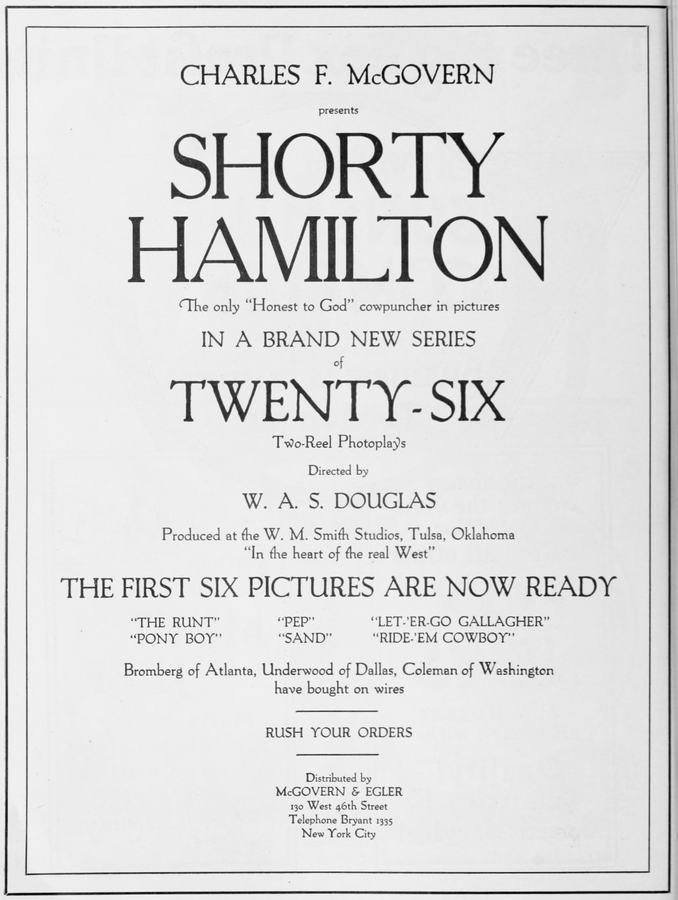
Stepping back into the nascent days of cinematic storytelling, specifically to the year 1922, one encounters a fascinating landscape of burgeoning artistry and evolving narrative forms. Amidst this vibrant tapestry, a film titled "Pep" emerges, its very moniker suggesting an effervescence, a vital kinetic energy that was, perhaps, both a reflection of the roaring twenties and a thematic cornerstone of the silent era's more uplifting tales. While explicit plot details of this particular production starring the prolific Shorty Hamilton may have faded into the mists of time, the evocative title alone beckons a critical exploration of what such a film might have represented, both in its contemporary context and in the broader sweep of cinematic history. This isn't merely an exercise in conjecture; it's an archaeological dig into the cultural ether, seeking to understand the essence of a film whose impact, however subtle, contributed to the foundational grammar of a new art form.
The very concept of "Pep" as a driving force suggests a protagonist who embodies an almost infectious zeal, a relentless optimism capable of disrupting stagnation. One can readily envision a narrative arc where a spirited individual, perhaps a drifter with an irrepressible smile or a newcomer brimming with innovative ideas, arrives in a community mired in apathy or ruled by a tyrannical, joyless figure. Shorty Hamilton, known for his roles often steeped in action, Westerns, and straightforward heroism, would have been an ideal vessel for such a character. His screen presence, frequently characterized by a rugged earnestness and a practical, problem-solving demeanor, aligns perfectly with the archetype of someone who doesn't just observe problems but actively instigates solutions.
Picture this: our hero, "Pep," bursts into a sleepy, almost moribund town, perhaps a dusty outpost suffering from economic malaise or a moral decline. The townsfolk, resigned to their fate, view any attempt at revitalization with skepticism, even hostility. The antagonist, a grim-faced landlord or a corrupt official, thrives on this collective despair. Pep, however, possesses an innate ability to see beyond the grime and the cynicism. Through a series of seemingly small, yet profoundly impactful actions – organizing a community event, challenging a bully, or simply demonstrating an unwavering belief in human goodness – he begins to chip away at the hardened shell of the town. His "pep" isn't merely superficial cheerfulness; it's a deep-seated conviction in the power of collective effort and individual resilience. The narrative would likely culminate in a dramatic confrontation, not just between Pep and the villain, but between the forces of dynamism and inertia, ultimately seeing the community reawaken to its own potential, revitalized by the outsider's infectious spirit. This is a classic narrative trope, certainly, but one that resonated deeply with audiences grappling with the aftermath of global conflict and the rapid societal shifts of the early 20th century.
Shorty Hamilton, a stalwart of early cinema, particularly in the Western genre, brought a distinctive blend of physicality and heartfelt sincerity to his roles. In a film like "Pep," his performance would have relied heavily on exaggerated expressions, precise gestures, and an almost balletic movement to convey the character's boundless energy without the aid of spoken dialogue. The challenge of silent acting was immense, demanding a constant, visible internal monologue, projected outward for the audience to interpret. Hamilton’s knack for portraying earnest, often underdog figures would have lent considerable weight to the character of Pep, making his struggles and eventual triumphs all the more resonant. He wasn't a matinee idol in the mold of a Valentino, but rather a relatable everyman, whose grit and determination spoke volumes without a single intertitle. The success of a film like "Pep" would have hinged on Hamilton's ability to make his character's infectious spirit palpable, transcending the limitations of the medium through sheer force of presence.
The direction, too, would have been crucial. Silent films of this period, while often simplistic by modern standards, employed a sophisticated visual language. Close-ups would emphasize emotional shifts, long shots would establish the desolate landscape or the bustling, eventually revitalized town, and rapid cutting might underscore moments of excitement or conflict. Intertitles, far from being mere dialogue substitutes, served as narratorial anchors, providing exposition, conveying crucial conversations, and even offering moralistic reflections. For "Pep," these intertitles would have been instrumental in articulating the character's philosophy and the evolving mood of the community, guiding the audience through the emotional crescendo of the story.
The year 1922 itself was a pivotal moment in cinema. The industry was rapidly professionalizing, moving beyond its nickelodeon origins towards more elaborate productions. Feature films were becoming the norm, and studios were beginning to consolidate power. Audiences, still captivated by the novelty of motion pictures, were also growing more discerning, demanding richer narratives and more sophisticated characterizations. Films of this era often reflected the cultural zeitgeist: a post-war desire for escapism, a fascination with modernity, and an underlying tension between traditional values and the emerging freedoms of the Jazz Age. "Pep," with its implied themes of resilience and community spirit, would have fit comfortably within this landscape, offering a message of hope and empowerment at a time when society was still finding its footing after monumental global upheaval.
To fully appreciate the potential resonance of "Pep," it's instructive to consider it alongside its contemporaries. Many films of 1922 and the surrounding years grappled with similar themes or showcased comparable stylistic approaches. For instance, Shorty Hamilton himself was no stranger to narratives of self-reliance and moral fortitude, often embodied in the rugged individualism of the American West. Films like The Texas Kid or
IMDb 6.9
1923
Community
Log in to comment.