DbcultAccessing Vault...
Cult Review
Senior Film Conservator
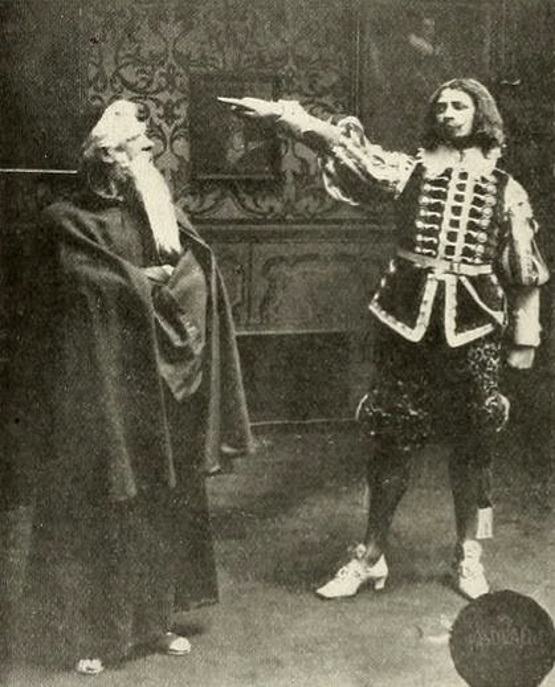
Picture a canvas brushed only with candle-smoke and moon-silver: that is the world The Betrothed conjures in 1913. While Griffith was erecting Babylonian elephants and Italian epics were still figuring out how to make a dolly roll uphill, this Lombard adaptation of Alessandro Manzoni’s brick-thick nineteenth-century novel dares to stage plague as protagonist, bureaucracy as villain, and betrothal as miracle.
Forgive the anachronism, but the film feels like someone spliced Les Misérables with Dante’s Inferno and then ran the reel through a vat of mercury. Shadows yawn like open graves; tinting alternates between bruise-violet and arsenic-green, so that every frame seems infected even before the buboes appear.
Cinematographer Emilio Rodani (also listed as an actor—multitasking was survival in early Turin studios) shoots the Lombard countryside as if it were a fever dream: reeds sharpen into pikes, alpine mists curdle like sour milk, and the Adda River becomes a sheet of black marble across which souls skate toward damnation. Compare this to the postcard pictorialism of Glacier National Park the same year; here nature is not backdrop but co-conspirator.
The tyrant’s palace, meanwhile, is rendered in high-Renaissance deep focus: you can count the dust motes on a suit of armor three planes back. When Don Rodrigo descends his staircase, the camera tilts downward—an early, wordless declaration that power is vertical, gravity-assisted, lethal.
Maria Gandini’s Lucia is less ingénue than icon: eyes dilated in perpetual vesper-light, she moves as though every step might crack the flagstones. Watch the scene where she learns her marriage is annulled: the actress freezes, allowing only the lace at her collar to flutter, as if even the garment were trying to flee.
Opposite her, Giovanni Ciusa plays Renzo with a volatile mix of peasant cunning and biblical fury. In the famous "bread riot" sequence he vaults over a table of tax collectors, fists churning like paddle-steamers—an explosion of proletarian rage that anticipates Eisenstein by a dozen years.
Where later pestilence films lean on rubber lesions and convenient coughs, 1913’s The Betrothed weaponizes absence: empty bell towers, streets littered with abandoned clogs, a wedding dress repurposed as a shroud. The epidemic arrives as jump-cuts—one frame a bustling piazza, the next a stack of coffins guarded by a monk whose mask beak resembles a rapier.
This is horror by subtraction, and it annihilates the sentimental safety net that cushions From the Manger to the Cross or Life and Passion of Christ. You are not consoled; you are infected.
Renzo Chiosso and Eugenio Perego condense Manzoni’s 700-page tome into intertitles that read like cuneiform prophecy. Example:
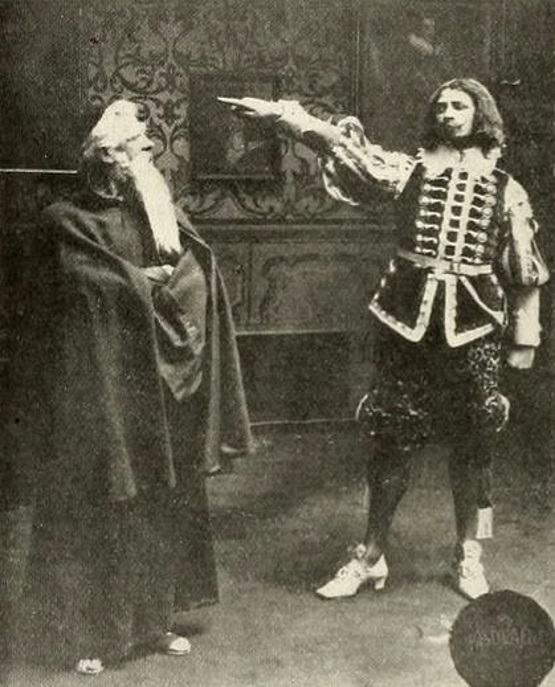
"The law was a parchment ghost; the plague, a scarlet reaper. Between them love was a sparrow with a broken wing."
Each card is hand-tinted: livid yellow for famine, sulphur orange for riot, cadaver-blue for contagion. The result is a silent film that sounds chromatic.
Early cinema is littered with flailing damsels—see What Happened to Mary or The Adventures of Kathlyn. Lucia begins as stereotype: virgin, prize, vessel. Yet halfway through she engineers her own exile, bartering her dowry for passage to a convent whose abbess (a regal Cristina Ruspoli) teaches her to read, cipher, and manipulate papal bureaucracy. By the time Renzo fights his way back to her, she negotiates their marriage contract herself, quill in one hand, plague-scabbed rosary in the other—a proto-feminist beat that feels neither grafted nor anachronistic.
Original screenings boasted a live quartet performing a pastiche of Donizetti, Verdi and Alpine folk motifs. Modern restorations sometimes resort to ambient drones; resist them. Demand the 2015 Cineteca di Bologna version scored by Marco dall’Asta—a tense minimalist suite that replaces strings with hurdy-gurdy groans and plague-tambourine rattles.
Stack it beside Oliver Twist and you’ll see how both films weaponize childhood innocence against institutional cruelty; yet whereas Dickens lands on benevolent patriarchs, Manzoni offers only miracle—a deus ex machina that feels suspiciously like randomness. Place it against Les Misérables Part 1 and notice how each adapts doorstopper novels into serial breathlessness, though Italy’s version keeps the carnivalesque carnage intact.
Banned by the Lombard League in 1921 for "defaming clergy," resurrected by Rossellini as compulsory viewing for the cast of Paisà, referenced in 1812 for its battlefield mise-en-scène, the film now rests in the Vatican’s secret archive—digitized but water-marked, viewable only with a scholar’s pass. A 35 mm nitrate print survives in Turin’s Museo Nazionale del Cinema, its final reel scarred by vinegar syndrome that resembles the very pestilence it depicts.
Is it flawless? Hardly. The army of priests swells and dwindles according to budget, not narrative; day-for-night sequences look more like day-for-eclipse. But these scars are stigmata that attest to the film’s reckless ambition. It wants to stage history as contagion, love as insurrection, faith as bureaucracy. It succeeds in ways that make later spectacles—yes, even Quo Vadis—feel tidy.
Watch it at 2 a.m. when the world outside feels similarly provisional. Keep a glass of grappa handy; when the final bell tolls and the lovers limp toward a horizon still smoldering, you’ll need fire in your throat to mask the chill in your marrow.
Rating: 9/10 — a cracked fresco that bleeds more truth than most pristine blockbusters ever dare.
Streaming: Limited edition Blu-ray from Cineteca di Bologna (region-free, English intertitles). Bootlegs abound on auction sites—avoid; the gamma is off, tinting is reversed, and you’ll miss the cyan plague-cards that make the film breathe.
IMDb 5.6
1935
Community
Log in to comment.