DbcultAccessing Vault...
7.7/10
Senior Film Conservator
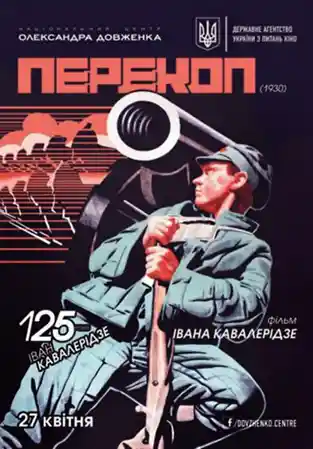
A definitive 7.7/10 rating for a film that redefined the boundaries of cult cinema. Perekop remains a cornerstone of transgressive art.
“Perekop,” from way back in 1930, is a tough watch today. Seriously. Unless you’re really into Soviet silent cinema or a history buff who doesn't mind a bit of heavy-handed messaging, you might struggle. If you’re just looking for an action-packed war movie, this ain’t it; it's more like a historical document with some dramatic flair. Most folks just looking for a casual movie night will probably find it a slog, honest.
The film relies heavily on these intense close-ups of faces. You get a lot of stern looks, determined gazes. It’s almost like a silent play with everyone performing for the back row, you know? The expressions are often so big.
The intertitles are where a lot of the story happens. Sometimes they feel like a history lesson got interrupted by a dramatic pause, real dramatic. They do a lot of the heavy lifting for the plot.
There’s a scene early on with a huge crowd, all moving together. It's really something to see, this wave of people. But then you notice a few extras who look a bit lost, not quite sure where to be. It breaks the spell just for a second, almost makes you chuckle. 😂
For a film this old, the battle sequences are surprisingly ambitious. You see actual horses, hundreds of people. The sheer scale is pretty impressive for 1930, no doubt. They must have rounded up half the town.
One part, they're showing the Red Army moving through mud. It just looks miserable. You can practically feel the cold and the wet coming off the screen, no fancy CGI, just real people struggling. It feels very real, that exhaustion.
There's this moment where a character, I think it's Ekaterina Osmyalovskaya playing one of the women soldiers, just stares off into the distance after something big happens. No tears, no big expression, just this quiet, heavy look. That stuck with me. It was a powerful bit of acting without saying a word.
Kavaleridze clearly had a vision beyond just the battlefield. The whole “destruction of the kulak” bit, that's layered in there. You get these quick cuts to farming scenes, then back to the war. It's not subtle, but it's part of the fabric of the film. It's like, "this is what we're fighting for, to change all this."
The ending feels very decisive, almost celebratory. They really want you to feel that the civil war is over, a new era has begun. It’s got that triumphant, almost propaganda-film feel. 🚩 The Red Army wins, everything's great.
There's a lot of marching. So much marching. Everyone's always on the move. It gets a bit repetitive after a while, but it drives home the idea of a massive, unified army. They just keep coming.
I saw a shot of a flag being raised against a stormy sky. It's a classic image, but it still works. Powerful stuff. That one really got me. You know, a good flag shot is always effective, even now.
The faces of the soldiers, some of them look so young. Like, barely old enough to shave. It makes you think about who these real people were, just boys really, caught up in something huge.
The editing often feels quite fast for a silent film. Quick cuts to different actions, then back to a commander. It tries to keep things moving. Sometimes it’s a bit jarring, actually.
You know, watching these old silent films, you always wonder what the live music accompaniment was like. Was it a full orchestra? Just a piano? It must have changed the whole vibe completely. Like, the tension in one scene could be totally different with a different score. 🎶 The film on its own is one thing, but with that forgotten music... that's another.
And the 'implementation of the five-year plan' – it's woven into the fabric. You see factories, people working. It’s almost like, "we fight the war so we can build this." It's a very specific kind of nationalistic storytelling. They really wanted to connect the war to the future.
It's interesting how Nestor Makhno’s troops are mentioned in the plot summary. Makhno was an anarchist, and his relationship with the Bolsheviks was, well, complicated, to say the least. The film mostly just shows them as "Red Army" without digging into any of that nuance. No surprises there for a Soviet film of
IMDb —
1928
Community
Log in to comment.