DbcultAccessing Vault...
7.2/10
Senior Film Conservator
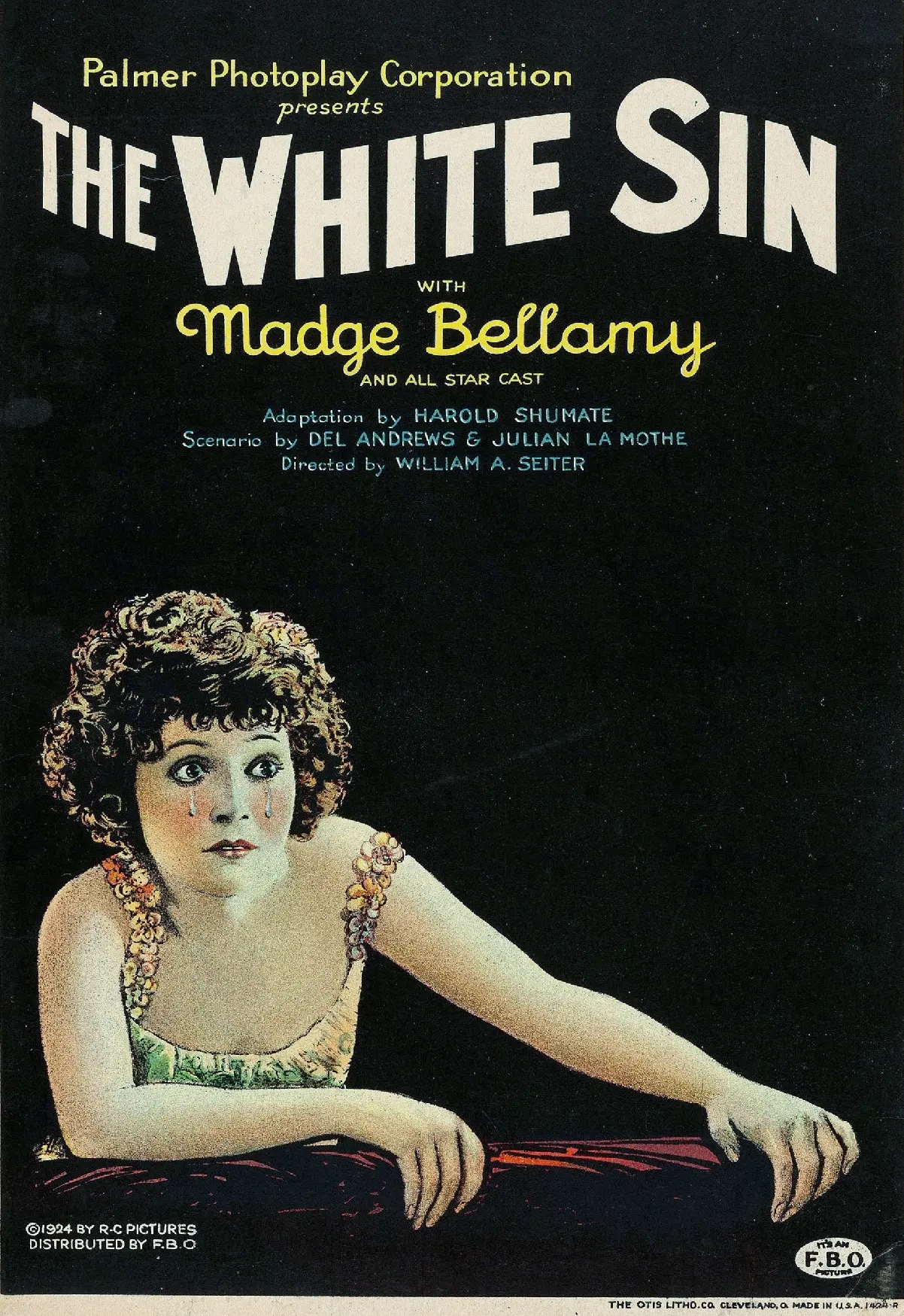
A definitive 7.2/10 rating for a film that redefined the boundaries of cult cinema. The White Sin remains a cornerstone of transgressive art.
Ah, the silent film era! A period often romanticized, sometimes overlooked, but always rich with narratives that, despite their lack of synchronized dialogue, speak volumes. Today, we're diving into a particular treasure from 1924, a film that, in its stark portrayal of class, innocence, and betrayal, leaves an indelible mark: The White Sin. Directed by William A. Seiter, this cinematic offering, penned by Harold Shumate, Julian La Mothe, and Del Andrews, is more than just a period piece; it's a poignant exploration of societal fault lines that continue to echo in contemporary storytelling. Prepare yourselves, dear readers, for a journey into a world where a single, ill-fated decision can unravel a life.
At the core of The White Sin is Hattie Lou, portrayed with a delicate yet resilient vulnerability by the luminous Madge Bellamy. Her character is a familiar archetype in silent cinema: the innocent, small-town girl, yearning for a life beyond the confines of her provincial existence. Much like the tenacious protagonist in Daddy-Long-Legs, Hattie Lou embodies the spirit of a young woman striving for self-determination against formidable odds. Her escape from her hometown isn't merely a physical relocation; it's a symbolic severance from a destiny she refuses to accept, a quest for something more, even if undefined.
Her initial foray into the wider world lands her in the employ of the affluent Van Gore family, a name that, in retrospect, feels almost too on-the-nose for a family steeped in moral decay. As a maid, Hattie Lou is an outsider looking in, a witness to a lifestyle of extravagant leisure and casual disregard for those beneath their station. This stark contrast between her humble origins and their gilded cages is a recurring motif, brilliantly underscored by the film’s visual language. The Van Gores, with their grand yacht and South Seas aspirations, represent a world of unfettered privilege, a stark antithesis to Hattie Lou’s nascent struggles.
The fateful voyage begins, transporting Hattie Lou not just across oceans, but into a perilous emotional landscape. It is aboard this luxurious vessel that she encounters Spencer, the Van Gore scion, a character whose superficial charm masks a profound lack of integrity. While the cast list includes Hallam Cooley and John Bowers, often playing romantic leads or figures of varying moral fiber, Spencer's character, as depicted in the plot, is undeniably a catalyst for Hattie Lou's downfall. He orchestrates a 'mock wedding,' a cruel charade that, in its very essence, mocks the sacred institution it purports to imitate. This pivotal moment, steeped in deception, is where the narrative truly pivots, transforming a tale of aspiration into a searing indictment of class power and the vulnerability of the innocent.
The consequences of this spurious union are swift and unforgiving: a baby, born into a world unprepared for its arrival, and a cascade of 'hard times' that befall Hattie Lou. This segment of the film is where Bellamy’s performance truly shines, as she navigates the crushing weight of societal judgment and the immense responsibility of motherhood, all while facing the repercussions of a love that was never truly legitimate. The film doesn't shy away from depicting the harsh realities faced by women in such predicaments during that era, echoing the struggles seen in films like Mothers of Men, which often explored the profound societal expectations and burdens placed upon women.
Madge Bellamy’s portrayal of Hattie Lou is the emotional anchor of The White Sin. She embodies a compelling blend of naiveté and burgeoning strength. Her wide, expressive eyes convey a spectrum of emotions, from wide-eyed wonder at the opulence surrounding her to the deep despair of betrayal. Bellamy manages to make Hattie Lou relatable, not just as a victim of circumstance, but as a young woman grappling with profound moral and emotional challenges. Her journey from hopeful runaway to embattled mother is rendered with a heartbreaking authenticity that transcends the limitations of silent film acting, relying heavily on gesture, facial expression, and the subtle nuances of her physical presence.
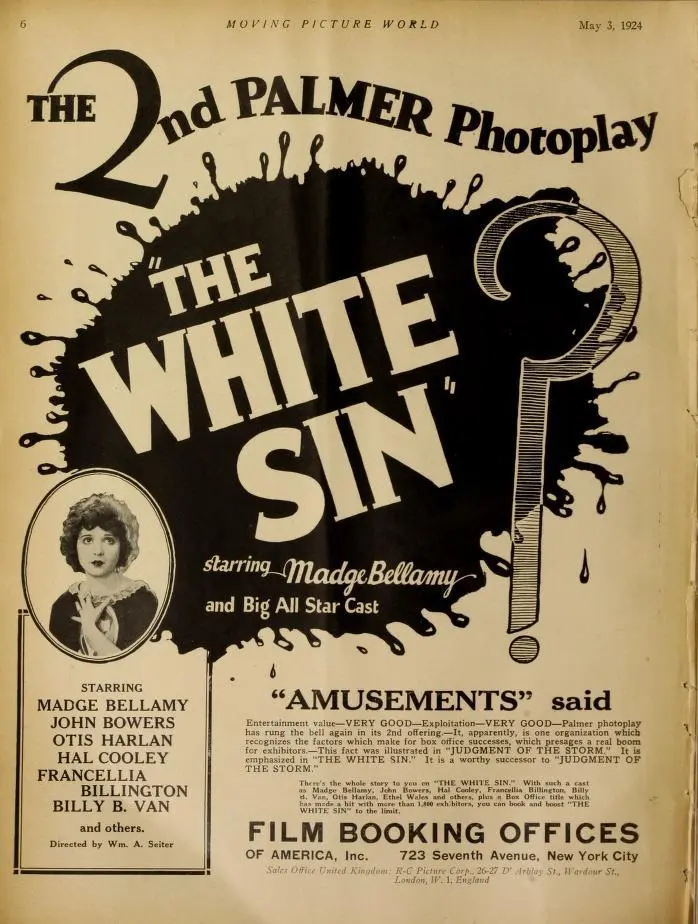
The character of Spencer, the wealthy scion, is a fascinating study in moral ambivalence. While the specific actor playing Spencer isn't explicitly detailed in the plot summary, the roles of Hallam Cooley and John Bowers often encompassed such complex, sometimes villainous, sometimes redeemed, figures in silent cinema. Spencer is not a mustache-twirling villain in the traditional sense; rather, he represents a more insidious form of evil – that of casual entitlement and thoughtless cruelty. His 'mock wedding' is less an act of deliberate malice and more a consequence of his privileged upbringing, where consequences are for others, not for him. This makes his actions all the more chilling, for they are born not of grand design, but of a profound moral vacuum. The film subtly critiques the societal structures that enable such characters to operate with impunity, highlighting the vulnerability of those without power or social standing.
The Van Gore family itself, though perhaps not individually fleshed out in the same depth as Hattie Lou or Spencer, serves as a powerful symbol. Otis Harlan and Ethel Wales likely embody the older generation of the Van Gores, representing the established, unyielding social order. They are the gatekeepers, the arbiters of respectability, whose wealth shields them from true accountability. Their presence reinforces the film's commentary on class disparity, where the actions of the rich are often excused or ignored, while the poor bear the full brunt of societal judgment. The supporting cast, including James Corrigan, Norris Johnson, Francelia Billington, James Gordon, Myrtle Vane, Arthur Millett, Billy Bevan, and Mary Marguerite, would have contributed to building this believable, if often unforgiving, world around Hattie Lou.
The White Sin is a powerful exploration of several enduring themes. Foremost among these is the stark contrast between innocence and experience, particularly how society often punishes the former while excusing the latter, especially when wealth is involved. Hattie Lou’s purity is exploited, and her subsequent suffering serves as a harsh lesson about the dangers lurking beneath the veneer of civility. The 'white sin' of the title itself is a fascinating oxymoron, suggesting a transgression that, while morally reprehensible, might be overlooked or justified by society due to the status of those involved, or perhaps the 'innocent' nature of the victim. It compels us to question what constitutes a 'sin' and who gets to define it.
The film also delves into the pervasive issue of class disparity. The Van Gores' casual abuse of power, their ability to manipulate circumstances and evade responsibility, stands in stark contrast to Hattie Lou's utter lack of agency. Her struggle to survive and protect her child against a backdrop of societal condemnation is a searing indictment of a system that favors the privileged. This theme resonates strongly with other melodramas of the era, such as St. Elmo (1923), which often depicted the tragic consequences of social stratification and moral failings within high society.
Deception, too, plays a crucial role. Spencer’s mock wedding is the ultimate act of deceit, a betrayal of trust that has life-altering implications. The film meticulously charts the ripple effects of this single act, demonstrating how one person’s thoughtless cruelty can unravel another’s entire existence. It’s a cautionary tale, perhaps, about the fragility of trust and the devastating power of lies, especially when wielded by those in positions of power.
William A. Seiter, as director, along with writers Harold Shumate, Julian La Mothe, and Del Andrews, crafted a narrative that, while perhaps melodramatic by modern standards, possessed a raw emotional power essential for silent cinema. The visual storytelling would have been paramount, relying on expressive cinematography, evocative sets (especially the yacht, a character in itself), and the dramatic impact of intertitles. The pacing, crucial for maintaining audience engagement without dialogue, would have been carefully orchestrated to build tension and convey emotional shifts. The film's ability to communicate complex ideas and feelings purely through visual means is a testament to the artistry of the era.
The performances, particularly Bellamy’s, would have been central to its success. Silent actors were masters of physical expression, using their bodies and faces to convey dialogue, inner turmoil, and subtle nuances. This demands a level of theatricality that, when done well, is captivating. We can imagine scenes of Hattie Lou’s growing affection for Spencer, her shock at the mock wedding, and her subsequent despair, all communicated through powerful, wordless gestures. The use of light and shadow, often exaggerated in silent films, would have further enhanced the emotional landscape, casting characters in symbolic illumination or darkness.
While we don't have direct access to its original score, the accompanying music would have played a vital role, guiding the audience's emotional response and underscoring the narrative's dramatic beats. From swelling orchestral pieces during romantic scenes to ominous tones foreshadowing tragedy, the score was an indispensable component of the silent film experience, acting as an unseen narrator. The cumulative effect of these elements — direction, writing, performance, and music — would have been a deeply immersive and emotionally resonant experience for contemporary audiences.
The White Sin emerged during a fascinating period in American cinema, a decade marked by both burgeoning artistic experimentation and evolving social mores. The 1920s, often dubbed the Roaring Twenties, saw a loosening of some Victorian constraints, yet societal expectations, particularly for women, remained rigid. Films like this one often served as both entertainment and a form of social commentary, reflecting anxieties about class, morality, and the changing role of women. The tragic plight of Hattie Lou would have resonated deeply with audiences familiar with the harsh judgments faced by unmarried mothers or women perceived to have 'fallen.'
Comparing it to other films of the era, we can see common threads. The theme of a young woman navigating a treacherous world, often alone, is a staple, found in films like Peg o' My Heart, where a spirited girl from humble beginnings finds herself embroiled in aristocratic affairs. The focus on a woman’s struggle for respectability and survival against a backdrop of societal judgment also aligns with the broader genre of social problem films prevalent at the time, much like The Average Woman might have explored similar themes of female agency and societal constraints.
While perhaps not as widely remembered as some of the era's blockbusters, The White Sin is a significant piece of cinematic history. It offers a window into the narrative conventions, acting styles, and thematic preoccupations of its time. For film enthusiasts and historians, rediscovering such films is crucial for understanding the evolution of storytelling and the enduring power of visual narrative. It reminds us that even without spoken words, cinema can deliver profound emotional truths and incisive social critiques.
In conclusion, The White Sin stands as a compelling example of silent era melodrama, elevated by Madge Bellamy's captivating performance and a narrative that, despite its period setting, tackles universal themes of class, deception, and the resilience of the human spirit. It is a film that asks us to reflect on the true cost of privilege and the immense burden placed upon those without it. While the specific details of its plot might seem quaint to a modern audience, the emotional core – the struggle for dignity and survival against overwhelming odds – remains as potent and relevant today as it was nearly a century ago. If you ever get the chance to witness this cinematic artifact, do so. It's a poignant reminder of the power of early cinema and the timeless nature of human drama.
IMDb 5.7
1930
Community
Log in to comment.