DbcultAccessing Vault...
Cult Review
Senior Film Conservator
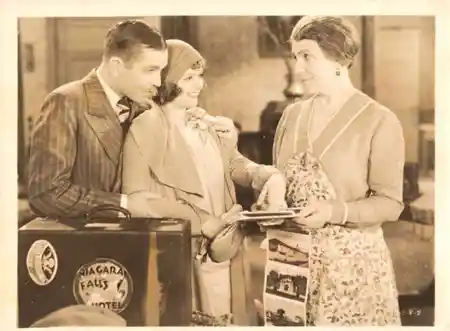
Alright, so 'Personality' from 1930. Is it worth tracking down today? For most casual movie watchers, probably not. But if you’re someone who genuinely loves digging into film history, especially the early talkie era, this one’s a surprisingly quaint little find. Folks who want fast plots or fancy visuals will probably find it a slog. Hardcore classic film buffs, though? You might just get a kick out of it. 🎞️
The whole thing feels like a stage play taped for the big screen, which, you know, was super common back then. The cameras barely move, and everyone just kind of… waits for their turn to talk. It's almost charming in its stiffness.
Our lead, played by Sally Starr, is Betty King, a young woman trying to make it work in the city. She’s got this idea that she needs a 'personality' to get ahead. You see her trying on different personas, like a hat. It’s pretty innocent stuff, really.
There’s a scene early on where she tries to act all sophisticated at a party. She keeps trying to say big words, but she clearly doesn't know what they mean. The camera just kinda sits there, letting her flounder. You can almost feel the movie trying to convince you this moment is a huge turning point for her. It’s a bit much, honestly.
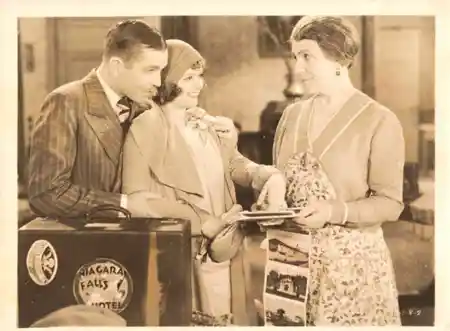
Blanche Friderici plays her landlady, and she’s a hoot. Her expressions are so wonderfully over-the-top, like she’s still on the stage. Every time she disapproves of Betty’s schemes, she does this little head shake and a sigh that's just perfect. You can tell she's seen it all before.
The sound itself is a character in these early films, isn't it? Sometimes the dialogue is crystal clear, then someone moves two feet to the left, and they sound like they’re shouting from another room. It’s a wild experience, really.
John T. Murray, as the slick city fellow, is exactly what you’d expect from a 1930s cad. He’s all smooth talk and quick glances. His character doesn’t really develop much, but he fills the role of 'potential bad influence' just fine.
There’s a moment where Betty gets this new dress, and she parades around her tiny apartment. The scene goes on about 20 seconds too long, and the silence starts to feel awkward rather than emotional. You just kinda want someone to say, 'Yeah, it's nice, let's move on.' But nope, she just keeps posing. 👗
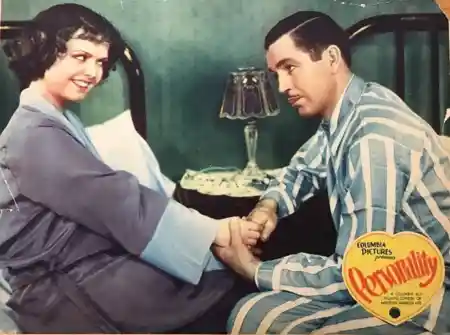
What struck me was how much they rely on reaction shots. Someone says something, and the camera cuts to someone else just staring, sometimes for a beat too long. One reaction shot of George C. Pearce’s character lingers so long it becomes funny, like he’s forgotten his line or something.
The plot, such as it is, meanders a bit. It’s not a tight narrative, more like a series of vignettes showing Betty’s journey. Some bits feel a little tacked on, like they needed to fill a bit more time before the final act.
And the ending? It’s exactly what you’d predict for a film of this era about a young woman finding herself. No big surprises, no edgy twists. It's comforting in its predictability, almost like a warm blanket.
So, yeah, 'Personality' is a snapshot. It shows what cinema was like when it was still figuring out this whole 'talking pictures' thing. It’s not a masterpiece, not by a long shot. But it has its moments, especially if you appreciate the history and the raw, unpolished charm of early Hollywood.
IMDb —
1915
Community
Log in to comment.