DbcultAccessing Vault...
Cult Review
Senior Film Conservator
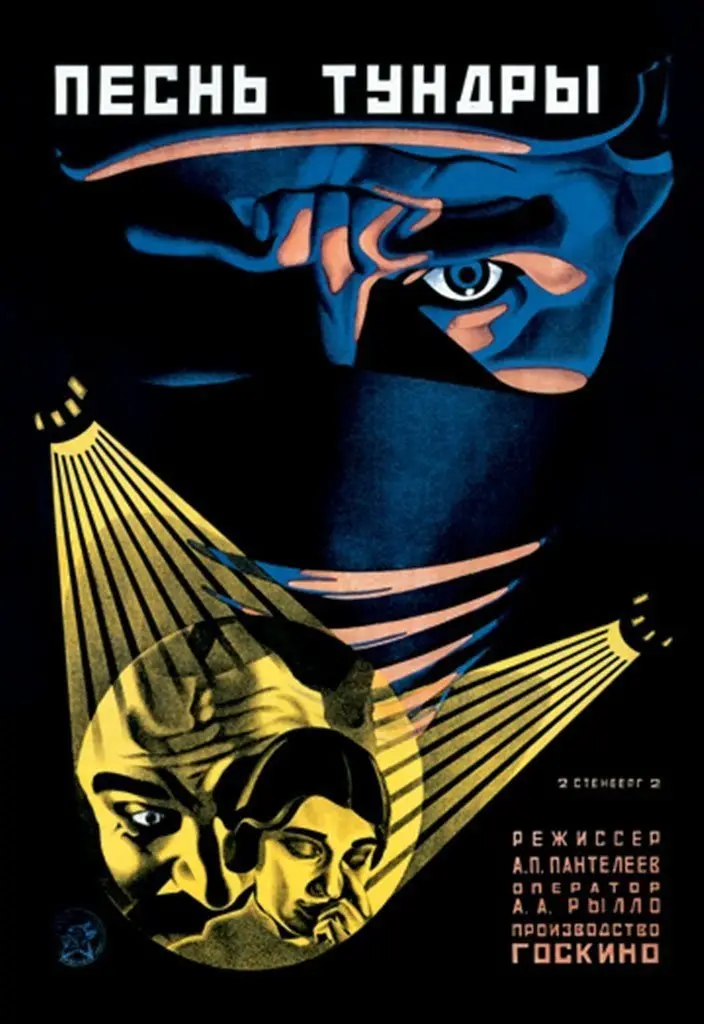
Is 'Pesn tundry' a film that demands your attention in the current cinematic landscape? Short answer: yes, but with significant caveats that demand a particular kind of viewer. This is a film crafted for enthusiasts of early Soviet cinema, historians of indigenous struggles, and those with a keen interest in political allegories and the foundational narratives of social realism. It is decidedly not for audiences seeking fast-paced modern storytelling, polished contemporary aesthetics, or an escape into pure, unchallenging entertainment.
To approach 'Pesn tundry' is to engage with history, both cinematic and societal. It's an artifact, yes, but one that still pulses with a certain defiant energy, provided you are willing to meet it on its own terms.
"Pesn tundry" (Song of the Tundra) emerges from an era when cinema was still finding its voice, often using its nascent power to echo the revolutionary fervour of its time. The film positions its audience directly into a narrative of profound struggle, a testament to the period's conviction that art could serve as a powerful instrument for social change. We are introduced to an unnamed Russian revolutionary, a figure banished to the desolate reaches of the tundra, whose personal exile quickly transforms into a shared crusade.
Instead of wallowing in his misfortune, he finds purpose among the Sami, an indigenous people whose existence is threatened by the rapacious expansion of tsarist authority and the predatory practices of opportunistic merchants. These antagonists are not nuanced villains but archetypes of oppression: the state, represented by the arbitrary tsarist police, and capital, embodied by the unscrupulous traders. The revolutionary becomes a strategic mind, a unifying force, helping the Sami articulate their grievances and organize their resistance.
The plot, while straightforward in its ideological leanings, gains considerable weight from its setting. The tundra itself becomes a character—a vast, indifferent, yet ultimately defining force against which human struggles are magnified. The film explores themes of cultural survival, the universal fight against injustice, and the surprising solidarity that can form across cultural divides in the face of common enemies. It’s a narrative less about individual heroism and more about collective awakening, spurred by an outsider who recognizes the inherent dignity and rights of a people.
Is 'Pesn tundry' a film that demands your attention in the current cinematic landscape? Yes, for specific demographics, it absolutely does. It serves as a vital historical document, offering a window into early Soviet filmmaking techniques and the political messaging prevalent at the time. For those interested in the history of indigenous struggles, particularly in the Russian context, it provides a rare, albeit ideologically framed, depiction of the Sami people's plight.
However, for a casual viewer accustomed to modern narrative conventions, the film's pacing and stylistic choices might prove challenging. It requires an investment in its historical context and a willingness to appreciate cinema as a developing art form.
This film works because of its unflinching commitment to its social justice themes and its raw, earnest portrayal of an indigenous community's fight for survival, which still carries a poignant resonance. Its historical value as a piece of early Soviet cinema, showcasing a distinct political and artistic style, is undeniable. Furthermore, the sheer ambition of telling such a story against a harsh, natural backdrop is commendable.
This film fails because its didactic messaging can occasionally overshadow character development, leading to archetypal rather than deeply nuanced portrayals. The technical limitations of its era, particularly in terms of editing and sound (if any), can also make it feel somewhat inaccessible to modern audiences who are not accustomed to the silent or early sound film experience. Its pacing, while deliberate, can test the patience of those expecting contemporary narrative momentum.
You should watch it if you are a student of film history, an anthropologist, or someone deeply interested in the political and social narratives of the early 20th century. It’s also for those who appreciate the aesthetic of early cinema and are willing to look past technical imperfections to grasp the core message and historical significance. If you enjoy films like Whirligigs for their historical context or The White Dove for its social commentary, 'Pesn tundry' will likely appeal.
Vladimir Shmidtgof’s direction in "Pesn tundry" is a fascinating study in early Soviet realism, tinged with a clear propagandistic intent. He leverages the vastness of the tundra not just as a setting, but as an active participant in the drama. Wide shots, a hallmark of the era, frequently dwarf the human figures, emphasizing the overwhelming odds faced by the Sami and the revolutionary. This visual strategy is particularly effective in scenes depicting arduous journeys across the snow, where the sheer scale of the landscape underscores the characters' vulnerability and resilience.
The cinematography, while constrained by the technology of the time, makes a concerted effort to capture the stark beauty and brutal reality of the Arctic environment. There are moments of genuine visual poetry, particularly in the way light plays on the snow and ice, or the raw, unvarnished depiction of Sami life. One striking example is a sequence showing the Sami's traditional reindeer herding, which, despite its apparent ethnographic purpose, also subtly highlights their harmonious relationship with nature, a stark contrast to the destructive forces of the merchants. Shmidtgof often uses close-ups on the faces of the Sami elders, like Nikolay Sharap's character, to convey a quiet dignity and deep-seated wisdom that transcends the language barrier of silent cinema.
However, the direction also leans heavily into the symbolic. The tsarist police are often framed in rigid, imposing compositions, while the merchants are depicted with exaggerated gestures of greed and deception. This broad-strokes approach, while effective for its immediate political message, sometimes sacrifices subtlety for clarity. It works. But it’s flawed. The tension between documentary-style realism in depicting Sami life and the more theatrical, almost caricatured, portrayal of the antagonists is a defining characteristic of Shmidtgof's approach, mirroring the narrative's black-and-white moral landscape.
The acting in "Pesn tundry" is a product of its time, often characterized by a blend of theatrical expressiveness and an emerging sense of cinematic naturalism. Veronika Buzhinskaya, as a key Sami figure, delivers a performance that balances stoicism with a palpable sense of injustice. Her eyes, often magnified by early close-up techniques, convey a world of quiet suffering and fierce determination, making her a compelling emotional anchor for the film's indigenous narrative. She avoids the pitfalls of overt melodrama, instead opting for a dignified portrayal that grounds the more overtly political aspects of the story.
A. Shabelskiy, as the exiled revolutionary, embodies the intellectual and moral conscience of the film. His journey from isolated ideologue to an integrated member of the Sami community is subtly portrayed through his evolving interactions and growing empathy. While his initial expressions might seem broad to modern eyes, they effectively communicate his character's internal conviction and the weight of his political ideals. His transformation is less about grand speeches and more about his quiet resolve and actions, such as his patient explanations of strategy to the Sami elders.
The supporting cast, including Viktor Plotnikov and Aleksandr Nenyukov as the antagonists, lean into more overt, almost villainous portrayals. Their performances are less about psychological depth and more about embodying the oppressive forces. Plotnikov's tsarist officer is a symbol of unthinking authority, while Nenyukov's merchant is a caricature of avarice. This stylistic choice, common in revolutionary cinema, ensures that the audience's sympathies are unequivocally aligned with the Sami and their revolutionary ally. It might lack nuance, but it certainly clarifies the film's moral compass.
The pacing of "Pesn tundry" is deliberate, reflecting the epic scope of its setting and the gravitas of its themes. It unfolds at a rhythm that allows the audience to absorb the vastness of the landscape and the slow grind of oppression and resistance. There are no sudden narrative jolts or rapid-fire cuts; instead, the film builds its tension through sustained sequences, such as the arduous journey of the Sami across the tundra or the drawn-out negotiations with the merchants. This measured approach, while potentially challenging for viewers accustomed to contemporary cinema, fosters a contemplative atmosphere, allowing the weight of the Sami's struggle to truly sink in.
The tone is predominantly earnest and serious, imbued with a sense of revolutionary idealism. While there are moments of communal warmth within the Sami encampment, the overarching mood is one of struggle and defiance. It's a film that takes its subject matter with utmost gravity, aiming to inspire solidarity and expose injustice rather than merely entertain. This unwavering commitment to its message, while admirable, occasionally veers into didacticism. The film doesn't ask you to consider; it tells you to understand.
Thematic resonance is where "Pesn tundry" truly shines, even almost a century later. The core themes of indigenous rights, anti-colonialism, and the struggle against economic exploitation remain acutely relevant. The film’s portrayal of the Sami facing cultural erasure and economic subjugation by external forces echoes countless historical and ongoing conflicts worldwide. This is not merely a historical curiosity; it is a pertinent commentary on power dynamics that persist today. The film, perhaps unintentionally, serves as a powerful reminder that the fight for dignity against overwhelming odds is a timeless human endeavor. Its message, though delivered through the lens of early Soviet propaganda, transcends its origins to touch upon universal truths about justice and human resilience.
One might argue that its portrayal of the 'heroic revolutionary' is overly simplistic, reducing complex political movements to a single, benevolent figure. Yet, even within this simplification, the underlying message of solidarity across different forms of oppression is potent. It stands in fascinating contrast to other films of its era, like The Luring Lights, which might have explored more personal dramas, by prioritizing collective struggle. This makes 'Pesn tundry' a unique, if sometimes heavy-handed, entry in the canon of socially conscious cinema.
"Pesn tundry" is more than just an old film; it's a valuable historical document and a testament to the enduring power of cinema as a tool for social commentary. While its stylistic choices and pacing are undeniably products of its era, requiring a certain patience and contextual understanding from the viewer, its core message of resistance against injustice remains remarkably potent. It’s a film that rewards those willing to delve beyond surface aesthetics, offering a rare glimpse into a specific historical struggle and the universal human quest for dignity. It may not be a Sunday afternoon casual watch, but for the discerning cinephile or history buff, its rediscovery is a profoundly enriching experience. It asks you to engage, to think, and to remember. And that, in itself, is a powerful legacy.
IMDb 6
1933
Community
Log in to comment.