DbcultAccessing Vault...
Cult Review
Senior Film Conservator
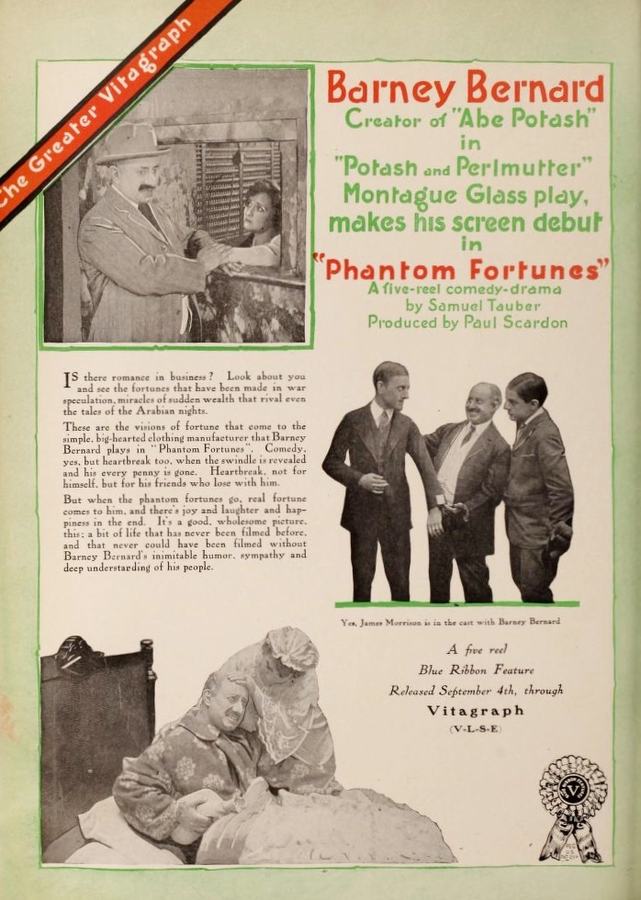
The ghosts of 1915 still rattle their tinsel chains inside Phantom Fortunes, a one-reel marvel that most historians misfile between The Frame-Up and The Student of Prague, as if all silent morality plays were interchangeable shadows. Yet this Lower-East-Side fable—patched together from war jitters, rag-trade ambition, and garter-snapping romance—has the breathless metabolism of a newsboy shouting extra editions. It is capitalism’s origin myth shot at 18 frames per second: a place where contracts grow on telegraph wires and every handshake smells of chalk dust and knish.
Director/entrepreneur L. Rogers Lytton (who also essays the thankless bit of Scotland Yard bloodhound) stages the opening like an Ellis Island fever dream. Bob Deering—played with jaunty, matinée-idol swagger by Robert Gaillard—strides through a set that smells of pickle brine and coal smoke. A gang of messenger boys pounces on Herman Pinsker like starved urchins in a Dickens basement; Bob’s rescue, a flurry of bowler hats and flying fists, earns him entry into thePinsker sweatshop-cum-fiefdom.
That shop is the film’s true protagonist: sewing machines hiccup like mechanical locusts, bolts of serge tower like Torah scrolls, and every close-up of a scissor blade glints with the threat of circumcised destinies. The cinematographer, anonymous as most of the era’s unsung poets, lights the squalor with a single carbon arc that carves sea-blue (#0E7490) shadows along the walls, turning fabric lint into nebulae. You can almost taste the schmaltz in the air.
Romance here is transactional, a currency stitched looser than any sleeve. Ike Mandell (Barney Bernard, channeling a Yiddish Iago) pursues Dora Pinsker with the manic obsessiveness of a man who’s already been fired ten times and knows the eleventh could be permanent. Dora, played by Jennie Moskowitz with kohl-eyed worldliness, measures suitors by the yardage they can deliver. When the war shutters the stock market, courtships pivot to woolen shirts for ghost regiments—love measured in shoulder seams.
Bob’s courtship of Molly Sherman (Adele DeGarde) is comparatively chaste: a flirtation across switchboard wires, her face lit by the sodium glow of hotel indicators. Their scenes pulse with the sea-blue (#0E7490) tint of night-shift ennui; every “hello” she chirps into the brass mouthpiece feels like a tiny marriage proposal. Yet even here, Lytton slips in the mercantile: Bob’s promise that she’ll never need to “hello” again if she weds him. The film whispers, not so subtly, that affection is just another contract clause.
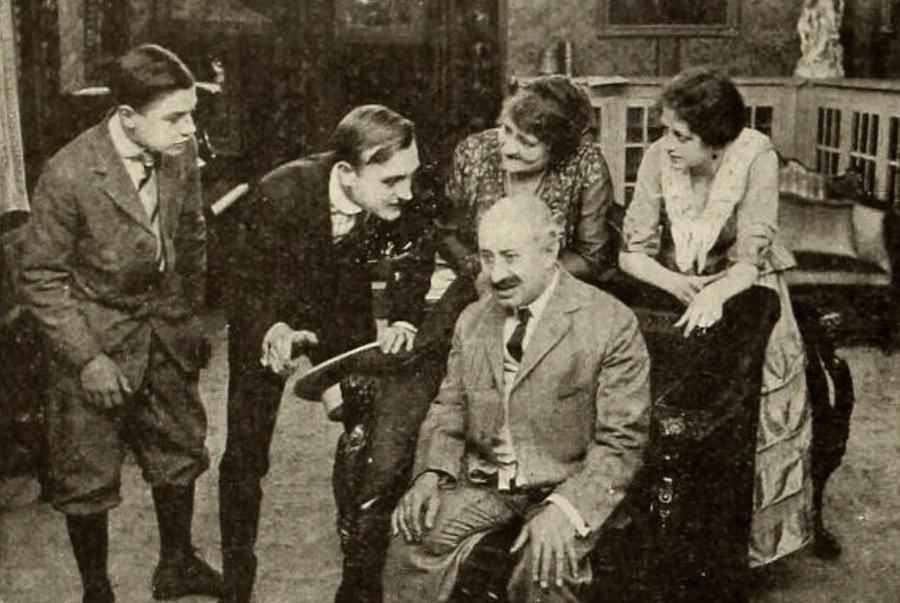
Enter “Red” Dorgan, flame-haired maestro of the long con, played with carnivorous charm by James Morrison. He embodies the war-time euphoria that turned every basement tailor into a would-be tycoon. The scam—phantom Allied uniform orders—unfurls like a sleight-of-hand magic lantern show: samples approved, telegrams forged, manufacturers beguiled into rejecting domestic clients. It’s The Millionaire Baby’s stunt capitalism grafted onto Salvation Nell’s sweatshop fatalism.
The tension crests inside the hotel corridors where Molly works. Lytton cross-cuts between Scotland Yard’s stakeout and Bob’s dawning dread, editing rhythms that prefigure Hitchcock’s Saboteur by decades. The camera pans past potted palms and bellboys, each frame drenched in a sickly yellow (#EAB308) tint that suggests both opulence and infection. When the fraud collapses, the fallout is less moral than mercantile: bolts of unsold cloth pile like wounded soldiers, and the word “profit” becomes an obscenity scrawled on ledger pages.
But Lytton refuses tragedy. Bob, ever the improvisational capitalist, pivots: if the war commission is a mirage, then flood the domestic market while competitors wait for phantom orders. It’s a maneuver worthy of Ayn Rand’s Hank Rearden, executed inside a tenement loft that smells of herring. The montage—Pinsker’s workers churning out civilian garb, delivery wagons rattling over cobblestones—bursts with dark-orange (#C2410C) tinting, the color of pennies molten into momentum. For a brief reel, the film celebrates the ingenuity of the immigrant underclass, the same way later Warner Brothers sagas would toast Roosevelt’s New Deal.
Ike’s retaliatory strike feels like a page torn from Alone in London’s labor-riot playbook, but the film sides squarely with management. Bob quells the walkout with a speech that unspools in intertitles heavy on paternalism; workers trudge back to benches, dignity sold for steady wages. Modern viewers may cringe, yet the moment is honest to 1915’s paternal capitalism, when social conscience was measured in paychecks, not picket lines.
Justice, when it arrives, is swift and screwball: Dorgan nabbed, check traced, signatures scrutinized. The six-thousand-dollar check made out to Bob becomes the film’s MacGuffin—proof of guilt or forged alibi? In a tidy denouement, Pinsker’s promise to “make good” if his signature alone graces the paper absolves Bob, sealing a partnership that reeks of old-world loyalty. The cops retreat, trench coats swirling like Keystone Kops in a darker key.
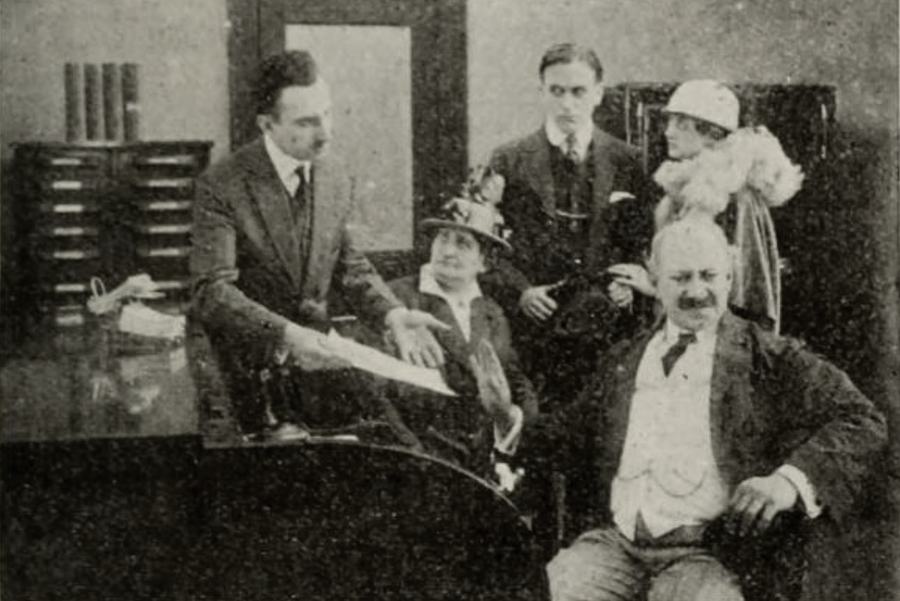
The double wedding—Molly to Bob, Dora to Glassman—plays out against a tableau of ledgers balanced and futures secured. Molly’s last day at the switchboard is staged with almost religious solemnity: she removes her headset like a novitiate doffing a habit, the sea-blue (#0E7490) tint bathing her face in baptismal calm. Dora, trading Ike’s scheming for Glassman’s nascent prosperity, smiles with the cold satisfaction of a merger finalized. The film ends on an iris-in over bolts of cloth, a visual ellipsis suggesting the cycle of ambition will loop ad infinitum.
Gaillard’s Bob is less a character than a locomotive, all teeth and momentum; you believe he could sell sand in the Sahara. Bernard’s Ike quivers with comic paranoia, eyes darting like a man forever one pogrom ahead of history. Moskowitz delivers Dora’s mercenary pragmatism with flapper-era candor—she’d be at home in Cukor’s Holiday a decade later. Only Lytton’s Scotland Yard detective feels perfunctory, a plot hinge rather than flesh.
The surviving 16 mm print—grainy, spliced, yet gloriously tinted—uses chromatic shorthand: dark orange for profit, yellow for deceit, sea blue for longing. It’s a system more nuanced than many prestige pictures of the era. When Bob corners the market, the screen floods with molten orange that seems to warm the projector bulb itself; during Dorgan’s hotel shakedown, yellow creeps in like nicotine stains, warning of rot beneath gilt.
Modern hustlers from The Wolf of Wall Street to Billions owe this flick a debt: the con, the pivot, the strikebreaker-as-hero arc. Yet unlike latter-day celebrations of excess, Phantom Fortunes keeps one foot in the tenement, aware that every fortune is stitched by someone’s aunt with arthritic fingers. Its optimism is hard-won, cynical yet jaunty, a tone later refined in Sturges and Wilder.
Should you track down this orphaned reel—buried in archive catalogs under forgotten hyphenated surnames—prepare for a yarn that hustles faster than a Bowery card shark. It’s not Neptune’s Daughter spectacle, nor the metaphysical chill of The Student of Prague. Instead, Phantom Fortunes offers something rarer: a time-capsule of American appetite, where love is bartered in yards of wool and every redemption comes with a receipt. Watch it once for history, twice for the cautionary shimmer that still reflects in today’s crypto booms and NFT busts. The fortune may be phantom, but the hustle, darling, is eternal.
IMDb —
1916
Community
Log in to comment.