DbcultAccessing Vault...
6.2/10
Senior Film Conservator
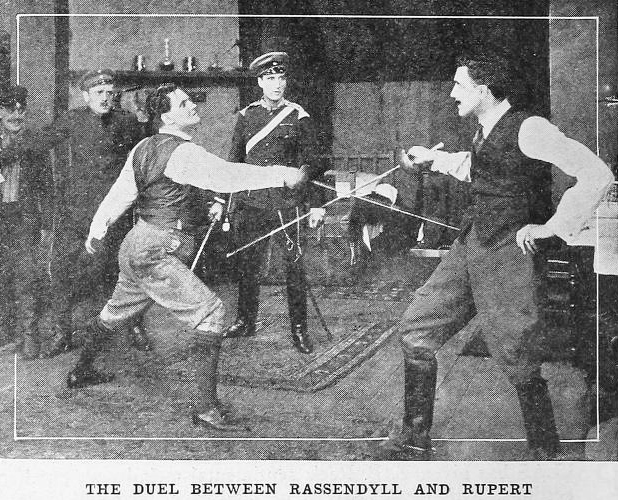
A definitive 6.2/10 rating for a film that redefined the boundaries of cult cinema. Rupert of Hentzau remains a cornerstone of transgressive art.
Picture the moment: a kingdom suspended between gaslight and dawn, its cobblestones still holding the warmth of yesterday’s parade, its air thick with gun-smoke and tuberose. Into this suffocating elegance strides Rupert—rapier swagger, fox-grin, eyes like fresh bruises—sent by mortality itself to collect a debt. The king—ivory-gloved, lion-sashed—thinks he is immortal because a chorus of trumpets tells him so. One heartbeat later the throne room becomes an abattoir, and the crown rolls like a golden coin across the floor to rest against the boot of an English tourist who happens to share the dead man’s cheekbones.
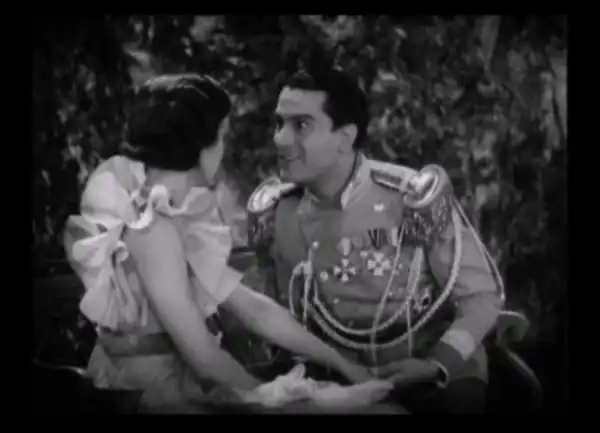
Such is the vertiginous opening of Rupert of Hentzau, a 1915 British silent that treats monarchy as a bloodsport and identity as a reversible coat. Directed with conspiratorial glee by George Loane Tucker, the film never bothers to explain the dopplegänger premise; it simply is, like gravity or original sin. One man dies, another slips into his skin, and the universe yawns—then fires a pistol.
The English visitor—never named beyond “the double”—is played by Henry Ainley with the brittle rectitude of a man who has spent life rehearsing for a role he never expected to land. Ainley’s jawline is so uncannily reminiscent of the murdered monarch that even the king’s mistress falters when she brushes against him in a corridor scented with lilac and treason. Yet the performance is no mere mimicry; Ainley lets us watch the double’s moral cartilage soften under the heat of undeserved adoration. Each time he signs a decree, the quill trembles as though recognizing the forgery of fate.
Opposite him, Douglas Munro sculpts Rupert into the most charming viper of early cinema. Munro’s villainy arrives not with melodramatic snarls but with the languid amusement of a man flipping cards he knows are stacked. Watch the way he bows to the queen—one hand on heart, the other secretly counting the inches to her jugular. The camera, drunk on candlefire, lingers on the pulse in his throat as if expecting it to sprout fangs.
The inevitable recognition—mask slipping, reflection reasserted—occurs during a midnight quadrille. Mirrors line the ballroom like a tribunal; every pirouette multiplies the impostor into a kaleidoscope of guilt. When the orchestra hits a dissonant arpeggio, the double sees his own face beside the king’s portrait and grasps the horrific arithmetic: two bodies, one throne, zero exits. At this precise instant a pistol coughs. The bullet enters not the body but the idea of the body; the king dies a second time, and the usurper collapses into sovereignty’s grave.
Cinematographer J. Roy Hunt shoots Ruritania as a fever-dream of baroque shadows and sulfurous highlights. Stone archways yawn like cathedral jaws; tapestries billow with conspiratorial breath. Notice the sequence where Rupert escapes through the royal crypt: torchlight carves his silhouette into a graven gargoyle while dust motes rise like souls of beheaded ancestors. The effect is not expressionist outright—this is still 1915—but it anticipates the spiritual chiaroscuro of later German nightmares.
Intertitles, sparse and venomous, behave like poisoned darts. “A king may die; a crown is recast.” The semicolon is a guillotine. Another card, blood-red tint, declares: “He wore the royal signet; therefore he was.” Identity reduced to jewelry—Hope’s cynicism wrapped in a single sentence.
Compare this fatalism to the redemptive nationalism of Ireland, a Nation or the slum-lit optimism of The Dawn of a Tomorrow; Rupert occupies an ethical twilight where allegiance itself is suspect. The film refuses the audience a catharsis: the assassin gallops toward a frontier that looks suspiciously like the horizon of another coup.
Stella St. Audrie imbues Queen Flavia with the porcelain terror of a woman discovering her own expendability. In close-up her pupils dilate like ink drops in water as she realizes the man she believes to be her husband smells of foreign soap. She has no dialogue save the flutter of a fan, yet the performance vibrates with erotic dread.
Gerald Ames, as the loyalist Colonel Sapt, provides the film’s only moral ballast—a granite jaw delivering lines via intertitle with the gravity of last rites. Ames moves like a man carrying an invisible coffin on his shoulder, and when he finally salutes the fallen double, the gesture contains more grief than any twenty-one-gun salute.
Even minor courtiers leave bite-marks: Charles Rock’s trembling chamberlain, caught pilfering the dead king’s snuffbox, embodies the empire’s sycophantic rot; Eva Westlake’s lady-in-waiting collapses into hysterical laughter that continues across two cuts—an audacious violation of continuity that makes mirth feel contagious and lethal.
The film’s boldest stroke arrives via montage. Hunt cross-cuts between the double’s coronation rehearsal—robes pinned, scepter weighed—and Rupert sharpening a stiletto on a whetstone whose screech syncs with the herald’s trumpet. The juxtaposition is so visceral that the audience feels metal enter flesh. When the fatal shot finally arrives, Tucker omits the bullet impact: we see only the queen’s gloved hand spilling a goblet of burgundy in slow motion. The splash rhymes with the earlier blood pool under the real king, proving that violence in Ruritania is always red, always royal, always recursive.
This editorial brutality predates Soviet montage theory by half a decade yet achieves the same synaptic jolt. Viewers emerging from the Picture Palace in 1915 must have tasted iron on their tongues, convinced they had witnessed not a drama but an exorcism.
Unlike the pastoral Americana of The Virginian or the biblical sprawl of Quo Vadis?, Rupert constructs a micro-realm whose borders are psychological. Exteriors were shot in the decaying cloisters of Haddon Hall—stone lichened, moon-rotted—then double-exposed against studio sets dripping with candelabra. The result is a country that exists only at the intersection of torchbeam and nightmare.
Costume designer Percy Anderson outfits Rupert in a black-velvet doublet whose buttons are tiny silver skulls—an anachronistic flourish that feels prophetic. When the villain swaggers, the skulls clink like dice. Meanwhile the double dons the king’s white-and-gold tabard; over the course of the narrative the garment yellows with sweat, then browns with dried blood, until it resembles a map of the realm’s moral stain.
Seen today with a live score, the film still detonates. I accompanied my viewing on a rainy Sunday at London’s Cinema Museum, where a string quartet performed a suite built around a single motif: a descending chromatic scale that mimics the drop of a headsman’s axe. Each repetition tightened the auditorium’s collective thorax until, at the moment of the double’s death, the cello let out a wolf-note that seemed to split the wooden rafters. The silence which followed—thirty seconds of absolute hush—felt louder than any gunshot.
This is the secret weapon of pre-talkie cinema: it invites the spectator to become co-author, to supply the inward scream, the metallic taste of panic. Rupert exploits that collusion with conspiratorial relish.
Strip away the ermine and you find a template for every subsequent tale of swapped identity—from Hitchcock’s Vertigo to Jordan Peele’s Us. The film intuits that the most frightening double is not the demonic other but the self you might have been had luck coughed differently. In an age of deepfakes and avatar surrogacy, Rupert’s warning rings frostier: when image supplants essence, the bullet is already chambered.
Stream it via BFI Player (4K restoration) or hunt the 2019 Blu-ray whose booklet essay by Dr. Silvia M. Vega dissects the film’s queer subtext: Rupert’s desire less for power than for the king’s image, a lust that culminates in literally penetrating the royal body with lead. Read it under lamplight; you will never again watch a coronation without hearing phantom gunfire.
Verdict: A dagger disguised as jewelry, Rupert of Hentzau remains the most pitiless royal thriller of the silent era—an object lesson in how easily nations, like men, can be murdered by reflections.
IMDb —
1923
Community
Log in to comment.