DbcultAccessing Vault...
6.9/10
Senior Film Conservator
A definitive 6.9/10 rating for a film that redefined the boundaries of cult cinema. Phi-Phi remains a cornerstone of transgressive art.
Short answer: yes, but only if you have an appetite for the theatrical. This film is for silent comedy completists and those who find humor in the collision of high art and low-brow domestic squabbles. It is not for audiences expecting a grounded historical epic or those who find 1920s gender dynamics too grating to enjoy.
Phi-Phi is worth watching because it offers a rare glimpse into the transition from popular French operetta to the silent screen. It manages to capture a specific brand of Parisian irreverence that feels surprisingly modern despite its century-old age. While it lacks the high-octane stunts of American contemporaries, its charm lies in its character-driven wit and its refusal to take the 'glory of Greece' seriously.
This film works because: It successfully translates the bawdy, lighthearted energy of the stage into a visual language that focuses on expressive facial acting and clever set design.
This film fails because: The central conflict—Madame Fidias’s jealousy—is recycled too many times across the middle act, leading to a noticeable dip in narrative momentum.
You should watch it if: You want to see how early cinema used anachronism and satire to poke fun at the concept of the 'tortured artist.'
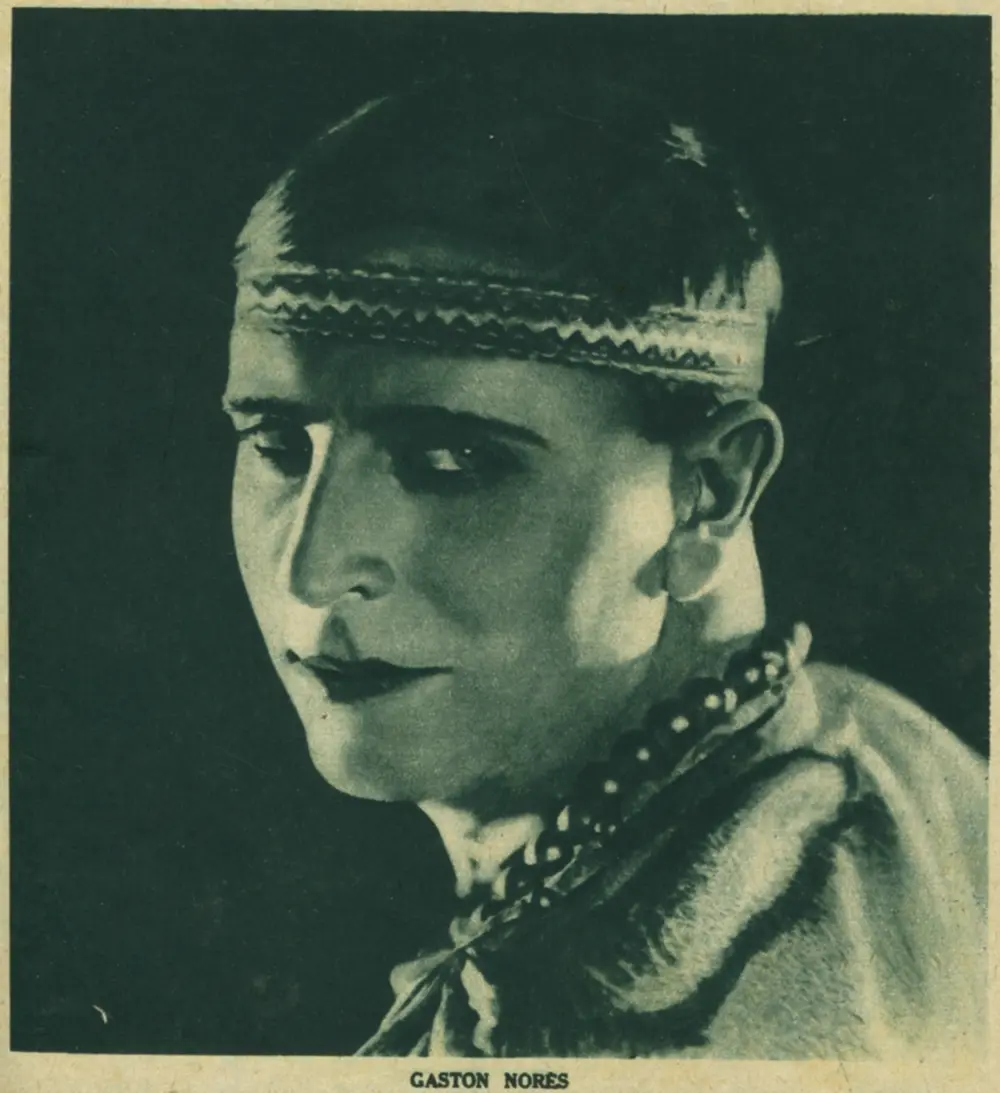
At its core, Phi-Phi is a domestic comedy dressed up in classical robes. Gaston Norès plays Fidias with a distracted, almost childlike enthusiasm for his work that makes his neglect of his wife seem more like a character flaw than malice. This is essential for the comedy to land; if he were a villain, Madame Fidias’s attempts to win him back would feel tragic rather than funny. The film operates on the premise that men are essentially simple creatures, easily swayed by the nearest beautiful thing, and women are the strategic architects of their domestic stability.
The studio scenes are the heart of the film. We see Fidias attempting to find the perfect pose for his models, and the film uses these moments to highlight the absurdity of the artistic process. The models themselves are not presented as sirens, but as working-class women doing a job, which adds a layer of grounded reality to the otherwise heightened satire. This reminds me of the social dynamics explored in The Cigarette Girl, where the workplace becomes a stage for romantic negotiation.
Madame Fidias, played by Olga Noël, is the true protagonist. Her performance is a masterclass in the 'silent pout.' She doesn't need intertitles to explain her frustration. A twitch of her eyebrow or a strategic adjustment of her stola tells the audience exactly what she’s thinking. She is a woman who knows she is being ignored and decides to make herself impossible to ignore. It is a performance of high energy and sharp timing.
Henri Diamant-Berger was a director who understood the pulse of the French public. In Phi-Phi, he keeps the camera relatively static, allowing the actors to treat the frame like a proscenium arch. This could have felt restrictive, but instead, it preserves the theatrical DNA of the original operetta. The tone is consistently light, even when the jealousy themes threaten to turn sour. It’s a farce in a toga. It never asks the audience to feel deep pain, only to enjoy the spectacle of a clever woman outmaneuvering her husband.
One of the most interesting aspects of the direction is the use of anachronisms. The ancient Greeks here behave very much like 1920s Parisians. They have the same social anxieties, the same obsession with fashion, and the same cynical view of marriage. This choice makes the film feel less like a history lesson and more like a costume party. It’s a stylistic choice that mirrors the playfulness found in Molly of the Follies, where the setting is secondary to the personality of the lead.
The pacing, however, is where the film shows its age. In the transition from a three-act musical to a silent feature, some of the connective tissue feels thin. There are moments where the plot circles back on itself, repeating a joke about a model's pose or a misunderstood glance one too many times. Unlike the tight narrative of The Forfeit, Phi-Phi allows itself to meander through its beautiful sets.
Olga Noël is the anchor of the film. While Gaston Norès provides the physical comedy and the blustering ego of Fidias, Noël provides the intelligence. Her character, Madame Fidias, is a precursor to the screwball heroines of the 1930s. She is proactive. She doesn't wait for her husband to notice her; she creates situations that force his hand. Her use of 'feminine charms' is portrayed not as a weakness, but as a tactical weapon.
The supporting cast, including André Deed, brings a sense of Vaudeville energy to the production. Deed, a veteran of early film comedy, knows how to use his body to generate laughs without saying a word. His presence ensures that the film never gets too bogged down in the 'marriage drama' and stays firmly in the realm of comedy. The chemistry between the 'models' and the 'wife' is also surprisingly nuanced, avoiding the typical 'catfight' tropes in favor of a more complex social hierarchy.
I find the 'Phi-Phi' nickname itself to be an unconventional observation of the film's power dynamics. By calling the great sculptor by a diminutive, pet name, Madame Fidias effectively strips him of his public grandeur before the audience even sees him. He isn't the master of the Parthenon; he's just her husband who needs a haircut and a reality check. It works. But it’s flawed. The power dynamic is clear from the start, which leaves little room for a traditional character arc.
The film lacks the atmospheric shadows of German Expressionism or the grand scale of Italian epics like Cabiria. Instead, it opts for a flat, bright aesthetic that mimics the lighting of a theater. This was likely a practical choice to ensure all the physical comedy was visible, but it also reinforces the film's identity as an adaptation. The sets look like cardboard. And that’s okay. The artifice is part of the joke.
Every scene in the studio is framed to highlight the contrast between the 'idealized' marble statues and the 'messy' human emotions swirling around them. There is a specific moment where Madame Fidias poses in the place of a statue, and the camera lingers on the husband's confusion. It’s a simple visual gag, but it’s executed with a precision that shows Diamant-Berger's mastery of the medium. It lacks the visual complexity of The Illustrious Prince, but it makes up for it in clarity.
The costumes are a highlight. They are a bizarre blend of historical accuracy and 1920s flapper sensibilities. The way the fabric moves during the more frantic comedic sequences adds a layer of kinetic energy to the film. It’s a reminder that silent film was a medium of movement above all else. When the characters run through the marble halls, the flapping of their tunics creates a rhythm that replaces the missing musical score.
Pros:
The film is genuinely funny in a light, breezy way. It avoids the heavy-handed moralizing often found in silent dramas like The Innocent Lie. The anachronistic humor is clever and feels ahead of its time. The acting is energetic without being overly pantomimic.
Cons:
The visual style is very 'stagey' and lacks cinematic innovation. The plot is predictable, following the standard 'jealous wife' template seen in films like Where Is My Wife?. The pacing drags in the middle sections, making the 100-minute runtime feel a bit long.
Phi-Phi is a delightful, if somewhat slight, piece of cinematic history. It doesn't aim to change the world or redefine the medium; it aims to entertain, and in that, it largely succeeds. It’s a film that celebrates the wit of women and the folly of men, wrapped in a colorful, pseudo-Greek package. While it may not have the staying power of the era's greatest works, it remains a charming example of how early cinema sought to bring the joy of the stage to a wider audience. If you can forgive the cardboard sets and the repetitive plot, you’ll find a comedy that still has a pulse. It’s a minor work, but a joyful one. Watch it for Olga Noël, if nothing else.
IMDb 6.7
1924
Community
Log in to comment.