DbcultAccessing Vault...
5.2/10
Senior Film Conservator
A definitive 5.2/10 rating for a film that redefined the boundaries of cult cinema. Physical Beauty remains a cornerstone of transgressive art.
Alright, so, "Physical Beauty." Is it worth your time today? Yeah, absolutely, if you're the kind of person who finds beauty in the quiet hum of domestic life, or if you're already a fan of early Yasujirō Ozu. This isn't a film for anyone expecting grand dramatic gestures or a breakneck plot. If you need your movies to move fast or involve explosions, you'll probably hate it. But if you're open to settling in and just observing, there's a lot here.
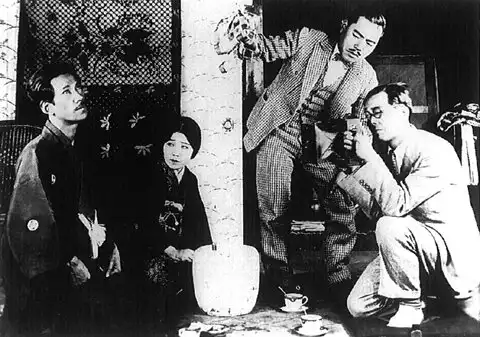
The whole thing centers on Kensaku, played by Tatsuo Saitō. He's a house-husband, takes care of everything, and his wife, Yoshiko (Mitsuko Yoshikawa), is an artist. He's her model, too. You see him in these long, static shots, just holding a pose, looking a little uncomfortable, while Yoshiko paints. There's this immediate sense of imbalance in their relationship, a quiet pecking order. He's serving her, literally and figuratively.
The camera, in classic Ozu style, often just sits there, low to the ground, watching. It doesn't move much, letting you soak in the atmosphere of their small home. You notice the way Kensaku clears the table, the small gestures of his daily routine. It feels lived-in, even if the acting sometimes has that slightly theatrical, early talkie stiffness.
Then comes Mr. Ōmura (Kenji Ōyama), Yoshiko's patron. This guy is just... a piece of work. He swans in, all charm and condescension, openly flirting with Yoshiko right in front of Kensaku. There's a scene where he critiques Kensaku's posture as a model, making a joke about his 'lack of spirit,' and it just hangs there, a really uncomfortable moment. You can almost feel the air go out of Kensaku. It's not a loud, dramatic humiliation, but it's potent because it's so casual, so accepted by everyone around him, including his wife. Yoshiko seems almost oblivious to the sting, or maybe she's just used to it, focused on her art.
Kensaku's decision to try painting himself isn't some fiery, sudden declaration. It's more of a quiet, stubborn resolve. He starts in secret, fumbling with brushes and paints. There's a wonderful awkwardness to his early attempts. He’s not a natural, not like Yoshiko. You see him struggling to mix colors, or staring blankly at a canvas, trying to figure out where to even begin. It’s a very human struggle, the kind that feels honest.
The film doesn't really dwell on the 'revenge' aspect in a grand way. It's more about Kensaku finding his own voice, his own dignity, separate from his wife's shadow and Ōmura's dismissals. It’s a personal rebellion, not a public one. The tension isn't about whether he'll become a famous artist, but whether he'll find a sense of self-worth.
There are these small, lovely moments. Like when Kensaku is working on his own paintings, and he tries to hide them when Yoshiko comes near. Or the way he looks at his own clumsy canvases with a mixture of pride and frustration. It's all very internal, very understated. The dialogue sometimes feels a bit formal, but it fits the era and the characters, especially the way people navigate social hierarchies.
Chôko Iida, who often pops up in Ozu films, is there as a friend or neighbor, offering bits of practical wisdom. She's a grounding presence, a reminder of the everyday world outside the artist's studio. Her reactions often mirror what you, the audience, might be feeling, a quiet judgment or understanding.
The pacing is, well, it's Ozu. There are scenes that just... exist. A shot of a street, a quiet conversation over tea. It might feel like it drags a little if you're not used to it, but it also allows you to really sink into the characters' emotional states. You watch Kensaku's face, his shoulders, and you start to understand the weight he carries.
Ultimately, "Physical Beauty" is a film about finding your own space, your own value, even when the world around you is trying to put you in a box. It's not a loud film, but it leaves a lasting impression. You feel for Kensaku, you want him to succeed, not necessarily as a great artist, but as someone who finally stands tall. It's a quiet little gem, a nice counterpoint to flashier dramas.
IMDb —
1924
IMDb 5.8
1910
Community
Log in to comment.