DbcultAccessing Vault...
Cult Review
Senior Film Conservator
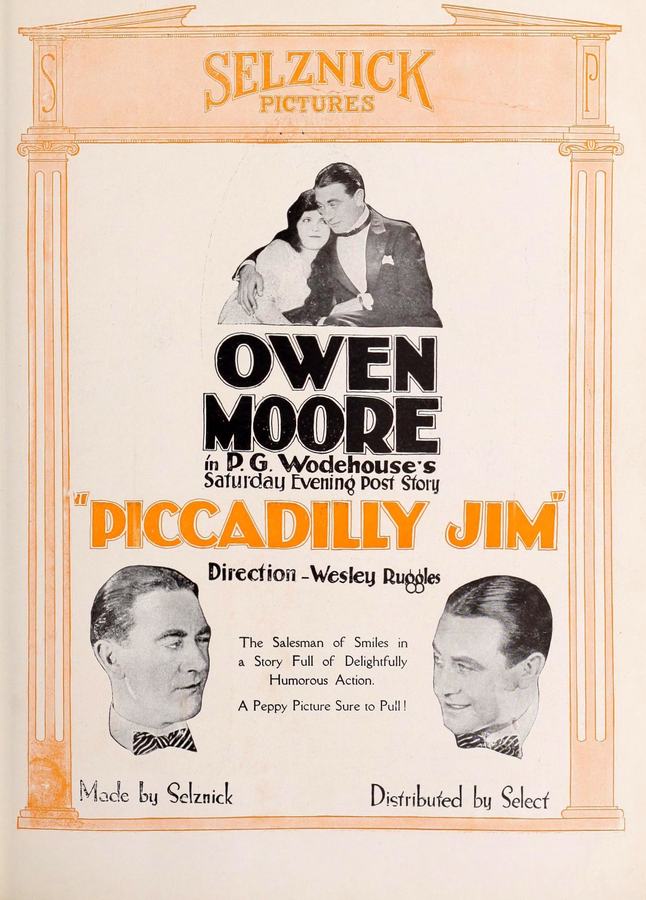
Stepping into the effervescent world of Piccadilly Jim is akin to uncorking a vintage bottle of champagne—bubbly, sophisticated, and utterly delightful. This 1919 silent film adaptation of P.G. Wodehouse’s beloved novel delivers a masterclass in comedic timing and character-driven hijinks, proving that the author's distinctive wit transcends the absence of spoken dialogue. From the very first frames, viewers are plunged into a meticulously crafted universe where socialites stumble through farcical predicaments and love blossoms amidst the chaos. It’s a testament to the enduring power of Wodehouse's narrative architecture that even without the benefit of his famously intricate prose delivered orally, the spirit of his storytelling shines through, vibrant and irresistible. The film captures the very essence of an era, a vibrant tapestry of transatlantic social circles and the delightful absurdities that often define them.
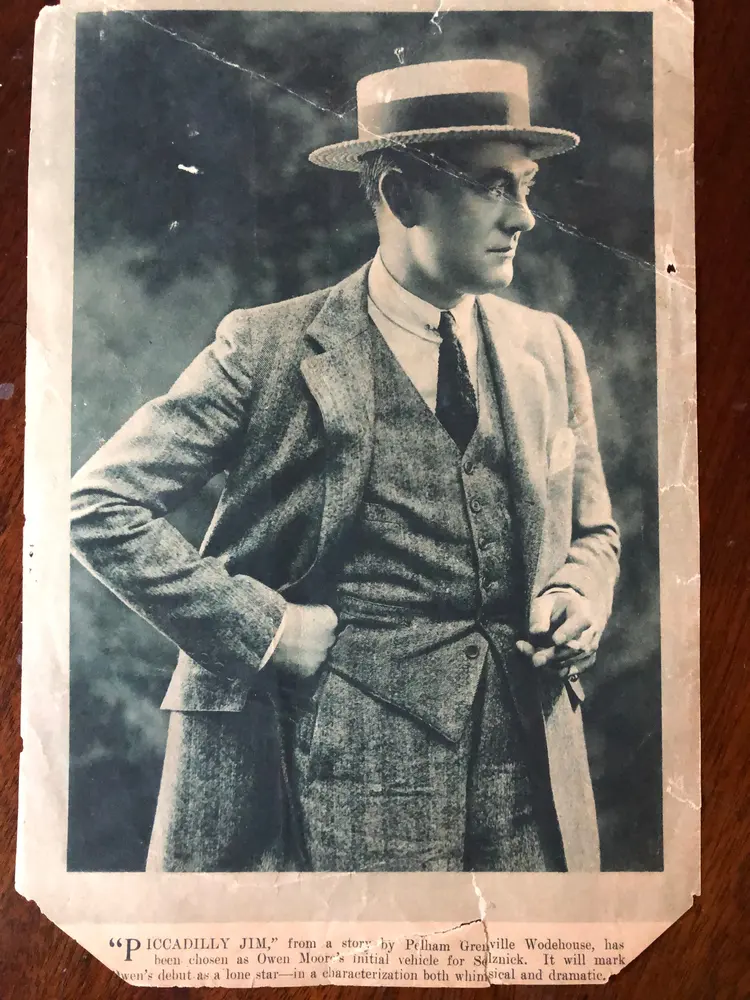
At the heart of this frothy concoction is Jim Crocker, portrayed with an infectious blend of roguish charm and burgeoning sincerity by Owen Moore. Jim, initially a transatlantic enfant terrible, has carved out a reputation in London as "Piccadilly Jim," a moniker earned through a series of audacious, headline-grabbing escapades. He's the kind of character who thrives on notoriety, a journalistic provocateur whose antics are as much a part of his profession as his byline. Yet, beneath the veneer of the jester lies a surprising vulnerability, a yearning for something more substantial than fleeting infamy. This inner conflict is subtly conveyed through Moore’s nuanced expressions and physical comedy, a challenging feat in the silent era where exaggerated gestures often dominated.
The catalyst for Jim's potential transformation arrives in the form of Ann Chester, played by Zena Keefe. Ann is not merely a love interest; she is the moral compass, the discerning observer whose candid, unflattering appraisal of Jim's public persona stings him into an unexpected desire for reform. Her perception acts as a mirror, reflecting a side of himself Jim perhaps hadn't truly acknowledged. This moment of overheard truth is a classic Wodehouse setup, an external judgment sparking an internal revolution, albeit one fraught with further comedic complications. Keefe imbues Ann with a quiet strength and intelligence, making her a formidable, yet appealing, figure whose affections are clearly hard-won.
The narrative truly ignites when Jim, spurred by Ann's unwitting challenge, decides to return to America, encountering her aboard the very same vessel. Seizing the opportunity for a clean slate, he adopts an assumed identity, setting the stage for a delightful dance of deception and burgeoning attraction. This classic trope of mistaken identity is executed with a lightness of touch that prevents it from becoming overly convoluted, instead serving as a fertile ground for humorous misunderstandings and romantic tension. The silent film medium excels at this, relying on visual cues and the audience's interpretation to build the intricate web of deceit. One could draw parallels to the subtle class dynamics and identity play seen in films like Her New York, where characters navigate new environments under altered circumstances, though Piccadilly Jim maintains a distinctly lighter, more farcical tone.
Upon his return to New York, Jim's attempts at professional re-establishment prove futile. This unexpected setback forces him into the orbit of his step-aunt, Mrs. Peter Pett, and her famously dysfunctional household. The Pett family, a quintessential Wodehousian creation, offers a rich tableau of eccentricities and exaggerated personalities. They represent the upper echelons of society, prone to indulgence and oblivious to the consequences, a perfect foil for Jim's newfound desire for earnestness. The film deftly portrays their world, a gilded cage of privilege where even the most absurd behaviors are tolerated, if not encouraged. Dora Mills Adams, as Mrs. Peter Pett, captures the exasperated matriarch perfectly, a woman seemingly perpetually on the verge of a nervous breakdown due to her pampered progeny.
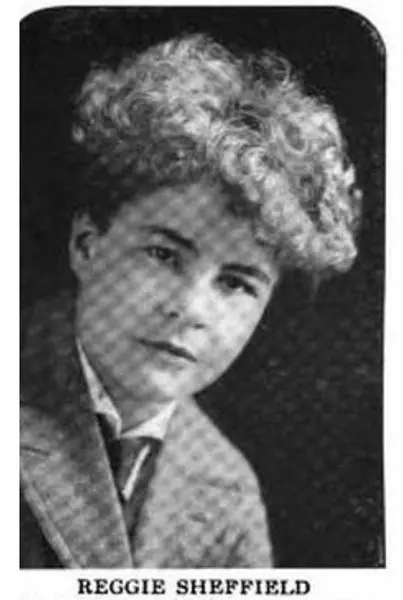
The pièce de résistance of the plot involves the audacious scheme to "kidnap" the incredibly indulged cousin, Ogden Pett. Ogden, a character whose overindulgence has rendered him a living caricature of aristocratic uselessness, is not merely a victim but a willing accomplice, enticed by the prospect of half the ransom money. This level of self-serving absurdity is pure Wodehouse, highlighting the moral elasticity of characters when faced with personal gain. Reginald Sheffield's portrayal of Ogden is a masterclass in portraying pampered imbecility, his every gesture and expression screaming privilege and a complete lack of self-awareness. The collaboration between Jim and Ann in this endeavor, despite its ultimate failure, serves to forge a deeper bond between them, their shared comedic enterprise cementing their affection. The intricate planning and execution, often reliant on visual gags and physical comedy, are a joy to behold.
Adapting P.G. Wodehouse to the silent screen presents unique challenges and opportunities. Wodehouse’s novels are renowned for their sparkling dialogue, intricate plotting, and the precise rhythm of his prose. Translating this verbal brilliance into a visual medium requires immense skill from both the screenwriters and the director. The film achieves this by leaning heavily on exaggerated characterizations, expressive physicality, and meticulously choreographed comedic set-pieces. The intertitles, far from being mere plot devices, become integral to conveying Wodehouse's distinctive voice, often delivering concise, witty observations that mirror the author's narrative style. They bridge the gap between spoken word and visual storytelling, ensuring that the audience remains immersed in the specific brand of humor.
The cast, under the direction, manages to embody the specific archetypes that populate Wodehouse's universe. Owen Moore, as Jim, navigates the transformation from a mischievous prankster to a genuinely earnest suitor with believable charm. His silent performance conveys both the outward bravado and the underlying shift in his character's motivations. Zena Keefe's Ann is intelligent and poised, her reactions often providing the perfect counterpoint to the surrounding chaos. The supporting cast, particularly the members of the Pett household, excel at creating a world of delightful eccentrics. Their performances, often bordering on caricature, are precisely what is needed to bring Wodehouse’s larger-than-life creations to the screen. The physicality of the comedy, from frantic chases to subtle facial expressions, is paramount.
One cannot discuss Piccadilly Jim without acknowledging the film’s meticulous attention to period detail. The costuming, set design, and general ambiance transport the viewer directly into the roaring twenties, or at least the cusp of it. The opulent interiors of the Pett residence, the bustling streets of London and New York, and the elegant attire worn by the characters all contribute to the immersive experience. This visual richness is crucial in establishing the social milieu that Wodehouse so expertly satirized. The film doesn't just tell a story; it paints a vivid picture of a particular time and place, enhancing the audience's appreciation for the specific brand of humor derived from these settings.
Beyond the slapstick and clever plot twists, Piccadilly Jim explores themes that resonate even today. The idea of personal transformation, driven by love and self-awareness, is a universal one. Jim's journey from a superficial reputation-seeker to a man genuinely striving for worthiness is compelling. The film also playfully critiques the excesses of wealth and privilege, particularly through the character of Ogden Pett, whose willing participation in his own "kidnapping" for financial gain is a biting, if humorous, commentary on entitlement. This gentle satire of the upper classes is a hallmark of Wodehouse's work, and the film translates it effectively. The absurdity of the situation highlights the often-ridiculous nature of human desires and societal expectations.
The romantic arc between Jim and Ann is handled with a charming blend of wit and genuine affection. Their relationship isn't built on instantaneous infatuation but on a gradual understanding and appreciation for each other's true selves, even through layers of deception. Ann’s initial disdain for "Piccadilly Jim" makes her eventual acceptance of the reformed Jim all the more satisfying. It speaks to the idea that true love often sees beyond superficial appearances and public personas. This nuanced development of their relationship adds depth to the otherwise lighthearted proceedings, grounding the comedy in relatable human emotions. The chemistry between Moore and Keefe is palpable, conveyed through stolen glances, hesitant smiles, and the shared thrill of their conspiratorial capers.
Comparing Piccadilly Jim to other silent-era comedies reveals its distinct approach. While films like The Young Lady and the Hooligan might explore class disparities with a more dramatic, almost didactic tone, Piccadilly Jim opts for gentle satire and farcical humor. It’s less about social commentary with a heavy hand and more about the delightful absurdity of human behavior within a specific social context. Similarly, while Limousine Life might depict the opulent lives of socialites, Piccadilly Jim injects a uniquely Wodehousian brand of self-inflicted chaos into that same milieu, making the characters active, albeit often bumbling, participants in their own comedic destinies rather than mere observers of wealth. The film stands out for its cleverness and its commitment to a particular brand of sophisticated silliness.
The direction, while uncredited in some records for the specific director (though historically it was Frank Crane), exhibits a keen understanding of silent film mechanics. The pacing is brisk, preventing any scene from overstaying its welcome, a crucial element in maintaining comedic momentum. The camera work, while perhaps not groundbreaking for its era, is effective in framing the action and highlighting the physical comedy. Close-ups are used judiciously to convey emotional reactions, particularly from Ann and Jim, allowing the audience to connect with their internal states despite the lack of dialogue. The visual gags are well-timed and executed, often building upon each other to create escalating levels of comedic tension. The film relies on a visual vocabulary that is both clear and expressive, ensuring that even complex plot points are easily understood through action and reaction.
The performances, as mentioned, are a standout. Owen Moore, a prominent leading man of the era, brings a charismatic energy to Jim. He navigates the character’s dual nature—the flamboyant "Piccadilly Jim" and the earnest suitor—with a deft touch. His athleticism and comedic timing are evident in the more physical scenes, while his more tender moments with Ann reveal a surprising depth. Zena Keefe, as Ann, embodies the intelligent and independent woman, a refreshing departure from some of the more passive female leads of the time. Her expressions convey skepticism, amusement, and ultimately, affection, making her character fully realized and relatable. The ensemble cast, including Dora Mills Adams and Reginald Sheffield, creates a vibrant tapestry of supporting characters, each contributing to the film's overall comedic texture.
The enduring appeal of Piccadilly Jim lies in its ability to transport the viewer to a simpler, yet endlessly entertaining, world. It's a film that doesn't take itself too seriously, yet it's crafted with undeniable skill and a deep respect for its source material. It reminds us of the joy of pure, unadulterated escapism, where clever plots and charming characters combine to create a truly delightful experience. For fans of P.G. Wodehouse, it offers a fascinating glimpse into how his unique brand of humor translated to the nascent art form of cinema. For silent film enthusiasts, it's a shining example of comedic storytelling at its finest, demonstrating the genre's capacity for sophistication and wit without relying on spoken words.
In an era dominated by dramatic narratives and nascent special effects, Piccadilly Jim stands as a charming counterpoint, a film that prioritizes character, wit, and intricate plotting above all else. Its success lies not just in its faithful adaptation of Wodehouse's work, but in its ability to capture the spirit of his writing—the gentle satire, the absurd situations, and the ultimately hopeful romanticism. It’s a film that leaves you with a smile, a testament to the timeless appeal of well-executed comedy and the enduring genius of its literary progenitor. The film serves as a delightful time capsule, offering a window into the entertainment sensibilities of its time while simultaneously providing laughter that feels surprisingly fresh and relevant even a century later. Its influence, though perhaps subtle, can be seen in later romantic comedies that rely on mistaken identities and witty banter to drive their plots, proving that the foundations laid by films like Piccadilly Jim were indeed robust.
The intricate dance of attraction and deception, the clash of old-world expectations with new-world aspirations, and the sheer joy of watching well-meaning plans go hilariously awry—these elements coalesce into a cinematic experience that is both intellectually engaging and thoroughly entertaining. Piccadilly Jim is more than just a silent film; it's a vibrant, living piece of cinematic history that continues to charm and amuse, a true gem in the crown of early Hollywood comedy. It underscores the fact that great storytelling, regardless of the medium or the era, possesses an inherent power to captivate and delight audiences, transcending the boundaries of time and technology.
IMDb 5.8
1924
Community
Log in to comment.