DbcultAccessing Vault...
Cult Review
Senior Film Conservator
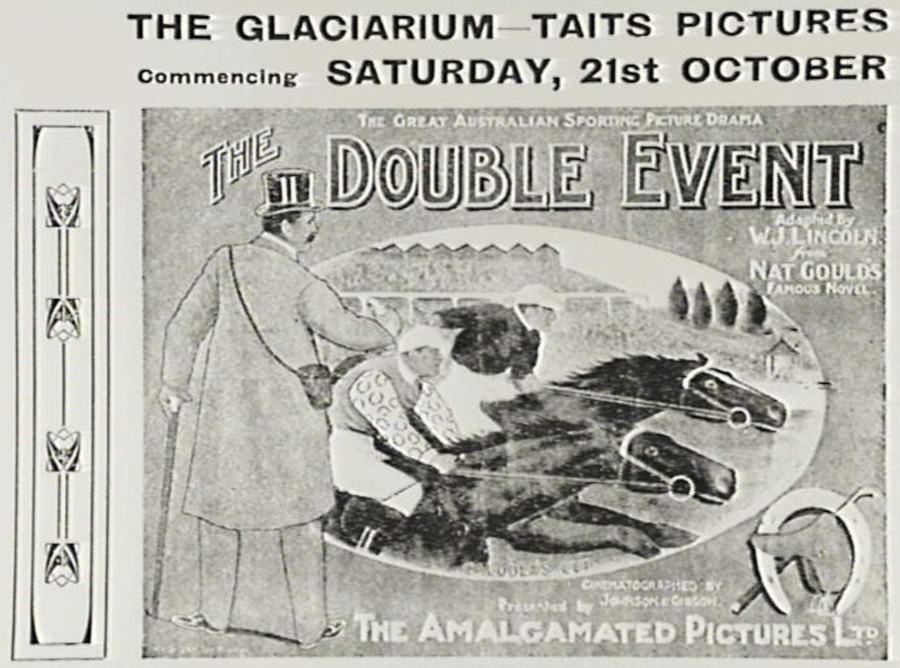
Stepping back into the nascent days of narrative cinema, one encounters productions like "The Double Event," a fascinating artifact that bridges the burgeoning world of film with the enduring popularity of literary serials. Based on the works of Nat Gould, a writer whose thrilling tales of the turf captivated millions, this film offers a rare glimpse into how early filmmakers attempted to translate complex, character-driven narratives to the silent screen. It's not merely a historical curiosity but a testament to the universal appeal of a well-spun yarn, even when conveyed through the rudimentary, yet profoundly expressive, language of silent film.
Nat Gould was, in his time, a literary titan, particularly among readers who relished the drama and spectacle of horse racing. His stories, often fraught with intrigue, romance, and the ever-present shadow of illicit dealings, were ripe for cinematic adaptation. "The Double Event", with its inherent dramatic tension revolving around a pivotal two-part race, provided a perfect canvas for early directors to experiment with sustained narrative arcs. Unlike the more observational or single-event focus of contemporaneous films like The Corbett-Fitzsimmons Fight or Jeffries-Sharkey Contest, which aimed to capture reality, "The Double Event" boldly embraced fiction. It sought to immerse audiences not just in the visual thrill of a race, but in the moral labyrinth leading up to it.
The film's ambitious plot, centered on young Arthur Seaton's courageous efforts to expose a racing syndicate's nefarious scheme, demanded a nuanced approach to character portrayal. Martyn Hagan, in the pivotal role of Arthur, would have been tasked with conveying a wide spectrum of emotions—innocence, suspicion, fear, and ultimate resolve—through gesture, facial expression, and body language alone. This was the crucible for silent film acting, a demanding art form that relied heavily on theatrical training and an innate understanding of visual storytelling. Imagine the challenge of expressing the gradual dawning of suspicion, the internal conflict of loyalty versus justice, or the adrenaline of a last-minute dash to foil a plot, all without a single spoken word. Hagan's performance, if preserved, would be invaluable for understanding the evolution of cinematic acting.
While many early films, such as travelogues like Trip Through Ireland or documentaries of daily life like Saída dos Operários do Arsenal da Marinha, focused on presenting slices of reality, "The Double Event" aimed for something grander: a fully realized fictional world. This required a deliberate construction of scenes, careful staging, and the judicious use of intertitles to bridge gaps in action or convey crucial dialogue and internal thoughts. The pacing, a constant challenge in silent cinema, would have been critical. How does one build suspense around a horse race when the audience knows the outcome of the novel? The answer lies in the human drama surrounding the event, emphasizing the stakes for Arthur and Colonel Marsden, and the villainy of Mr. Black.
The cinematography, though primitive by modern standards, would have played a vital role in establishing mood and directing the viewer's eye. Close-ups, still a relatively new technique, could emphasize a conspiratorial glance or Arthur's determined expression. Wider shots would capture the grandeur of the racecourse and the excitement of the crowd, drawing parallels to the spectacle seen in films like O Carnaval em Lisboa, but with a narrative purpose. The editing, too, would have been crucial for building tension, cutting between the stable, the plotting villains, and the impending race, creating a sense of urgency that transcends the lack of spoken dialogue or synchronized sound.
The success of "The Double Event" would have hinged on the audience's emotional investment in its characters. Arthur Seaton, the earnest stable boy, embodies the everyman hero, a figure audiences could easily root for. His journey from innocent bystander to active participant in foiling a crime is a classic narrative arc, one that resonates across cultures and time periods. Mr. Black, the antagonist, needed to be portrayed with an almost cartoonish villainy, a clear and present danger that heightened the stakes. The limitations of silent film often necessitated exaggerated gestures and expressions to ensure that character motivations were unmistakably clear, a stark contrast to the subtle performances we expect today. This theatricality was not a weakness but a necessary adaptation to the medium, a language understood by audiences accustomed to stage melodramas.
Comparing this to other early narrative efforts, one might look at religious epics like Life and Passion of Christ or historical dramas such as The Story of the Kelly Gang. These films also relied on strong, archetypal characters and clear moral lines to convey their stories effectively. However, "The Double Event" operates within a more contemporary, albeit still grand, setting, allowing for a different kind of realism—a realism of social intrigue rather than biblical or historical recreation. The nuanced social dynamics, the corrupting influence of money, and the resilience of integrity, themes central to Gould's work, would have been communicated through subtle visual cues and the dramatic confrontations between characters.
To fully appreciate "The Double Event," one must place it within the broader landscape of early cinema. This was a period of rapid experimentation and innovation, where filmmakers were still discovering the unique capabilities of the medium. While some were preoccupied with capturing novelties, like the movement of a train in At Break-Neck Speed, or the grandeur of public events, such as The Republican National Convention, others were pushing the boundaries of storytelling. "The Double Event" falls firmly into the latter category, attempting to weave a complex tale that required sustained attention and emotional engagement from its viewers. It represented a step away from mere 'actualités' and towards the fully fledged narrative feature film that would soon dominate the industry.
The adaptation of popular novels like Gould's was a shrewd move, capitalizing on pre-existing fanbases and providing familiar narratives in a novel format. This strategy was not unique; many early films, including numerous iterations of the Passion Play story (e.g., S. Lubin's Passion Play and The Life and Passion of Jesus Christ), drew from well-known sources. The challenge, however, was to translate the descriptive richness of literature into purely visual terms, a task made more difficult by the technological limitations of the era. The success of "The Double Event" would have depended on its ability to evoke the excitement of the races and the tension of the conspiracy through visual spectacle and compelling performances, rather than relying on the intricate prose of the original text.
Consider the technical ingenuity required to stage a horse race for the camera in the early 20th century. While modern films use complex camera rigs and CGI, filmmakers of this era relied on practical effects, clever framing, and perhaps even miniature work or carefully choreographed sequences. The realism of the racing scenes, which were central to the film's appeal, would have been paramount. These scenes, though perhaps lacking the frenetic energy of later cinematic races, would have been groundbreaking for their time, offering audiences a thrilling perspective on the sport that was previously only accessible through live attendance or static photography. This pursuit of capturing dynamic action places it in a lineage with other early sports films, though with a narrative framework that sets it apart from purely documentary efforts like Gans-Nelson Contest, Goldfield Nevada, September 3, 1906.
The absence of synchronized sound meant that the film's atmosphere was created entirely through visual cues and the live accompaniment of a pianist or orchestra. This dynamic interplay between image and live music was a crucial element of the silent film experience, adding emotional depth and intensity that the visuals alone could not always provide. The musical score, often improvised or based on cue sheets, would have underscored the dramatic moments, from the hushed tension of a secret meeting to the thunderous excitement of the final race. This collaborative art form, involving filmmakers, actors, and musicians, created a unique, immersive experience for early audiences, drawing them into the world of Nat Gould's creation.
"The Double Event," like many films from this pioneering period, exists primarily as a historical footnote, its full impact often lost to the ravages of time and the fragility of early nitrate film stock. Yet, its existence speaks volumes about the ambitions of early cinema. It demonstrates a clear desire to move beyond simple actualities and embrace complex storytelling, to adapt popular literature, and to explore genres that would later become staples of the medium. The film, in its very conception, foreshadows the narrative sophistication that would define the golden age of Hollywood.
What remains of "The Double Event" today, if anything, is a testament to the enduring power of narrative and the relentless drive of filmmakers to captivate audiences. It reminds us that even in cinema's infancy, there was a profound understanding of what makes a compelling story: relatable characters, clear stakes, and a dramatic resolution. While we may never fully experience it as contemporary audiences did, its place in the lineage of narrative cinema, particularly within the nascent genre of sports drama, is undeniable. It stands as a fascinating precursor to countless films that would later explore similar themes of competition, corruption, and redemption, proving that the thrilling 'double event' of compelling storytelling and visual artistry was a winning bet from the very beginning.
IMDb —
1914
Community
Log in to comment.