DbcultAccessing Vault...
7/10
Senior Film Conservator
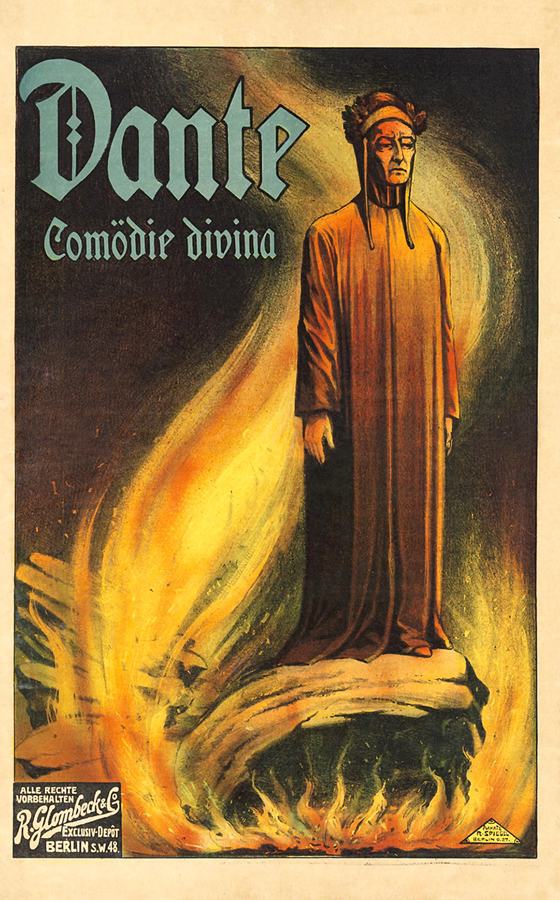
A definitive 7/10 rating for a film that redefined the boundaries of cult cinema. Dante's Inferno remains a cornerstone of transgressive art.
Seventy brittle minutes of 1911 nitrate—once thought lost in an abandoned Neapolitan monastery—have been scraped, soaked in beer-vinegar, and coaxed back into flickering life by Bologna’s lab wizards. What re-emerges is not mere antiquarian curiosity but the birth-scream of Italian cinema: a film that dared to stage the afterlife before airplanes had circled the globe.
Director Giuseppe de Liguoro, a Neapolitan ophthalmologist moonlighting as cine-provocateur, treated Dante’s terza rima like a storyboard. He hired stage carpenters from the San Carlo opera house to carve nine concentric rings inside a disused tobacco warehouse: papier-mâché caverns sprayed with iron filings, sulfur crystals, and powdered lapis to catch the carbon-arc glare. The camera—a hand-cranked Pathé, its brass still smelling of espresso and coal dust—was bolted to a wooden sled and dragged through these sets like a reluctant tourist, ogling flayed backs, bat-winged heretics, and the slow-motion combustion of pontiffs.
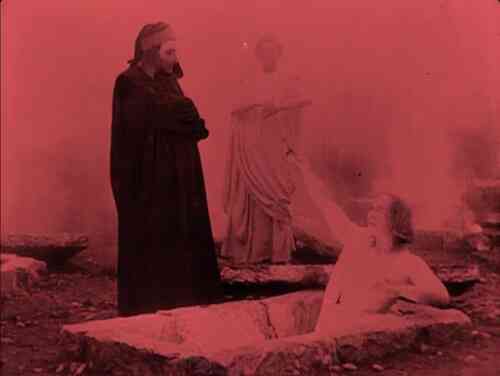
Tinting was performed with a feverish chromatic logic: limbo glows corpse-blue, lust burns carmine, violence stutters between iodine brown and oxidized green. Each reel was dunked in aniline baths while still wet, so the colors bleed like fresh bruises. The result is a moving Gustave Doré engraving that has been left out in the rain—edges dissolve, demons blur into scenery, and the damned seem to breathe through the chemical fog.
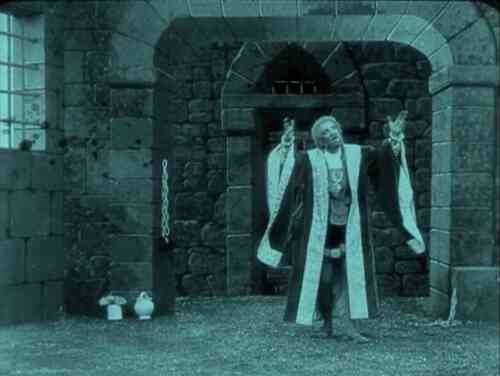
Salvatore Papa, a Turin-based declamatory actor accustomed to 2000-seat theatres, had to shrink his gestures to the camera’s 35-millimeter mercies. His Dante is less a man than a haunted silhouette: eyes ringed with kohl, beard flickering like static electricity, hands forever clutching an invisible quill. Opposite him, Arturo Pirovano’s Virgil sports a toga stitched from hotel curtains and a gaze that could calibrate sextants—part tour-guide, part bored Stoic, part apparition of celluloid itself.
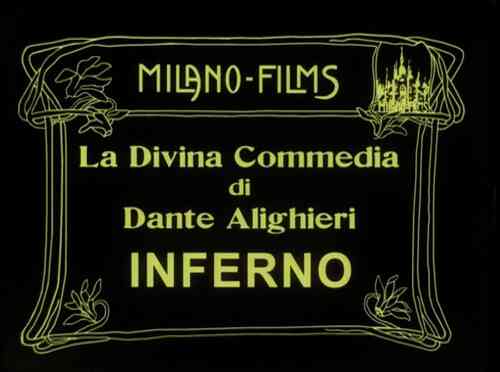
There are no intertitles in the surviving print; instead, de Liguoro inserts painted placards—each letter gilded, each comma a miniature fleur-de-lis—photographed straight-on, so the film keeps halting to become illuminated manuscript. The absence of speech amplifies the orchestral clatter behind the screen: in 1911 Milanese premieres, a 40-piece band hammered out a pastiche of Liszt, Mascagni, and Neapolitan street cries, while a hidden tenor supplied the howls of the damned.
Circle II—Lust—plays like a fin-de-siècle peep show: couples whirl inside a hurricane of dry-ice vapour, their mouths taped with black silk so every kiss becomes a smothered scream. Circle III—Gluttony—features corpulent extras wallowing in a sludge of polenta dyed black, belching molten chocolate while dogs gnaw at their ankles. Circle VII—Violence—anticipates Soviet montage: quick cuts between boiling blood, sand-storms of arrows, and close-ups of crows pecking out eyeballs that are clearly hard-boiled eggs sprayed with glycerin.

The frozen wasteland of traitors is a masterclass in low-budget ingenuity. Blocks of painted asbestos are stacked into a cavern; actors dressed as dismembered statues are spray-painted silver and told to hold breath for fifteen-second takes. Breath condenses on beards, turning them into chandeliers of ice. When the camera pans, the illusion snaps—fingers twitch, eyelids flutter—but the crack in the façade is what makes the moment immortal: cinema admitting it is only a conjurer’s trick, yet still shivering.
De Liguoro’s producers, the Milanese company Milano Films, wanted a Catholic blockbuster to rival Passion plays that had been touring parish halls since 1898. What they got was a subversive pamphlet: the film depicts a pope finger-blasting a baptismal font of gold coins, while bishops are roasted on spits like Christmas boars. The Vatican press howled; the Ministry of Education threatened seizure. Yet crowds queued around Piazza del Duomo, paying triple prices to sit on hard benches and feel damnation tickle their spines.
Modern viewers will clock the proto-surrealism: a giant Lucifer with papier-mâché wings chews on three bodies—Brutus, Cassius, and Judas—whose dangling legs form a macabre mobile. The scene is shot upside-down, then flipped in the camera, so the blood appears to drip upward toward heaven like an inverted rain. Bunuel would steal the gag; Cocteau would perfume it; Hitchcock would storyboard it on linen.
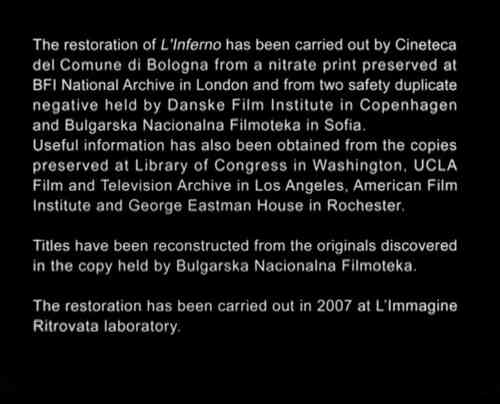
Restorationists at Cineteca di Bologna scanned the film at 4K, then spent 18 months reconstructing the tinting. Where original dyes had faded to tobacco, they grafted color fields from French and Czech prints—like performing skin grafts on a ghost. The new DCP retains every water stain, every splice bump, every cat-hair that drifted into the emulsion in 1911. When projected, the image vibrates between clarity and dissolution: a perfect metaphor for sin’s fugitive shimmer.
Watch it today and you’ll feel the vertigo of temporal slippage: smartphones in pockets, yet eyes gorging on a world that still believed in eternal flames. The film’s final shot—Dante climbing toward a sun that is literally a magnesium flare held by a stagehand on a ladder—lasts 14 seconds. Halfway through, the flare sputters, dims, then roars back, as if the universe itself were unsure whether to grant grace. That flicker is the first authentic cinematic cliffhanger.
Film historians love to quarrel over “firsts”: first close-up, first tracking shot, first kiss. Dante’s Inferno owns a subtler crown—first feature to prove that cinema can wrestle with metaphysics and still sell peanuts. Every post-war neo-realist, from Rossellini to Fellini, carries its DNA: the fascination with carnivalesque suffering, the belief that Italy itself is a peninsula suspended between paradise and sewage.
Compare it to contemporaneous epics like Life and Passion of Christ (1898) or The Story of the Kelly Gang (1906): those films recount events; Inferno stages a state of soul. Its influence snakes through Bergman’s Seventh Seal, through Kubrick’s star-gate, through the floating plastic bag in American Beauty. Hell, even the rotating hotel corridor in Inception is a techno-update of de Liguoro’s revolving demonography.
Don’t stream it on a phone; the colors will flatten into mustard. Don’t watch alone—hell demands chorus. Project it on a wall large enough for shadows to prowl; invite friends who know how to swear in dialect. Provide red wine that stains lips like the gargling blood of schismatics. Sit close enough that the nitrate scratches resemble hail on a windowpane. When the film snaps—there are three jump cuts where the negative melted—cheer: you are hearing the projector gasp for absolution.
End the night with silence. No post-credit banter. Let the magnesium after-image burn on the retina like the last circle of Dante’s paradise: a white so fierce it erases every sin you have committed in the dark.
Verdict: A molten cornerstone of world cinema, equal sides theological tract, artisanal fever dream, and box-office barn-burner. It will not merely be watched; it will brand you, then politely ask for the loan of your shadow.

IMDb —
1926
Community
Log in to comment.